LACMA

ShopMembershipMyLACMATickets
LACMA
Los Angeles County Museum of Art
5905 Wilshire Blvd.
Los Angeles, CA 90036
info@lacma.org
(323) 857-6000
Sign up to receive emails
Subscribe
© Museum Associates 2025

Museum Hours

Monday

11 am–6 pm

Tuesday

11 am–6 pm

Wednesday

Closed

Thursday

11 am–6 pm

Friday

11 am–8 pm

Saturday

10 am–7 pm

Sunday

10 am–7 pm


  • About LACMA
  • Jobs
  • Building LACMA
  • Host An Event
  • Unframed
  • Press
  • FAQs
  • Log in to MyLACMA
  • Privacy Policy
© Museum Associates 2025
Collections

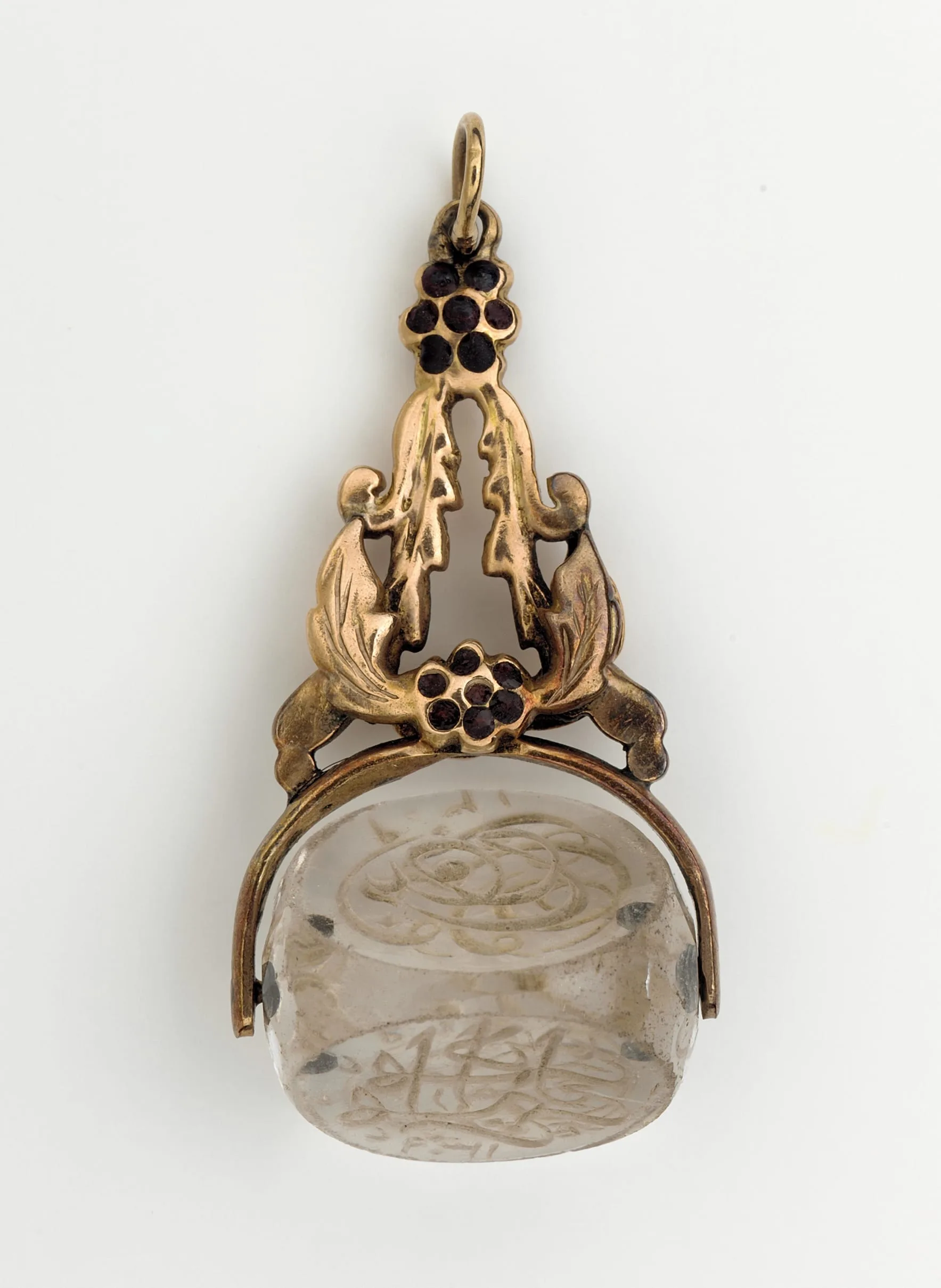
Seal1891/1309 A.H.

Not on view
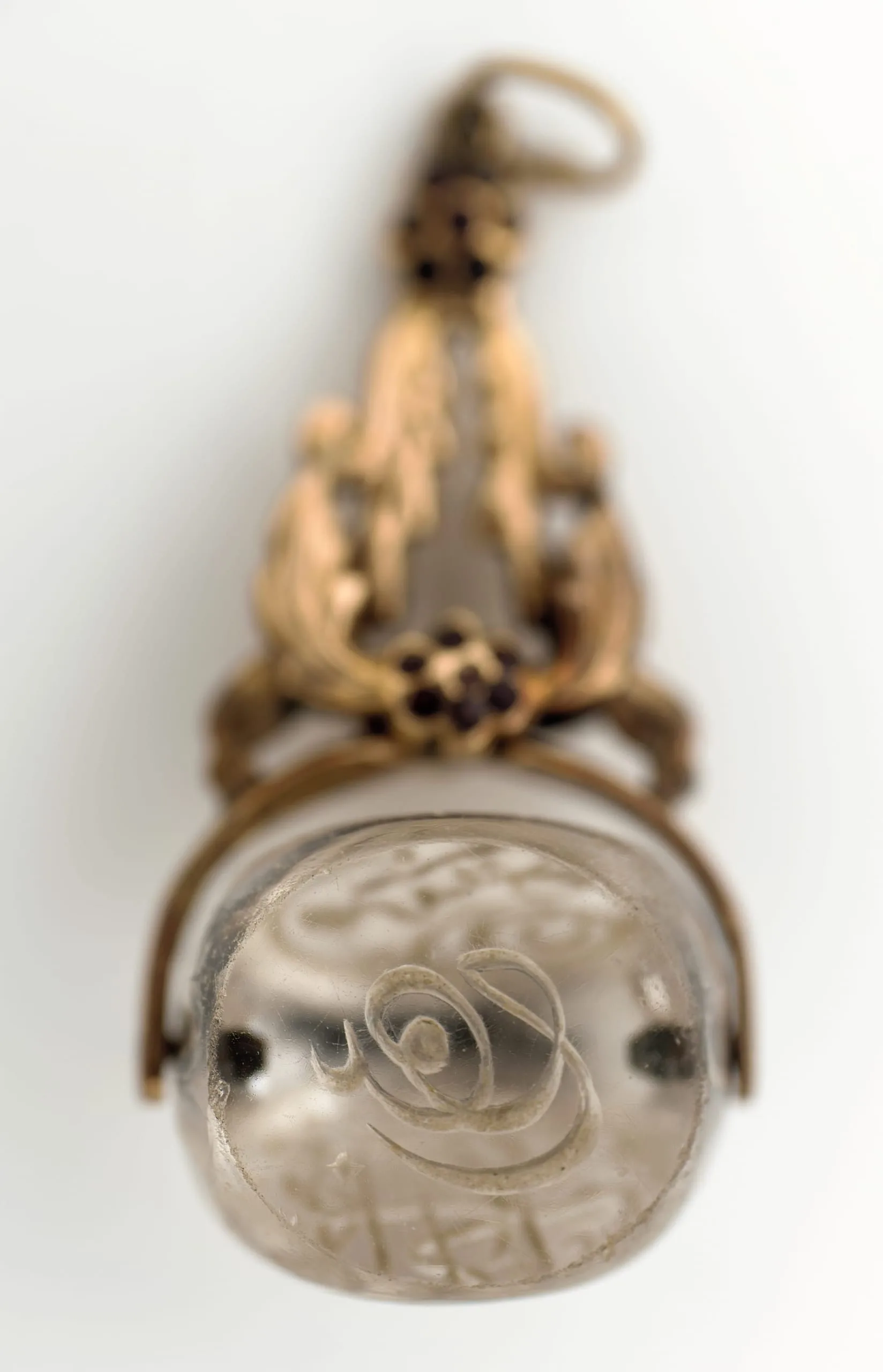
Gold-toned pendant with two figural forms and red stone rosettes above a rotating engraved rock crystal seal
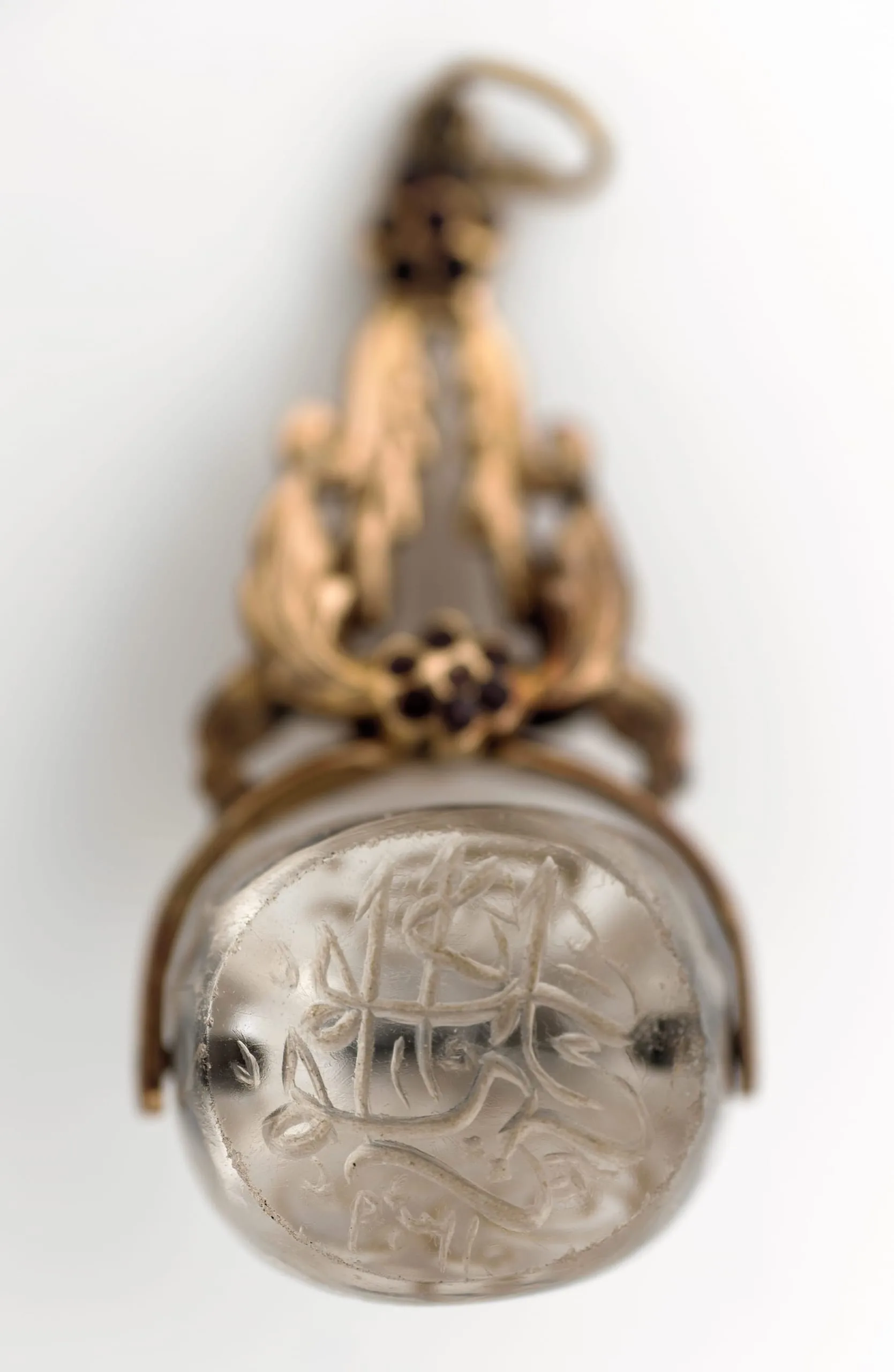
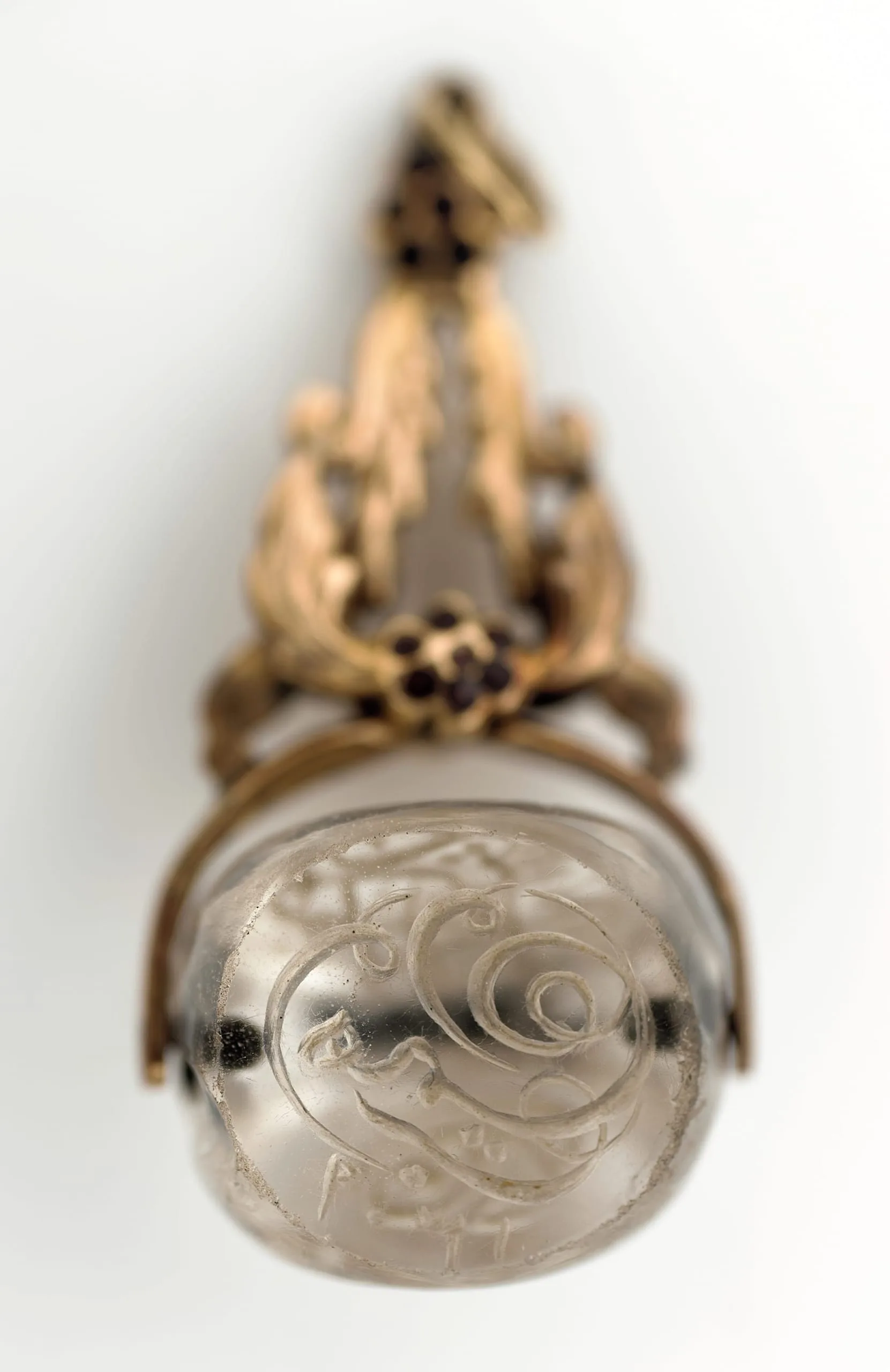
Pendant seal with an oval rock crystal intaglio engraved with a floral motif and Arabic script, set in a gold mount with a figural finial and suspension loop.
Gold pendant with a suspension loop, featuring a figural gold mount set with small red gemstones, holding an oval rock crystal intaglio seal engraved with Arabic or Persian script.
Pendant with a carved rock crystal cabochon engraved with scrolling floral motifs, set in a gold mount with foliate decoration and small dark gemstone accents.
Title
Seal
Place Made
Ottoman
Date Made
1891/1309 A.H.
Medium
Rock crystal with gold mount
Dimensions
Height: 1 1/2 in. (3.81 cm)
Credit Line
The Madina Collection of Islamic Art, gift of Camilla Chandler Frost
Accession Number
M.2002.1.561
Classification
Jewelry and Adornments
Collecting Area
Art of the Middle East: Islamic
Curatorial Notes

Befitting its royal owner, Sultan Abdülhamid II (r. 1876-1909), this fob seal made an impressive status symbol even when not in use. The small link at the top suggests that the seal was likely worn on a chain suspended from the waistband or neck. The handle is in the form of rococo foliage and blossoms, which echo motifs from the interior decoration of contemporaneous Ottoman palaces, like Dolmabahce. The gold mount holds a rock-crystal stamp that acts simultaneously as the end of an attractive pendant and a multi-faced seal.

Multi-faced seals were often used among Ottoman palace officials and royalty during the second half of the nineteenth century. Unlike rings or single-stamp seals, this design incorporates a kinetic pivot, which allows the owner to rotate the seal to three different faces; each presents a distinct formulation of the Sultan’s name in nasta‘liq script. The first side reads: "Abdülhamid, son of Gazi Abdülmecid." The next face offers his name with the seal’s date, "Abdülhamid, 1307 [1898]." Finally, the third face appears to read, “al-Hamid.” The last text likely plays on both the Sultan’s name and its relation to the Arabic name of God meaning, “The Praiseworthy One.”