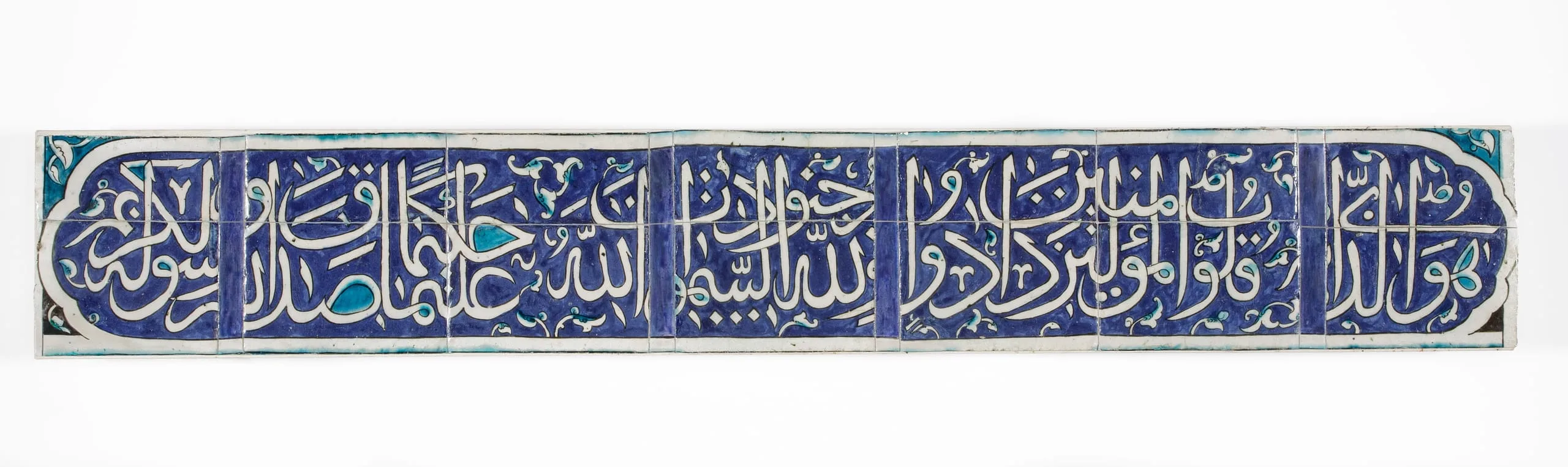
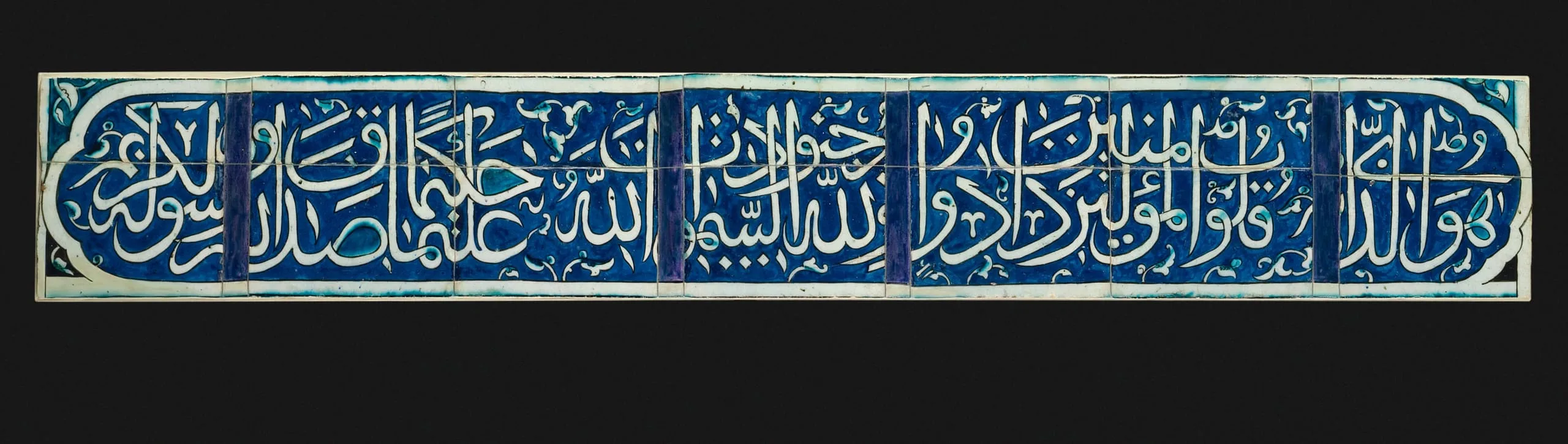
In Muslim cultures, words are used not only to communicate but to decorate. Because it is through writing that the Qur’an is transmitted, scripts in the Arabic alphabet were devised and perfected to be worthy of divine revelation. On this account, calligraphy became the most important art form regardless of the text. This concern with beautiful writing extended beyond the page to objects of all sorts, including metalwork, coins, ceramics, stone, glass, wood, and textiles, as well as inscriptions on buildings, as here.
The primary decoration of this tile panel, which would have been made for a religious institution, is the elegant cursive inscription reserved in white against a blue ground. Although incomplete (the blue vertical bands represent areas of loss), the text is nonetheless readily recognizable. It is from the opening section of a particularly powerful chapter of the Qur’an (Sura Al-Fath: 4): “He it is who sent down tranquility upon the hearts of the believers that they might add faith to their faith—to Allah belong the hosts of the heavens and the earth, and Allah is All-Knowing, Wise.”