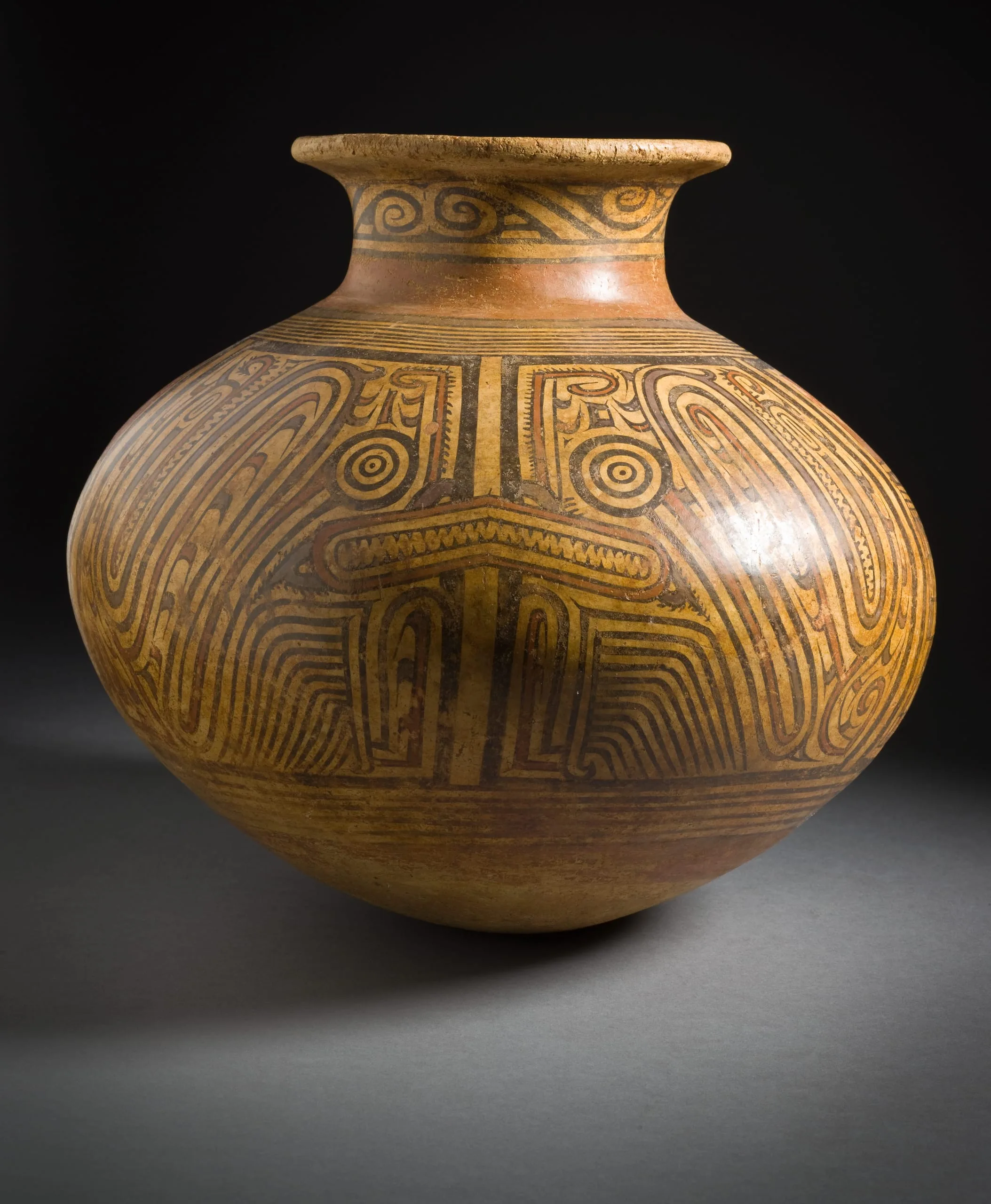
It is hard to discern a figure amid the riotous and repetitive background of this jar. This intermingling of subject and backdrop makes many Macaracas-style compositions ambiguous: their subjects are both perceptible and ethereal. As here, the overall design is sometimes separated into black-outlined panels; however, in a dramatic twist, a ferocious mouth filled with teeth breaks out of its frame and bridges the two main panels. The Macaracas style is part of the broader Gran Coclé archaeological culture, which produced a range of striking artifacts including goldwork, carved bone, and textiles, in addition to remarkable polychrome pottery. Artists developed bold red, black, and purple slips for painting onto a cream-white background. The motifs often feature highly stylized animals or elements thereof.
Some have suggested that in these designs, artists captured the experience of ritual hallucination by merging the real world with other realms. Art can prompt the brain to recall hallucinatory experiences, and therein lies some of the power of art objects: to bring two worlds into contact at the interface of vision and visions.
Julia Burtenshaw
2018
Selected Bibliography
Helms, Mary W. Creations of the Rainbow Serpent: Polychrome Ceramic Designs from Ancient Panama. Albuquerque: University of New Mexico Press, 1995.