LACMA

ShopMembershipMyLACMATickets
LACMA
Los Angeles County Museum of Art
5905 Wilshire Blvd.
Los Angeles, CA 90036
info@lacma.org
(323) 857-6000
Sign up to receive emails
Subscribe
© Museum Associates 2025

Museum Hours

Monday

11 am–6 pm

Tuesday

11 am–6 pm

Wednesday

Closed

Thursday

11 am–6 pm

Friday

11 am–8 pm

Saturday

10 am–7 pm

Sunday

10 am–7 pm


  • About LACMA
  • Jobs
  • Building LACMA
  • Host An Event
  • Unframed
  • Press
  • FAQs
  • Log in to MyLACMA
  • Privacy Policy
© Museum Associates 2025
Collections

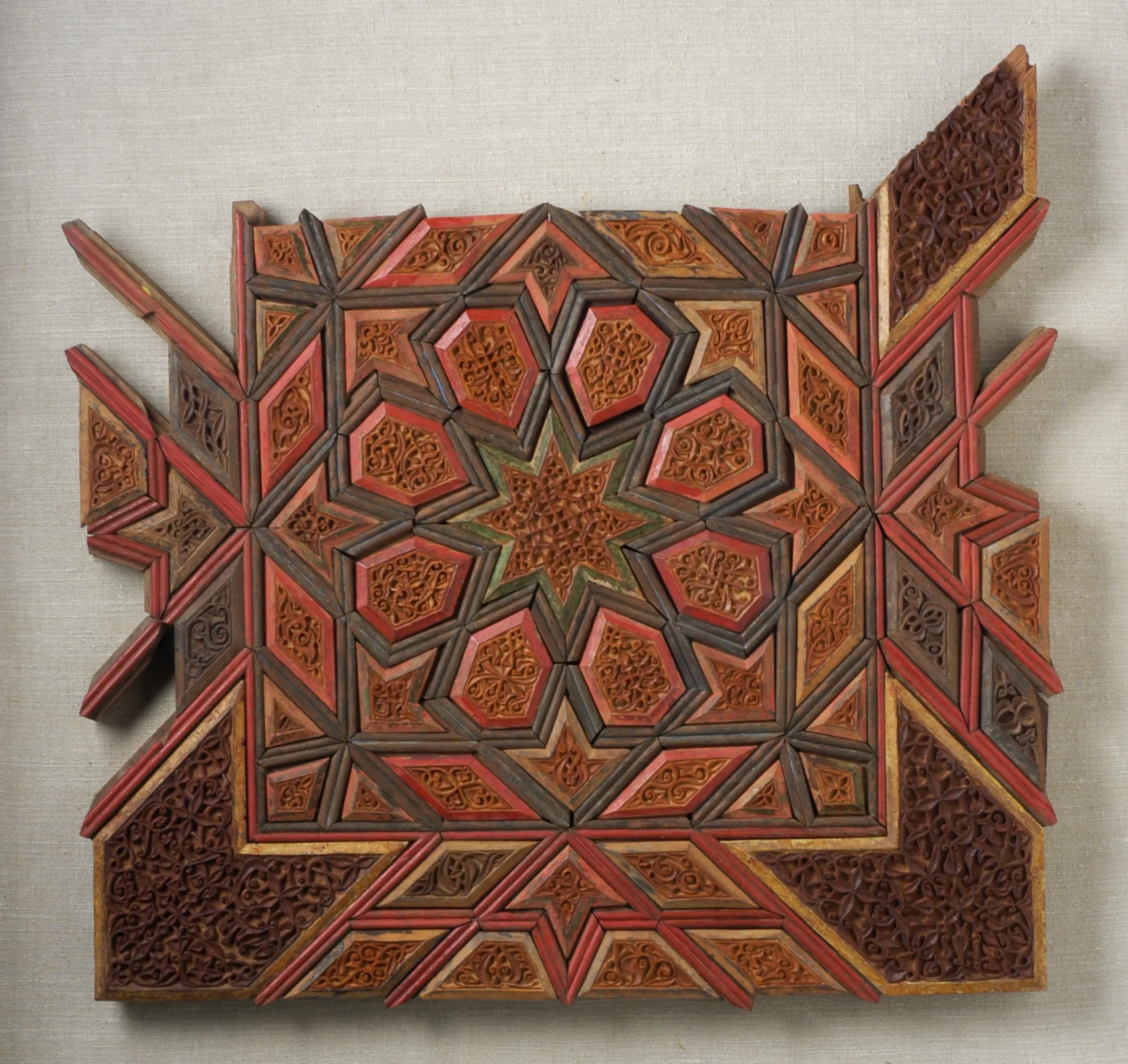
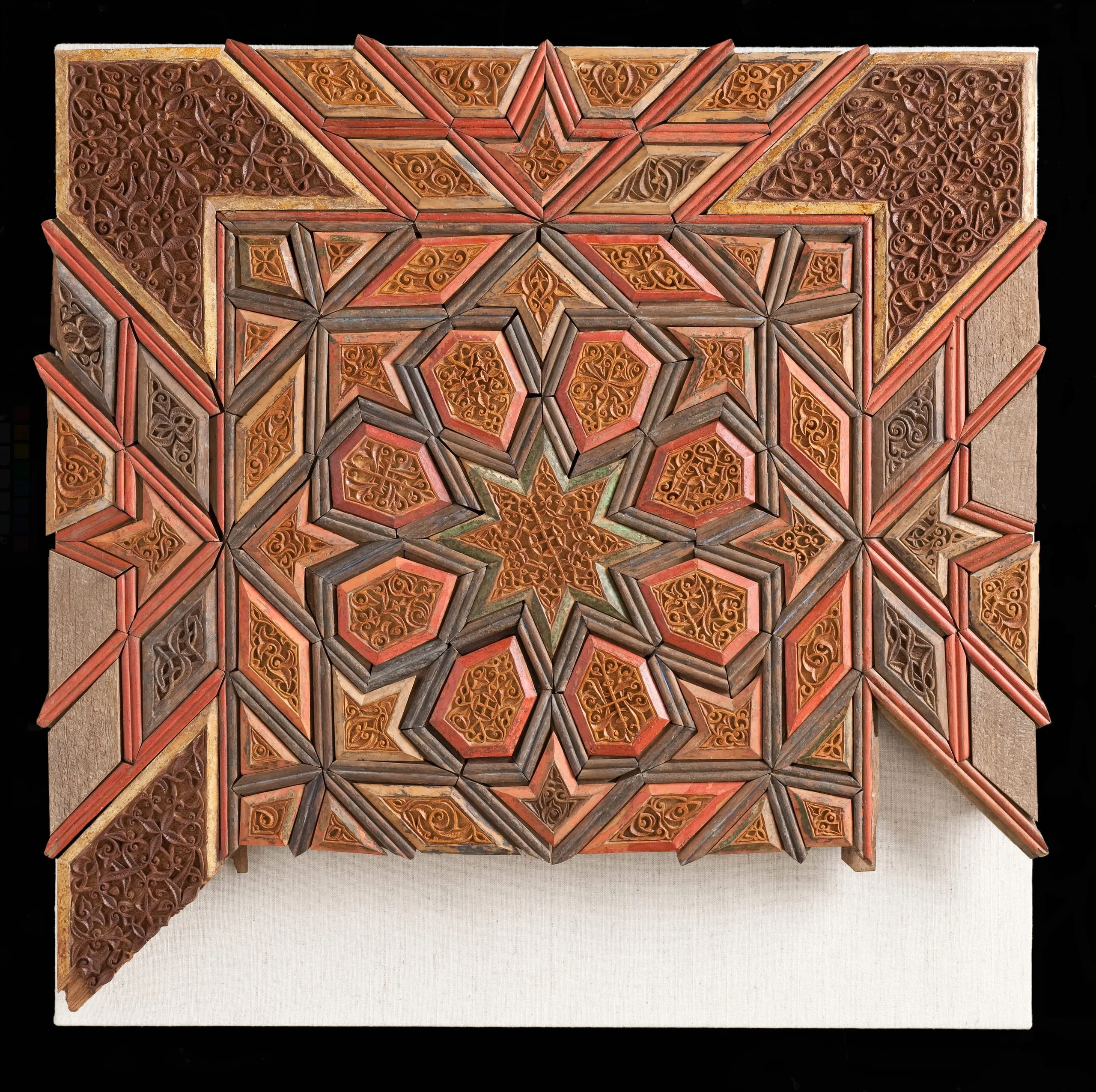
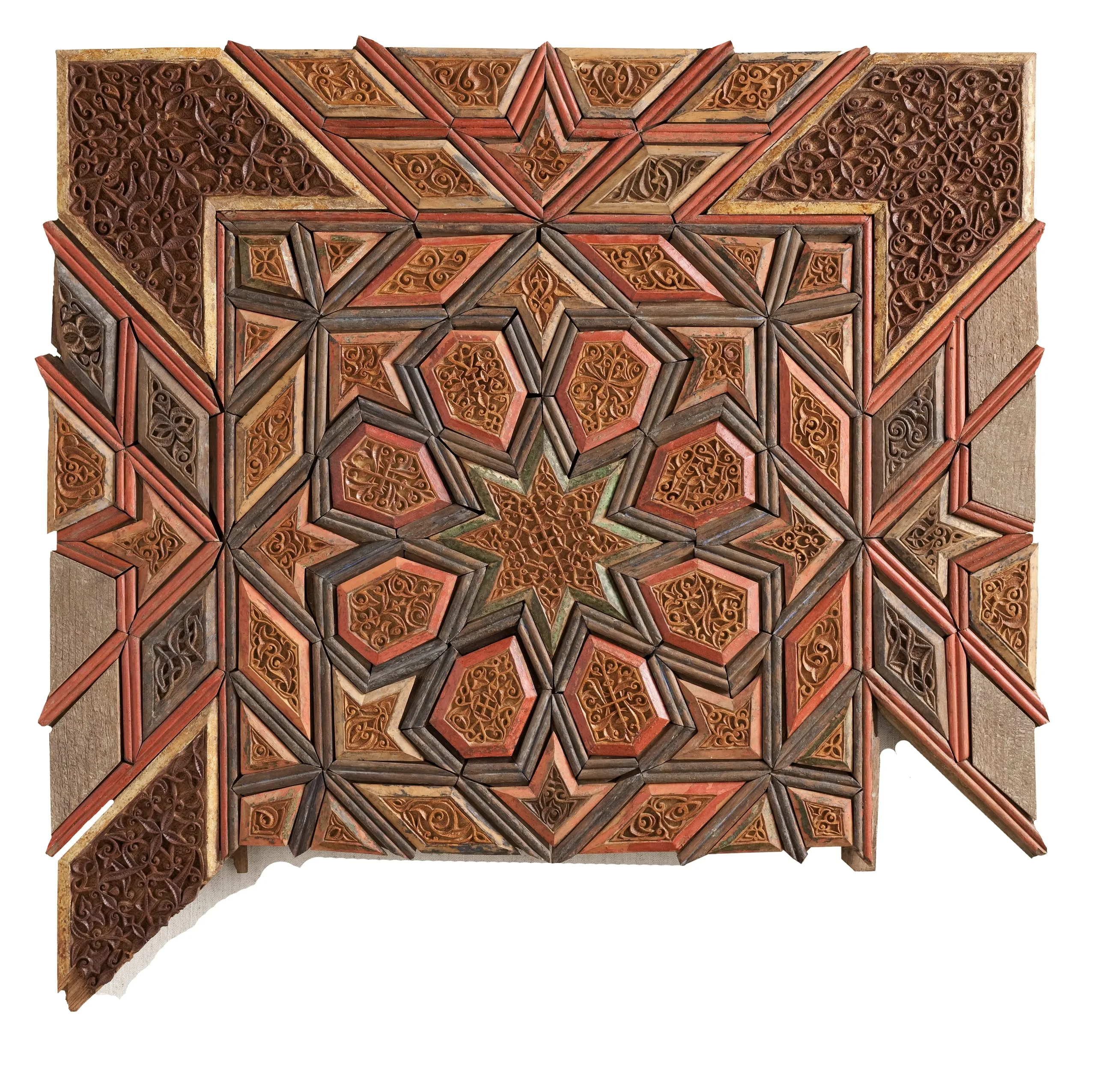
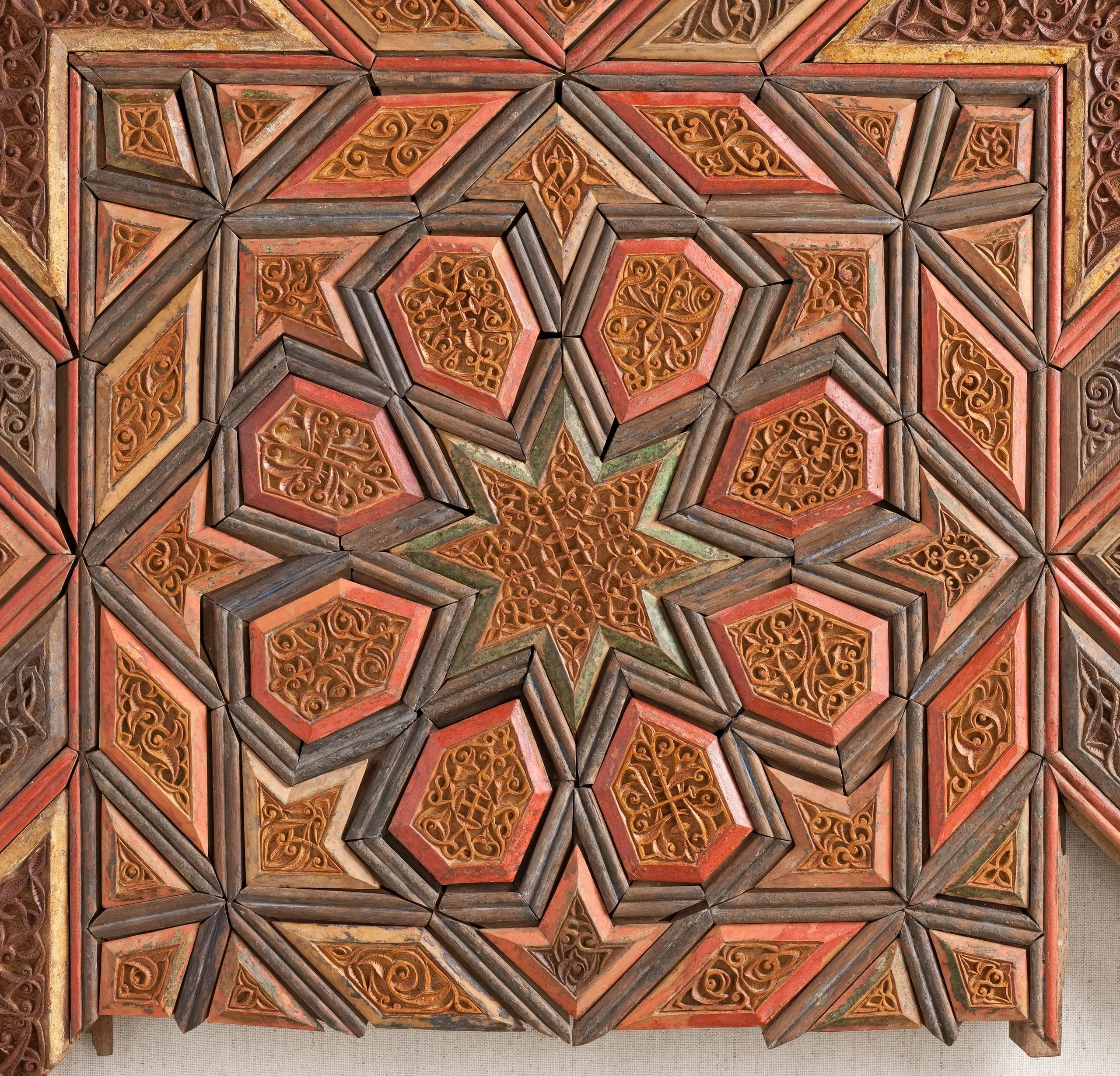
Panelsecond half of 14th-first half of 15th century

Not on view
Carved wooden architectural panel with interlocking geometric star pattern in terracotta, amber, and dark brown, with dense arabesque scrollwork in each cell
Carved and painted wooden panel with intricate geometric star pattern radiating from a central eight-pointed star, surrounded by interlocking polygons filled with arabesque relief carving in red, ochre, and dark brown tones.
Carved and painted wooden panel with geometric Islamic interlace pattern; a central eight-pointed star radiates outward into interlocking polygons in red, dark brown, and warm ochre, each facet filled with finely carved arabesque scrollwork; border corners feature dense arabesques in darker wood.
Carved and painted wooden panel with interlocking geometric star patterns in the Islamic muqarnas tradition; warm terracotta reds, earthy browns, and traces of green form layered eight-pointed stars radiating from a central rosette, with arabesques filling the interstices; lower-left corner section is detached, revealing the panel's construction.
Title
Panel
Place Made
Iran
Date Made
second half of 14th-first half of 15th century
Medium
Wood, carved and painted, fitted together tongue and groove
Dimensions
26 x 27 in. (66.04 x 68.58 cm); Mount: 32 x 32 in. (81.28 x 81.28 cm)
Credit Line
The Madina Collection of Islamic Art, gift of Camilla Chandler Frost
Accession Number
M.2002.1.753
Classification
Wood
Collecting Area
Art of the Middle East: Islamic
Curatorial Notes

Due to their inherent fragility, wood objects from the medieval Islamic world do not survive in great numbers, and those that do are primarily from interior settings, where they were protected from the elements. Most extant examples from Iran can be associated with religious institutions, in which they were safeguarded from the frequent warfare punctuating the rise and fall of dynasties and the ensuing destruction of palaces and other secular edifices. This painted wood panel, constructed from numerous individual pieces that fit together with tongue-in-groove attachments, may have formed part of a cenotaph (grave marker) from a tomb or perhaps a minbar (pulpit) from a mosque.
Selected Bibliography
  • Lo Terrenal y lo Divino: Arte Islámico siglos VII al XIX Colección del Museo de Arte del Condado de Los Ángeles. Santiago: Centro Cultural La Moneda, 2015.

  • Komaroff, Linda. Beauty and Identity: Islamic Art from the Los Angeles County Museum of Art. Los Angeles: Los Angeles County Museum of Art, 2016.