LACMA

ShopMembershipMyLACMATickets
LACMA
Los Angeles County Museum of Art
5905 Wilshire Blvd.
Los Angeles, CA 90036
info@lacma.org
(323) 857-6000
Sign up to receive emails
Subscribe
© Museum Associates 2026
  • About LACMA
  • Jobs
  • Building LACMA
  • Host An Event
  • Unframed
  • Press
  • FAQs
  • Log in to MyLACMA
  • Privacy Policy
© Museum Associates 2026
Collections

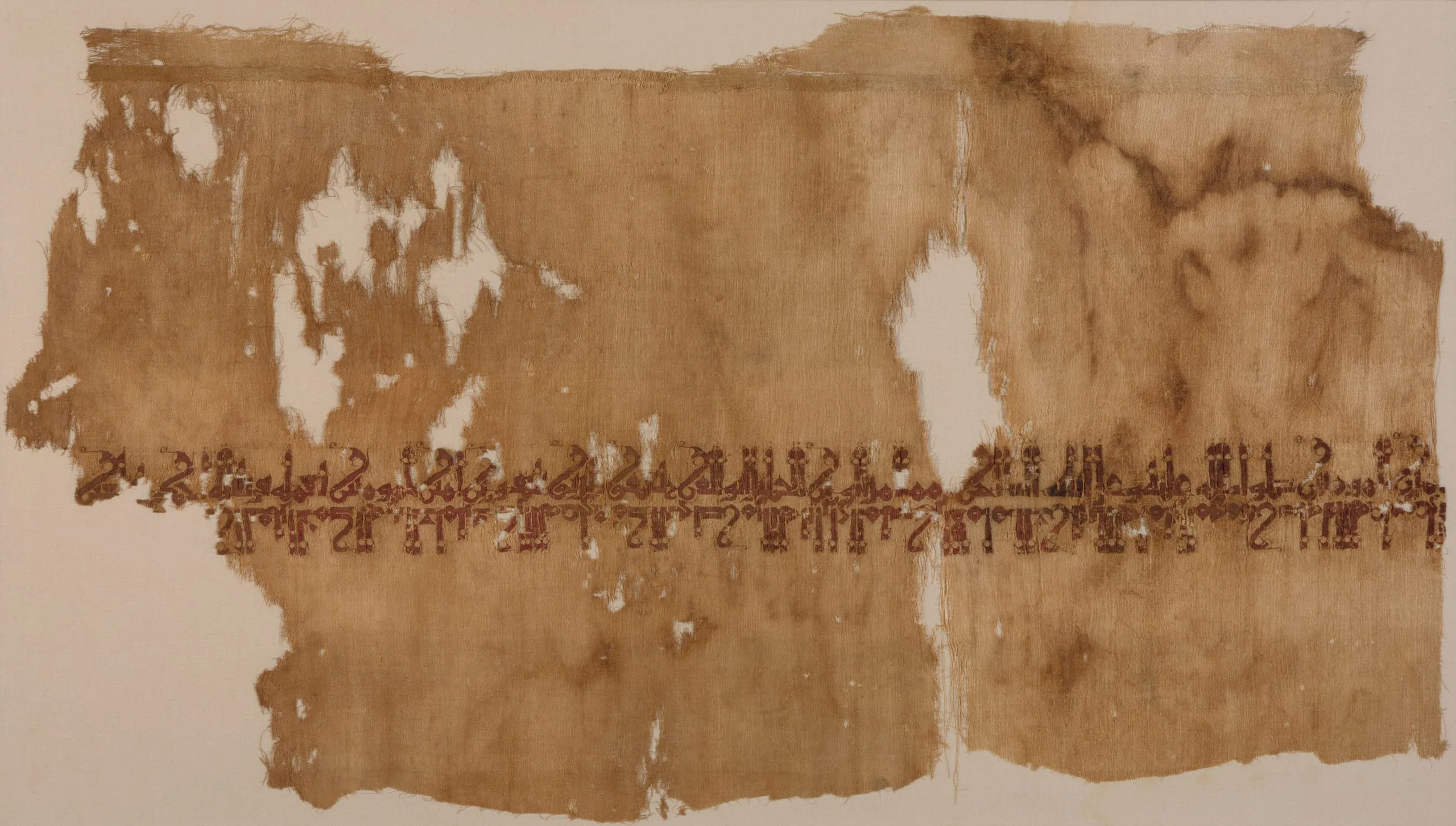
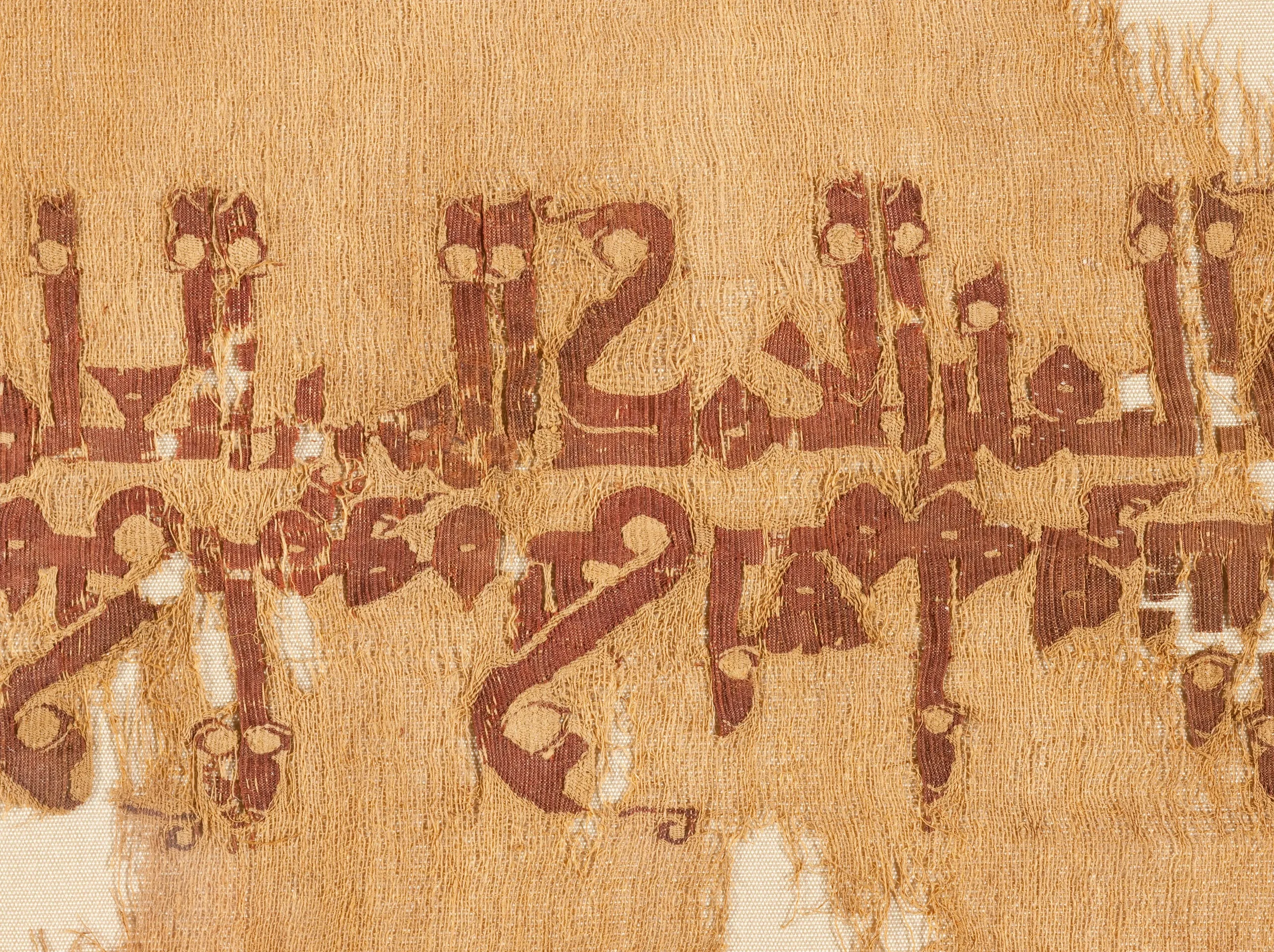
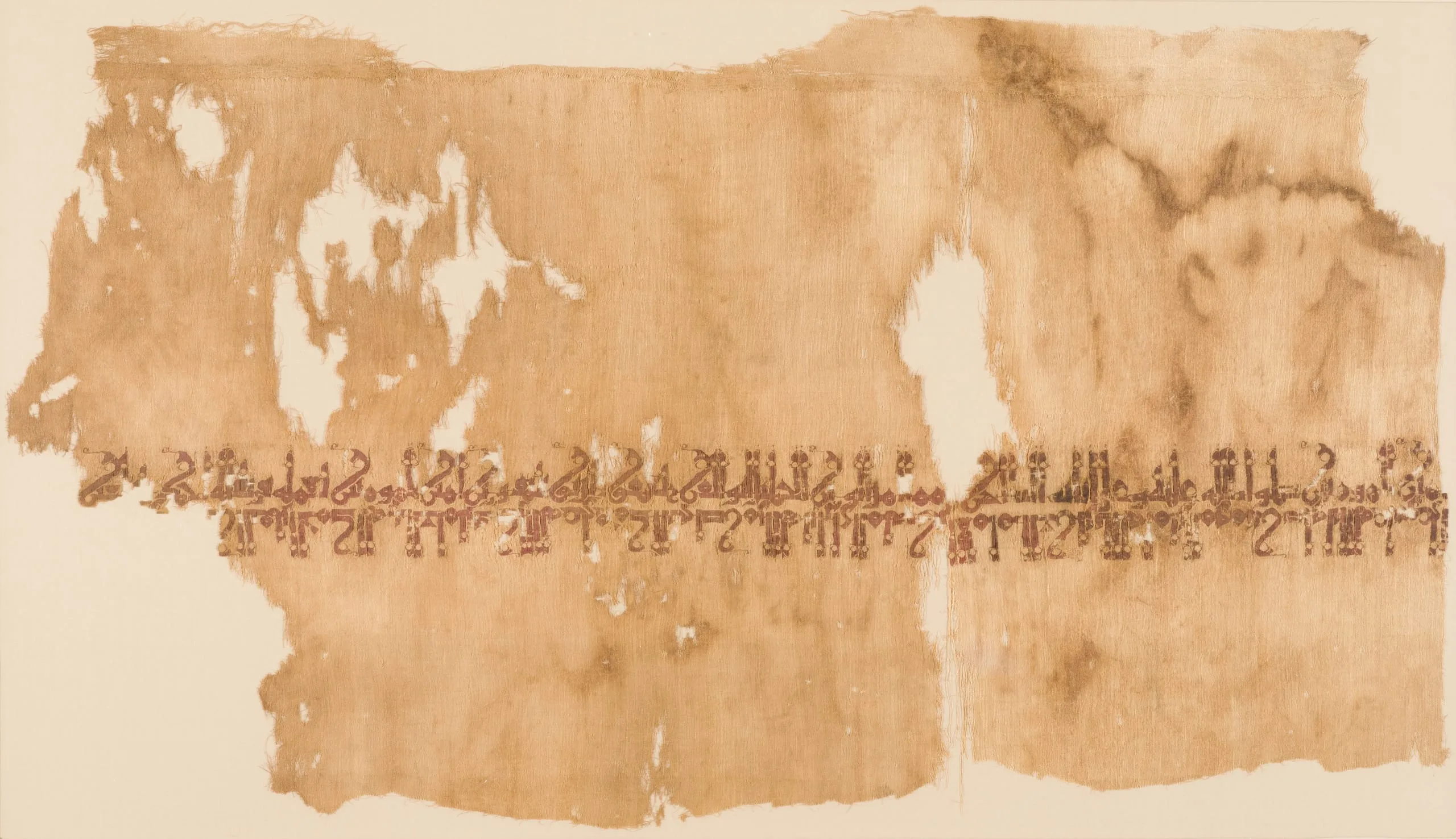
Inscribed Textile (Tiraz) Fragment981/371 A.H.

On view:
Geffen Galleries, Art of the Word, Word as Art
Fragment of aged textile or papyrus in honey-tan tones with two rows of reddish-brown cursive script in a non-Latin script across the center, with large areas of loss and torn edges
Papyrus fragment, horizontal strip with two lines of Arabic script in dark reddish-brown ink on aged, cream-colored surface with worn and torn edges.
Fragment of aged linen textile, heavily stained and degraded with large losses, featuring two horizontal lines of Arabic script in dark reddish-brown ink across the center.
Textile fragment with two horizontal bands of Arabic script woven in dark reddish-brown on undyed linen ground, with frayed edges visible along the bottom.
Title
Inscribed Textile (Tiraz) Fragment
Place Made
Egypt
Date Made
981/371 A.H.
Period
Fatimid (909-1171)
Medium
Linen plain weave with linen-warp and silk-weft tapestry weave
Dimensions
Textile: 15 1/2 × 27 1/8 in. (39.37 × 68.9 cm) Frame: 19 5/8 × 31 5/8 × 1 7/8 in. (49.85 × 80.33 × 4.76 cm)
Credit Line
The Madina Collection of Islamic Art, gift of Camilla Chandler Frost
Accession Number
M.2002.1.30
Classification
Textiles
Collecting Area
Costume and Textiles
Curatorial Notes

Textiles from the first centuries of the Islamic era survive mainly in the form of fragments, including tiraz, with their characteristic embroidered or woven Arabic inscriptions supplying the name and titles of the ruler. Tiraz textiles were produced in factories, both private and public, and were the exclusive preserve of the caliph. The reigning monarch would gift such cloths, or more often robes of honor bearing inscriptions on the sleeves of the garment, to members of his court.

Due to the fragmentary state of this tiraz, the inscription is incomplete but fortunately preserves much key historical information. The text is typically rendered in the kufic script and is divided into two lines written opposite one another: “Praise to God, Lord of the Worlds, may God bless Muhammad the Prophet. Assistance [from God] to Nizar Abu Mansur, the Imam al-Aziz billah, Commander of the Faithful, God’s blessing upon him and upon [his pure ancestors]. From what was ordered by the respectable vizier Abu’l-Faraj Ya‘qub ibn Yusuf [ibn Killis], vizier of the Commander of the Faithful, to be made in the year [three hundred] seventy-one.”

The Fatimid caliph named here is al-‘Aziz (r. 975−96). His vizier, or chief minister, Ibn Killis (served 977−90) was of Jewish origin, reflecting the ecumenical nature of Fatimid society. He was renowned for the financial reforms that helped bring enormous prosperity to Egypt as well as to himself.

Selected Bibliography
  • Komaroff, Linda. Islamic Art at the Los Angeles County Museum of Art. Los Angeles: Museum Associates, 2005.
  • Komaroff, Linda. Gift Tradition in Islamic Art. Los Angeles: Los Angeles County Museum of Art, 2012.
  • Komaroff, Linda. Gifts of the Sultan: the Arts of Giving at the Islamic Courts. Los Angeles: Los Angeles County Museum of Art, 2011.
  • Lo Terrenal y lo Divino: Arte Islámico siglos VII al XIX Colección del Museo de Arte del Condado de Los Ángeles. Santiago: Centro Cultural La Moneda, 2015.