LACMA

ShopMembershipMyLACMATickets
LACMA
Los Angeles County Museum of Art
5905 Wilshire Blvd.
Los Angeles, CA 90036
info@lacma.org
(323) 857-6000
Sign up to receive emails
Subscribe
© Museum Associates 2025

Museum Hours

Monday

11 am–6 pm

Tuesday

11 am–6 pm

Wednesday

Closed

Thursday

11 am–6 pm

Friday

11 am–8 pm

Saturday

10 am–7 pm

Sunday

10 am–7 pm


  • About LACMA
  • Jobs
  • Building LACMA
  • Host An Event
  • Unframed
  • Press
  • FAQs
  • Log in to MyLACMA
  • Privacy Policy
© Museum Associates 2025
Collections

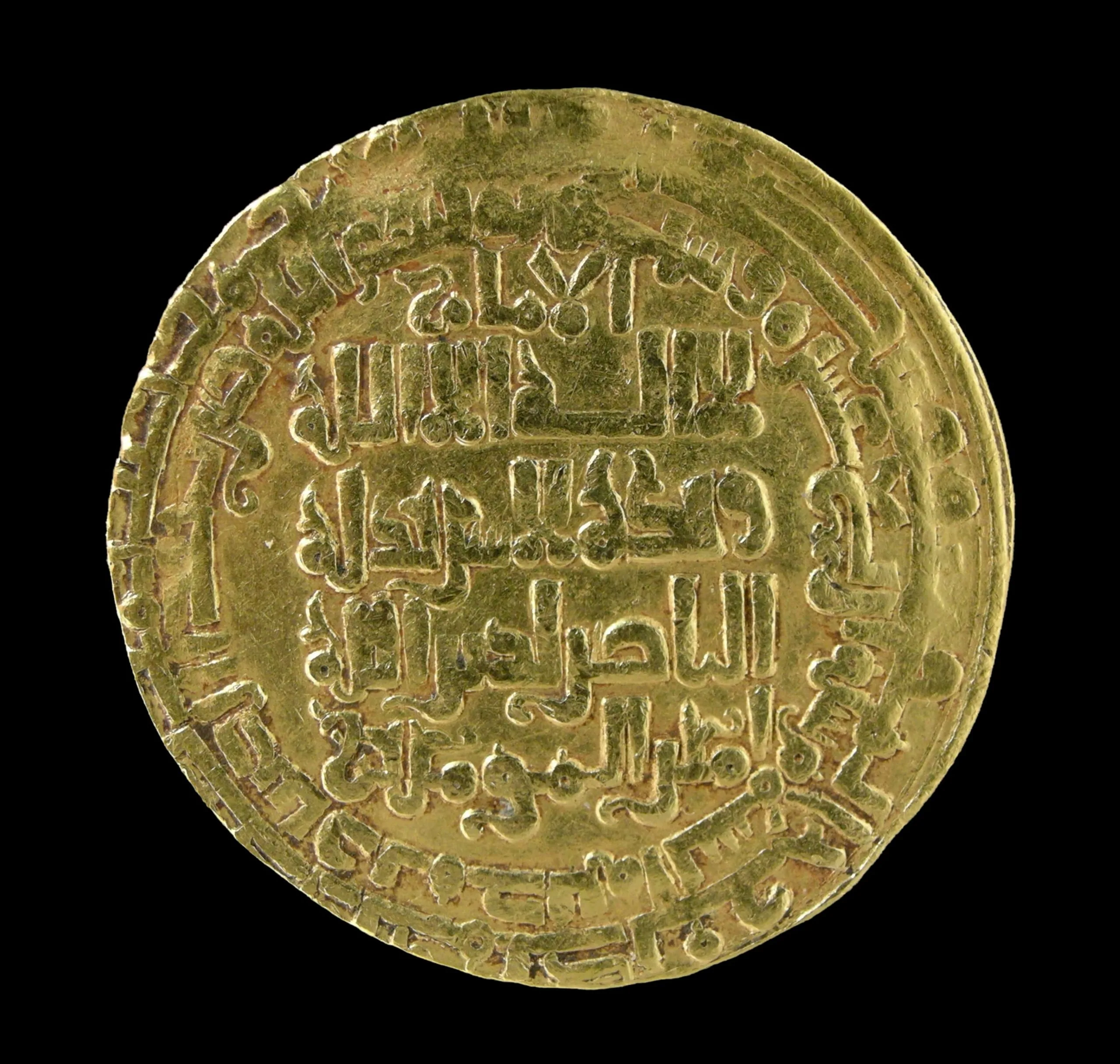
Dinar614 A.H.; 1217

Not on view
Gold Islamic coin with raised Arabic inscriptions arranged in stacked central lines and circular border bands, worn surface with irregular rim, against black background
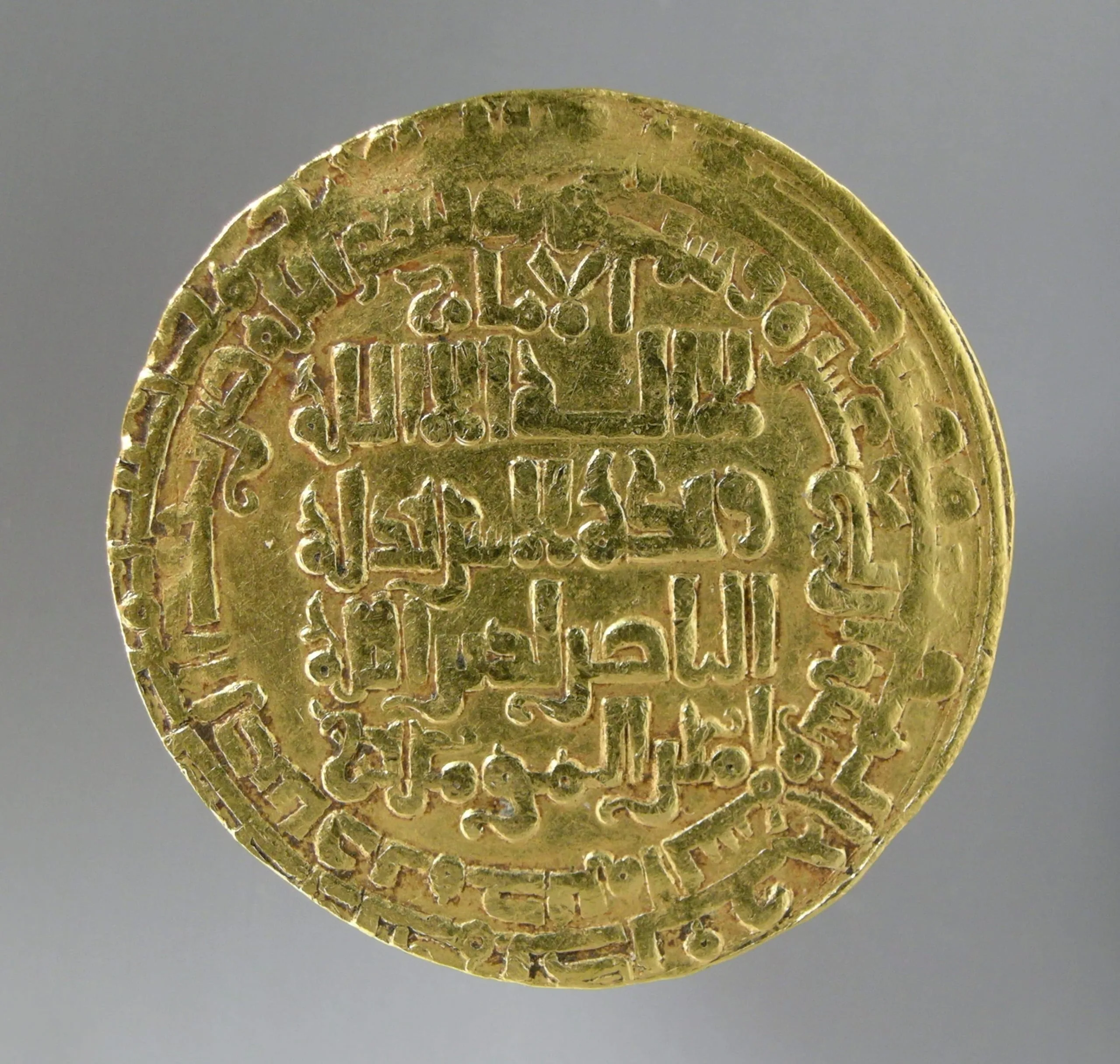
Gold coin with multiple concentric bands of raised Arabic script covering the entire face, with a central field of several lines of text surrounded by circular marginal inscriptions.
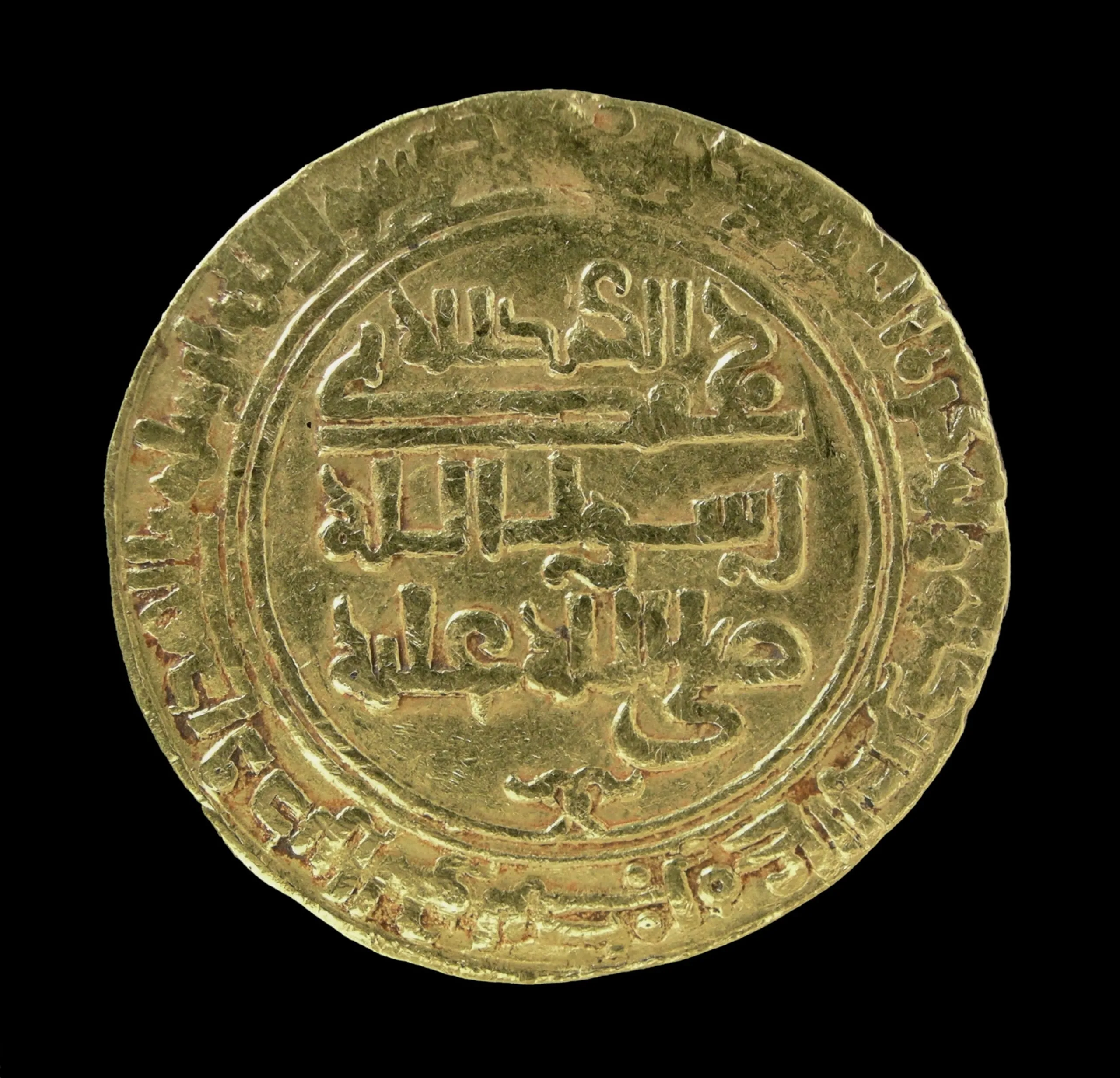
Gold coin with raised Arabic script arranged in concentric circles; central field contains multiple lines of Arabic inscription within a circular border, with a continuous Arabic legend around the outer margin. Slightly worn surface with reddish patina visible at edges.
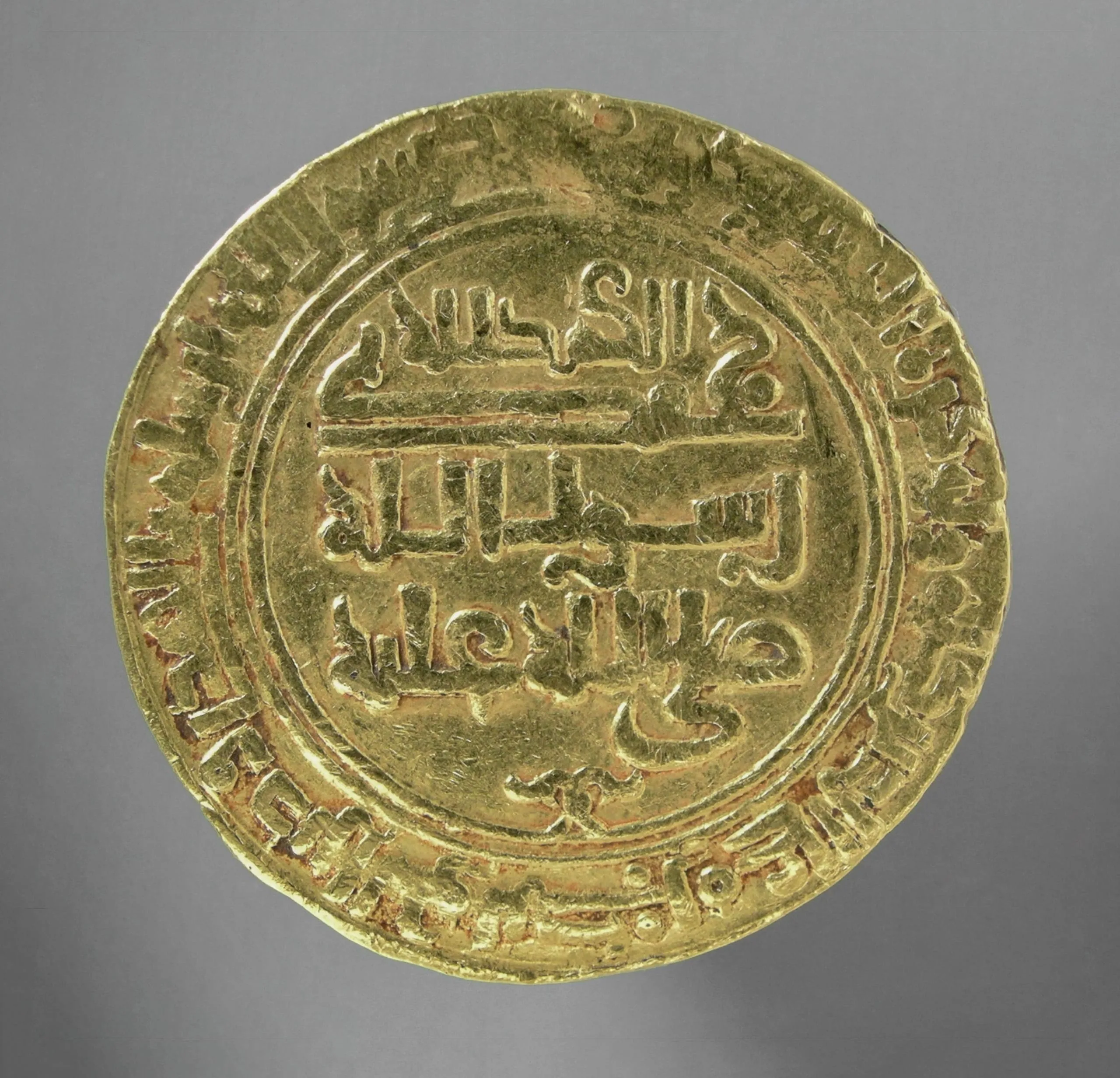
Gold dinar coin with raised Arabic script arranged in concentric bands around a central field of multiple inscription lines, against a gray background.
Title
Dinar
Place Made
Iraq, Baghdad
Date Made
614 A.H.; 1217
Period
'Abbasid (730-1258)
Medium
Gold
Dimensions
Diameter (Diameter): 1 3/16 in. (3.0163 cm) Weight: 0.34 oz. (9.5 g)
Credit Line
The Madina Collection of Islamic Art, gift of Camilla Chandler Frost
Accession Number
M.2002.1.405
Classification
Tools and Equipment
Collecting Area
Art of the Middle East: Islamic
Curatorial Notes

After a reform carried out at the end of the seventh century, coins issued by Muslim rulers came to bear the trademark design of Islamic coinage: Arabic inscriptions, which generally included the name of the ruler, the date or place of issue, and the shahada, or profession of faith. Gold coins such as this example were not for daily use but were instead reserved for large transactions such as paying taxes or tributes. The humbler and more common copper coins, known as fals, were used for everyday commerce and trade. Minted in Madinat al-Salam (Baghdad) in 614, the inscription on this coin reads, "In the name of caliph al-Nāṣir [li-Dīnillāh Amīr al-Mu’minīn (1180–1225)]."

Selected Bibliography
  • Komaroff, Linda. Beauty and Identity: Islamic Art from the Los Angeles County Museum of Art. Los Angeles: Los Angeles County Museum of Art, 2016.