LACMA

ShopMembershipMyLACMATickets
LACMA
Los Angeles County Museum of Art
5905 Wilshire Blvd.
Los Angeles, CA 90036
info@lacma.org
(323) 857-6000
Sign up to receive emails
Subscribe
© Museum Associates 2026
  • About LACMA
  • Jobs
  • Building LACMA
  • Host An Event
  • Unframed
  • Press
  • FAQs
  • Log in to MyLACMA
  • Privacy Policy
© Museum Associates 2026
Collections

Bread Stamp8th-9th century

On view:
Geffen Galleries, Islamic Art and Late Antiquity
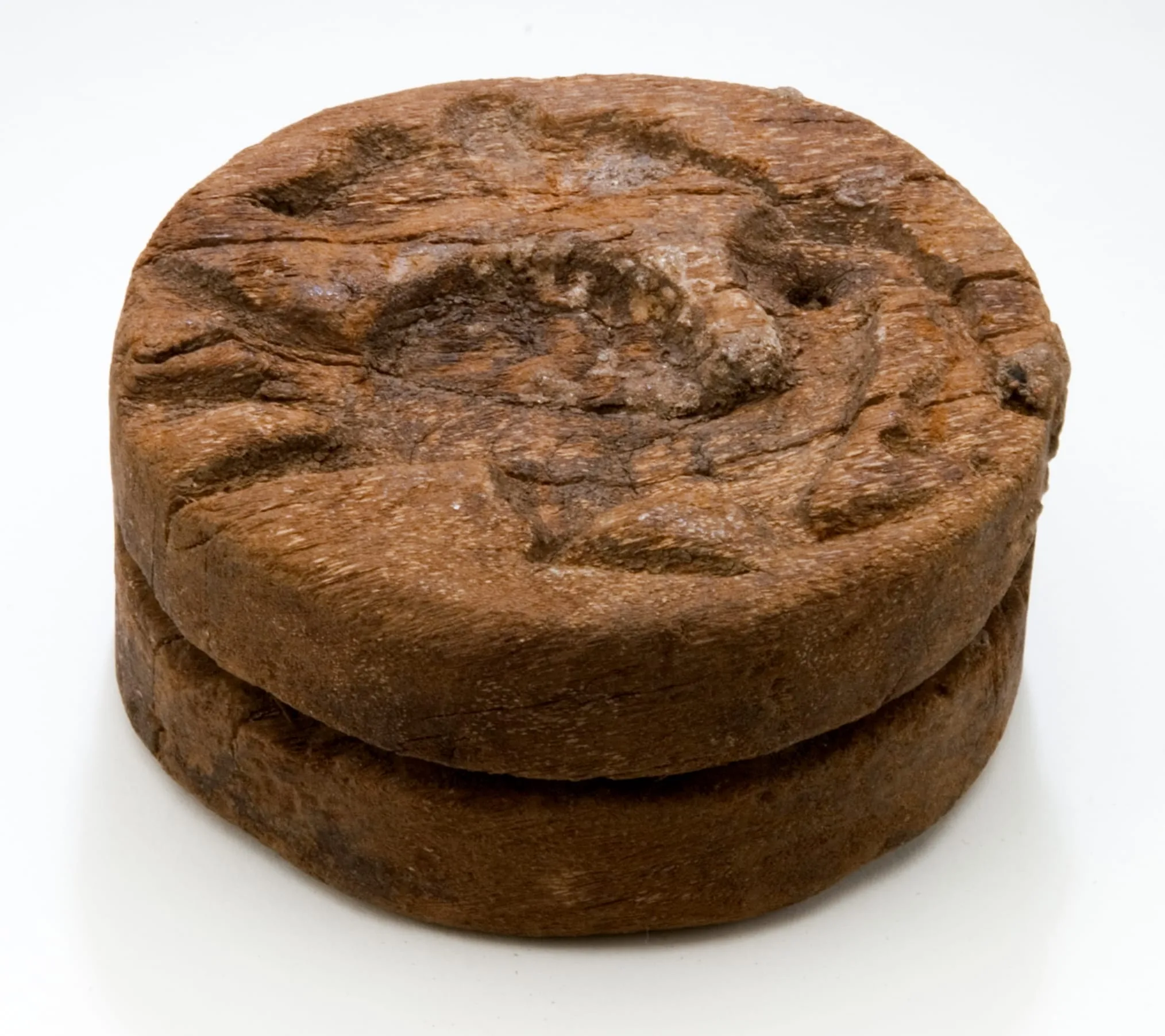
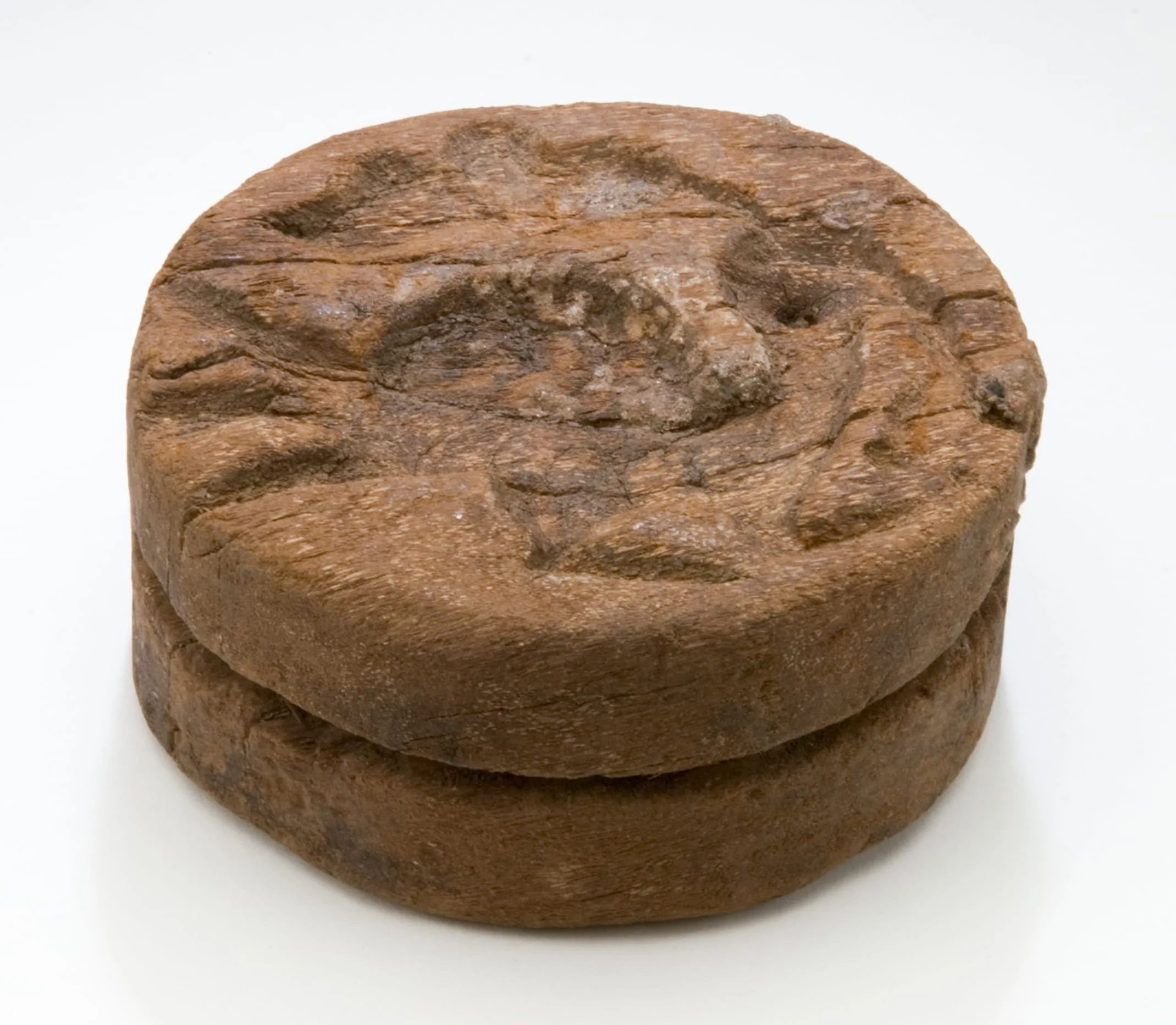
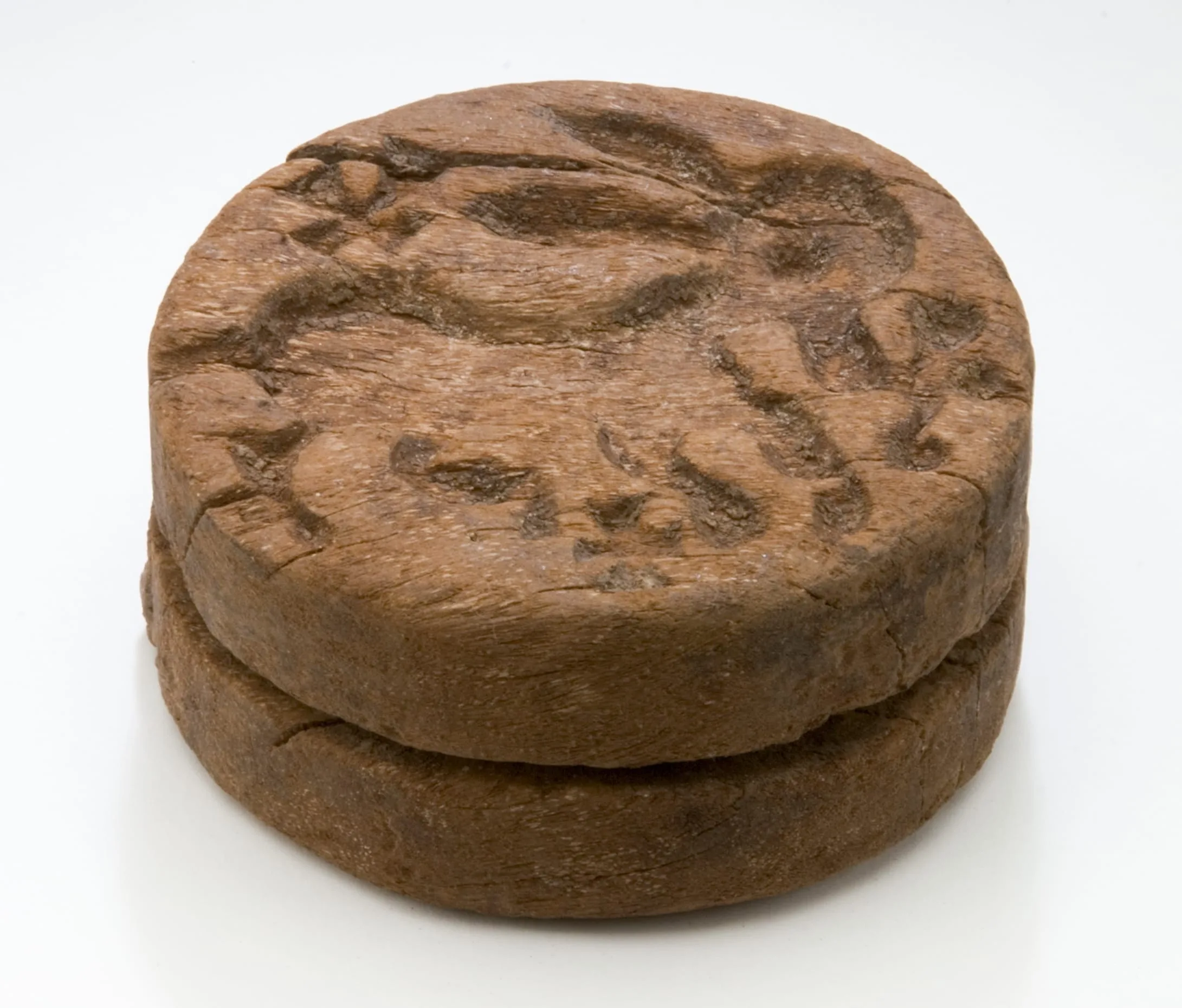
Small cylindrical object made of two stacked discs in chestnut brown, with a rough, pitted top surface and radiating grooves
Circular wooden box with lid, reddish-brown aged wood with rough, weathered texture; the lid features a shallow carved or worn central depression with irregular relief details.
Circular wooden box with lid, composed of two flat cylindrical discs; the top surface bears shallow carved relief decoration with worn, weathered grain throughout.

Unknown, Bread Stamp, 8th-9th century, Los Angeles County Museum of Art, The Madina Collection of Islamic Art, gift of Camilla Chandler Frost, photo © Museum Associates/LACMA

Title
Bread Stamp
Place Made
Egypt
Date Made
8th-9th century
Medium
Wood, carved
Dimensions
Height: 1 3/8 in. (3.49 cm); Diameter: 3 in. (7.62 cm)
Credit Line
The Madina Collection of Islamic Art, gift of Camilla Chandler Frost
Accession Number
M.2002.1.754
Classification
Wood
Collecting Area
Art of the Middle East: Islamic
Curatorial Notes

The long-standing practice of stamping bread possibly dates to the Neolithic period. Stamped words and symbols were used for a variety of ritualistic, commercial, and practical purposes, including to create votive offerings, to brand a loaf with the maker’s name, and to help to identify one’s cooked loaves in a communal oven. Despite their ephemerality, some stamped loaves of bread even survive from 79 CE, found in ovens at Herculaneum and Pompeii, where they were carbonized by the ash that erupted from Mount Vesuvius. Stamps were made from metal, clay, and wood, as in this double-sided example. It is decorated with a bird on one side and a hare and crosses on the other, the latter of which suggests it was made for a Christian, most likely in a Coptic context. Hand-stamped bread is still used today in the Coptic Orthodox Mass, where it is distributed to attendees as a blessing.

2024