The Mamluks, former Turkic-speaking military slaves who ruled Egypt and Syria from 1250 to 1517, were among the most formidable warriors of the late medieval period. A remarkable aspect of the dynasty they formed was their creation of a new, self-perpetuating military class of freed slave-soldiers that excluded the indigenous population. The Mamluks were prodigious patrons of the arts who took a special interest in building religious foundations, especially in the capital, Cairo, which they supplied with all manner of beautiful furnishings. Very little is preserved of their palatial architecture, although there is a wealth of surviving objects that must have been intended for such settings.
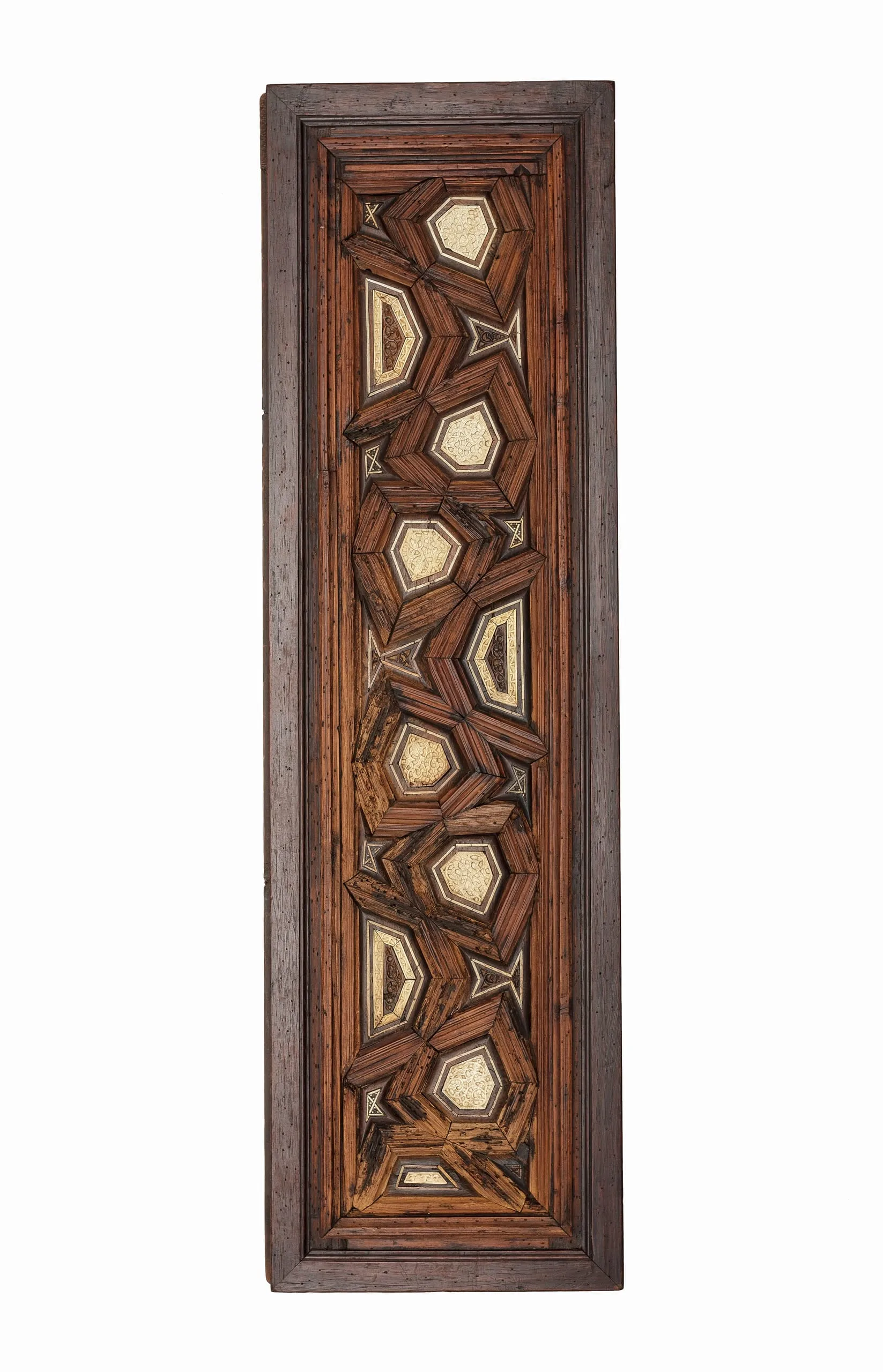
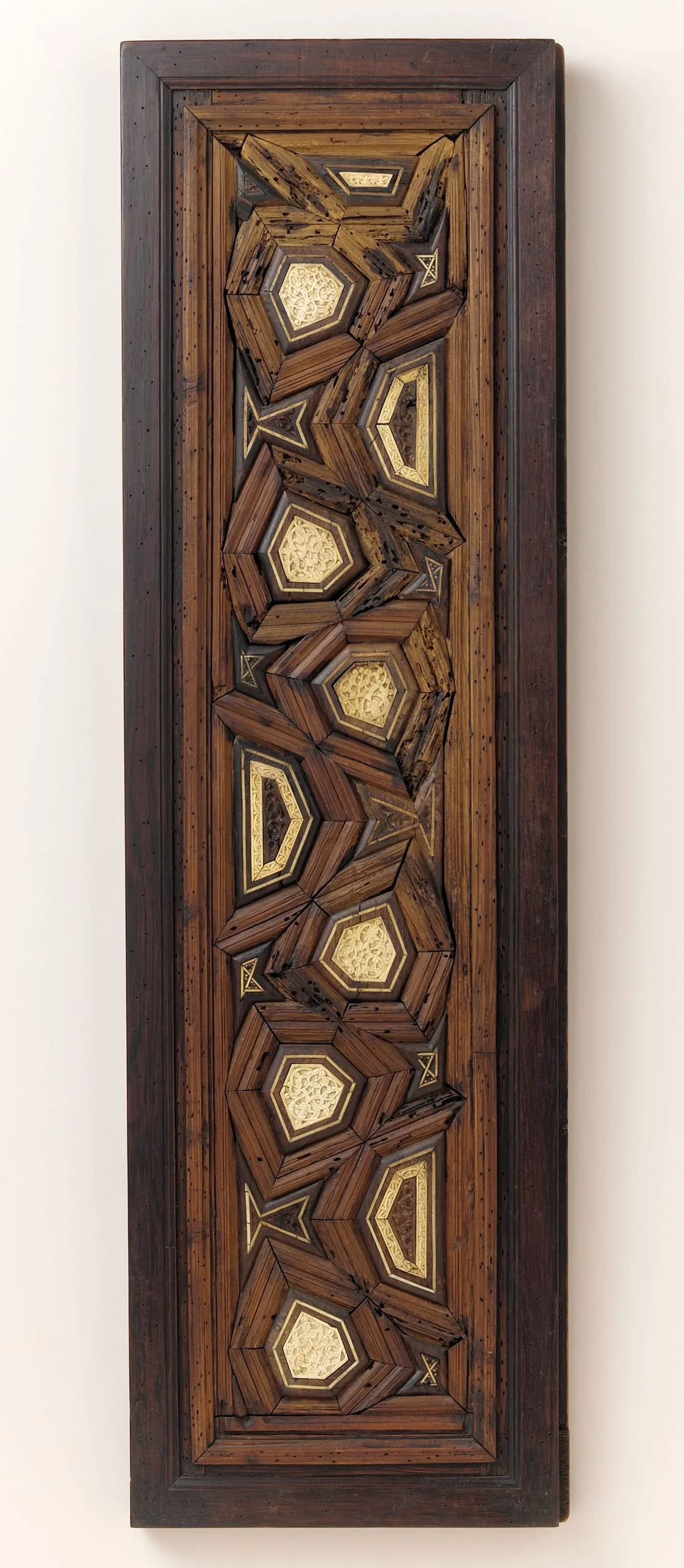
Ivory inlays were frequently combined with wood in the production of furniture and architectural fittings in Mamluk Egypt. This elaborate method of fabrication, which used costly ivory and rare woods like ebony, required that individual elements, often of minute size, be cut, carved with intricate motifs, and then carefully assembled like a mosaic to form a larger unit of generally geometric design. It is difficult to say exactly how the present door functioned, but most likely it was one of a pair, perhaps for a cupboard set into the wall, in either a religious or a domestic structure.
2025