- Title
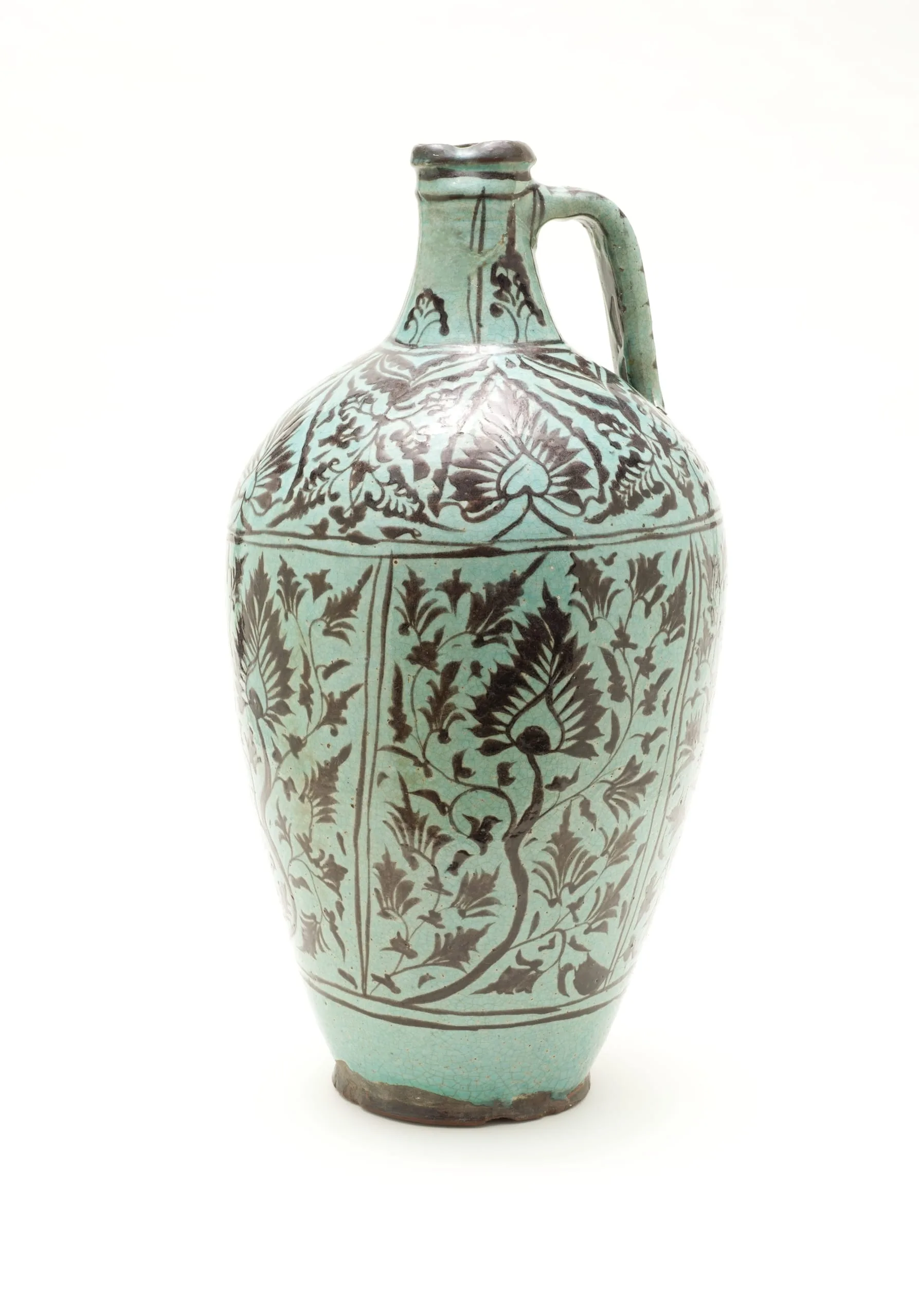
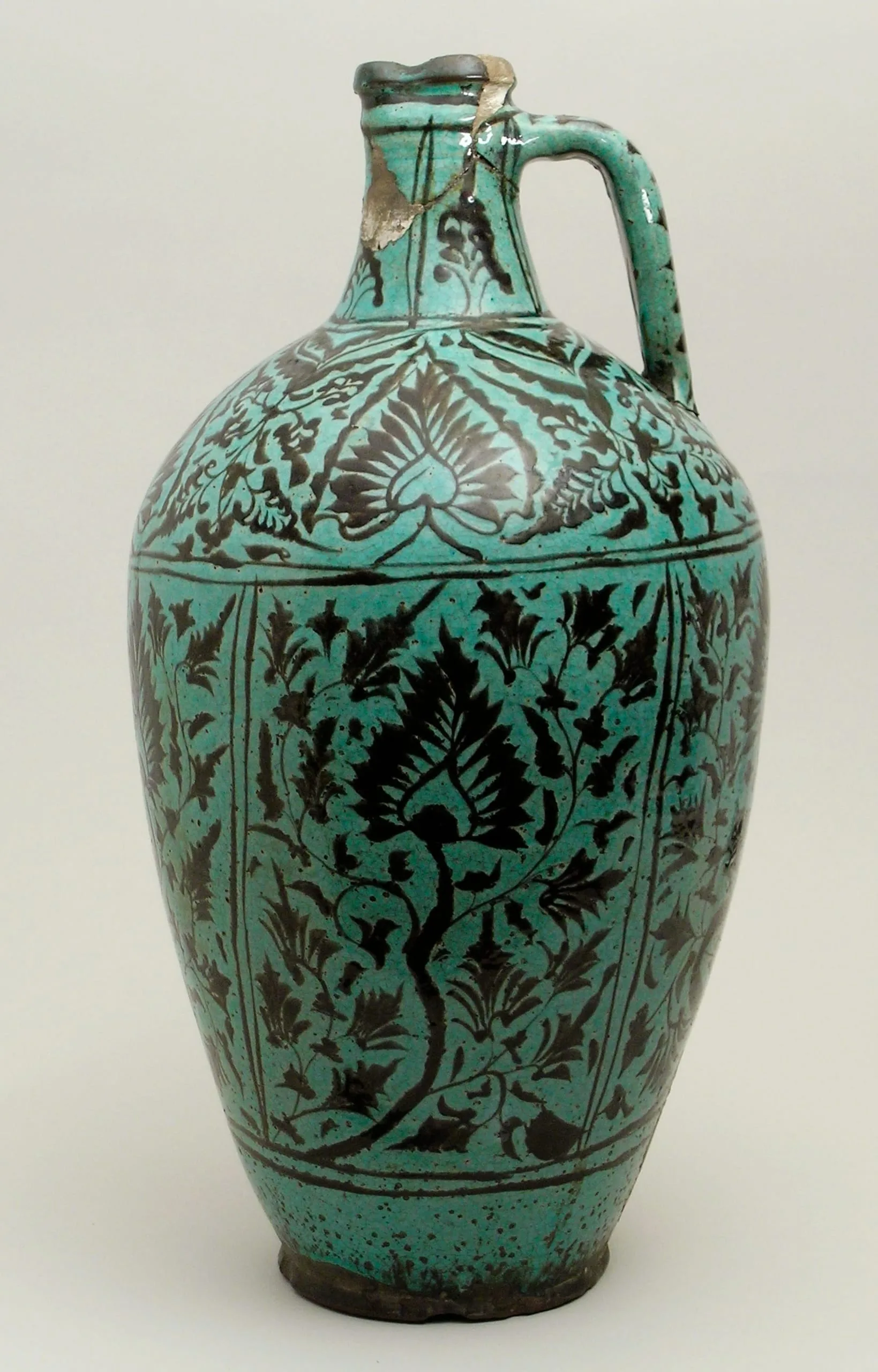
- Ewer
- Date Made
- late 15th - early 16th century
- Medium
- Earthenware with white slip, underglaze-painted
- Dimensions
- Diameter: 16 11/16 in. (42.38625 cm); Height: 19 7/8 x 10 in. (50.4825 x 25.4 cm)
- Accession Number
- M.2002.1.278
- Curatorial Notes
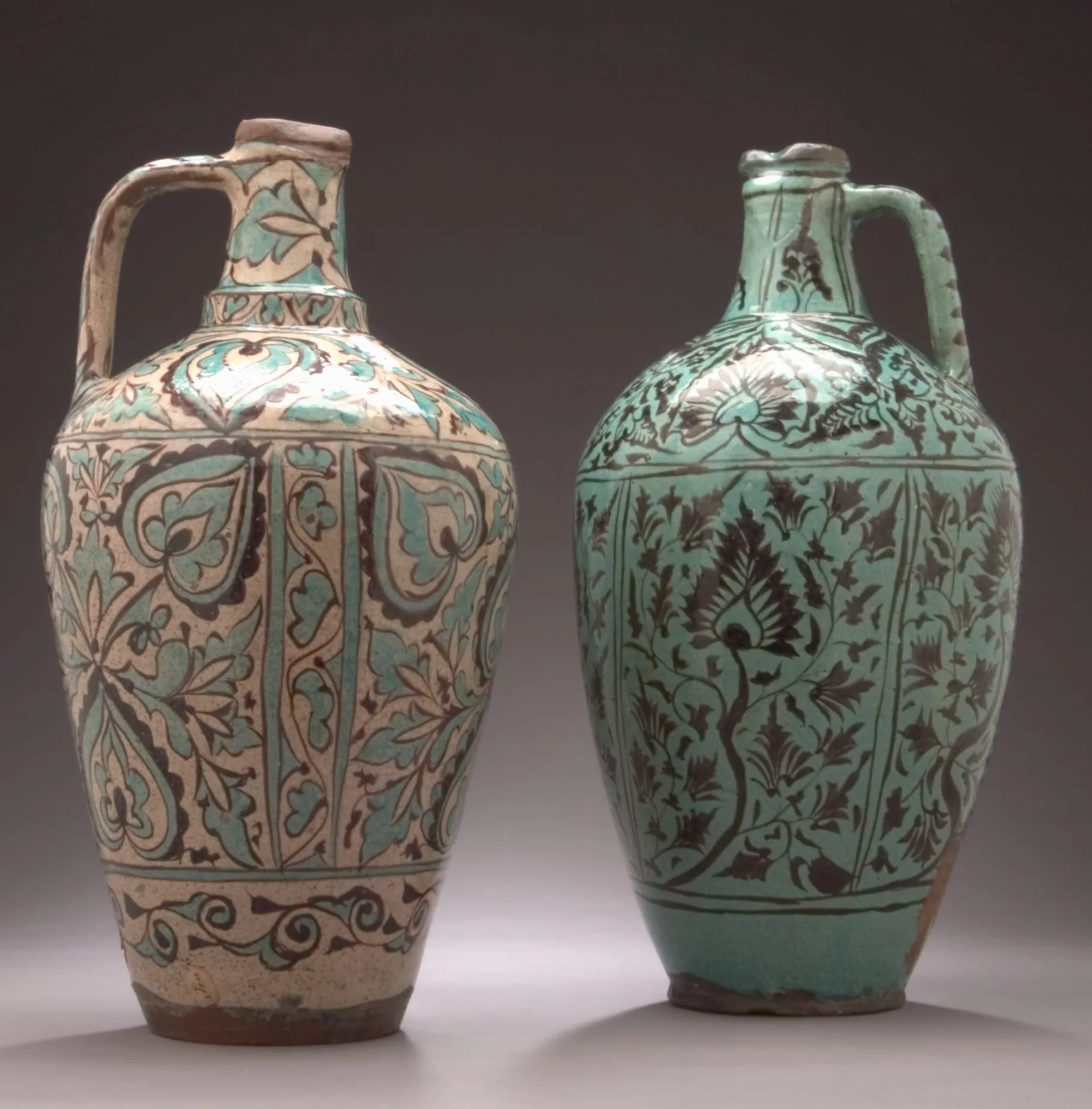
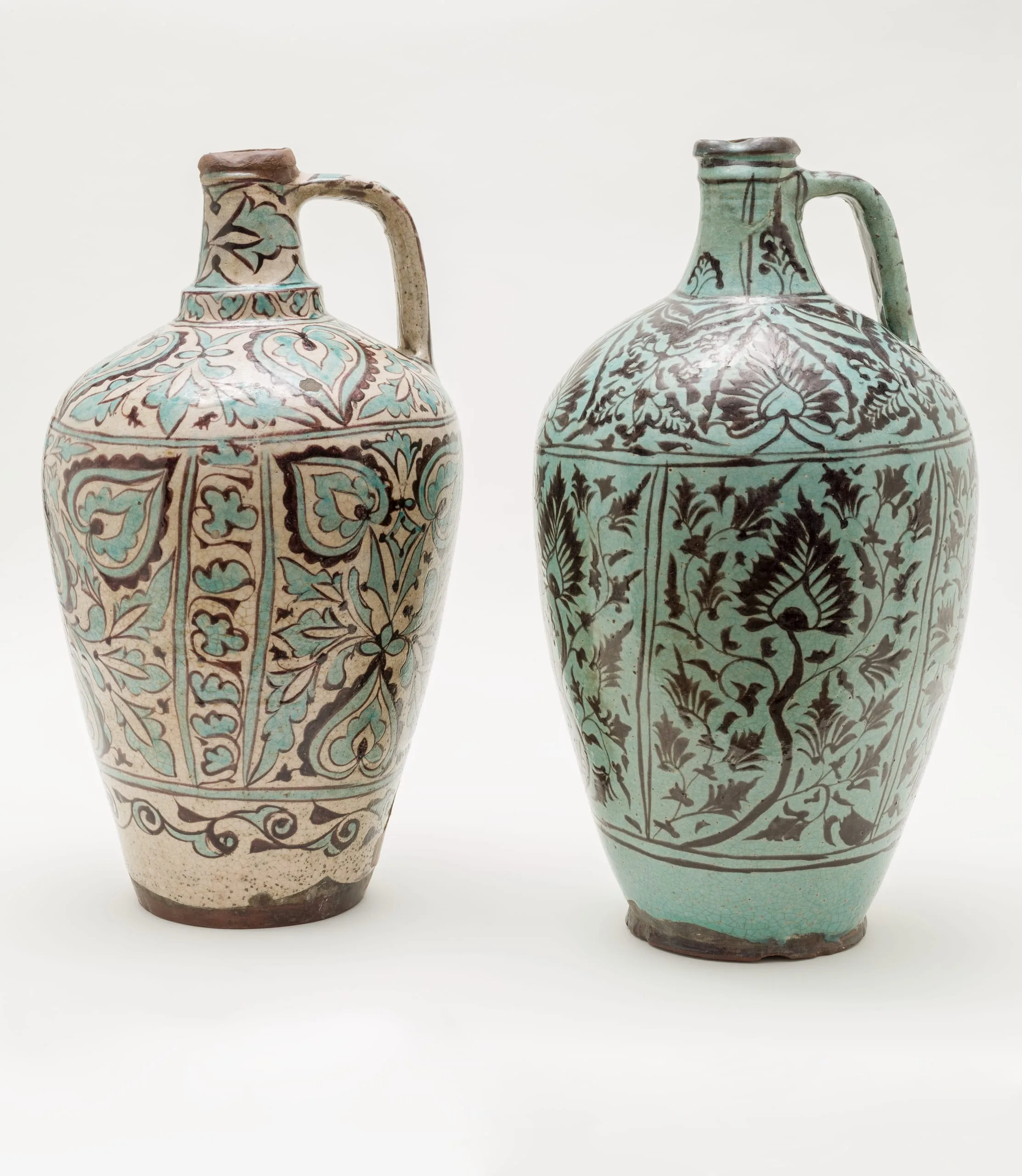
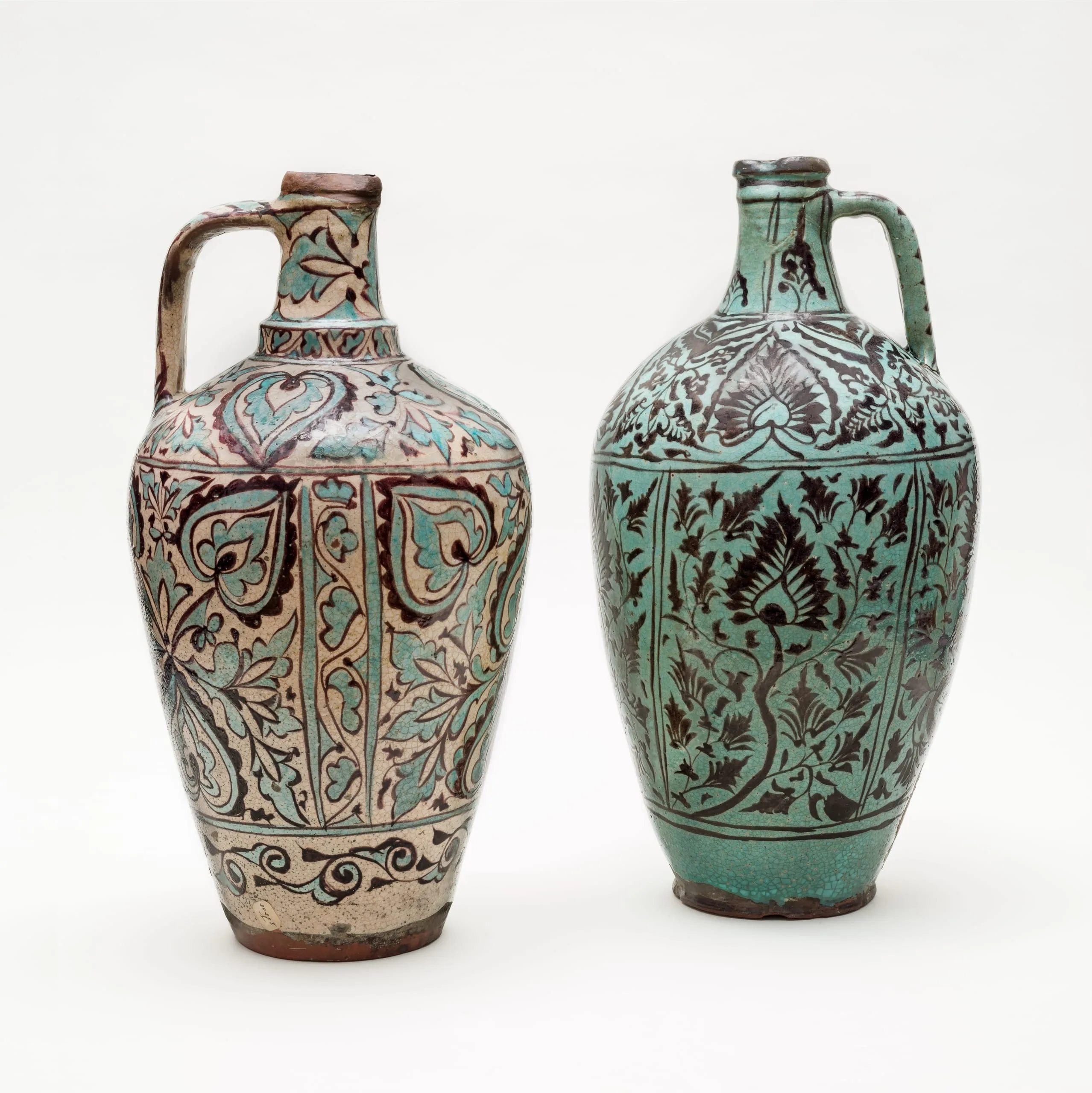
This glazed ceramic ewer and a related example (see M.2002.1.277) reflect some of the many changes that have taken place in the field of Islamic art history and perhaps also help to broaden our understanding of modern art. Both bear labels indicating that they were lent to the first great exhibition of Islamic art, held in Munich in 1910. It is now more than one hundred years later, but they have actually grown even older during that time. Ascribed to eighteenth-century Turkestan in the 1910 catalogue, these ewers can now be assigned to the late fifteenth or early sixteenth century. Among the many distinguished visitors to the Munich exhibition was the artist Henri Matisse (1869–1954), and it is easy to imagine that he may have preserved a visual memory of objects such as these ceramic ewers, whose colorful floral ornament is echoed in his works.
- Selected Bibliography
Sarre, Friedrich, ed. Die Ausstellung von Meisterwerken muhammedanischer Kunst in München, 1910. Munich: F. Bruckmann, 1912.
Lo Terrenal y lo Divino: Arte Islámico siglos VII al XIX Colección del Museo de Arte del Condado de Los Ángeles. Santiago: Centro Cultural La Moneda, 2015.
- Dercon, Chris, Leon Krempel and Avinoam Shalem, eds. The Future of Tradition, The Tradition of Future: 100 Years After the Exhibition Masterpieces of Muhammadan Art in Munich. Munich: Prestel, 2010.