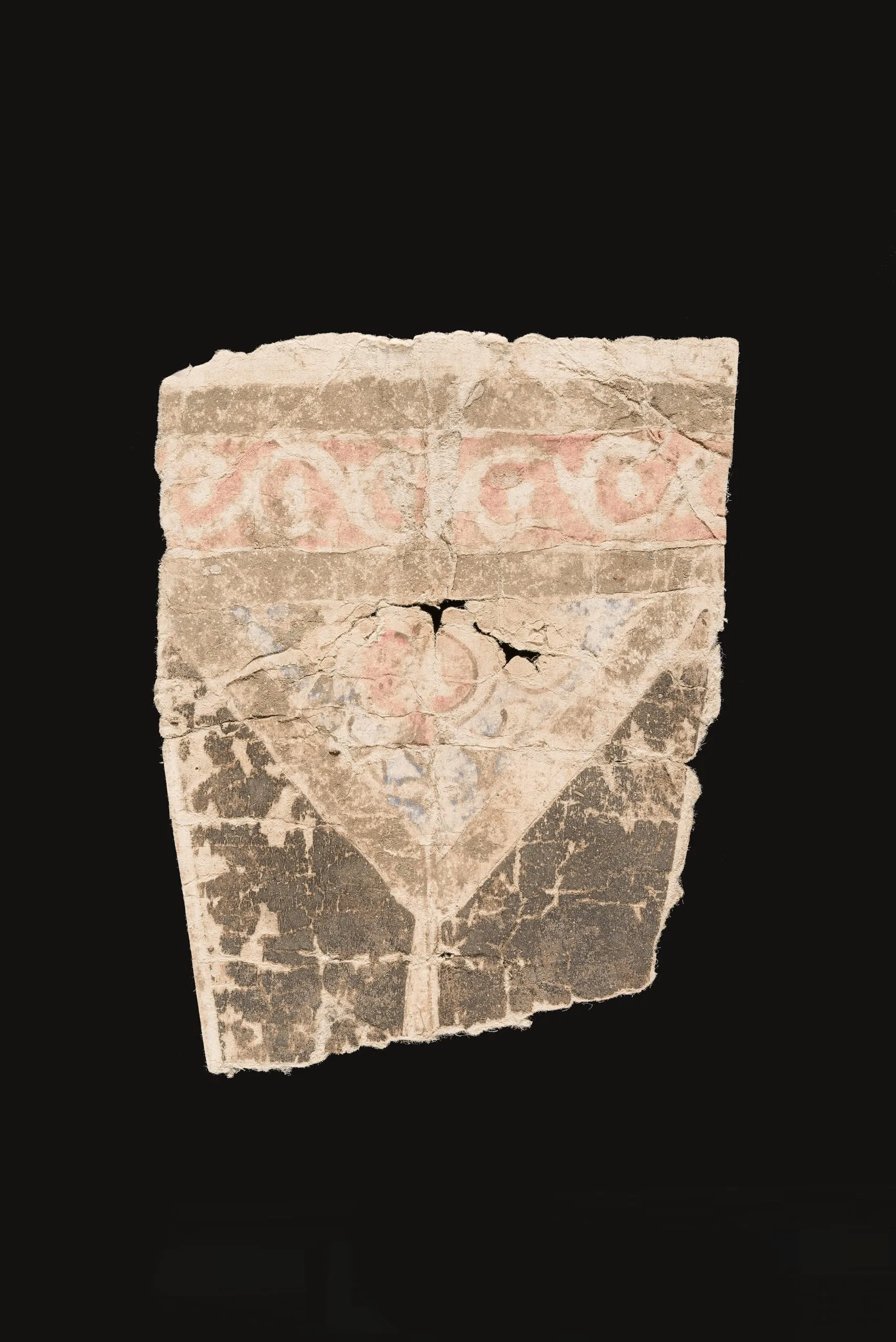
These three fragmentary paintings (also see M.2002.1.650 and M.2002.1.651) belong to a rare group of extant playing cards produced in Mamluk Egypt (1250-1517), representing the earliest such objects to survive from the Islamic world. Mamluk decks are remarkably similar to those used today, with fifty-two cards divided into four suits (cups, coins, swords, and polo sticks), each containing ten number cards and three "court" cards known as the king, governor, and deputy governor. Unlike their modern Western counterparts—the king, queen, and jack—Mamluk court cards do not feature figural imagery but are identified through a combination of symbols and label-like inscriptions.