The Mamluks, former Turkic-speaking military slaves who ruled Egypt and Syria from 1250 to 1517, were among the most formidable warriors of the late medieval period. A remarkable aspect of the dynasty they formed was their creation of a new, self-perpetuating military class of freed slave-soldiers that excluded the indigenous population. The Mamluks were prodigious patrons of the arts who took a special interest in building religious foundations, especially in the capital, Cairo, which they supplied with all manner of beautiful furnishings. Very little is preserved of their palatial architecture, although there is a wealth of surviving objects that must have been intended for such settings, as here.
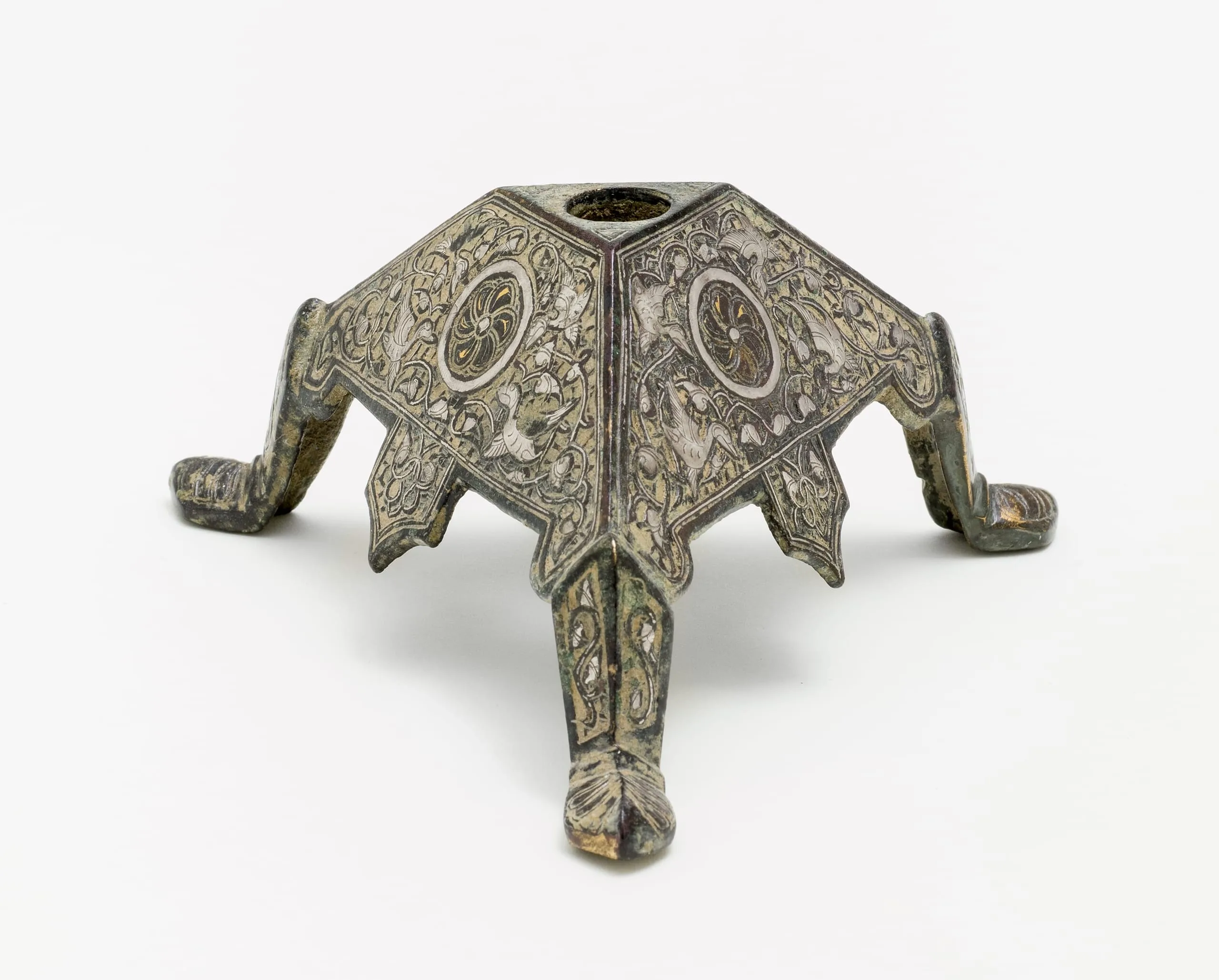
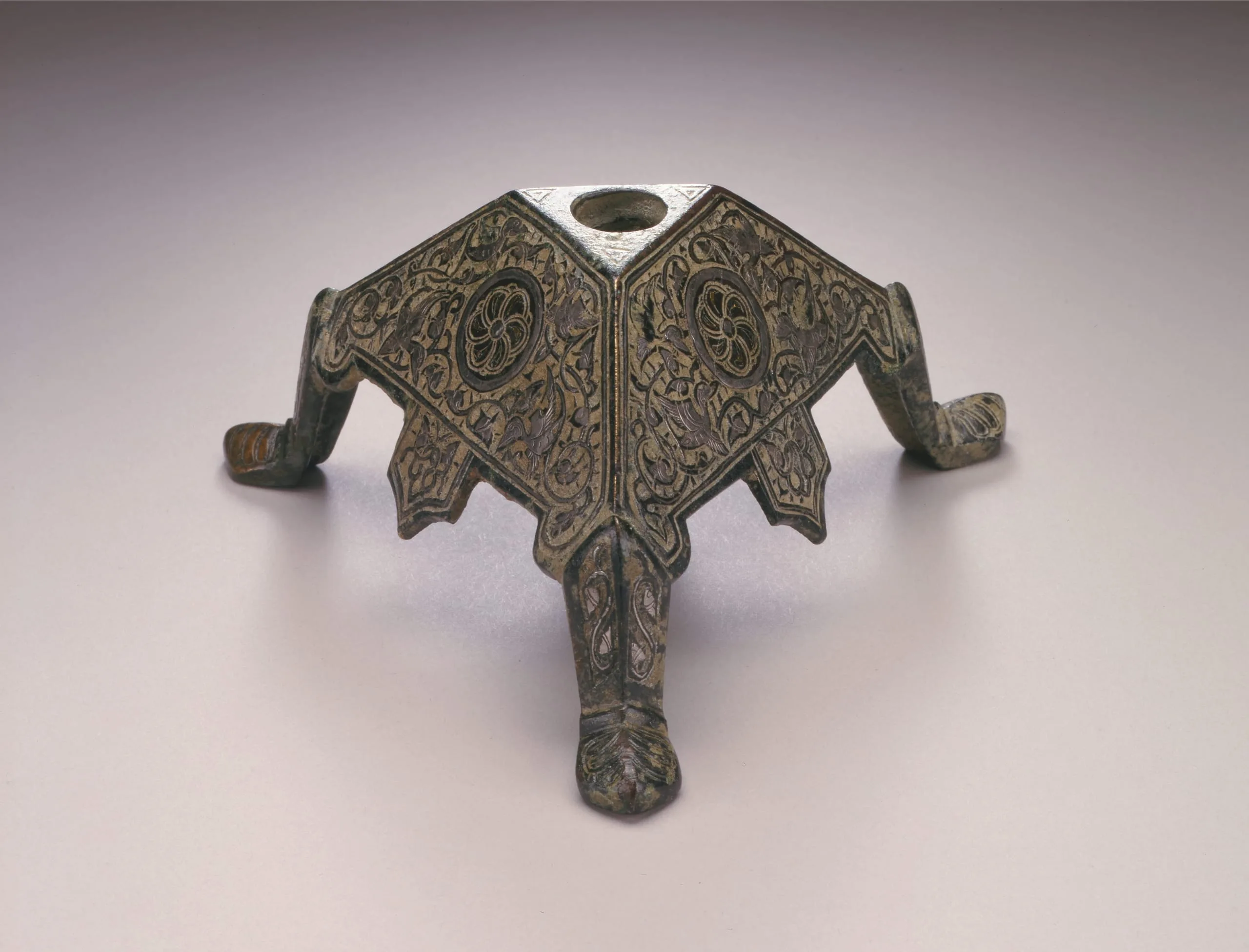
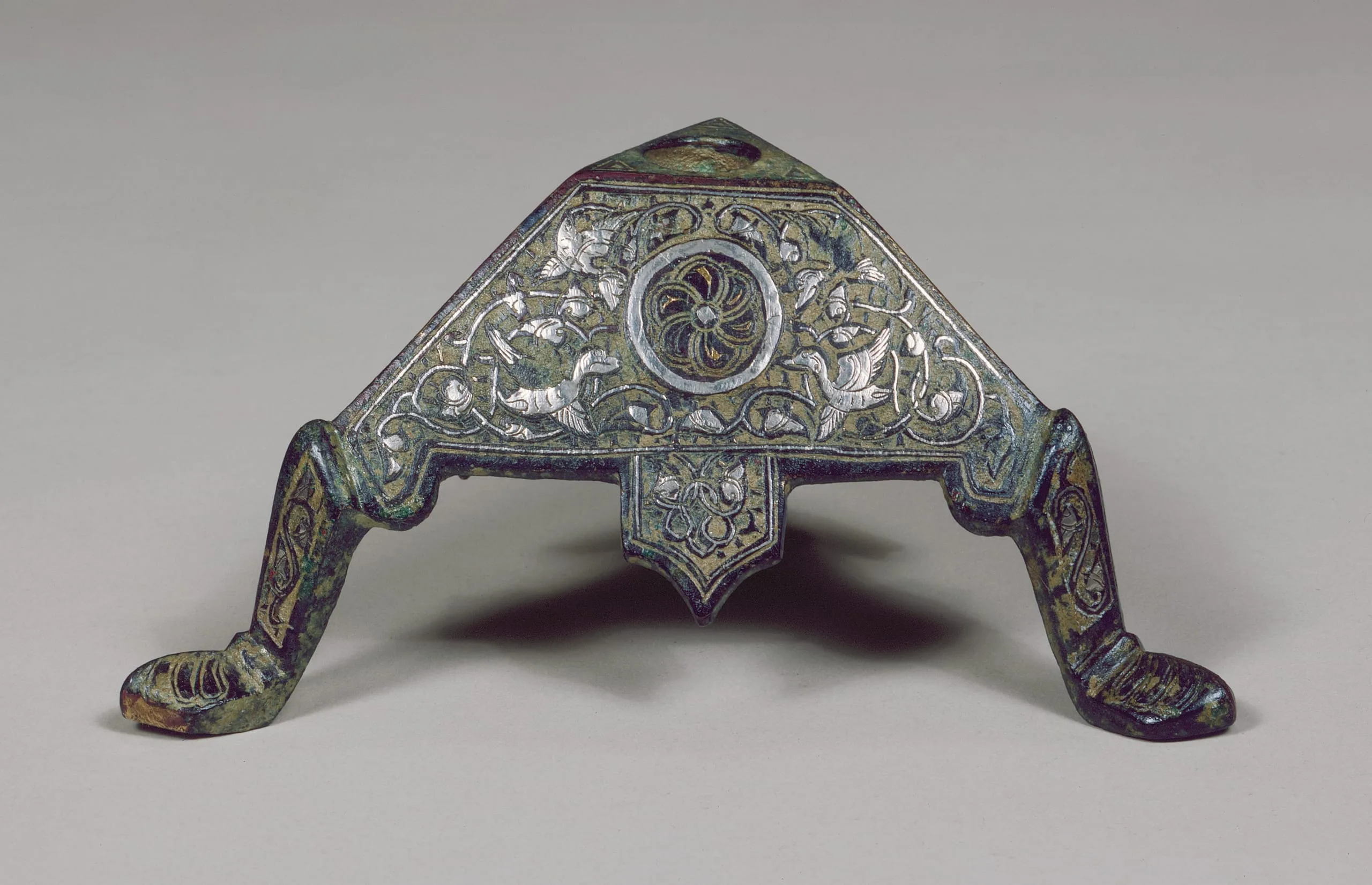
This charming brass candlestand, which lacks the columnar middle section and small tray with a shallow pin with which to affix the candle, was transformed into a luxury item by the extensive silver and gold inlay that covers it. Indeed, inlaid metalwork is one of the glories of Mamluk art. Here, the three pawlike feet that support the stand and the flying plump ducks on each of its three sides give it a playful quality suitable for an intimate setting, as suggested by its diminutive scale. A similar and more complete example in the Musée du Louvre, Paris, includes an inscription about its owner, revealing that such stands were commissioned by members of the Mamluk ruling elite.
2025