LACMA

ShopMembershipMyLACMATickets
LACMA
Los Angeles County Museum of Art
5905 Wilshire Blvd.
Los Angeles, CA 90036
info@lacma.org
(323) 857-6000
Sign up to receive emails
Subscribe
© Museum Associates 2025

Museum Hours

Monday

11 am–6 pm

Tuesday

11 am–6 pm

Wednesday

Closed

Thursday

11 am–6 pm

Friday

11 am–8 pm

Saturday

10 am–7 pm

Sunday

10 am–7 pm


  • About LACMA
  • Jobs
  • Building LACMA
  • Host An Event
  • Unframed
  • Press
  • FAQs
  • Log in to MyLACMA
  • Privacy Policy
© Museum Associates 2025
Collections

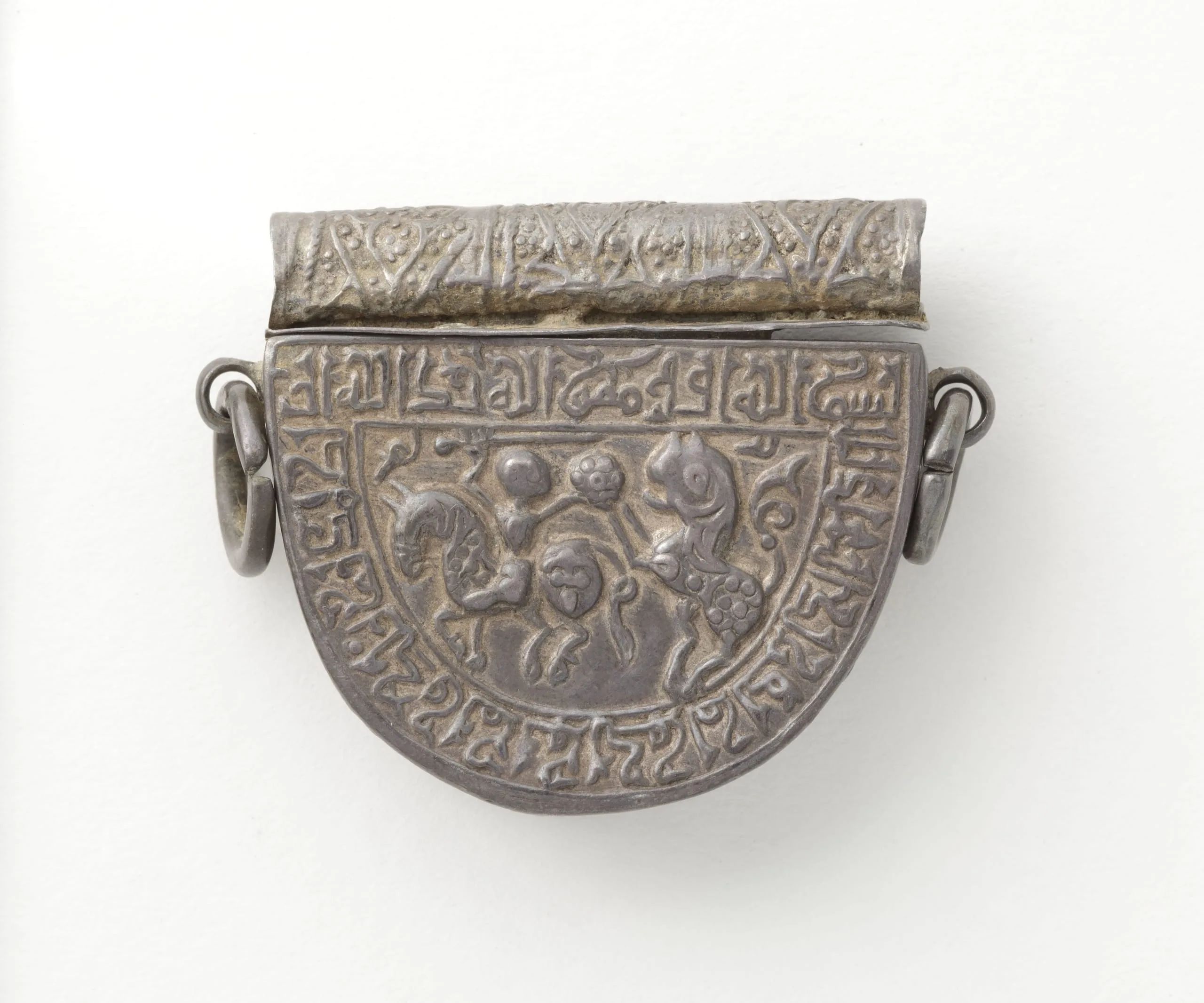
Amulet11th century

On view:
Geffen Galleries, Islamic Art and Late Antiquity
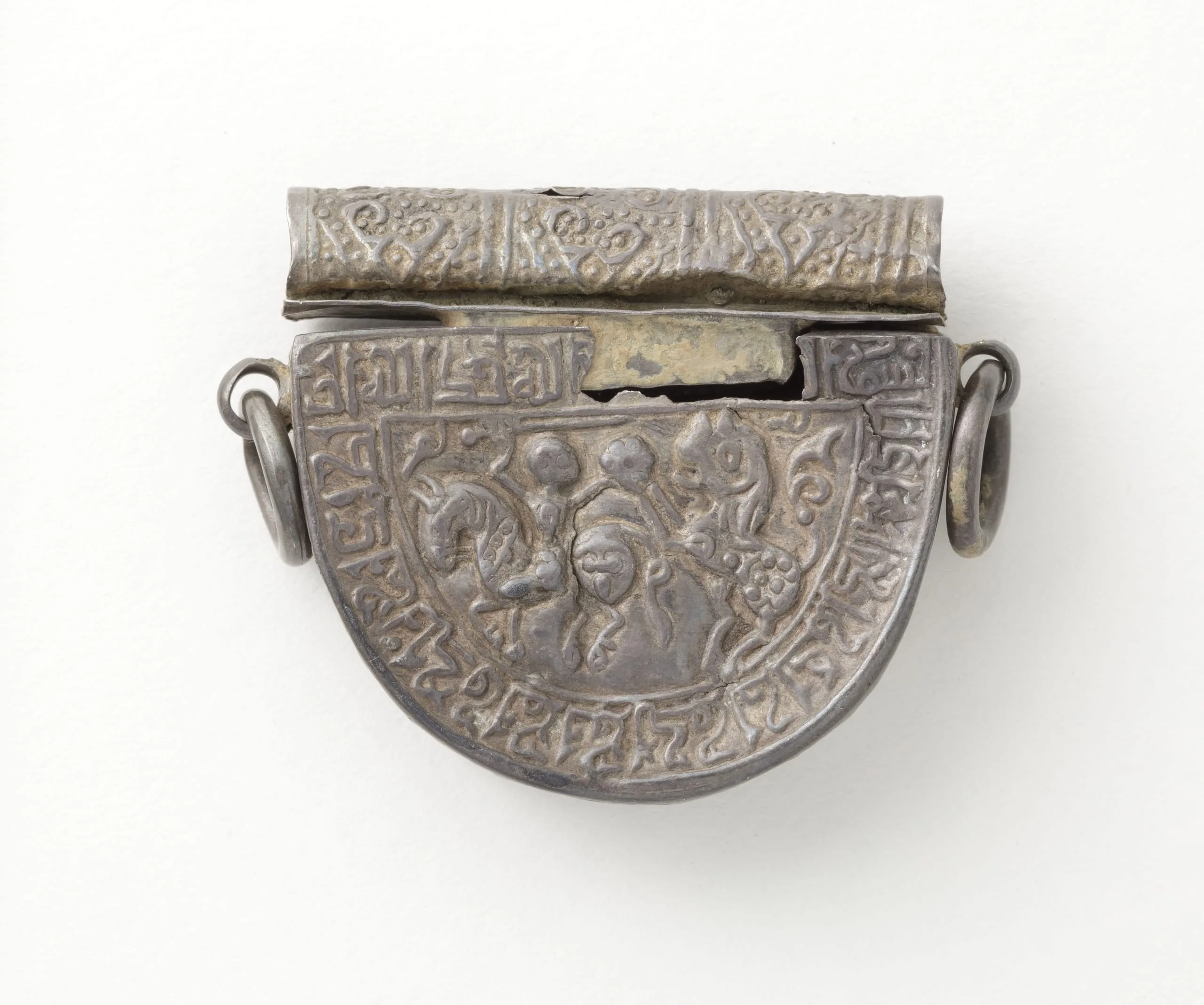
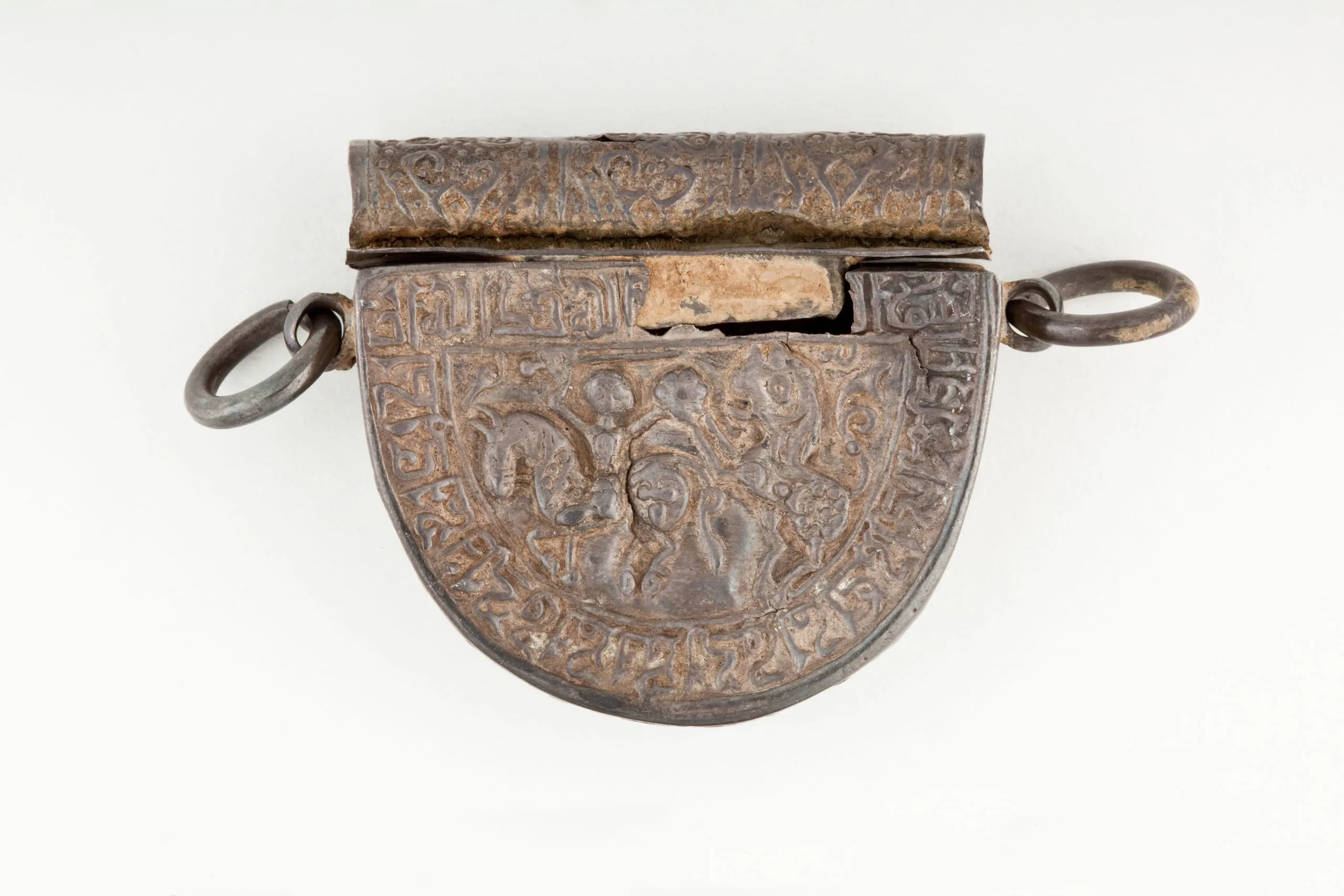
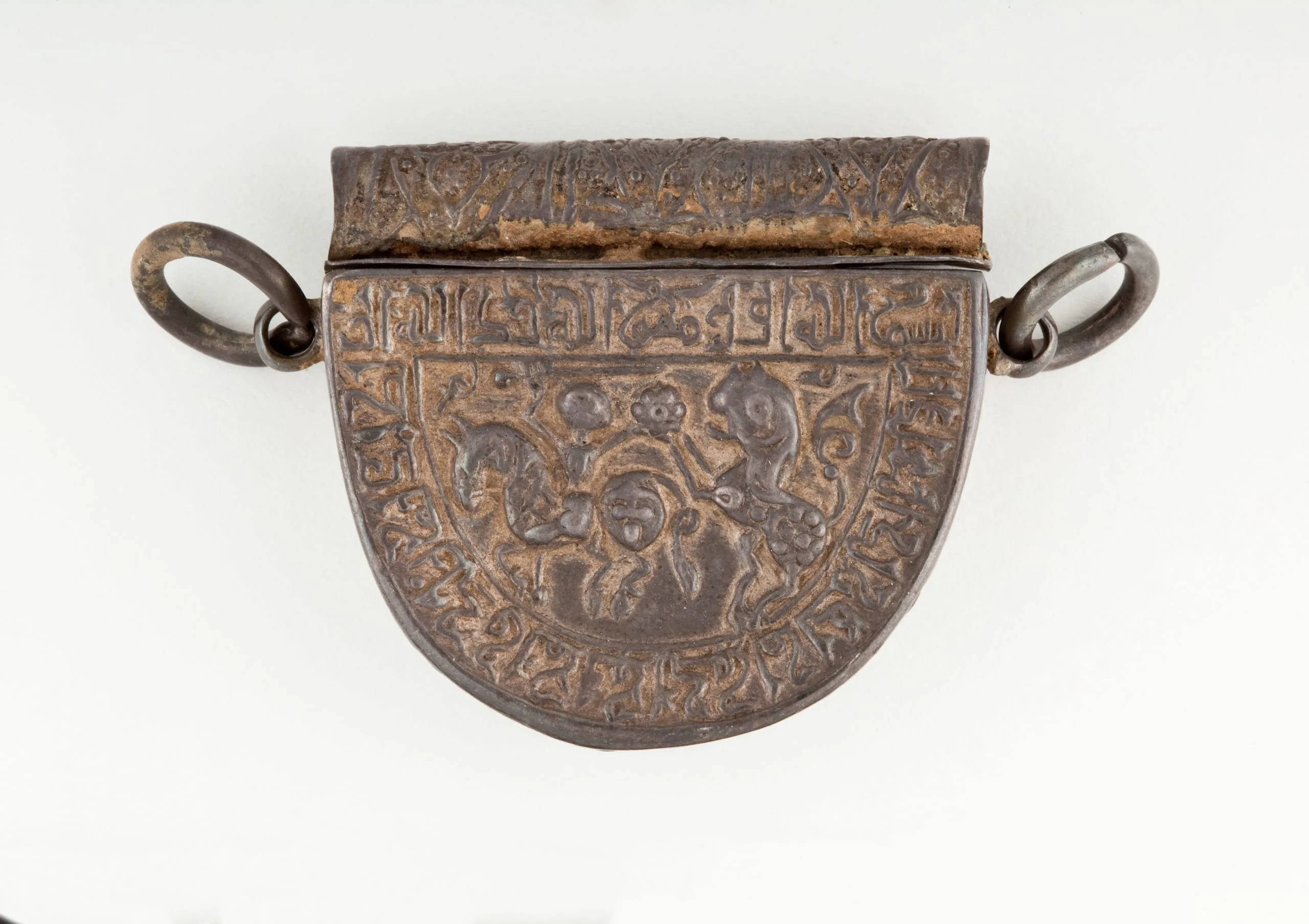
Small silver half-circle amulet box with raised Arabic script border, two suspension rings, and a hinged rectangular bar at top, decorated with relief animal figures in the center field
Silver metal amulet case, D-shaped with a hinged rectangular top bar and two side rings; front face decorated with repoussé animal figures in a central roundel, surrounded by a border of Arabic inscription in relief.
Small hinged metal box of D-shaped form with two iron suspension rings on either side; surface densely covered with cast or engraved figural scene at center and Arabic script borders, with dark patina and areas of corrosion.
Cast bronze amulet case with D-shaped body, two suspension rings at sides, and raised Arabic script along the top register above a central figural scene with human and animal forms within scrolling decoration.
Title
Amulet
Place Made
Iran
Date Made
11th century
Medium
Silver, cast
Dimensions
Height: 1 7/16 in. (3.65 cm); Width: 1 7/8 in. (4.76 cm)
Credit Line
The Madina Collection of Islamic Art, gift of Camilla Chandler Frost
Accession Number
M.2002.1.545a-b
Classification
Jewelry and Adornments
Collecting Area
Art of the Middle East: Islamic
Curatorial Notes

At the center of this cast-silver amulet, a lion attacks a warrior armed with sword and shield mounted on a caparisoned horse. Surrounding the scene is a verse from the beginning of chapter 112 of the Qur’an describing God as the Eternal Refuge. While it is unusual in Islamic art to find figural representation paired with a Qur’anic inscription due to the traditional separation of figuration from religious contexts, the scene of peril combined with the reference to God as a source of refuge suggests that this necklace element served to safeguard the wearer.

Selected Bibliography
  • Lo Terrenal y lo Divino: Arte Islámico siglos VII al XIX Colección del Museo de Arte del Condado de Los Ángeles. Santiago: Centro Cultural La Moneda, 2015.