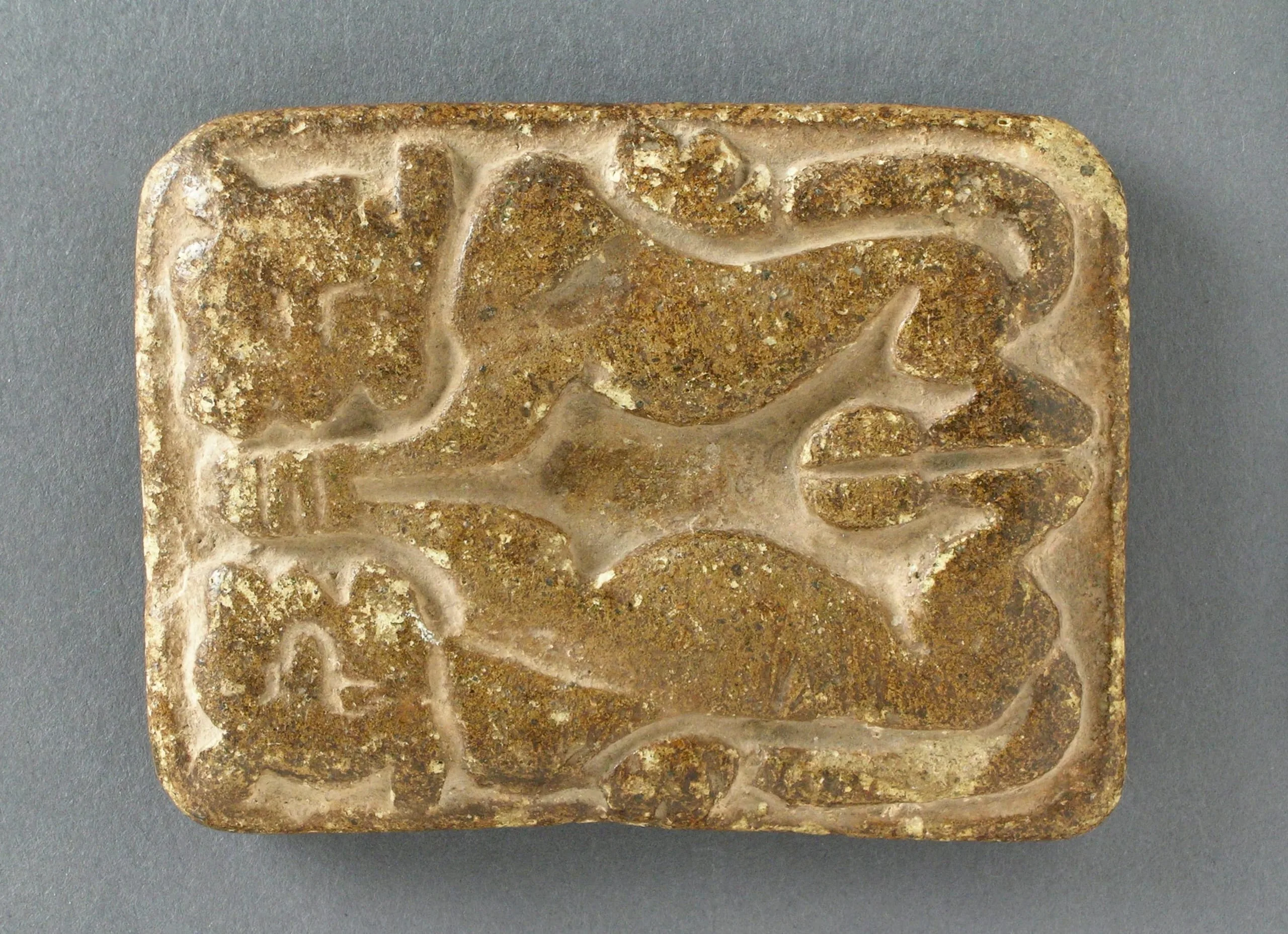
Medieval hammams offered a full range of services from essential bathing to elaborate pampering that could take up to a full day to experience in its entirety. Skilled attendants would rub down their customers, then wash, and exfoliate them, which is where this handy scraper would come into play. After softening a bather’s skin in the steamy hot rooms of the hammam, an attendant would use this bath scraper to scrub away dead skin. Its molded design includes two lions in relief, adding further variation to its finely textured surface of unglazed earthenware. On the reverse, small pebbles were added to the clay, which may have acted as a coarse exfoliator, or massaging beads. This work belongs to a group of related ceramic scrapers, possibly from Iran. While several scrapers of the double-lion mold survive, they also came in a variety of animal, floral, and geometric designs, which suggests that bathers could delight in a range of designs over the course of their many visits.
To give some sense of the extensive hammam experience, medieval Muslim travelers noted how visitors were supplied with as many as ten towels for successive bathhouse treatments. Many hammams included private washing rooms equipped with basins, in addition to essential pools of hot, cold, and tepid water for its visitors to utilize throughout their stay. Following exfoliation, a guest might request depilation or massages. Hammams also offered an array of refreshments for guests to enjoy. By the period of this work’s creation, sherbets, tea, and sweets often graced the reception rooms of these establishments. There, guests could relax with their treats, surrounded by wall paintings of animal- and hunt-inspired themes, which must have resonated with the motifs found on surviving bath scrapers.
Much like their earlier predecessors of the Roman bath, hammams in Islamic lands acted as popular social hubs in urban settings. The designated entry times for men and women, respectively, further structured the experience so that the hammam could serve as a homosocial space. Women, in particular, used hammams to exchange gossip, arrange marriages, and engage in celebratory cleansing rituals. For example, brides would often hold festive henna parties in hammams shortly before their weddings, where women of the community would offer gifts and ready the bride for her nuptials by painting her hands and feet, among other cosmetic treatments.