LACMA

ShopMembershipMyLACMATickets
LACMA
Los Angeles County Museum of Art
5905 Wilshire Blvd.
Los Angeles, CA 90036
info@lacma.org
(323) 857-6000
Sign up to receive emails
Subscribe
© Museum Associates 2025

Museum Hours

Monday

11 am–6 pm

Tuesday

11 am–6 pm

Wednesday

Closed

Thursday

11 am–6 pm

Friday

11 am–8 pm

Saturday

10 am–7 pm

Sunday

10 am–7 pm


  • About LACMA
  • Jobs
  • Building LACMA
  • Host An Event
  • Unframed
  • Press
  • FAQs
  • Log in to MyLACMA
  • Privacy Policy
© Museum Associates 2025
Collections

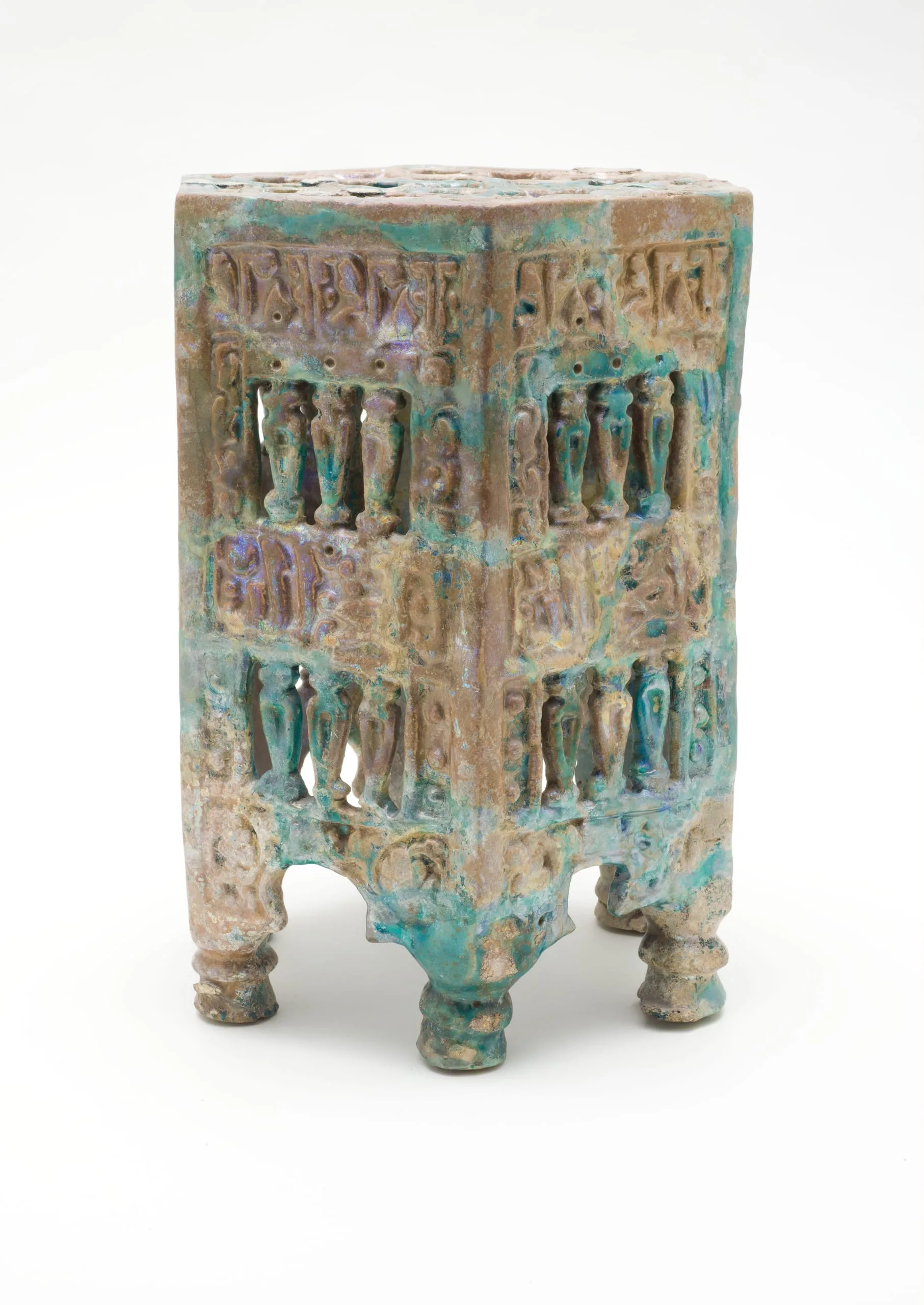
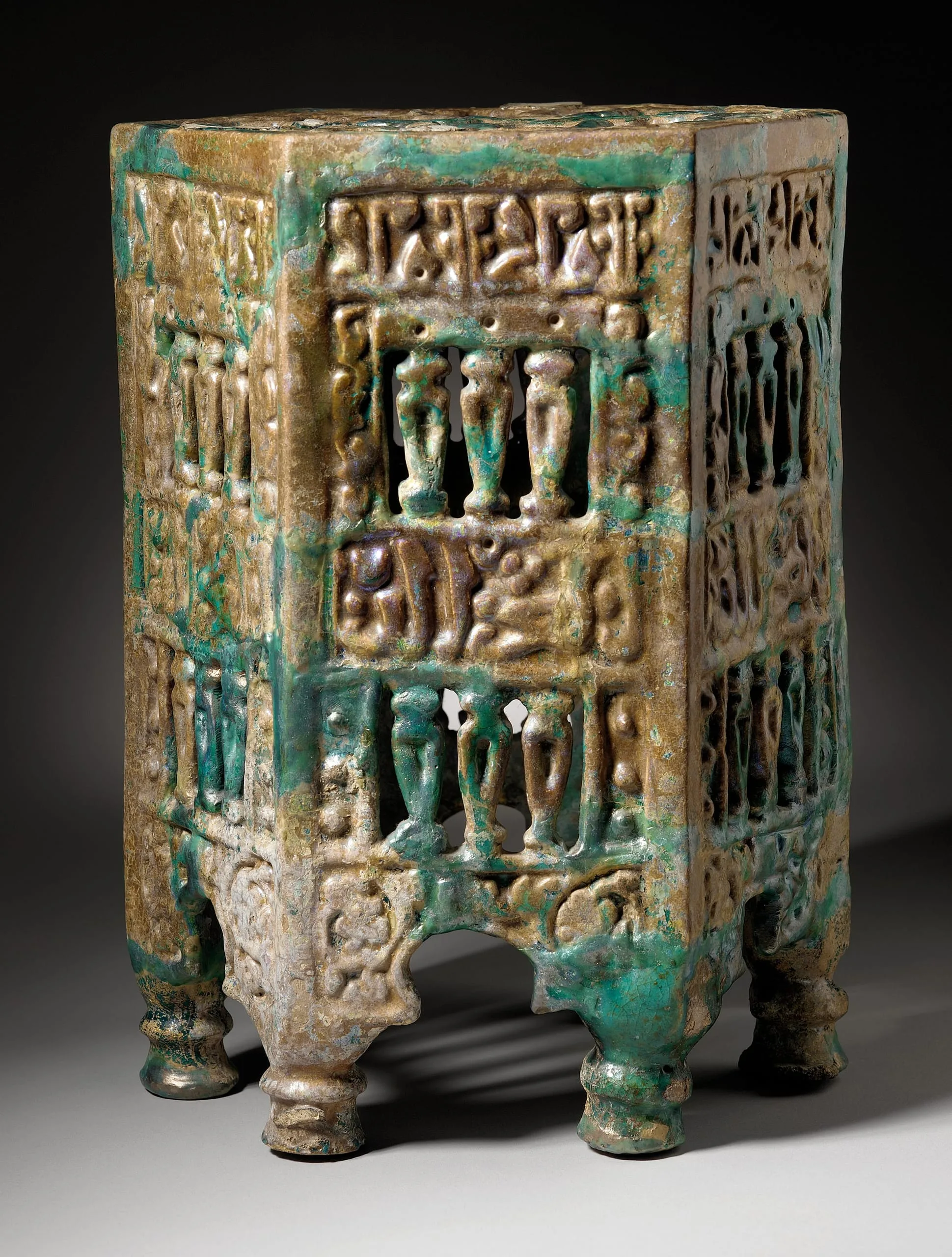
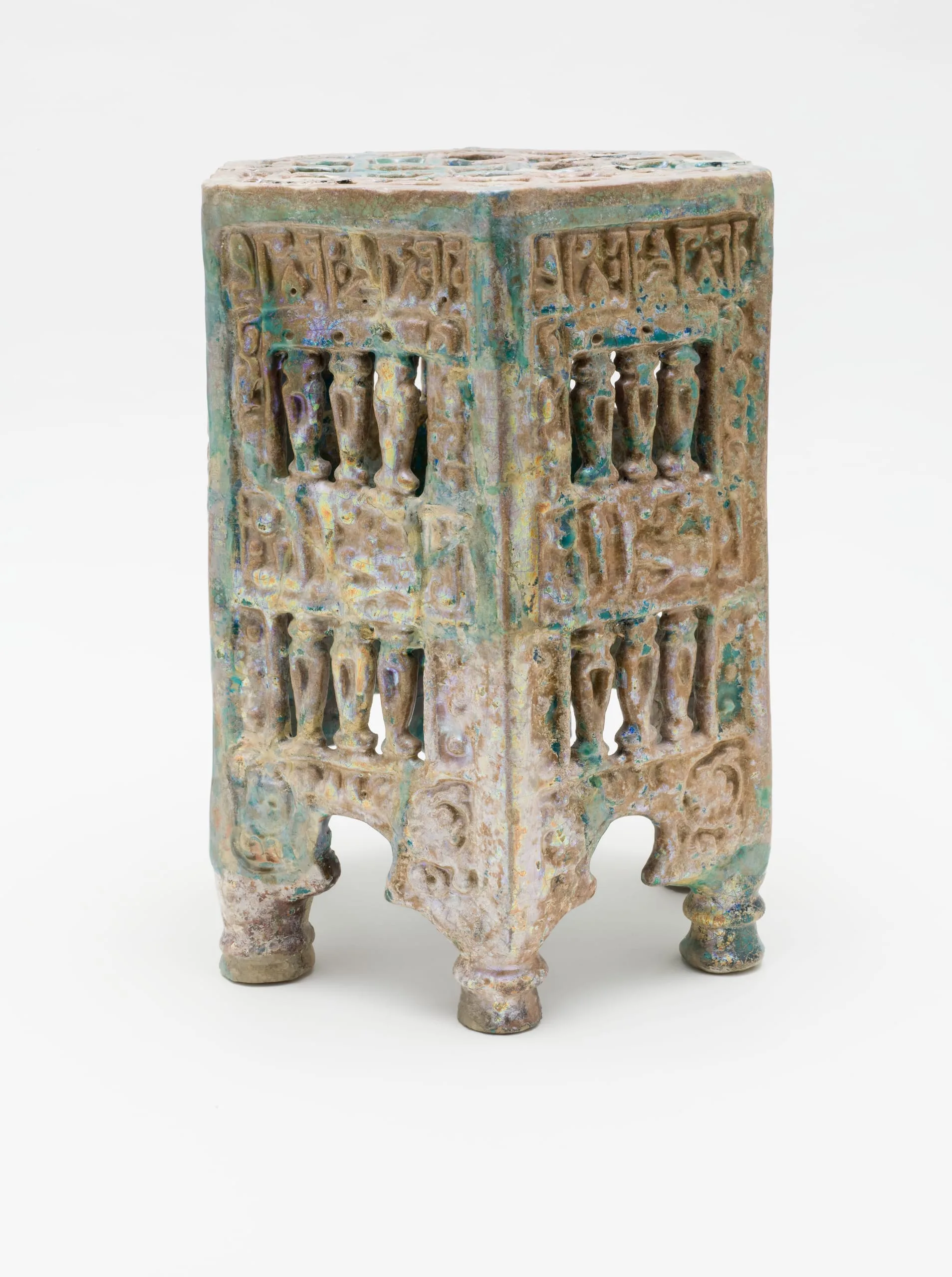
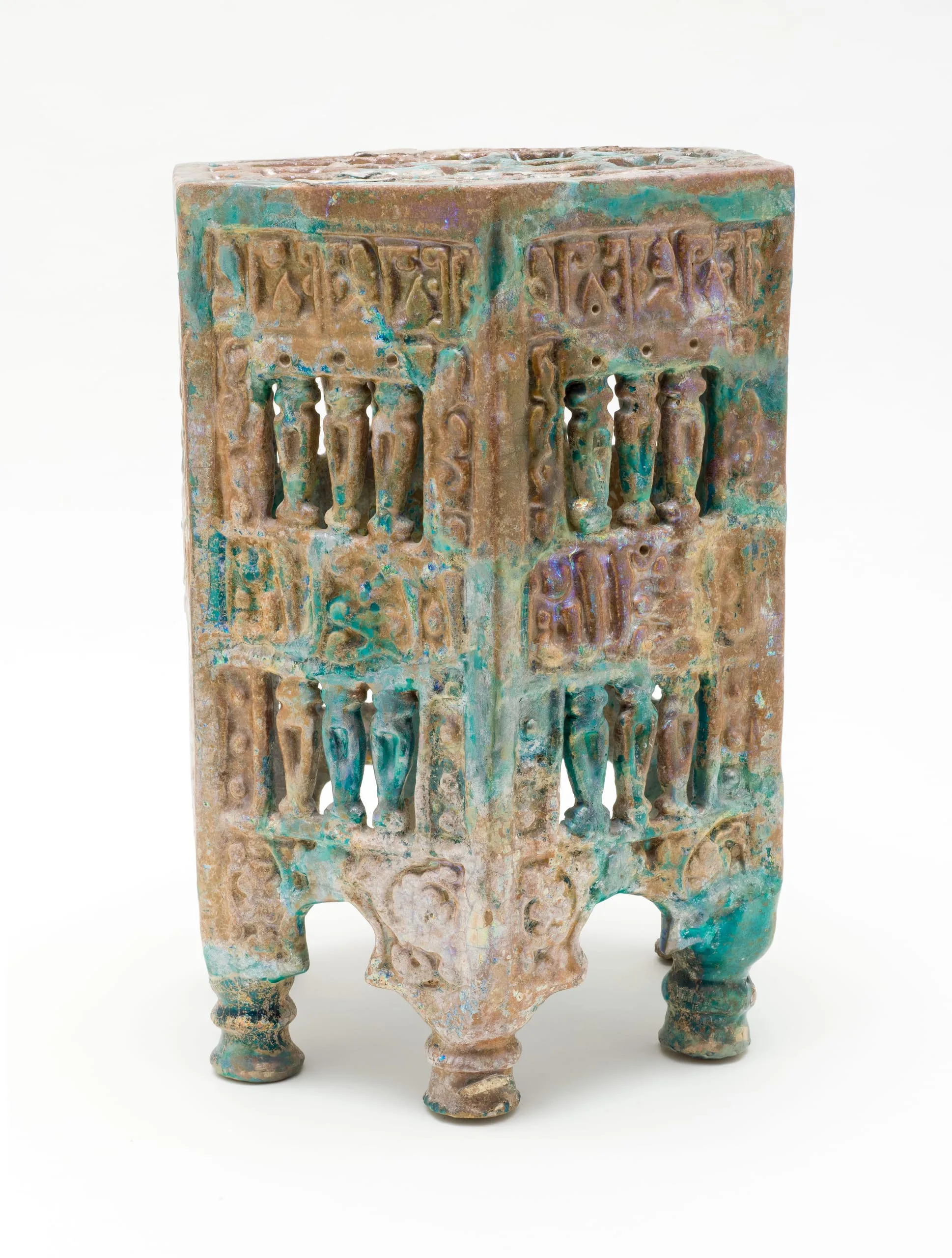
Tablelate 12th-early 13th century

Not on view
Glazed ceramic octagonal stand with carved Arabic inscription band, relief baluster columns, pierced top, and four rounded feet; iridescent turquoise and tan glaze
Ceramic hexagonal incense burner on six round feet, with turquoise and brown luster glaze; molded figural and Arabic inscription bands in registers across each facet, with openwork arcade decoration.
Ceramic inkwell on four small feet, octagonal form with turquoise and earth-toned glaze, decorated with rows of molded figural and Arabic inscription bands in relief across each facet.
Ceramic hexagonal incense burner raised on six feet, with turquoise and brown mottled glaze; pierced and molded panels on each face display rows of standing figures and Arabic script, with openwork arcading above the base.
Title
Table
Place Made
Syria
Date Made
late 12th-early 13th century
Medium
Fritware, molded, pierced and glazed
Dimensions
14 x 9 1/4 x 10 1/2 in. (35.56 x 23.5 x 26.67 cm)
Credit Line
The Madina Collection of Islamic Art, gift of Camilla Chandler Frost
Accession Number
M.2002.1.18
Classification
Ceramics
Collecting Area
Art of the Middle East: Islamic
Curatorial Notes

With the introduction of fritware, which is more cohesive than earthenware in its working state, twelfth-century Syrian potters branched out into producing ceramic furniture, such as this turquoise-glazed table. Six-sided tables of this type are believed to be based on wooden versions that have not survived. Perhaps in reference to the spaces in which they were used, the tables feature architectural motifs, such as the miniature pillars (balusters) on the sides and the pierced tabletop that resembles a mashrabiya, a type of window screen with openwork geometric design.
Selected Bibliography
  • Graves, Margaret S. "Aesthetics of simulation: architectural mimicry on medieval ceramic tabourets," in Islamic Art, Architecture and Material Culture: New Perspectives, edited by Margaret S. Graves, 63-79. Oxford: Archaeopress, 2012.
  • Lo Terrenal y lo Divino: Arte Islámico siglos VII al XIX Colección del Museo de Arte del Condado de Los Ángeles. Santiago: Centro Cultural La Moneda, 2015.

  • Komaroff, Linda. Beauty and Identity: Islamic Art from the Los Angeles County Museum of Art. Los Angeles: Los Angeles County Museum of Art, 2016.
  • Komaroff, Linda. Collecting Islamic Art at the Los Angeles County Museum of Art: A Curatorial Perspective. Los Angeles: Art Catalogues; LACMA, 2017.