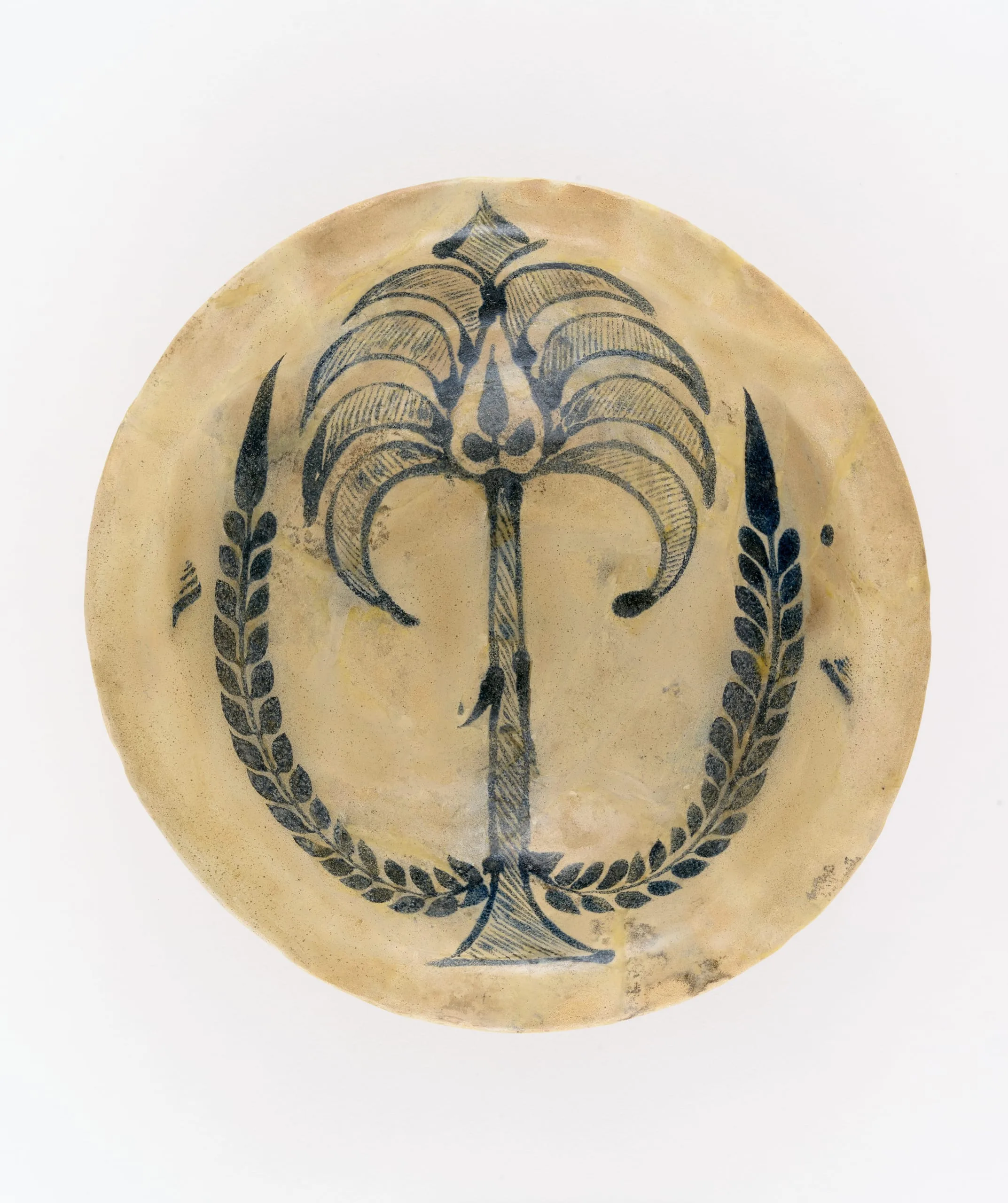
Finely glazed pottery became a significant art form in Islamic lands around the first decades of the ninth century. Although earlier glazed wares were made under the Umayyad dynasty (661−750), particularly in Syria and Egypt, it is only in the early ‘Abbasid era (9th10th century) that well-made wares with complex glazing techniques proliferated in Iraq, spreading rapidly throughout the empire.
Evidence suggests that a new cuisine was emerging at the ‘Abbasid court in Baghdad around the same time a novel form of ceramic tableware developed at Basra in southern Iraq in the ninth century. Pottery of this type, as here, frequently emulates the size and form of imported Chinese ceramics, especially bowls, and duplicates the whiteness of the stoneware or porcelain fabric by covering the coarser earthenware body with an opaque white glaze. Rather than being content with mere imitations, Iraqi potters used the white surface as a canvas on which to paint bold, cobalt-blue abstract and floral designs and difficult-to-decipher Arabic inscriptions. The stylized date palm at the center of this bowl reflected the local environment: Iraq was known for its fertile lands and this remarkably versatile tree, which, among other things, provided shade and abundant fruit.
2024