LACMA

ShopMembershipMyLACMATickets
LACMA
Los Angeles County Museum of Art
5905 Wilshire Blvd.
Los Angeles, CA 90036
info@lacma.org
(323) 857-6000
Sign up to receive emails
Subscribe
© Museum Associates 2025

Museum Hours

Monday

11 am–6 pm

Tuesday

11 am–6 pm

Wednesday

Closed

Thursday

11 am–6 pm

Friday

11 am–8 pm

Saturday

10 am–7 pm

Sunday

10 am–7 pm


  • About LACMA
  • Jobs
  • Building LACMA
  • Host An Event
  • Unframed
  • Press
  • FAQs
  • Log in to MyLACMA
  • Privacy Policy
© Museum Associates 2025
Collections

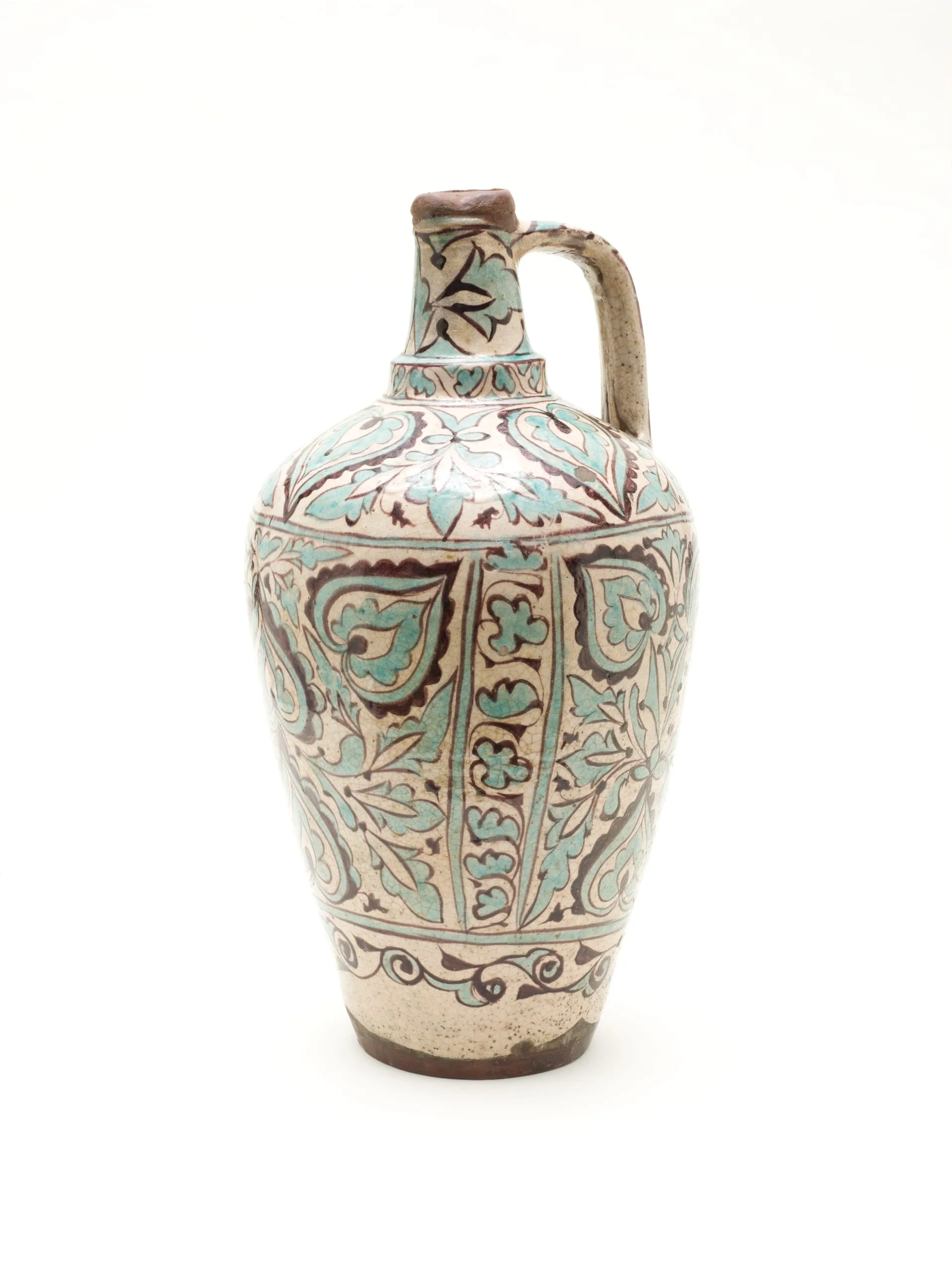
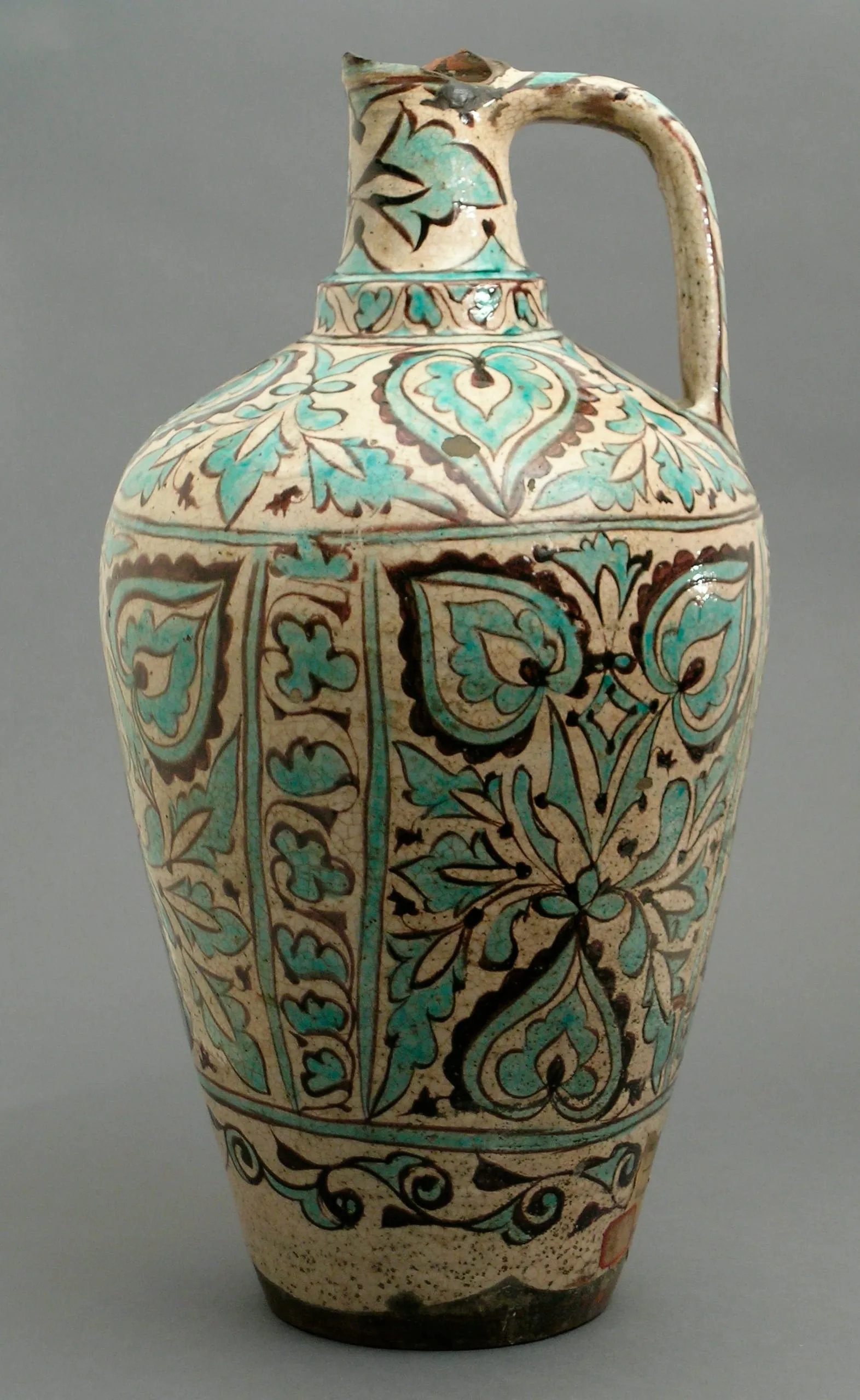
Ewerlate 15th - early 16th century

Not on view
Ceramic pitcher with off-white ground, painted overall with turquoise and dark brown floral and leaf motifs in vertical panels, single strap handle
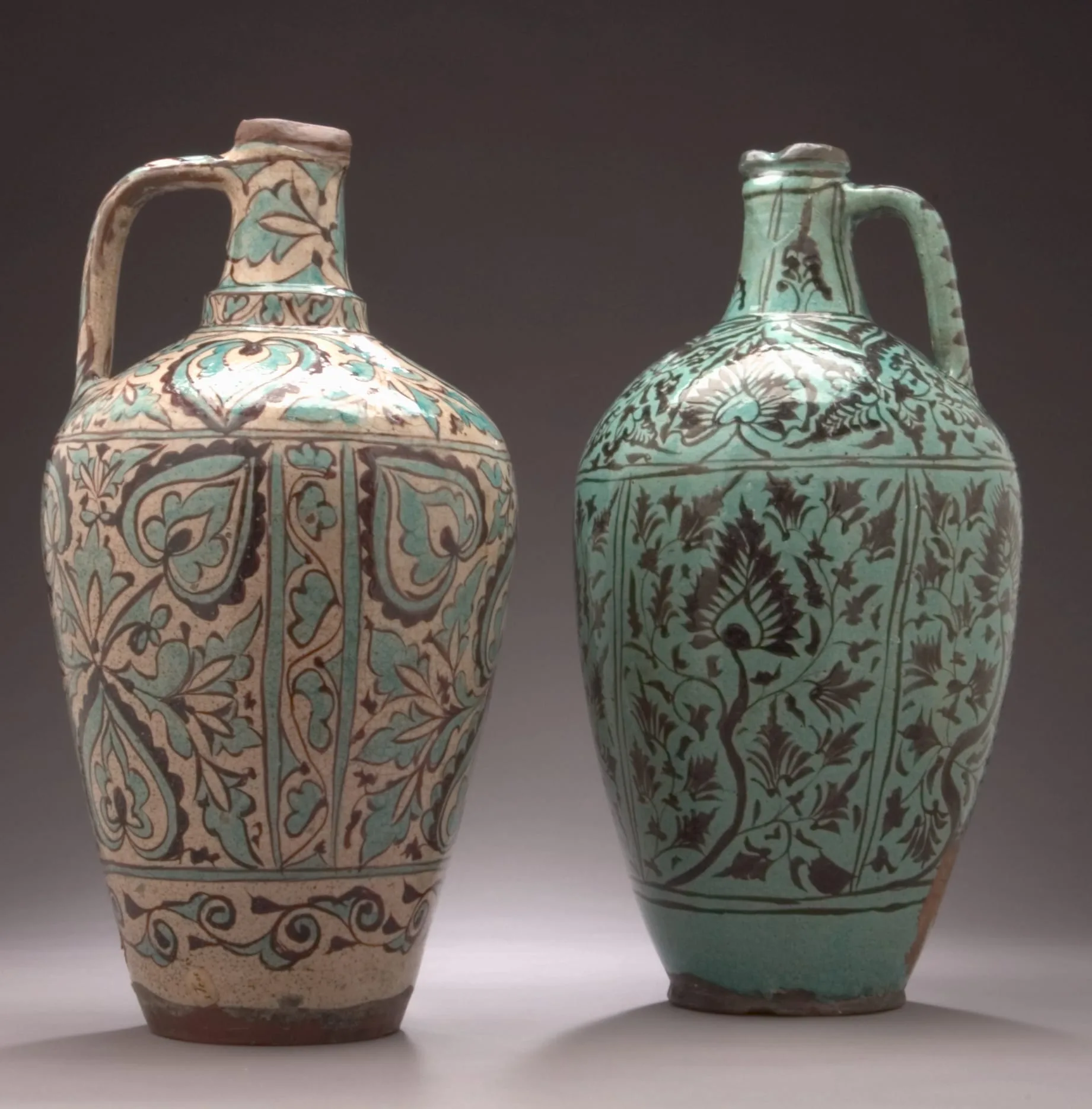
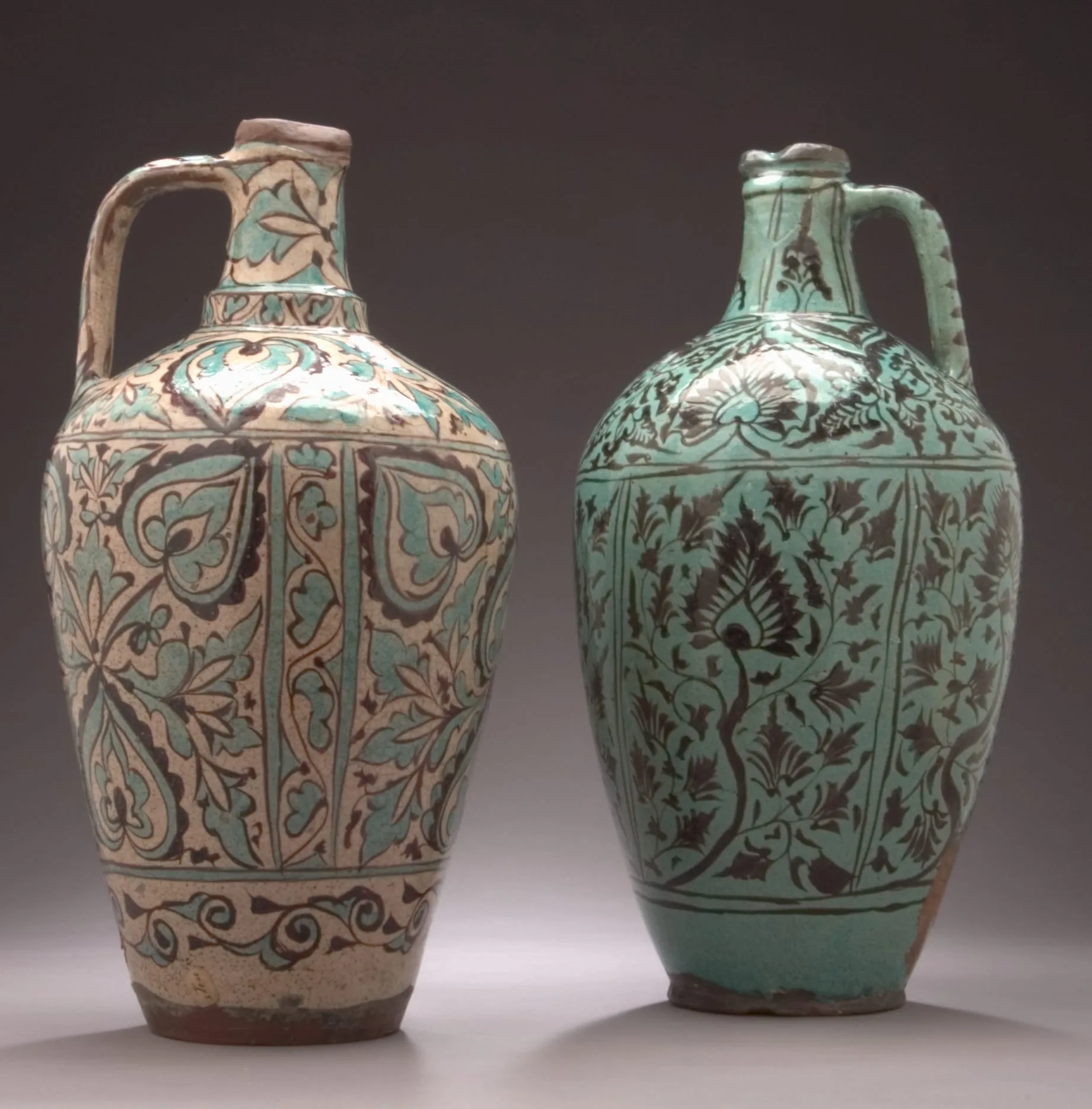
Two ceramic handled jugs with ovoid bodies and narrow necks, side by side. Both decorated with painted foliate scrollwork in turquoise and dark brown; the left jug has a cream ground, the right a solid turquoise ground with denser dark botanical motifs in vertical panels.
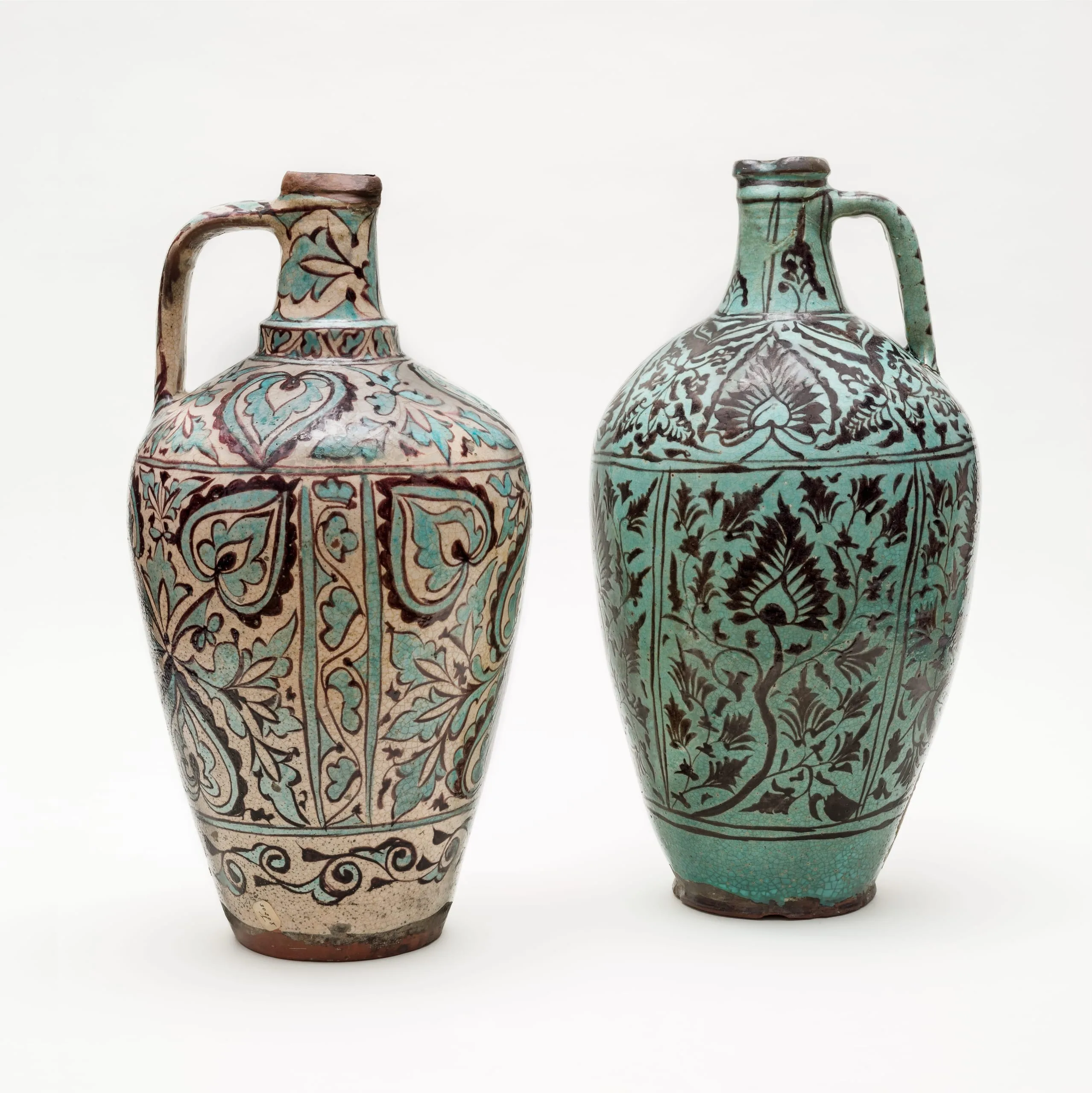
Two ceramic jugs with single handles and narrow necks, decorated with dense scrolling floral and foliate patterns in turquoise and dark brown; left jug has a cream ground, right jug a solid turquoise ground with more saturated dark painting.
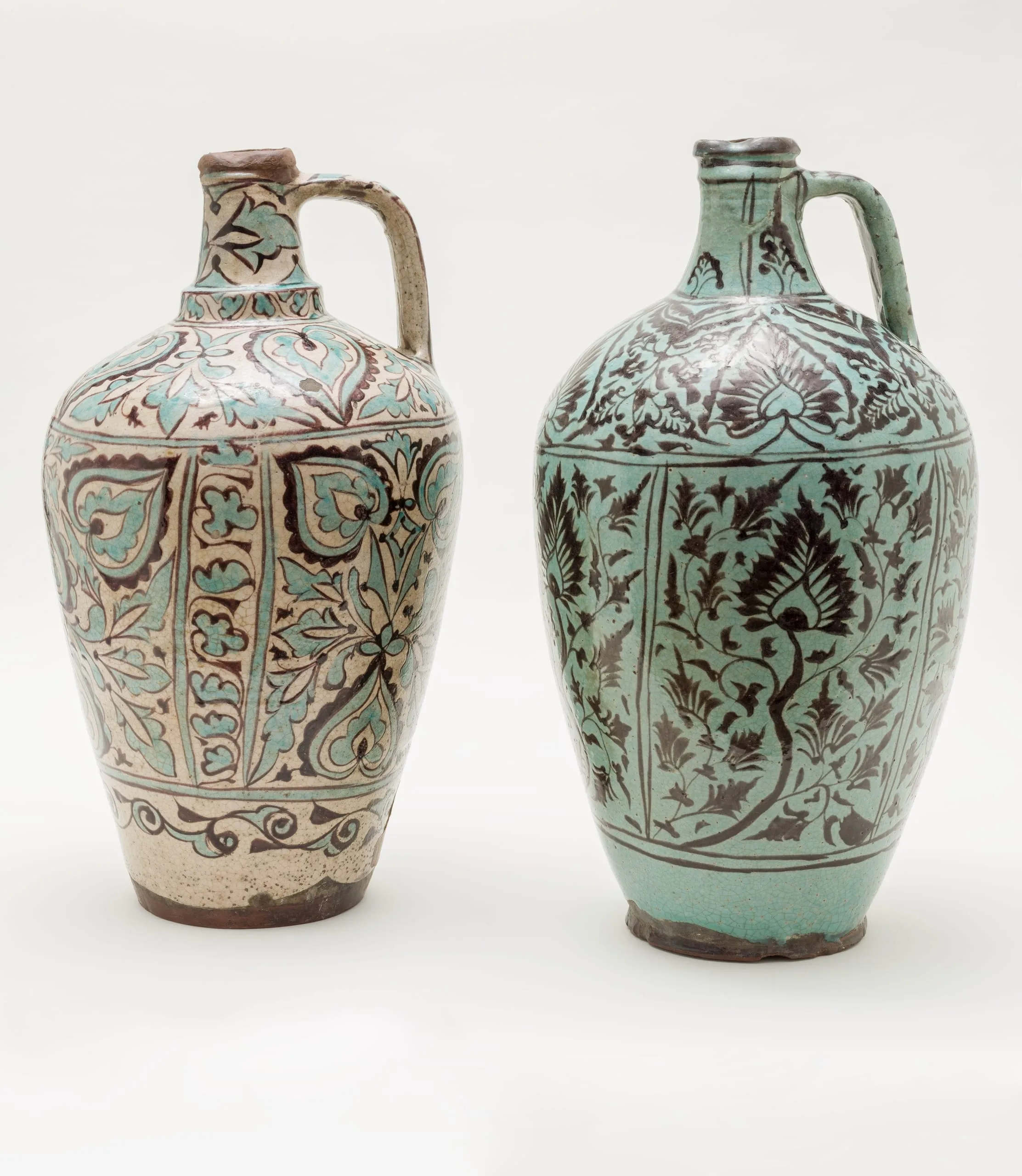
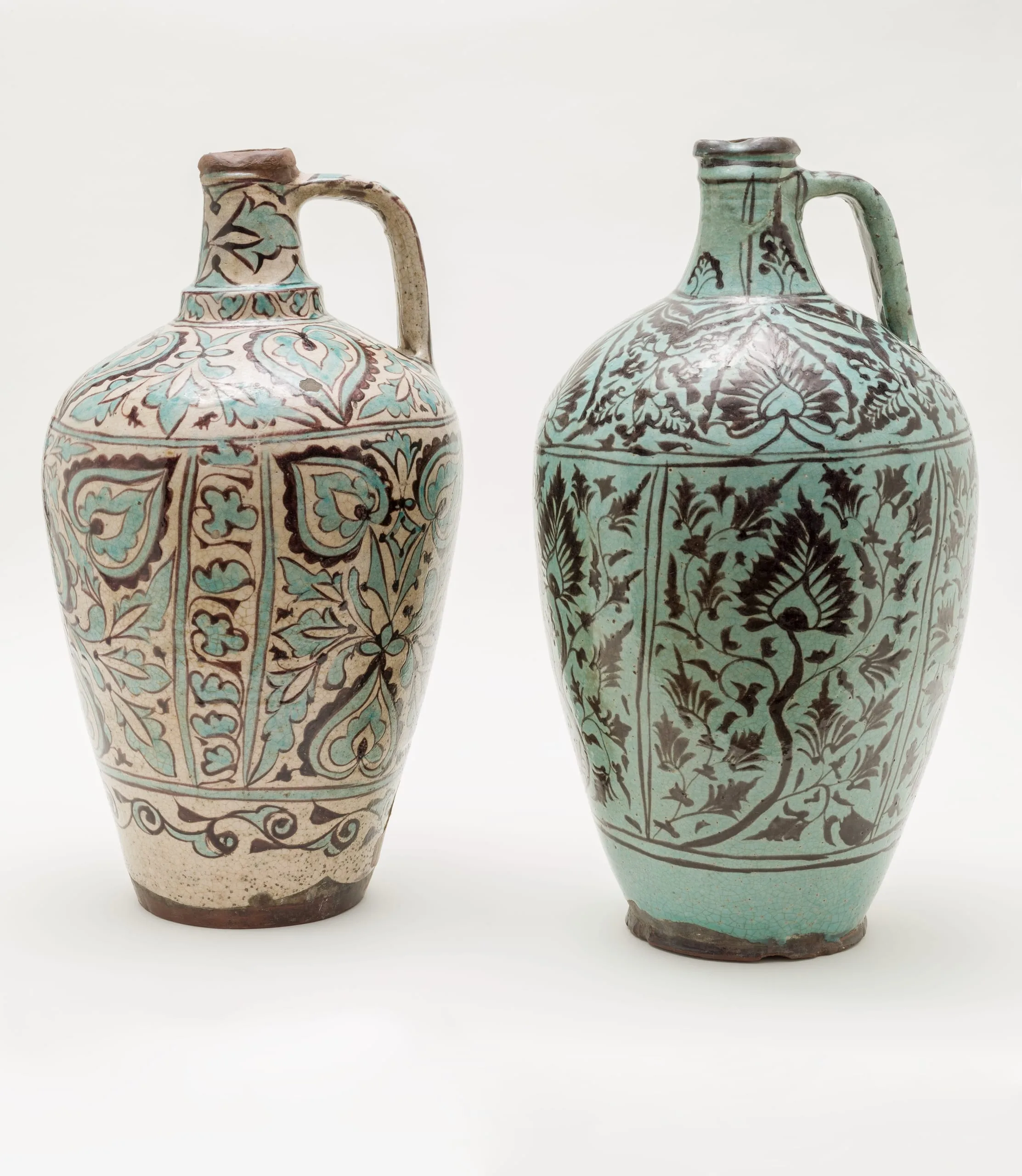
Two ceramic ewers with single handles, decorated with dense painted arabesques and botanical motifs in turquoise and dark brown. The left ewer has a cream ground with vertical panel divisions; the right is more fully covered in turquoise with dark overpainting.
Ceramic ewer with bulbous body, narrow neck, and loop handle, decorated overall with turquoise, brown, and cream painted arabesque and palmette motifs divided into vertical cartouches on the body, with scrolling foliage at the base.
Two ceramic jugs with single handles and narrow necks, decorated with scrolling floral and leaf motifs in dark brown and turquoise glaze; the left jug has a cream ground, the right a solid turquoise ground, both with paneled body compositions.
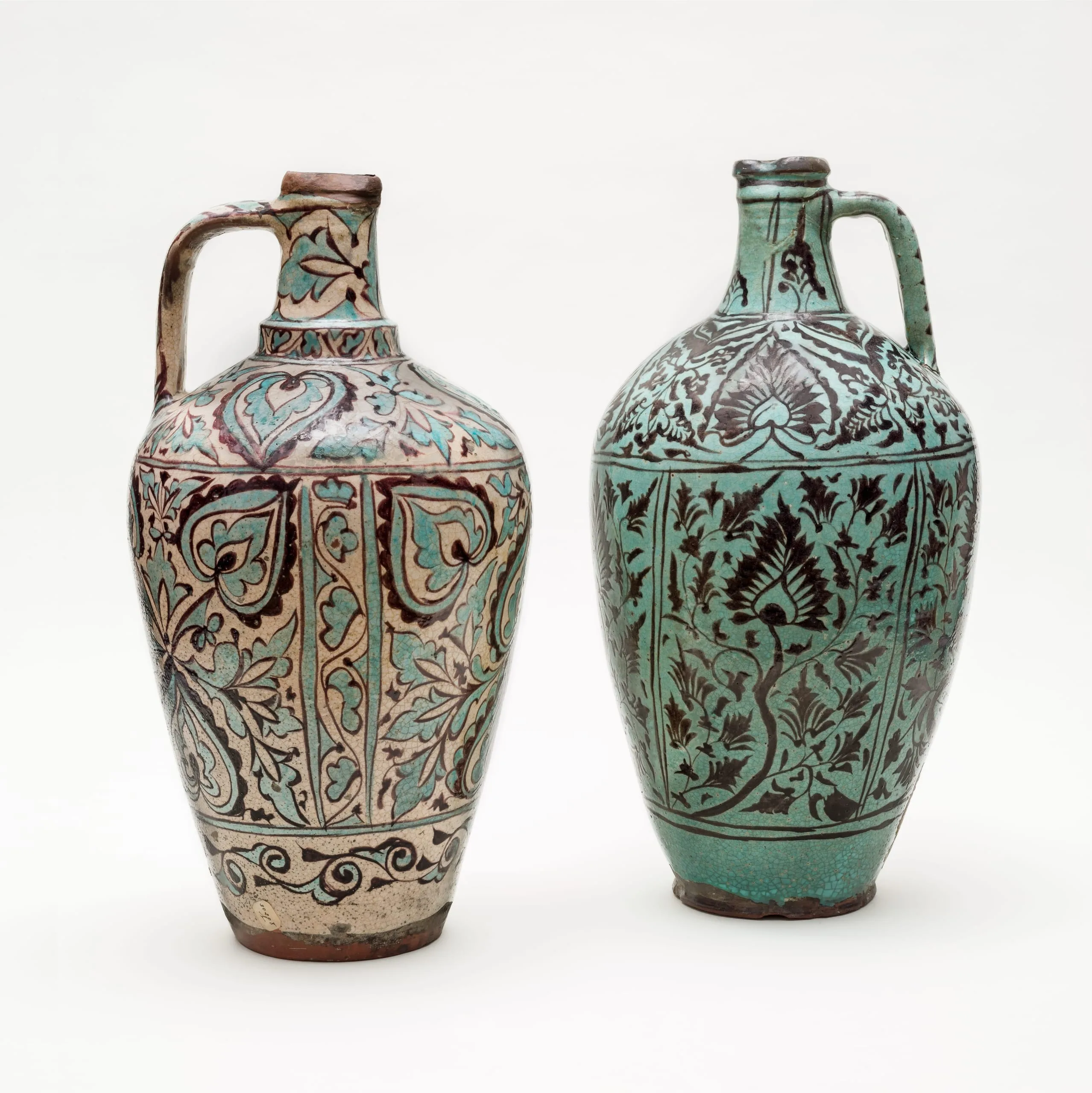
Two ceramic jugs with single handles and narrow necks, decorated with dense painted floral and foliate scrollwork in turquoise and dark brown; the left jug has a cream ground, the right a solid turquoise ground with vertical panel divisions.
Two ceramic jugs with single handles and narrow necks, decorated with dense scrolling floral and leaf patterns in turquoise and dark brown; the left jug has a cream ground, the right a solid turquoise ground with darker painted motifs.
Title
Ewer
Place Made
Iran or Central Asia
Date Made
late 15th - early 16th century
Medium
Earthenware with white slip, underglaze-painted
Dimensions
Height: 19 3/4 x 10 in. Diameter (Diameter): 16 7/16 in.
Credit Line
The Madina Collection of Islamic Art, gift of Camilla Chandler Frost
Accession Number
M.2002.1.277
Classification
Ceramics
Collecting Area
Art of the Middle East: Islamic
Curatorial Notes

This glazed ceramic ewer and a related example (see M.2002.1.278) reflect some of the many changes that have taken place in the field of Islamic art history and perhaps also help to broaden our understanding of modern art. Both bear labels indicating that they were lent to the first great exhibition of Islamic art, held in Munich in 1910. It is now more than one hundred years later, but they have actually grown even older during that time. Ascribed to eighteenth-century Turkestan in the 1910 catalogue, these ewers can now be assigned to the late fifteenth or early sixteenth century. Among the many distinguished visitors to the Munich exhibition was the artist Henri Matisse (1869–1954), and it is easy to imagine that he may have preserved a visual memory of objects such as these ceramic ewers, whose colorful floral ornament is echoed in his works.

Selected Bibliography
  • Lo Terrenal y lo Divino: Arte Islámico siglos VII al XIX Colección del Museo de Arte del Condado de Los Ángeles. Santiago: Centro Cultural La Moneda, 2015.

  • Dercon, Chris, Leon Krempel and Avinoam Shalem, eds. The Future of Tradition, The Tradition of Future: 100 Years After the Exhibition Masterpieces of Muhammadan Art in Munich. Munich: Prestel, 2010.