- Title
- Watch Box
- Date Made
- mid-19th century
- Medium
- Sandalwood with ivory veneer engraved and highlighted with lac; ivory; velvet; silvered brass lock and hinges
- Dimensions
- 2 3/4 × 4 5/8 × 4 3/4 in. (6.99 × 11.75 × 12.07 cm)
- Accession Number
- M.2013.177
- Curatorial Notes
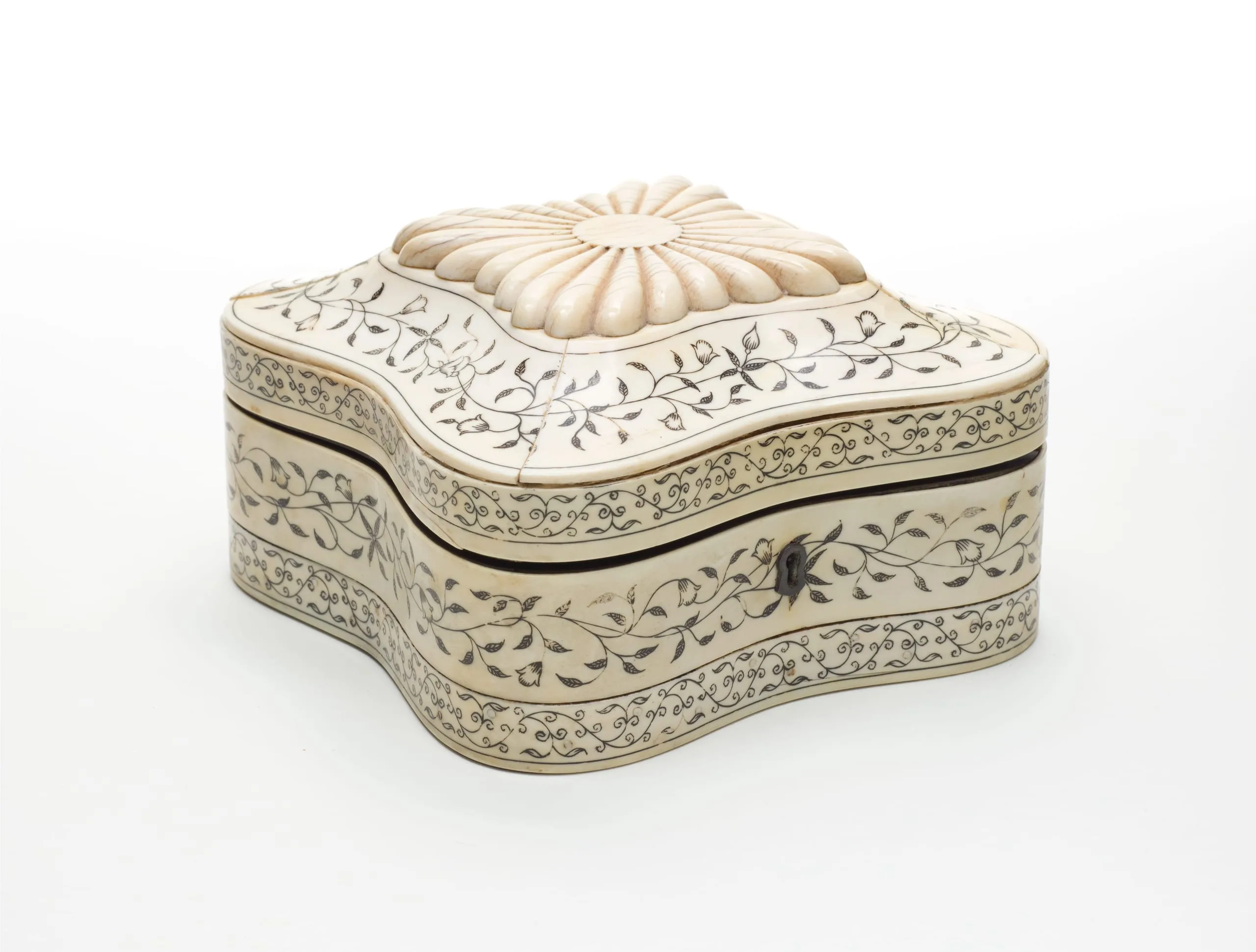
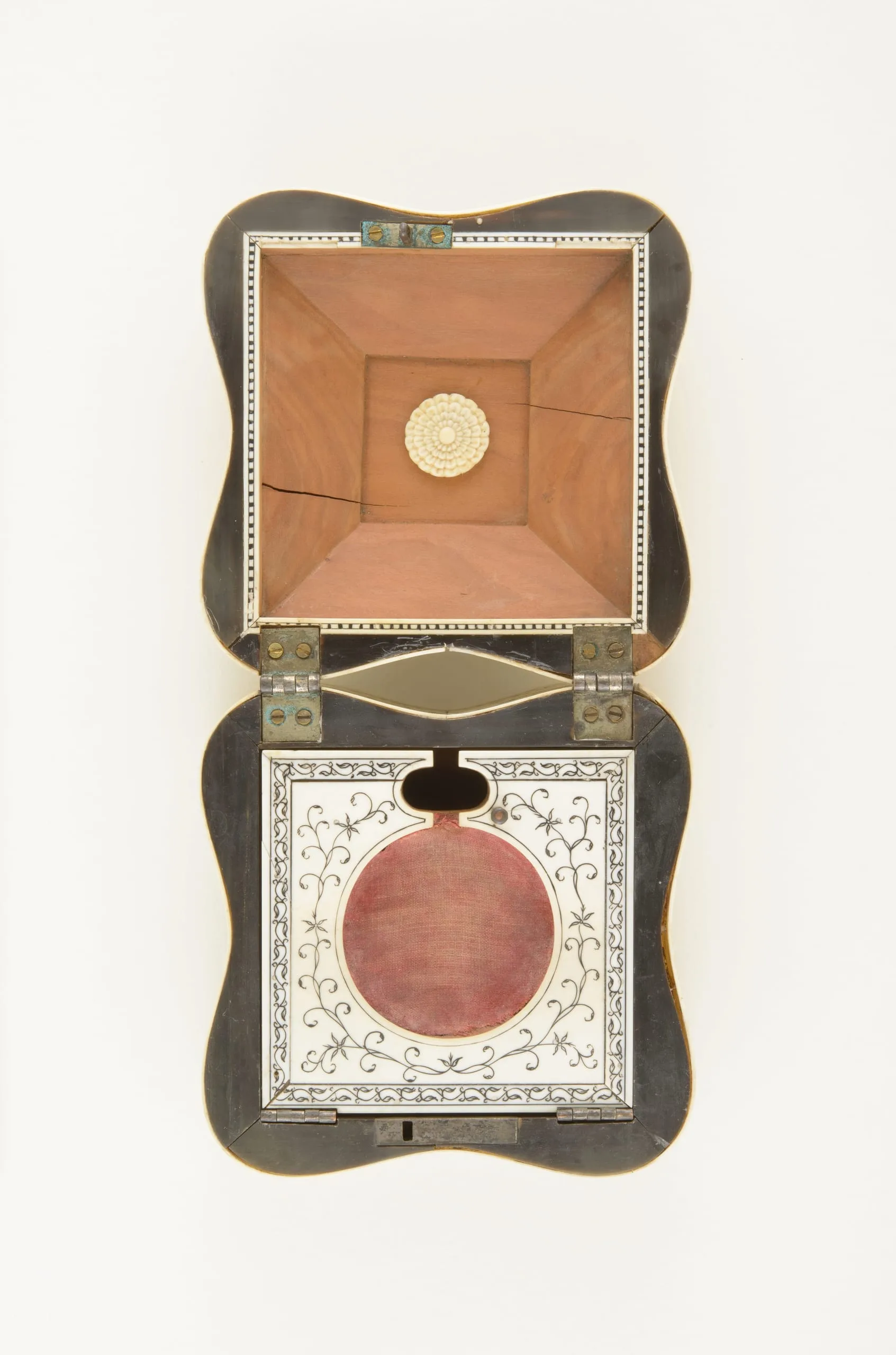
This intricately constructed display case for a pocket watch is made of richly scented sandalwood graced with an ivory veneer embellished with scrolling flowering vines. The floral motifs were incised and highlighted with molten lac, a resinous secretion of South Asian lac insects commonly used to make shellac, lacquer, etc. The square box has curvilinear exterior sides and is surmounted by a fluted ivory medallion in a sunburst design. The interior ceiling is tapered and has an ivory chrysanthemum roundel affixed in the center. The interior display shelf is recessed for the pocket watch and opens to a 45-degree viewing angle that is secured with a set lever.
One of the most distinctive genres of decorative objects made in India during the colonial period were the veneered and/or inlaid writing desks, jewelry caskets, sewing boxes, miscellaneous containers, and such furniture items as table bureaus and armchairs that were produced chiefly at the port of Vizagapatam (now known as Vishakhapatnam) on the southeast coast of present-day Andhra Pradesh. The port was an important trade and furniture manufacturing center on the sea route south of Calcutta from the late 17th century to the mid-20th century. Foreign dignitaries, officials of the East India Company, expatriate residents and visitors, and even ship's crew members regularly purchased Vishakhapatnam's exquisite wares as souvenirs of their sojourn in the East.