LACMA

ShopMembershipMyLACMATickets
LACMA
Los Angeles County Museum of Art
5905 Wilshire Blvd.
Los Angeles, CA 90036
info@lacma.org
(323) 857-6000
Sign up to receive emails
Subscribe
© Museum Associates 2025

Museum Hours

Monday

11 am–6 pm

Tuesday

11 am–6 pm

Wednesday

Closed

Thursday

11 am–6 pm

Friday

11 am–8 pm

Saturday

10 am–7 pm

Sunday

10 am–7 pm


  • About LACMA
  • Jobs
  • Building LACMA
  • Host An Event
  • Unframed
  • Press
  • FAQs
  • Log in to MyLACMA
  • Privacy Policy
© Museum Associates 2025
Collections

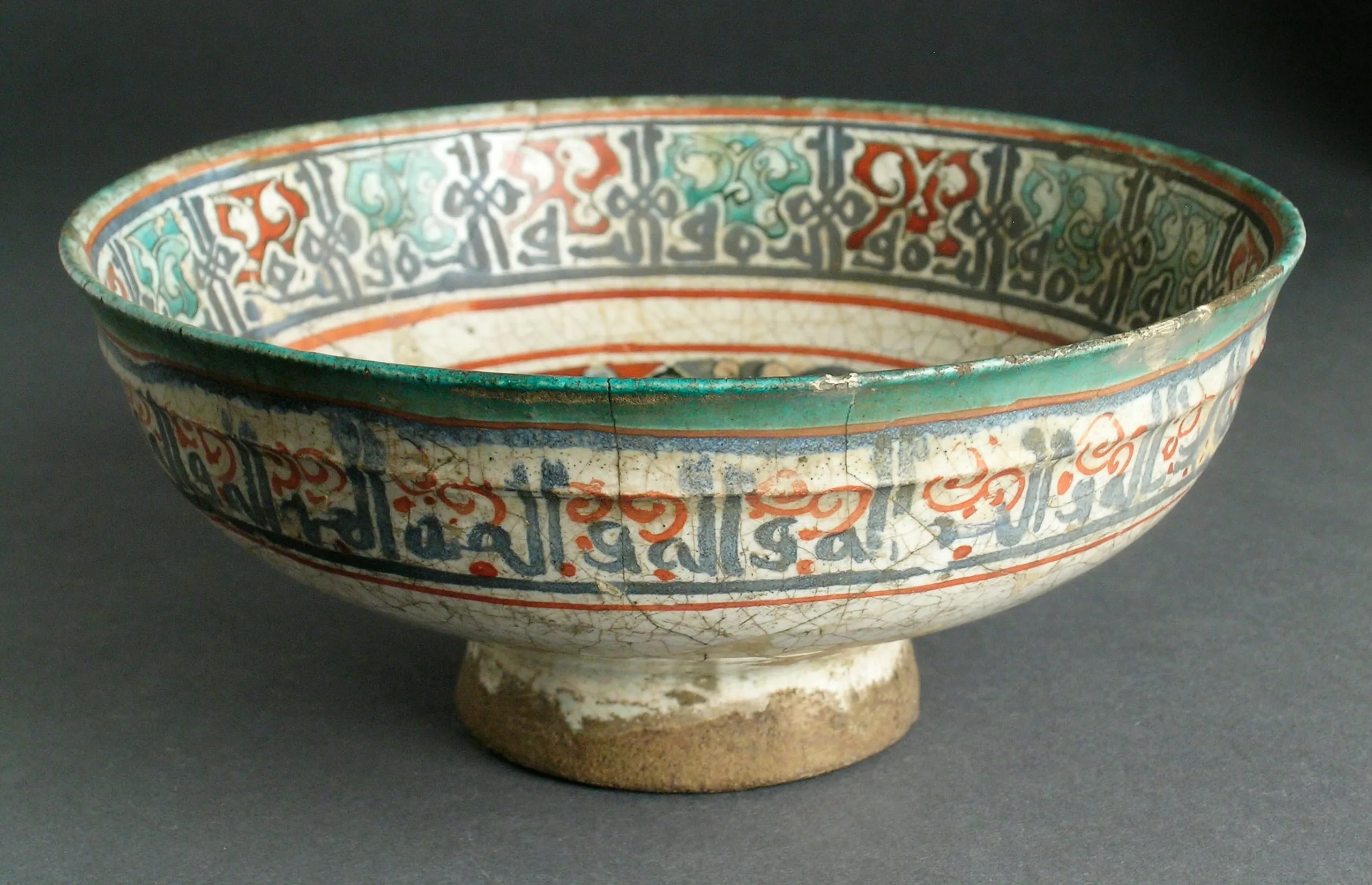
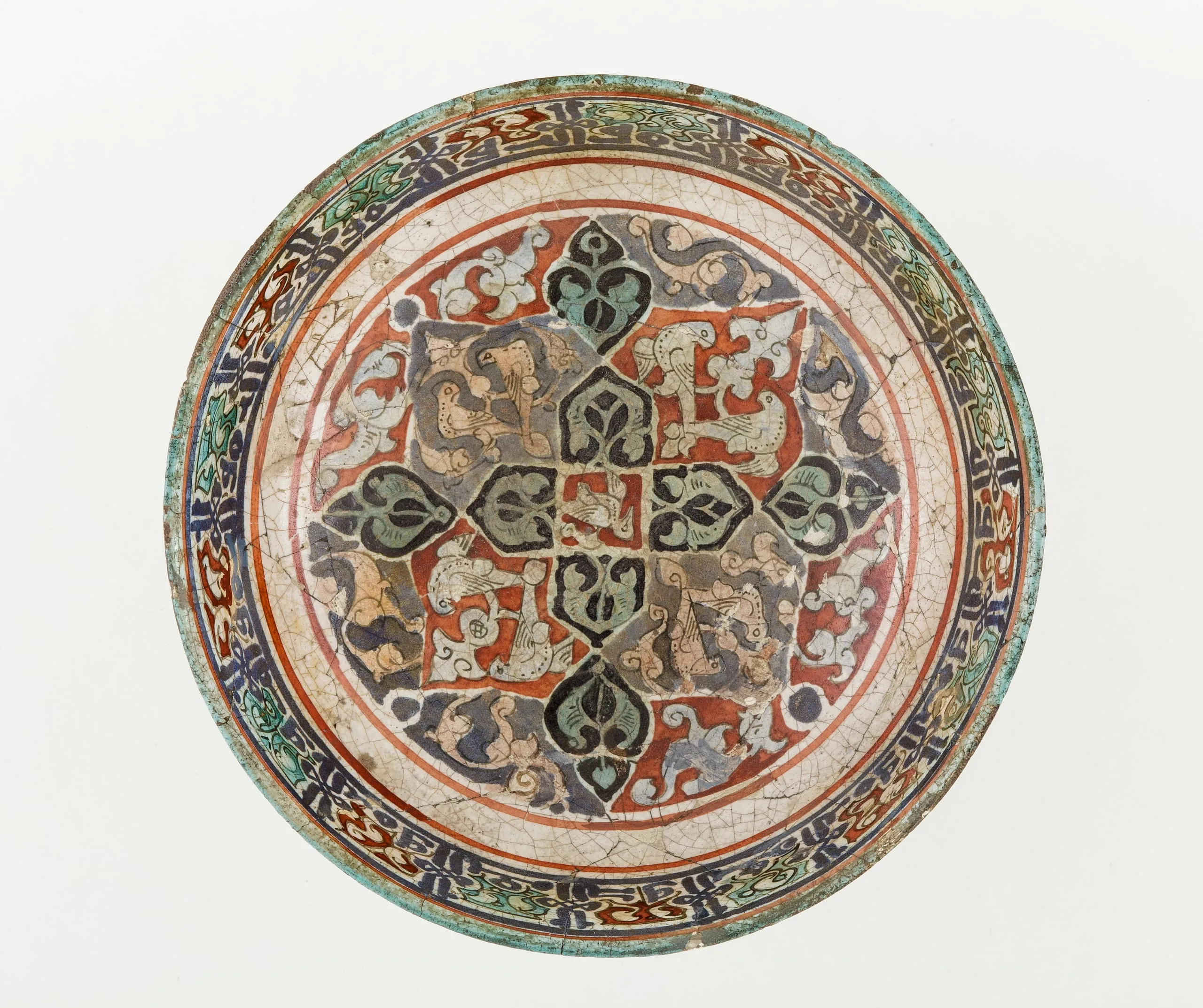
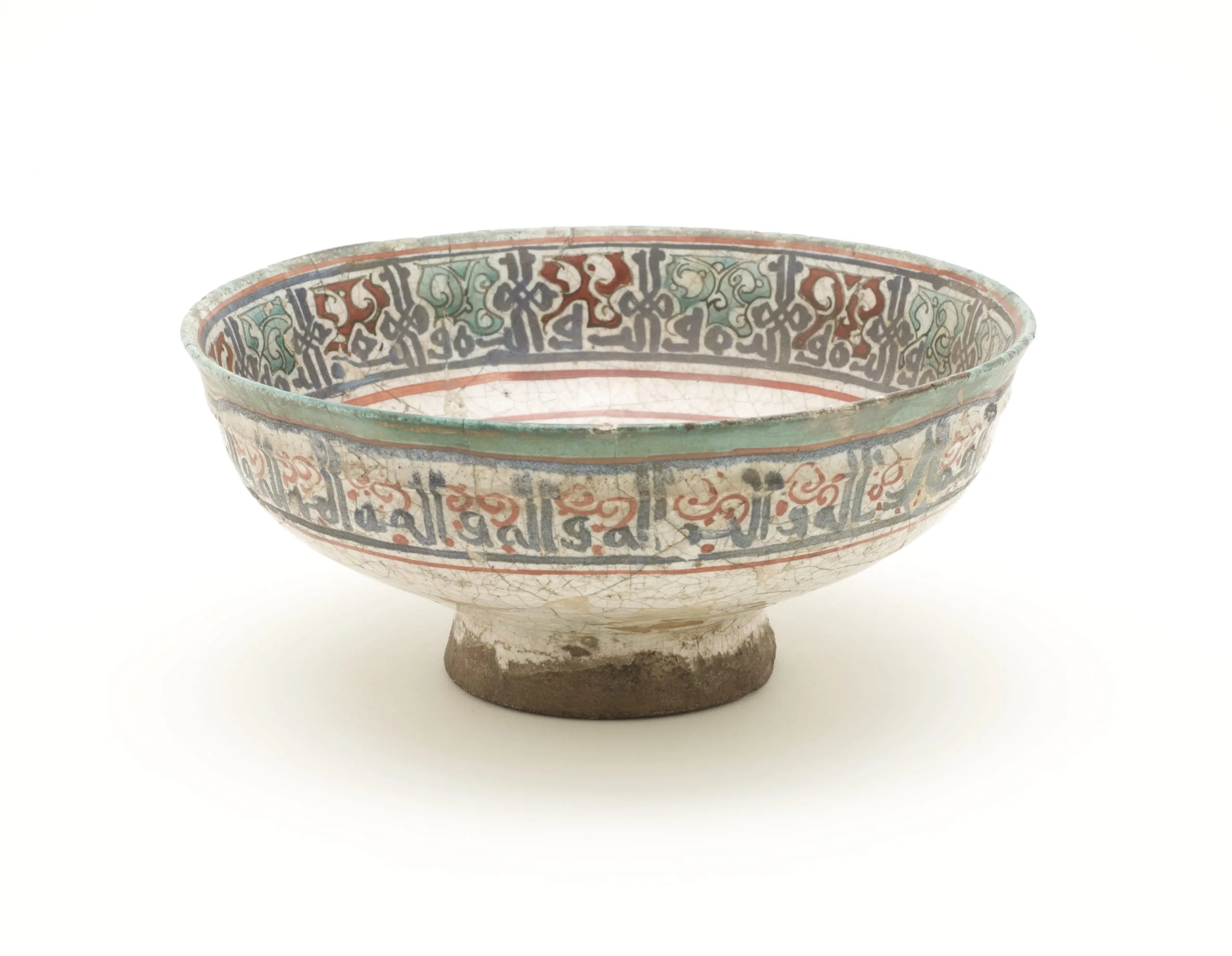
Bowllate 12th-13th century

Not on view
Ceramic bowl seen from above, with rust-red interior decorated with a central star rosette, encircling animal figures, and Arabic script along the rim
Ceramic bowl on a low foot ring with crackled white glaze, decorated with horizontal bands of Arabic calligraphy in blue and red, interspersed with foliate scrolls and green border stripes along the interior and exterior rim.
Ceramic footed bowl with crackled white glaze, decorated with bands of Arabic script in dark blue and red, and scrolling arabesques in turquoise, red, and blue on the interior rim and exterior.
Title
Bowl
Place Made
Iran
Date Made
late 12th-13th century
Medium
Fritware, inglaze- and overglaze-painted (mina'i)
Dimensions
Height: 2 7/8 in. (7.3 cm); Diameter: 6 1/2 in. (16.51 cm)
Credit Line
The Madina Collection of Islamic Art, gift of Camilla Chandler Frost
Accession Number
M.2002.1.156
Classification
Ceramics
Collecting Area
Art of the Middle East: Islamic
Curatorial Notes

By the 1910s a taste developed among Western collectors for brightly colored mina’i (enamel-glazed) ceramics. While mina’i wares represent the prized collectibles of the day, they also serve to demonstrate the technical virtuosity of the Islamic potter and the evident demand within medieval Islamic society for functional objects of great beauty. The method for producing the polychrome enamel pigments is described in a treatise on pottery making by Abu’l-Qasim of Kashan, completed in AD 1301, by which time mina’i or haft rang (seven colors) wares, as they are known in the textual tradition, were no longer being produced.
Selected Bibliography
  • Lo Terrenal y lo Divino: Arte Islámico siglos VII al XIX Colección del Museo de Arte del Condado de Los Ángeles. Santiago: Centro Cultural La Moneda, 2015.

  • Komaroff, Linda. Beauty and Identity: Islamic Art from the Los Angeles County Museum of Art. Los Angeles: Los Angeles County Museum of Art, 2016.