LACMA

ShopMembershipMyLACMATickets
LACMA
Los Angeles County Museum of Art
5905 Wilshire Blvd.
Los Angeles, CA 90036
info@lacma.org
(323) 857-6000
Sign up to receive emails
Subscribe
© Museum Associates 2025

Museum Hours

Monday

11 am–6 pm

Tuesday

11 am–6 pm

Wednesday

Closed

Thursday

11 am–6 pm

Friday

11 am–8 pm

Saturday

10 am–7 pm

Sunday

10 am–7 pm


  • About LACMA
  • Jobs
  • Building LACMA
  • Host An Event
  • Unframed
  • Press
  • FAQs
  • Log in to MyLACMA
  • Privacy Policy
© Museum Associates 2025
Collections

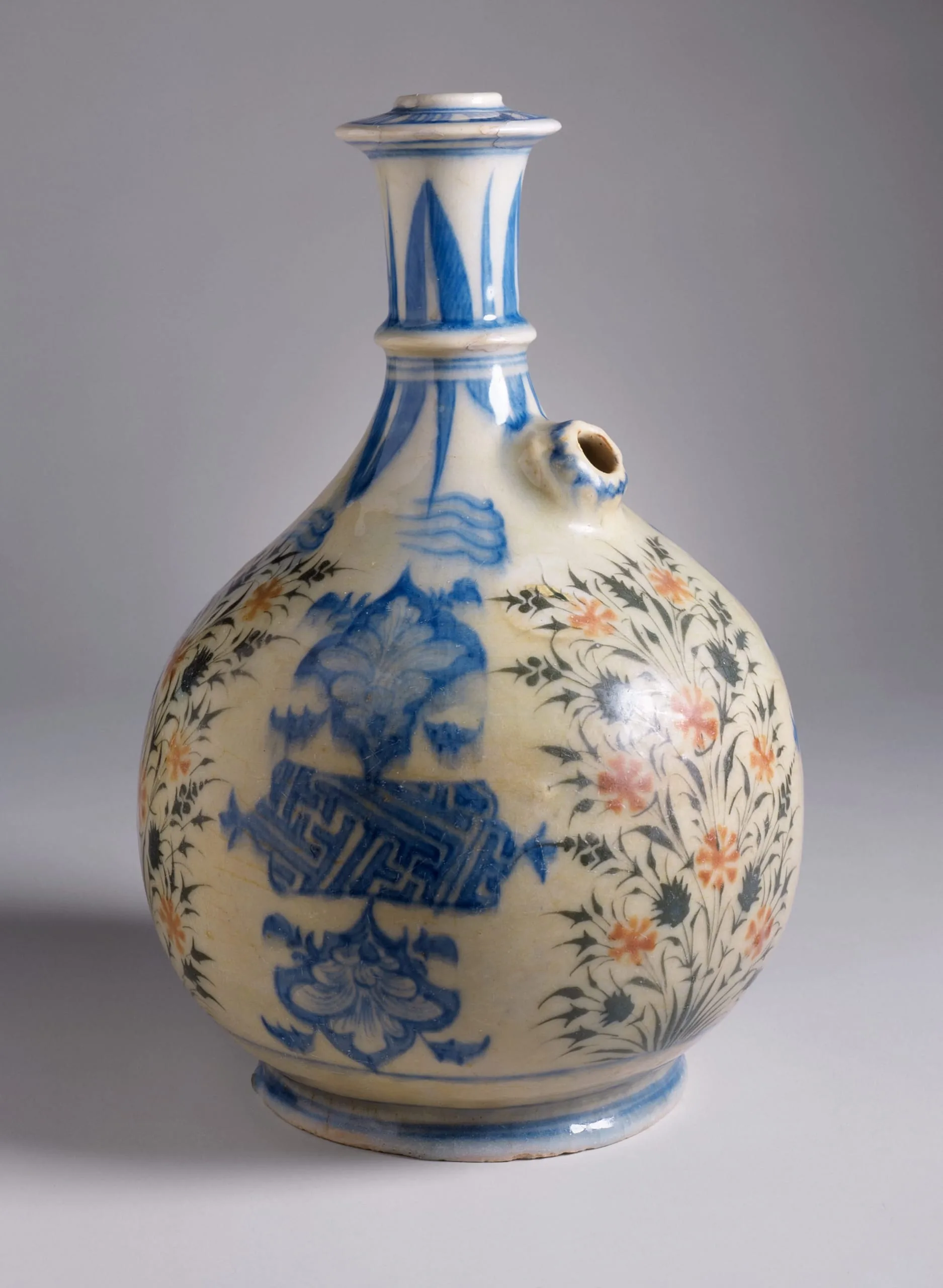
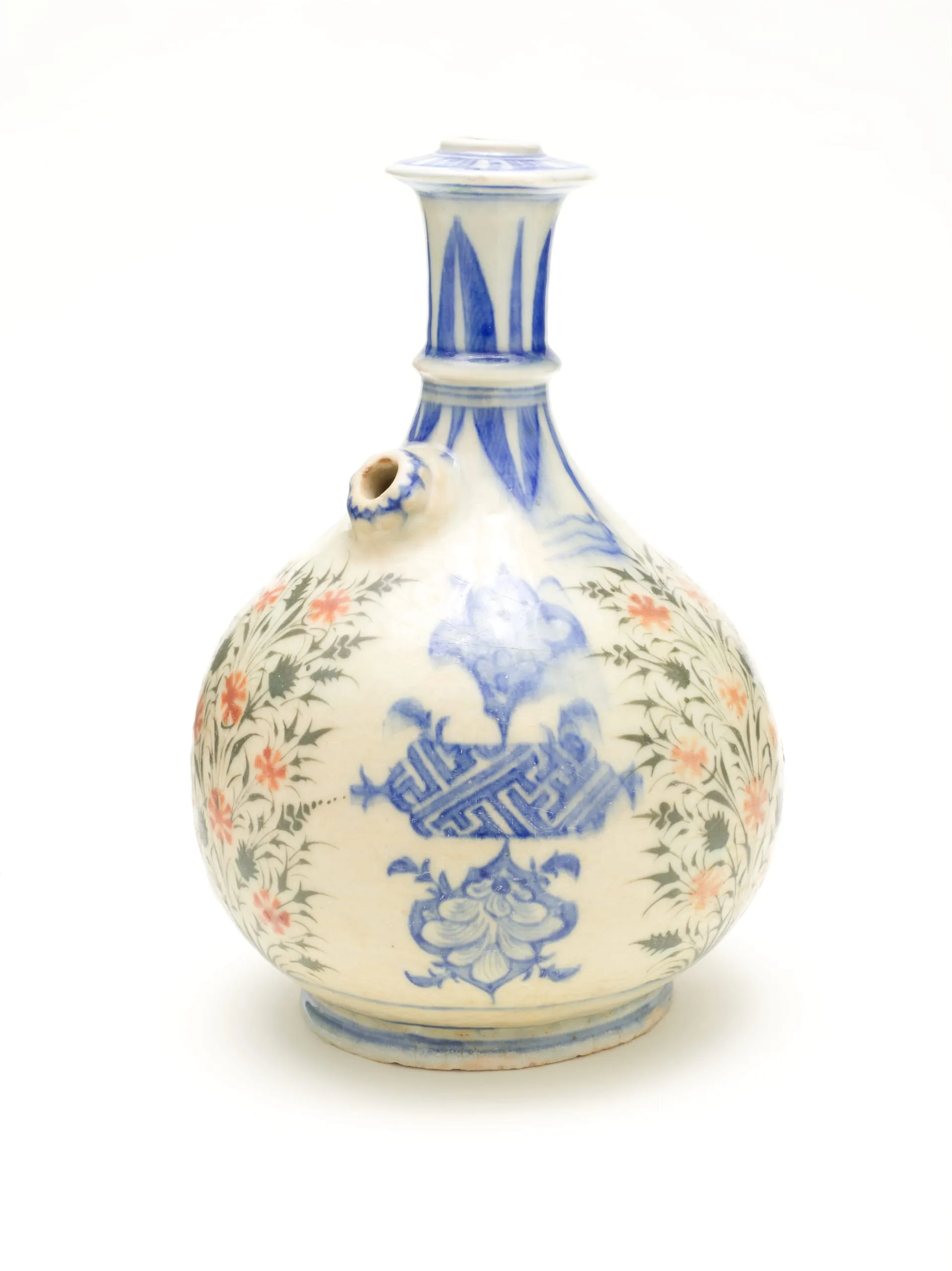
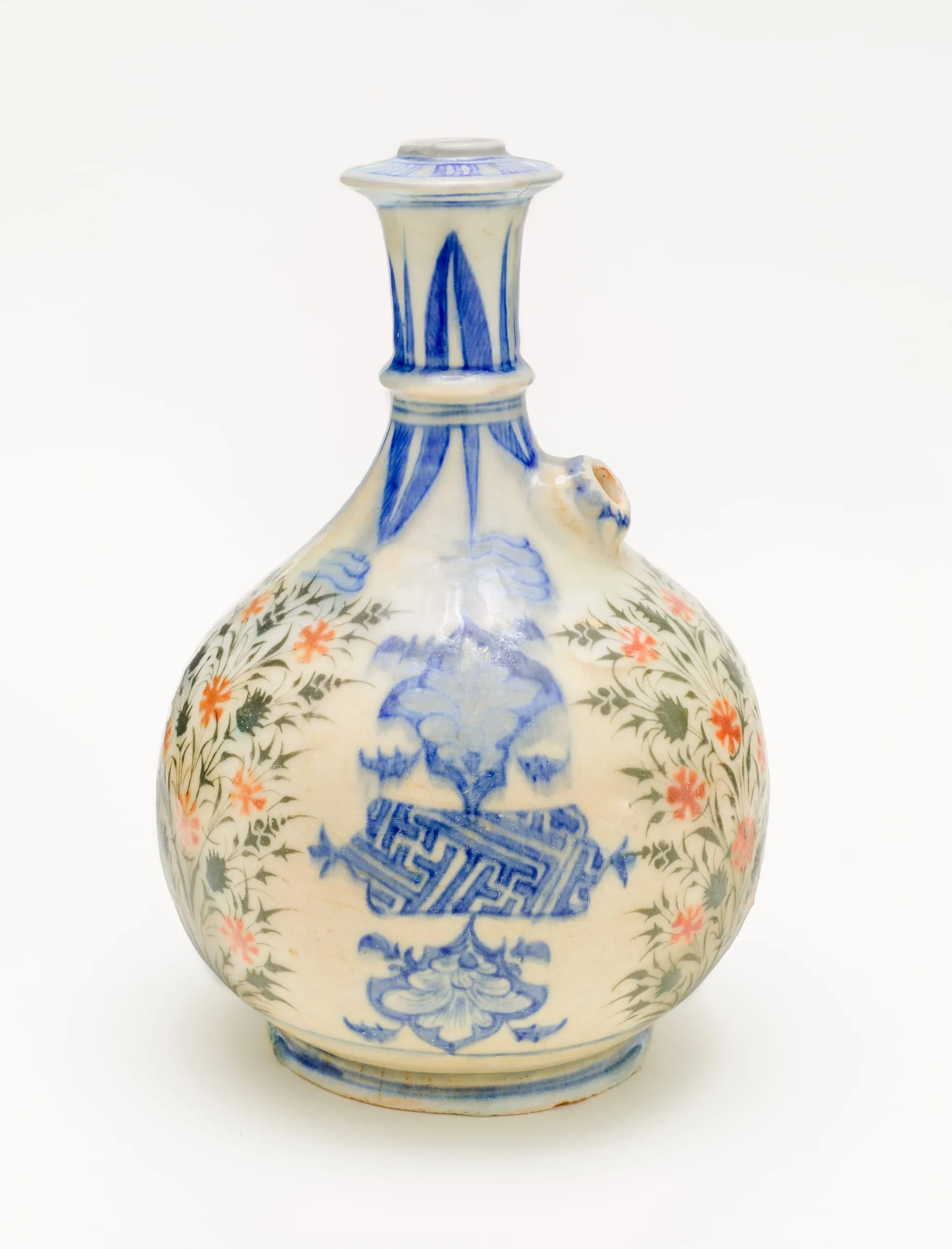
Kalian (water pipe)17th century

Not on view
Ceramic bottle-shaped vessel with spherical body and tall neck, decorated in cobalt blue, coral red, and green with a central geometric medallion and allover floral vine pattern
Porcelain bottle vase with globular body and tall cylindrical neck, decorated in underglaze blue and overglaze red and green enamels with scattered floral sprays, a central fret-pattern panel, and leaf motifs on the neck; small applied spout at shoulder.
Ceramic pilgrim flask with globular body and tall cylindrical neck, decorated in underglaze blue, orange, and gray with floral sprays and a central geometric fretwork panel on a cream ground; small spout at shoulder.
Title
Kalian (water pipe)
Place Made
Iran
Date Made
17th century
Medium
Fritware, underglaze slip- and stain-painted, incised
Dimensions
11 1/4 × 8 × 8 in. (28.58 × 20.32 × 20.32 cm)
Credit Line
The Madina Collection of Islamic Art, gift of Camilla Chandler Frost
Accession Number
M.2002.1.241
Classification
Ceramics
Collecting Area
Art of the Middle East: Islamic
Curatorial Notes

With the introduction of imported tobacco to the Iranian market around 1600 and its widespread domestic cultivation within a few decades, water pipes became a mainstay of daily life. Such implements were smoked at home for leisure by both men and women, in coffeehouses to stimulate discussion, and even in schools to help focus the mind of both teacher and pupil. They were produced in a variety of materials to satisfy consumers across the socioeconomic spectrum, from humble versions made of coconut shells to more elaborate metalwork and glazed ceramic forms, such as this example.
Selected Bibliography
  • Lo Terrenal y lo Divino: Arte Islámico siglos VII al XIX Colección del Museo de Arte del Condado de Los Ángeles. Santiago: Centro Cultural La Moneda, 2015.