- Title
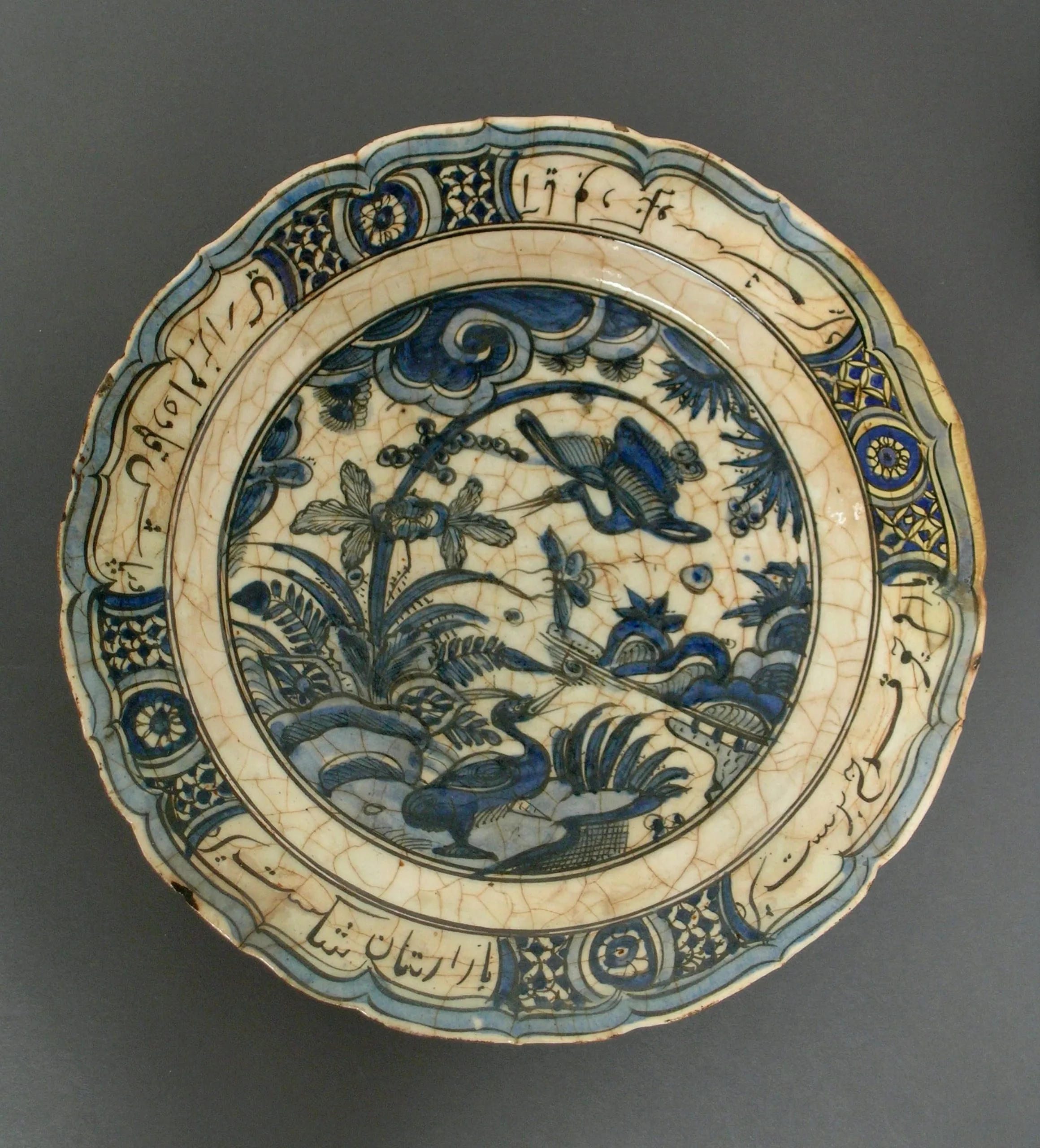
- Dish
- Date Made
- 17th century
- Medium
- Fritware, underglaze-painted
- Dimensions
- Height: 1 15/16 in. (4.92 cm); Diameter: 10 5/8 in. (26.98 cm)
- Accession Number
- M.2002.1.220
- Curatorial Notes
The introduction of blue and white porcelain from China to the Islamic world around the early fourteenth century initiated a taste for the wares that endures to the present day. Although they lacked the raw materials, notably kaolin, to create true porcelain, local industries such as those in Iran imitated its white body while also copying Chinese decoration and sometimes even seal-marks. Persian imitations were sufficiently successful that seventeenth-century Dutch merchants exported them to Europe under the guise of being Chinese. While the central decoration of this vessel is derived from a Chinese model, the poetic Persian inscription around the rim suggests it was intended for a local market. It reads: "When my Beloved takes a goblet in hand,/ the bazar of beautiful idols becomes bankrupt./ I have fallen at his feet, wailing, hoping,/ that he will take my hand."