LACMA

ShopMembershipMyLACMATickets
LACMA
Los Angeles County Museum of Art
5905 Wilshire Blvd.
Los Angeles, CA 90036
info@lacma.org
(323) 857-6000
Sign up to receive emails
Subscribe
© Museum Associates 2026
  • About LACMA
  • Jobs
  • Building LACMA
  • Host An Event
  • Unframed
  • Press
  • FAQs
  • Log in to MyLACMA
  • Privacy Policy
© Museum Associates 2026
Collections

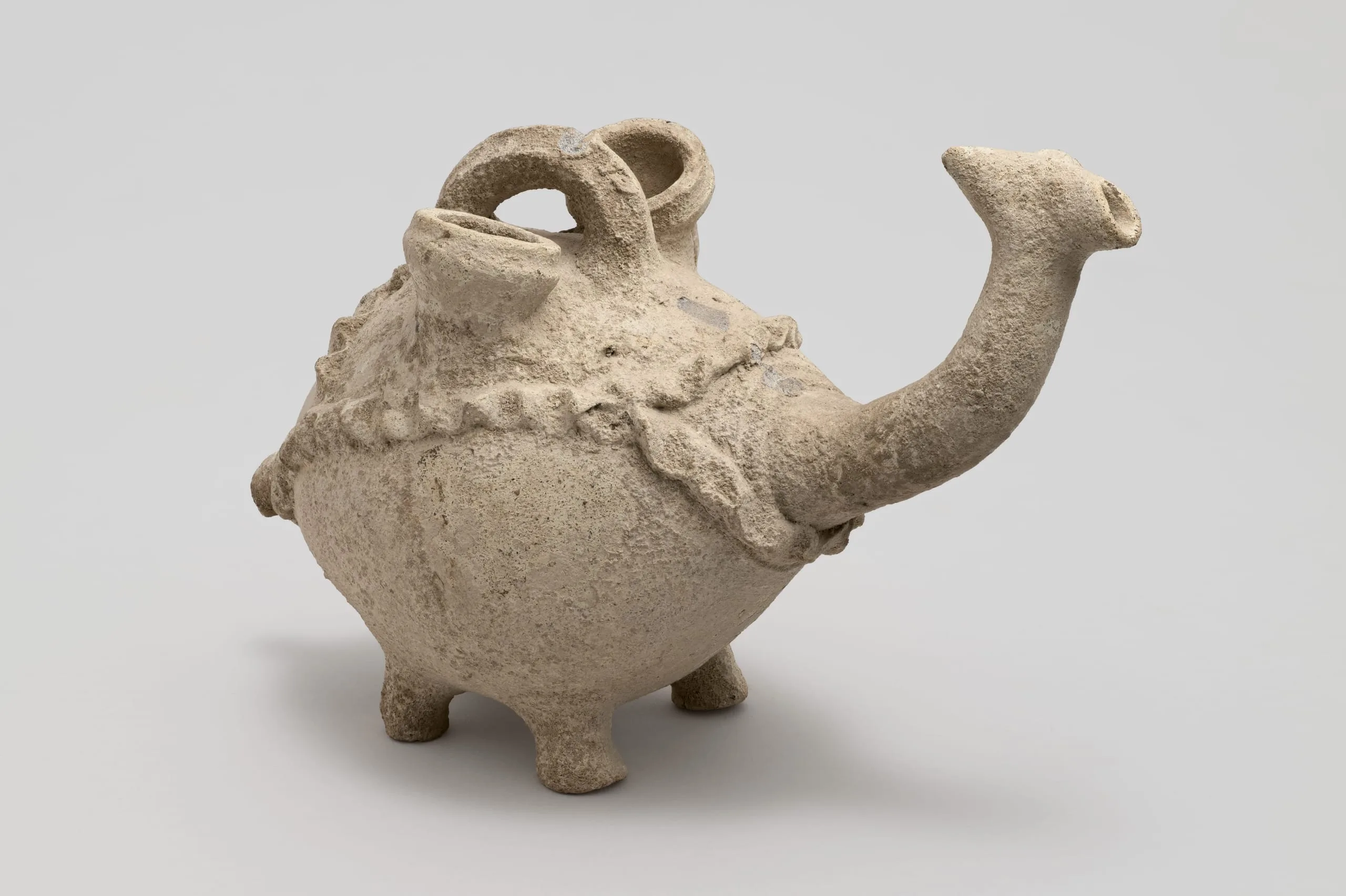
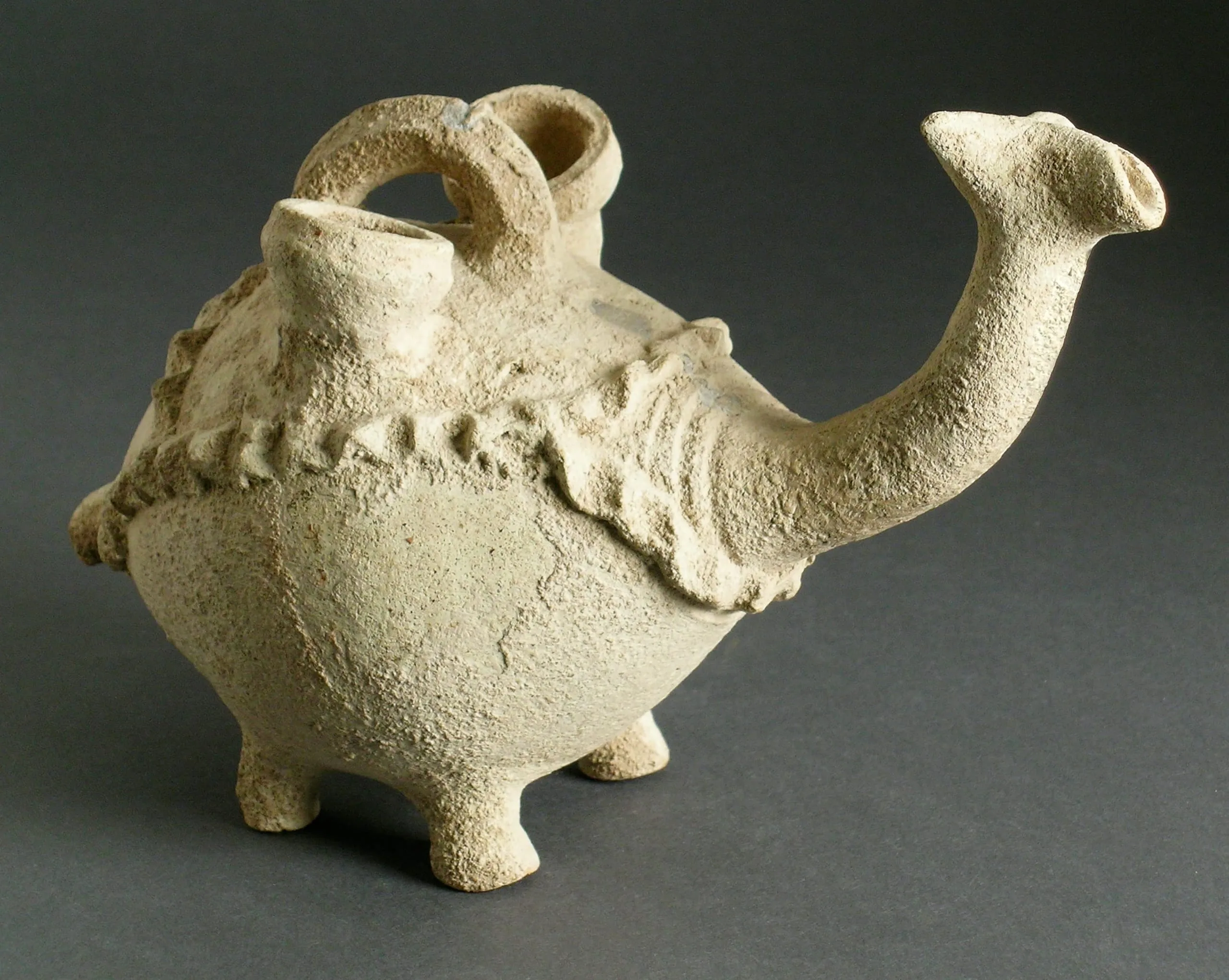
Vessel in the Form of a Camel8th-9th century

On view:
Geffen Galleries
Unglazed ceramic vessel modeled as a round-bodied camel with four stubby legs, a loop handle forming the hump, a spout-like neck and head, and a coarse sandy tan surface
Ceramic vessel in the form of a camel, with a globular body on four short legs, raised neck and head at front, loop handle and spout at top, and applied relief decoration along the back suggesting a saddle blanket; unglazed buff clay with rough, sandy surface texture.

Unknown, Vessel in the Form of a Camel, 8th-9th century, Los Angeles County Museum of Art, The Madina Collection of Islamic Art, gift of Camilla Chandler Frost, photo © Museum Associates/LACMA

Title
Vessel in the Form of a Camel
Place Made
Syria
Date Made
8th-9th century
Medium
Earthenware with applied decoration
Dimensions
6 x 9 in. (15.24 x 22.86 cm)
Credit Line
The Madina Collection of Islamic Art, gift of Camilla Chandler Frost
Accession Number
M.2002.1.144
Classification
Ceramics
Collecting Area
Art of the Middle East: Islamic
Curatorial Notes

This playful vessel takes the form of a rotund camel on stout legs. Its pinched spout suggests the dromedary’s head, set on its characteristically long, elegant neck. Two round openings at the top for filling the vessel allude to the baskets or packs strapped to the beast of burden, while the applied ornament mimics the harnesses that would secure them in place. A small rounded handle at the top, resembling the camel’s hump, allows the user to lift the vessel for pouring. This zoomorphic work demonstrates how a potter could skillfully transform a utilitarian object into a clever allusion to the everyday world in which camels were an essential means of transportation (also see M.88.129.187). Yet unlike the itinerant camel, this vessel may have complemented a sedentary life of leisure and luxury, creating a humorous juxtaposition. Because it is unglazed, which allows for evaporation and cooling, it was probably intended for drinking fruit-enhanced or plain water.

2024