LACMA

ShopMembershipMyLACMATickets
LACMA
Los Angeles County Museum of Art
5905 Wilshire Blvd.
Los Angeles, CA 90036
info@lacma.org
(323) 857-6000
Sign up to receive emails
Subscribe
© Museum Associates 2025

Museum Hours

Monday

11 am–6 pm

Tuesday

11 am–6 pm

Wednesday

Closed

Thursday

11 am–6 pm

Friday

11 am–8 pm

Saturday

10 am–7 pm

Sunday

10 am–7 pm


  • About LACMA
  • Jobs
  • Building LACMA
  • Host An Event
  • Unframed
  • Press
  • FAQs
  • Log in to MyLACMA
  • Privacy Policy
© Museum Associates 2025
Collections

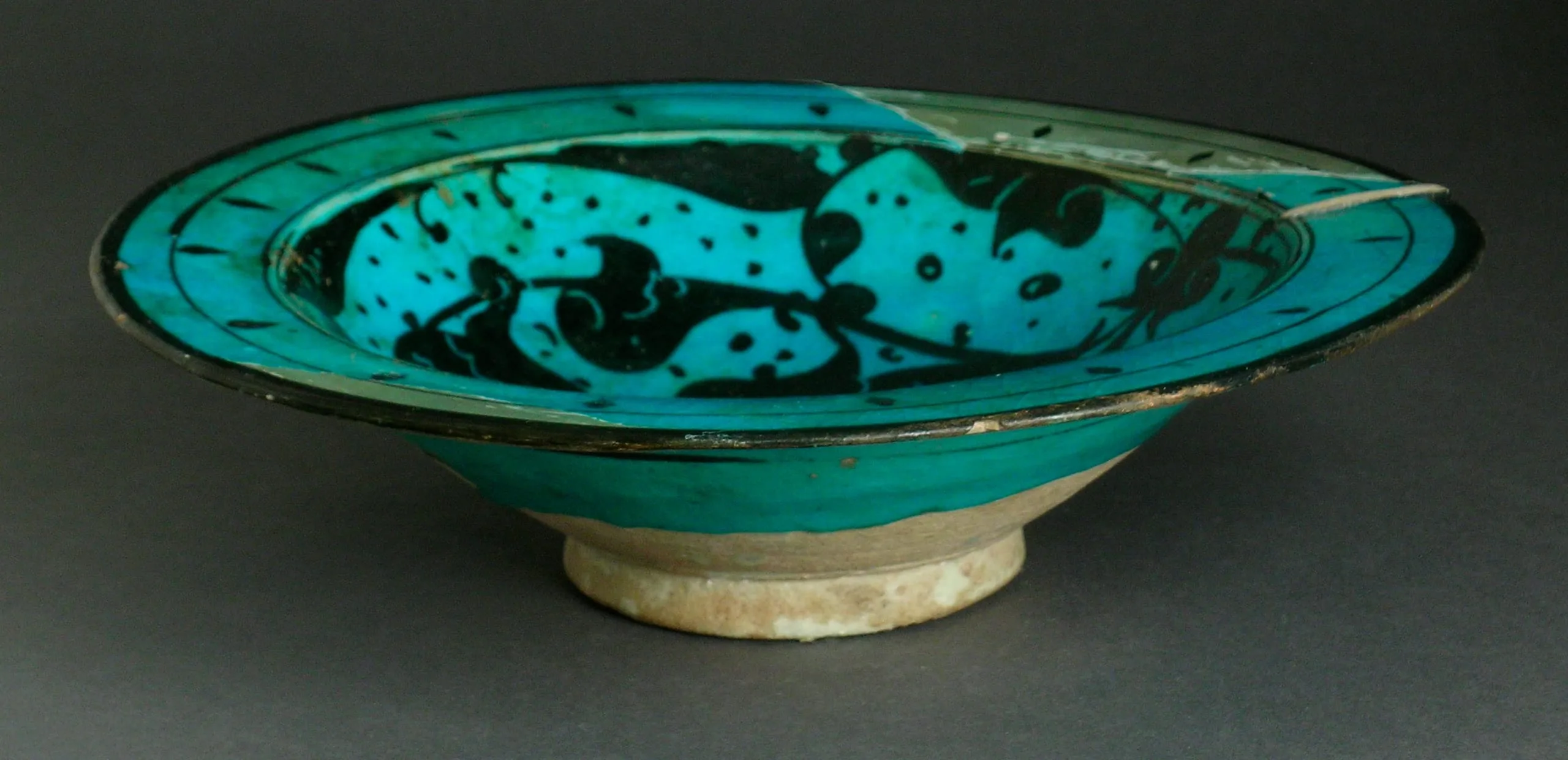
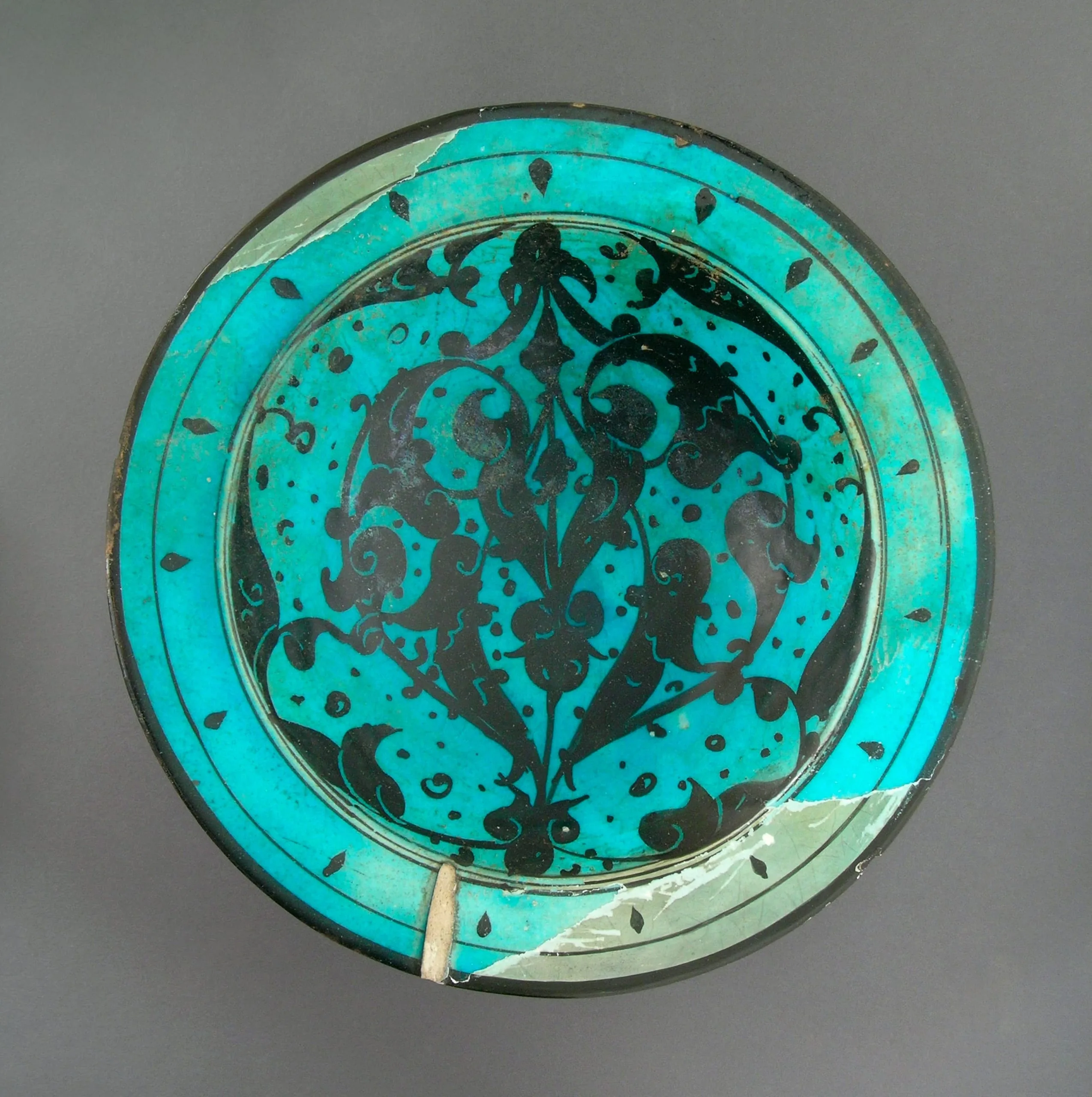
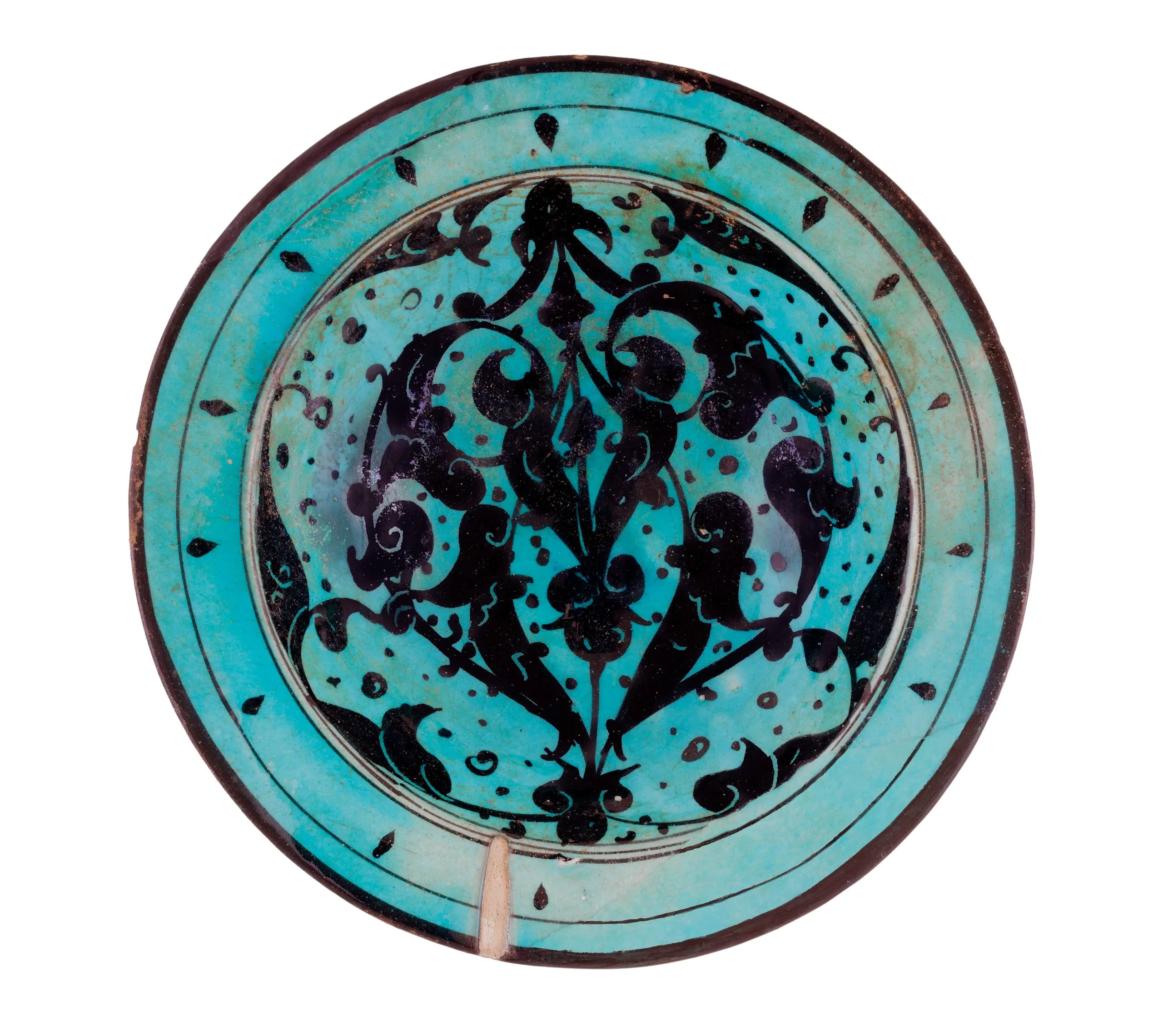
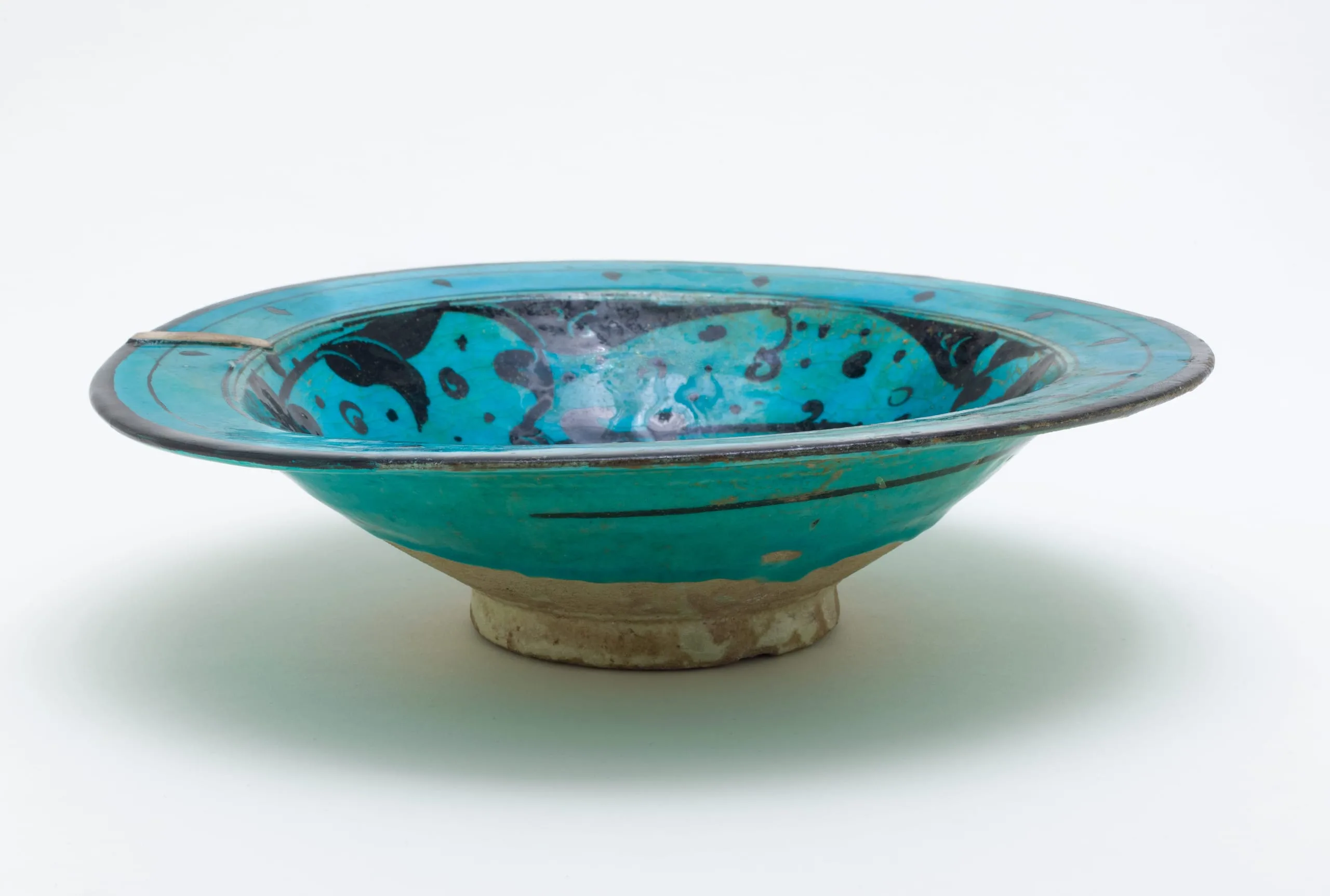
Bowllate 12th-early 13th century

Not on view
Ceramic dish viewed from above, covered in turquoise glaze with bold black arabesque scrollwork in the well and scattered leaf motifs on the broad flat rim
Ceramic bowl with wide flat rim and conical body on a low foot, covered in vibrant turquoise glaze with black and purple painted decoration of organic and figural motifs in the interior; unglazed buff clay visible at the base.
Ceramic bowl with wide flat rim and low foot, turquoise glaze with bold black painted animal and foliate motifs, small dots scattered across the interior; unglazed buff-colored base visible.
Ceramic dish viewed from above, with vivid turquoise glaze and bold black underglaze arabesque scrollwork in the central well, surrounded by concentric rings on the rim; visible cracks and restoration along the lower edge.
Title
Bowl
Place Made
Syria
Date Made
late 12th-early 13th century
Medium
Fritware, underglaze-painted and incised
Dimensions
2 7/8 x 10 5/8 in. (7.3 x 26.98 cm)
Credit Line
The Madina Collection of Islamic Art, gift of Camilla Chandler Frost
Accession Number
M.2002.1.75
Classification
Ceramics
Collecting Area
Art of the Middle East: Islamic
Curatorial Notes

This handsome turquoise and black bowl belongs to a type of ceramic commonly known as Raqqa ware. In the nineteenth century the Syrian city of Raqqa became a source of fascination for Europeans who read about it and its famous king, Harun al-Rashid, in The Thousand and One Nights, sparking a demand for ceramics from the site that in turn led a number of dealers to misattribute the provenance of their wares. New research has shown that Raqqa was not the exclusive source for such wares. In fact they were produced elsewhere in Syria as well as in Anatolia and Egypt.
Selected Bibliography
  • Lo Terrenal y lo Divino: Arte Islámico siglos VII al XIX Colección del Museo de Arte del Condado de Los Ángeles. Santiago: Centro Cultural La Moneda, 2015.

  • Komaroff, Linda. Beauty and Identity: Islamic Art from the Los Angeles County Museum of Art. Los Angeles: Los Angeles County Museum of Art, 2016.