- Title
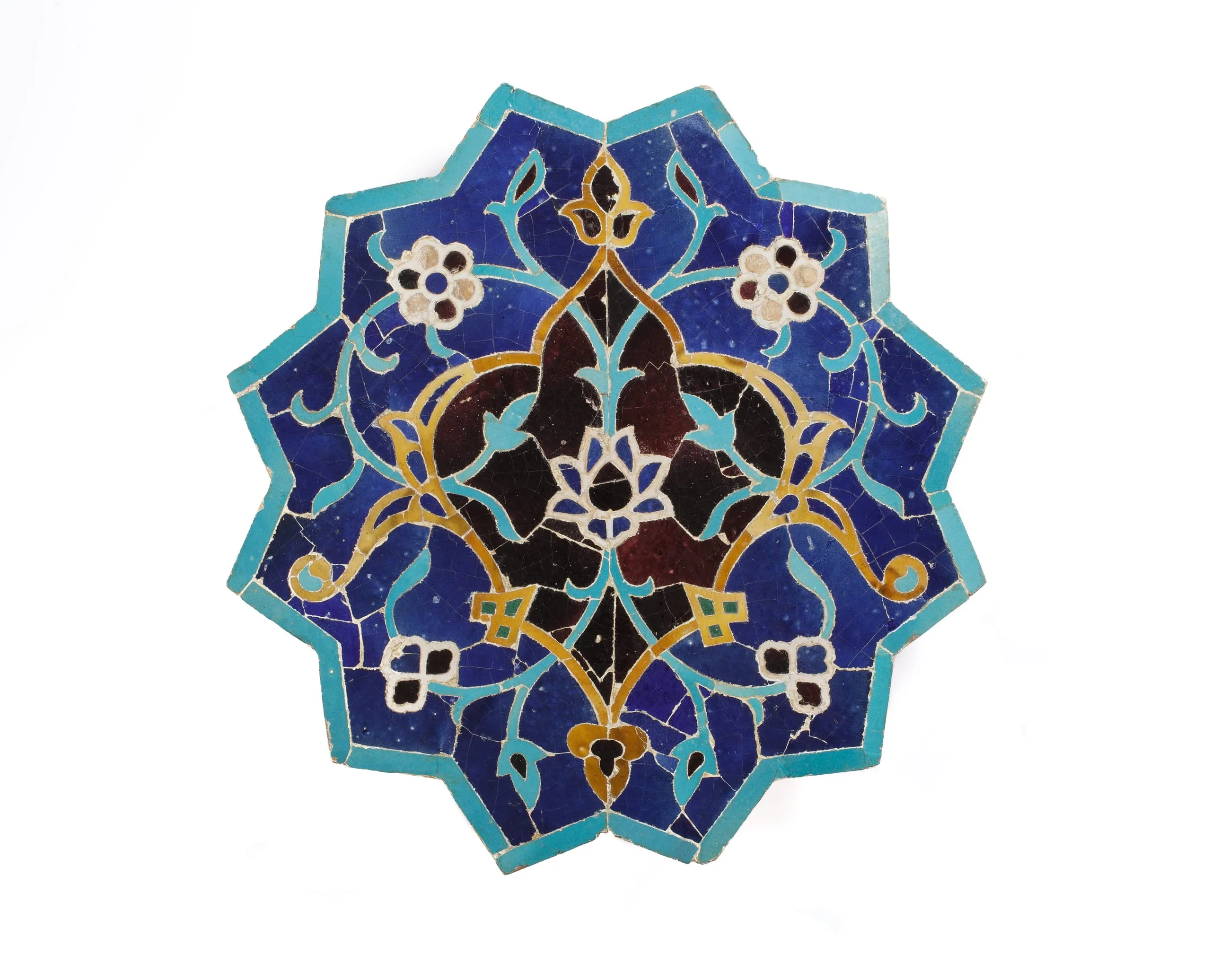
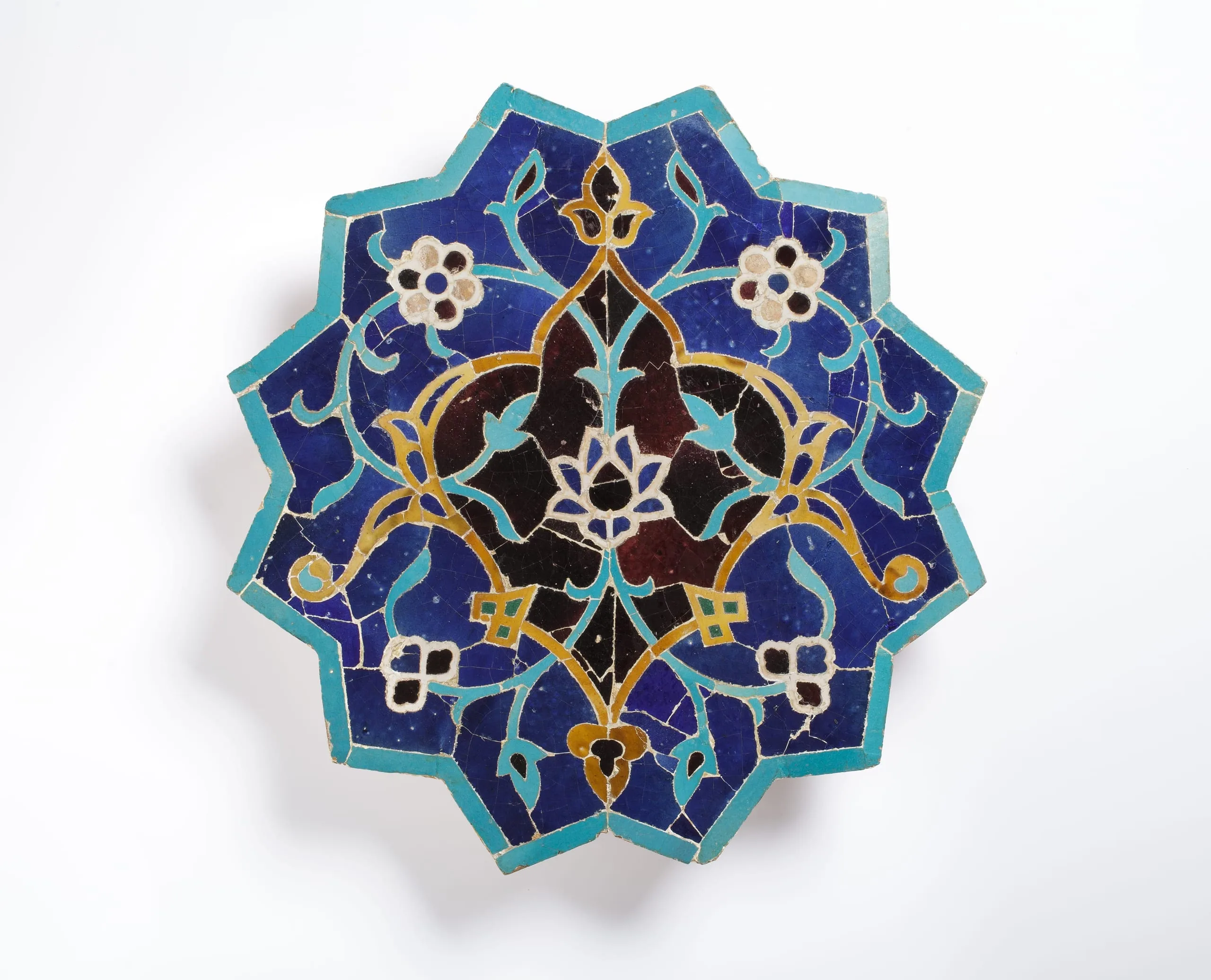
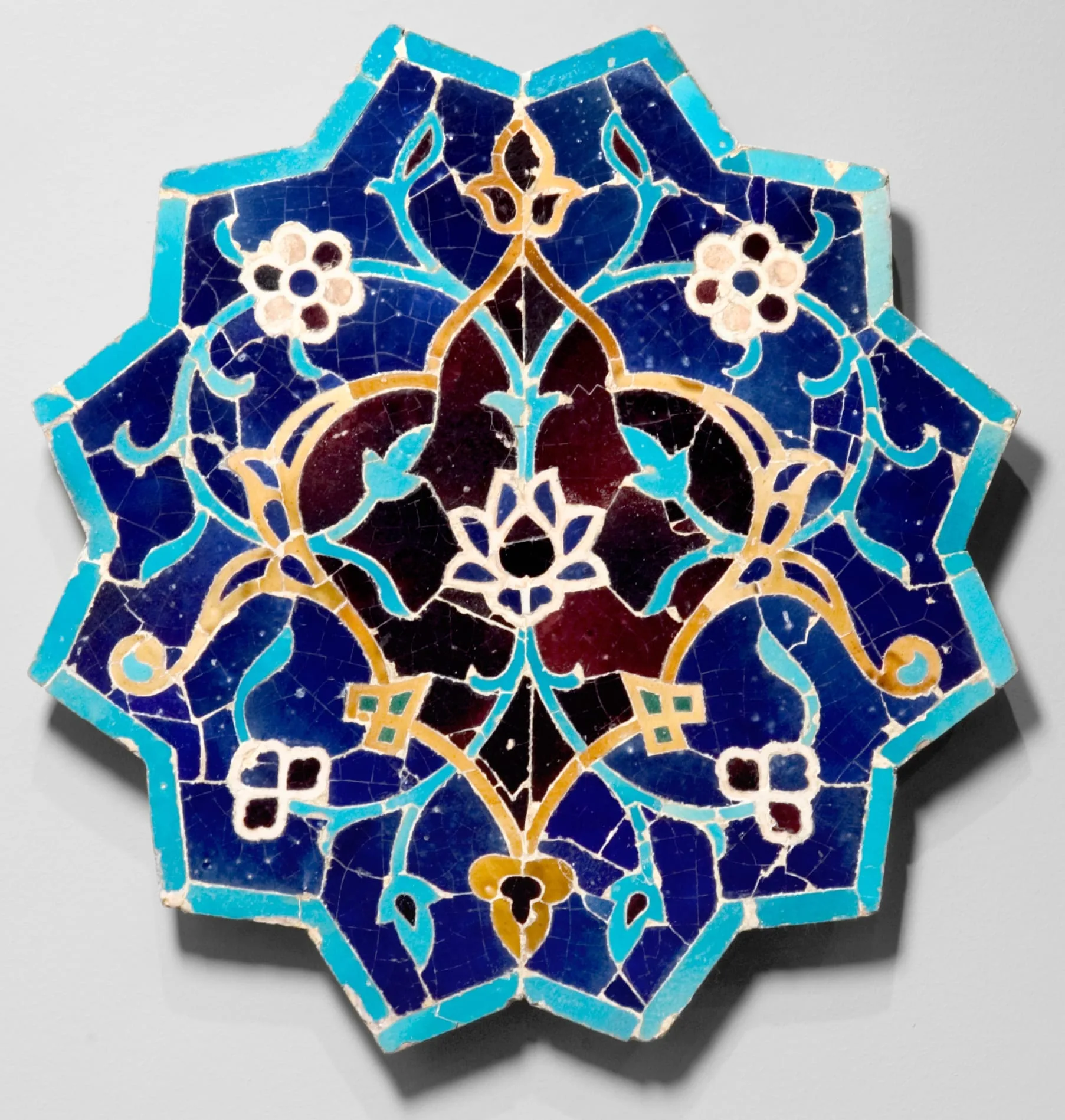
- Tile
- Date Made
- 15th century
- Medium
- Fritware, glazed, cut to shape and assembled as mosaic
- Dimensions
- Diameter: 23 1/2 in. (59.69 cm); Depth: 1 1/2 in. (3.81 cm)
- Accession Number
- M.2002.1.19
- Curatorial Notes
This tile belongs to the period of Timurid rule in Iran and Central Asia (1370–1506). The last great dynasty to emerge from the Central Asian steppe, the Timurids sponsored buildings that were often constructed on an enormous scale and sheathed in an elaborate decorative skin of brilliant glazed tile. Since the primary structural material was dun-colored baked brick, the tiles provided colorful embellishment. Elements of the floral design of this tile were cut from glazed tiles of different colors and assembled as a mosaic; it was set in place on the exterior of a building, where it joined others as part of a larger, more complicated design.
- Selected Bibliography
- Los Angeles County Museum of Art. New York: Thames and Hudson, 2003.
- Komaroff, Linda. Islamic Art at the Los Angeles County Museum of Art. Los Angeles: Museum Associates, 2005.
"A Selection of 2002 Museum Acquisitions." Apollo 156, no. 490 (December 2002): 15-46.
Lo Terrenal y lo Divino: Arte Islámico siglos VII al XIX Colección del Museo de Arte del Condado de Los Ángeles. Santiago: Centro Cultural La Moneda, 2015.
- Komaroff, Linda. Beauty and Identity: Islamic Art from the Los Angeles County Museum of Art. Los Angeles: Los Angeles County Museum of Art, 2016.
- Komaroff, Linda. Collecting Islamic Art at the Los Angeles County Museum of Art: A Curatorial Perspective. Los Angeles: Art Catalogues; LACMA, 2017.
- Los Angeles County Museum of Art. Transformation: the LACMA Campaign. Los Angeles: Museum Associates, 2008.