LACMA

ShopMembershipMyLACMATickets
LACMA
Los Angeles County Museum of Art
5905 Wilshire Blvd.
Los Angeles, CA 90036
info@lacma.org
(323) 857-6000
Sign up to receive emails
Subscribe
© Museum Associates 2026
  • About LACMA
  • Jobs
  • Building LACMA
  • Host An Event
  • Unframed
  • Press
  • FAQs
  • Log in to MyLACMA
  • Privacy Policy
© Museum Associates 2026
Collections

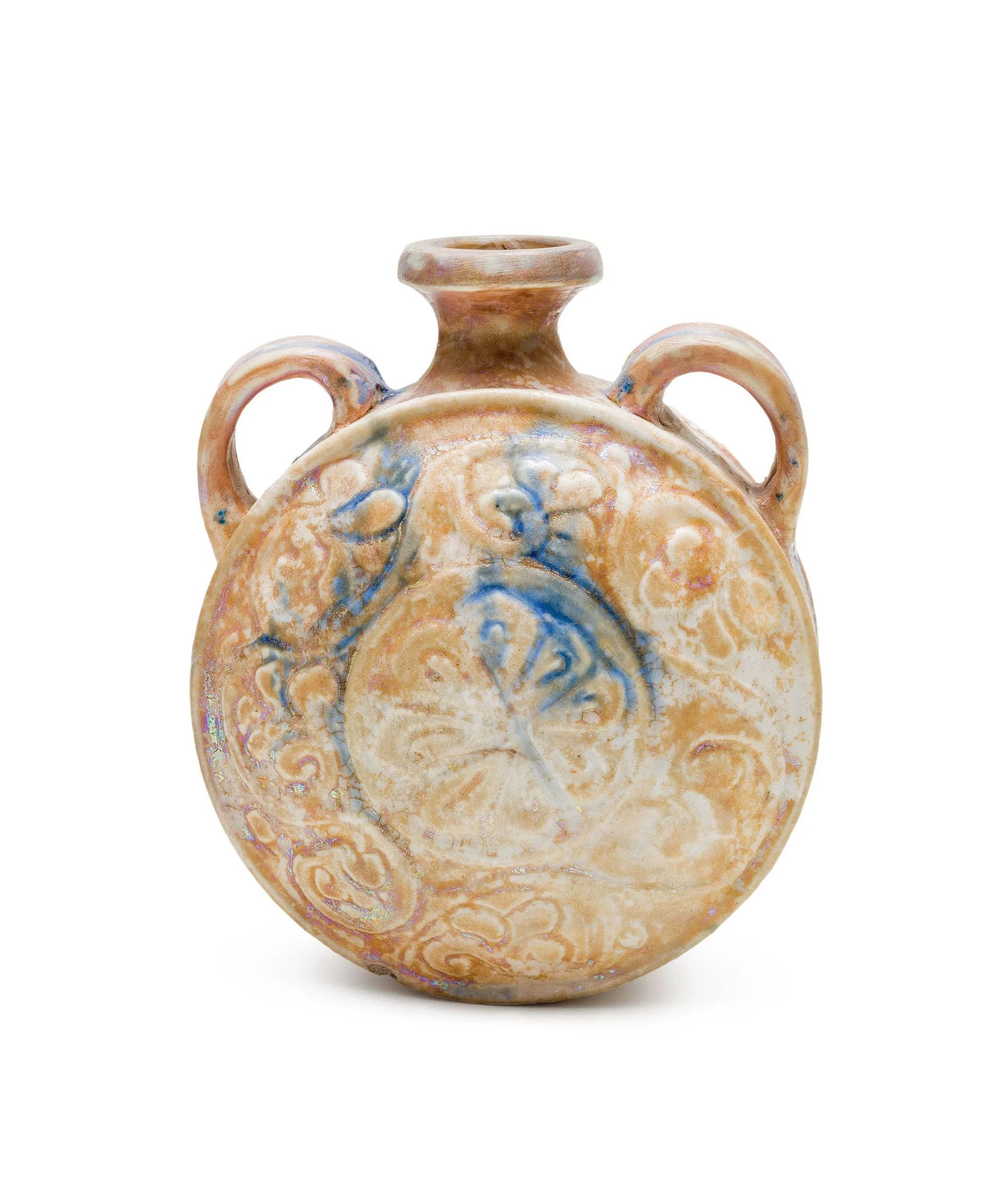
Canteenmid-12th century

On view:
Geffen Galleries, Earth and Water
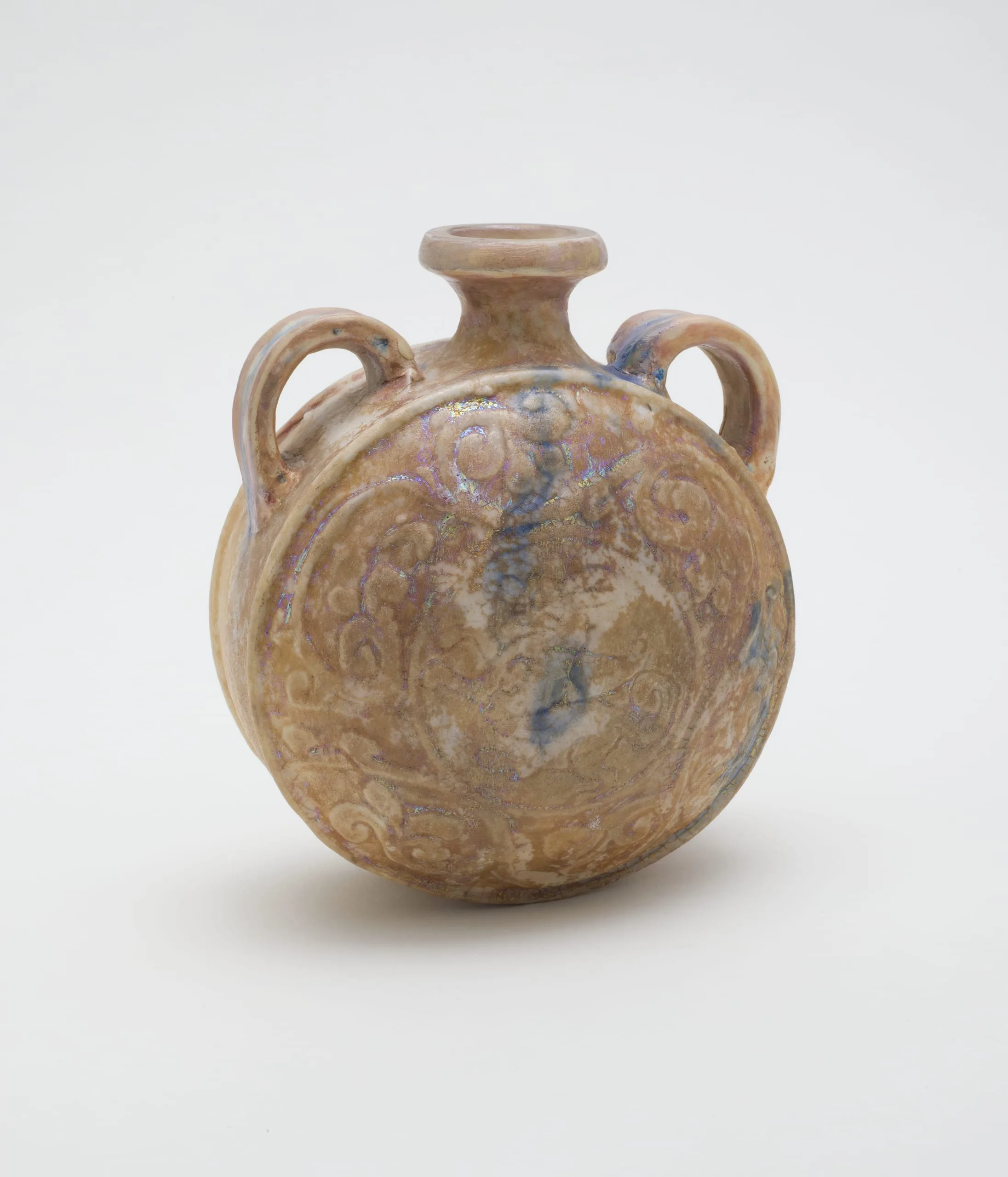
Ceramic pilgrim flask with flattened spherical body, two loop handles, and honey-tan glaze painted with cobalt blue bird and scrolling relief decoration
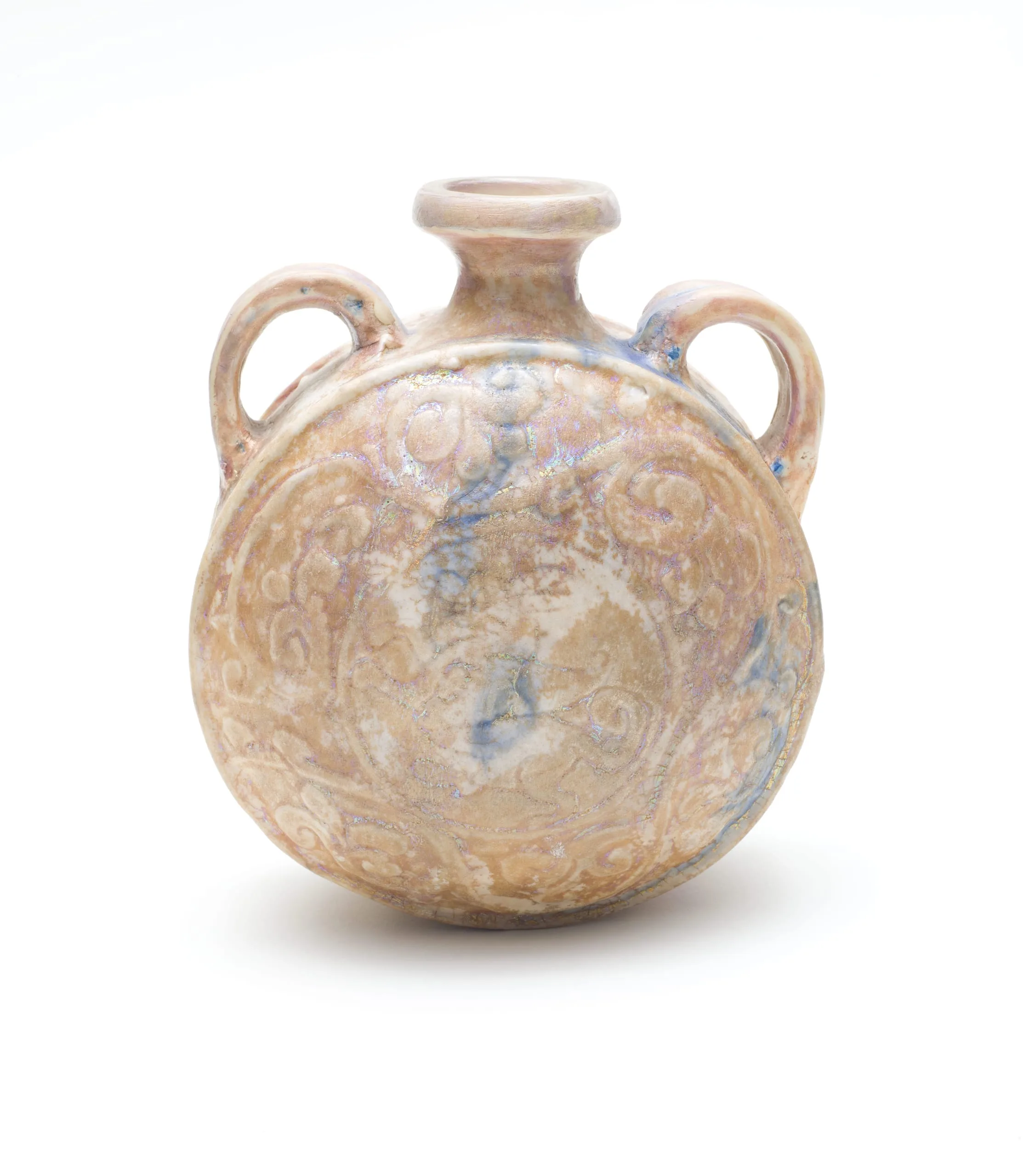
Ceramic flask with a flattened spherical body, narrow neck, and two small loop handles, covered in a tan luster glaze with iridescent blue and purple patches and molded scrolling foliate decoration.
Ceramic pilgrim flask with flattened spherical body, narrow neck, and two small loop handles, decorated with scrolling foliate relief patterns in pale tan and faded blue glaze with iridescent surface weathering.
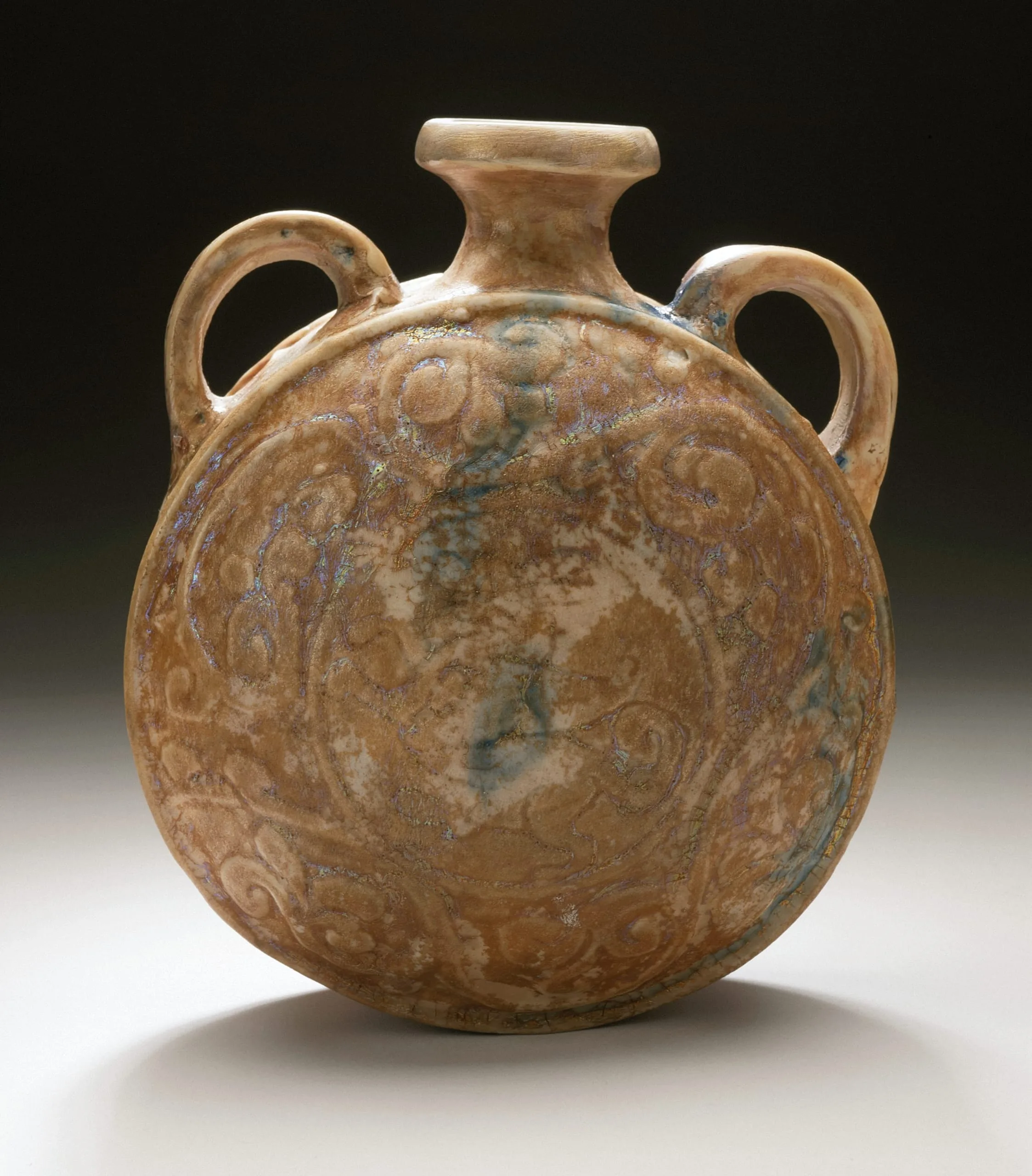
Ceramic pilgrim flask with flat circular body, narrow neck, and two loop handles, covered in a weathered buff glaze with iridescent blue-green patches and molded scrolling vine decoration across the surface.
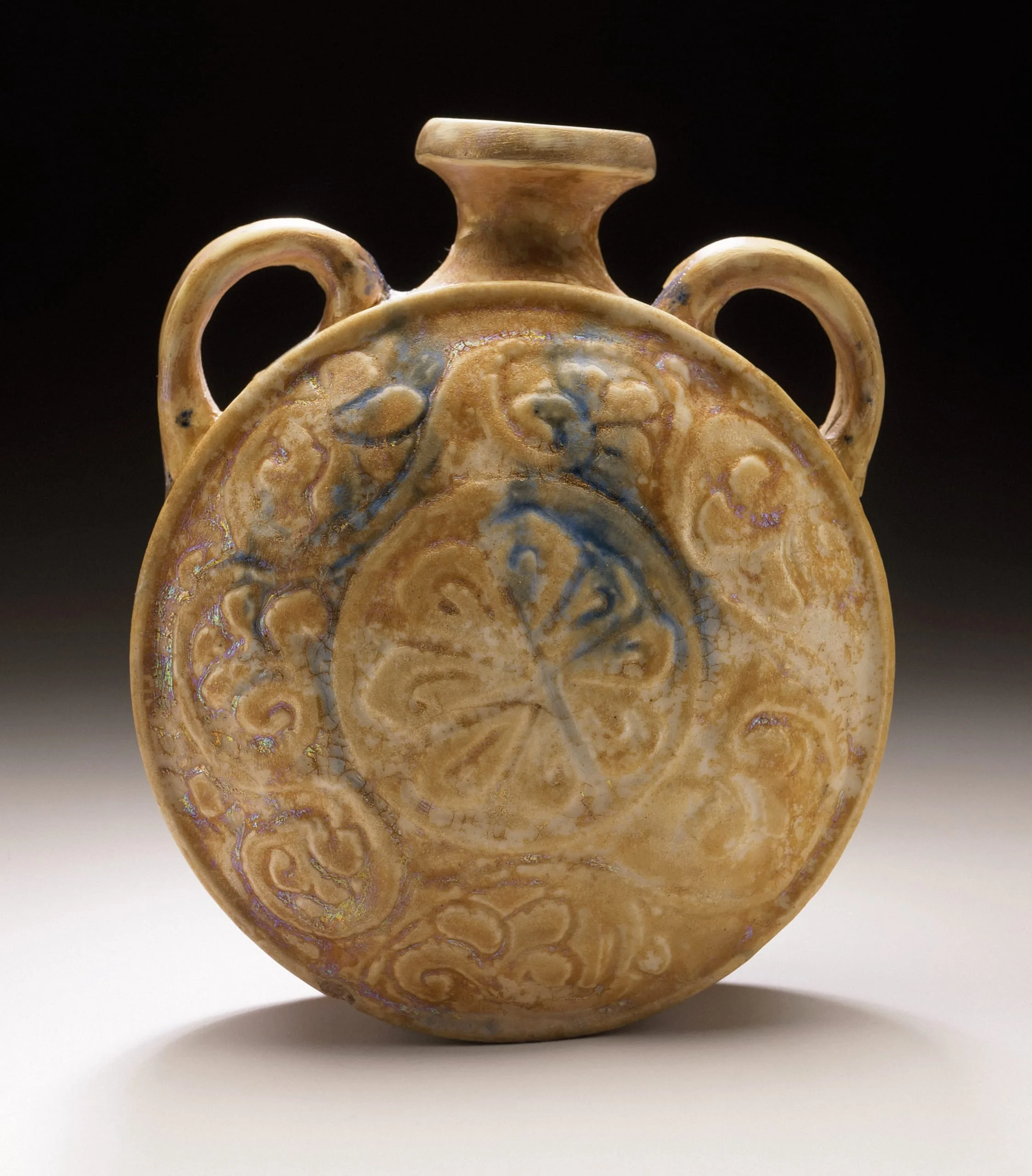
Ceramic pilgrim flask with flat circular body, two loop handles, and short cylindrical neck; buff glaze with iridescent sheen and blue-accented molded relief decoration of scrolling foliage and a central winged motif.

Unknown, Canteen, mid-12th century, Los Angeles County Museum of Art, The Madina Collection of Islamic Art, gift of Camilla Chandler Frost, photo © Museum Associates/LACMA

Title
Canteen
Place Made
Syria
Date Made
mid-12th century
Medium
Fritware, carved and glazed, with applied neck and handle
Dimensions
Height: 6 1/2 in. (16.51 cm)
Credit Line
The Madina Collection of Islamic Art, gift of Camilla Chandler Frost
Accession Number
M.2002.1.140
Classification
Ceramics
Collecting Area
Art of the Middle East: Islamic
Curatorial Notes

Traceable to Roman times, the basic form of the canteen has changed little over the centuries and is still in use today. While medieval Islamic canteens are sometimes referred to as pilgrim flasks, most seem to have played a more ordinary role as personal water vessels designed for portability. Although made in a variety of materials, canteens in the Islamic world most often were ceramic, and were frequently left unglazed to allow for evaporation to keep their contents cooler. Their applied handles enabled them to be suspended from a saddle or a belt. Despite their humble material, they were nonetheless often richly decorated, as can be seen in this example embellished with foliate designs carved in relief and glazed.

2024
Selected Bibliography
  • Lo Terrenal y lo Divino: Arte Islámico siglos VII al XIX Colección del Museo de Arte del Condado de Los Ángeles. Santiago: Centro Cultural La Moneda, 2015.

  • Komaroff, Linda. Beauty and Identity: Islamic Art from the Los Angeles County Museum of Art. Los Angeles: Los Angeles County Museum of Art, 2016.
  • Komaroff, Linda, editor. Dining with the Sultan: The Fine Art of Feasting. Los Angeles: Los Angeles County Museum of Art; New York: DelMonico Books, 2023.