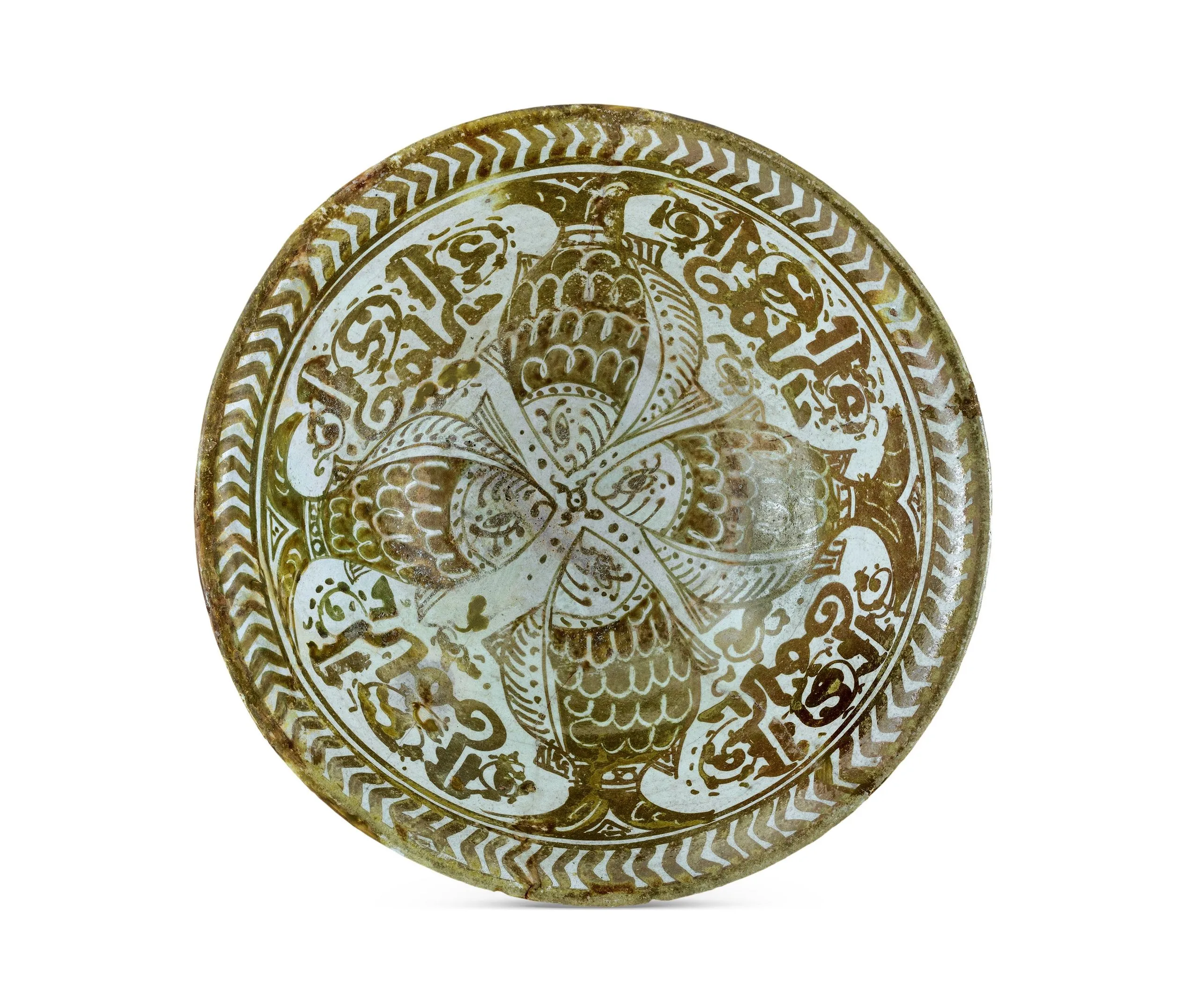
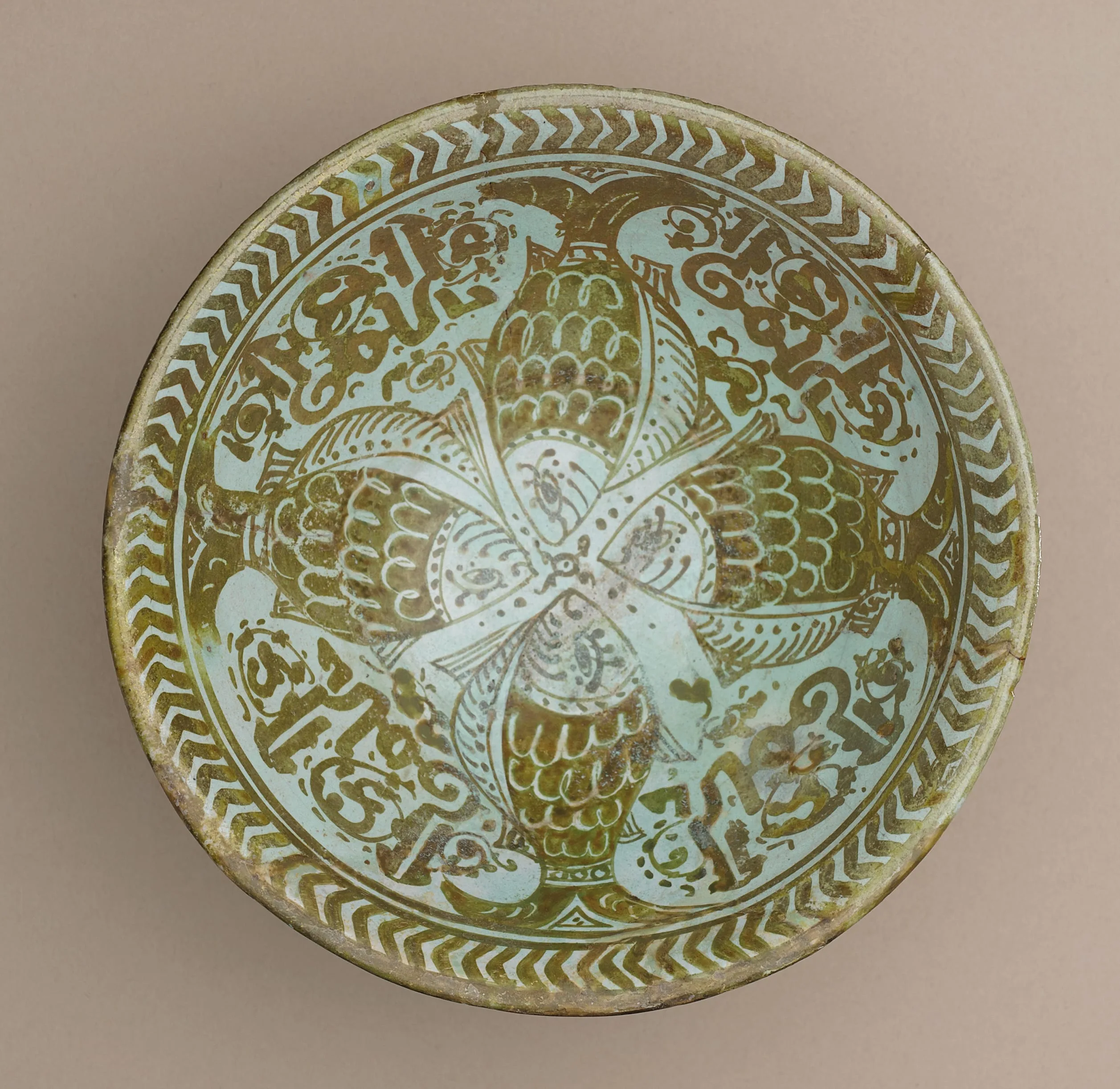
The art of luster-painted ceramics was likely introduced in Egypt at least by the early eleventh century under the Fatimid dynasty (969−1171). Though probably not made for the Fatimid court, luster-painted ceramic vessels of this type were nonetheless luxury wares, in part because they required two firings. In the first firing, an opaque, generally white but here turquoise glaze was applied, and in the second, the design was daubed from a paste that included silver and copper compounds ground with sulfur. The second firing took place in a special kiln that restricted the flow of oxygen; this reducing atmosphere forced the metals to give up their oxygen, thereby creating a thin, lustrous film that fused with the glazed surface.
Here, on the opaque, turquoise-glazed ground, four golden fish alternate with an inscription repeating the Arabic word for prosperity. Given the provenance of this small bowl and Egypt’s prominence as a riverine culture, it is tempting to think of the fish not only as symbols of prosperity but as food. A large number of fish recipes are associated with medieval Egyptian cuisine, best known from its capital, Cairo. Enjoying such a meal from this bowl, to fully reveal the luster-painted creatures within, must have enhanced the pleasure of the diners.
2025