LACMA

ShopMembershipMyLACMATickets
LACMA
Los Angeles County Museum of Art
5905 Wilshire Blvd.
Los Angeles, CA 90036
info@lacma.org
(323) 857-6000
Sign up to receive emails
Subscribe
© Museum Associates 2025

Museum Hours

Monday

11 am–6 pm

Tuesday

11 am–6 pm

Wednesday

Closed

Thursday

11 am–6 pm

Friday

11 am–8 pm

Saturday

10 am–7 pm

Sunday

10 am–7 pm


  • About LACMA
  • Jobs
  • Building LACMA
  • Host An Event
  • Unframed
  • Press
  • FAQs
  • Log in to MyLACMA
  • Privacy Policy
© Museum Associates 2025
Collections

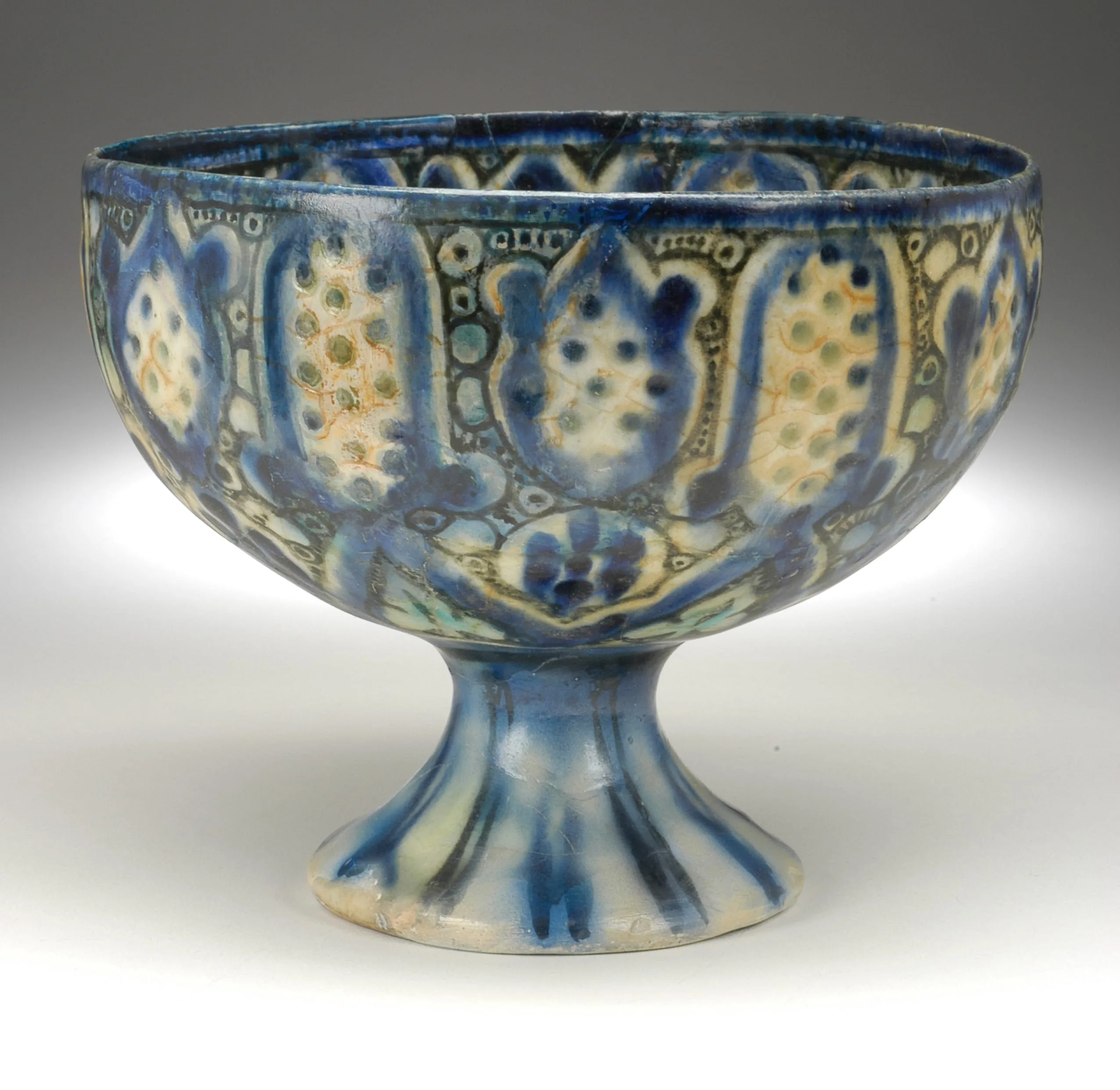
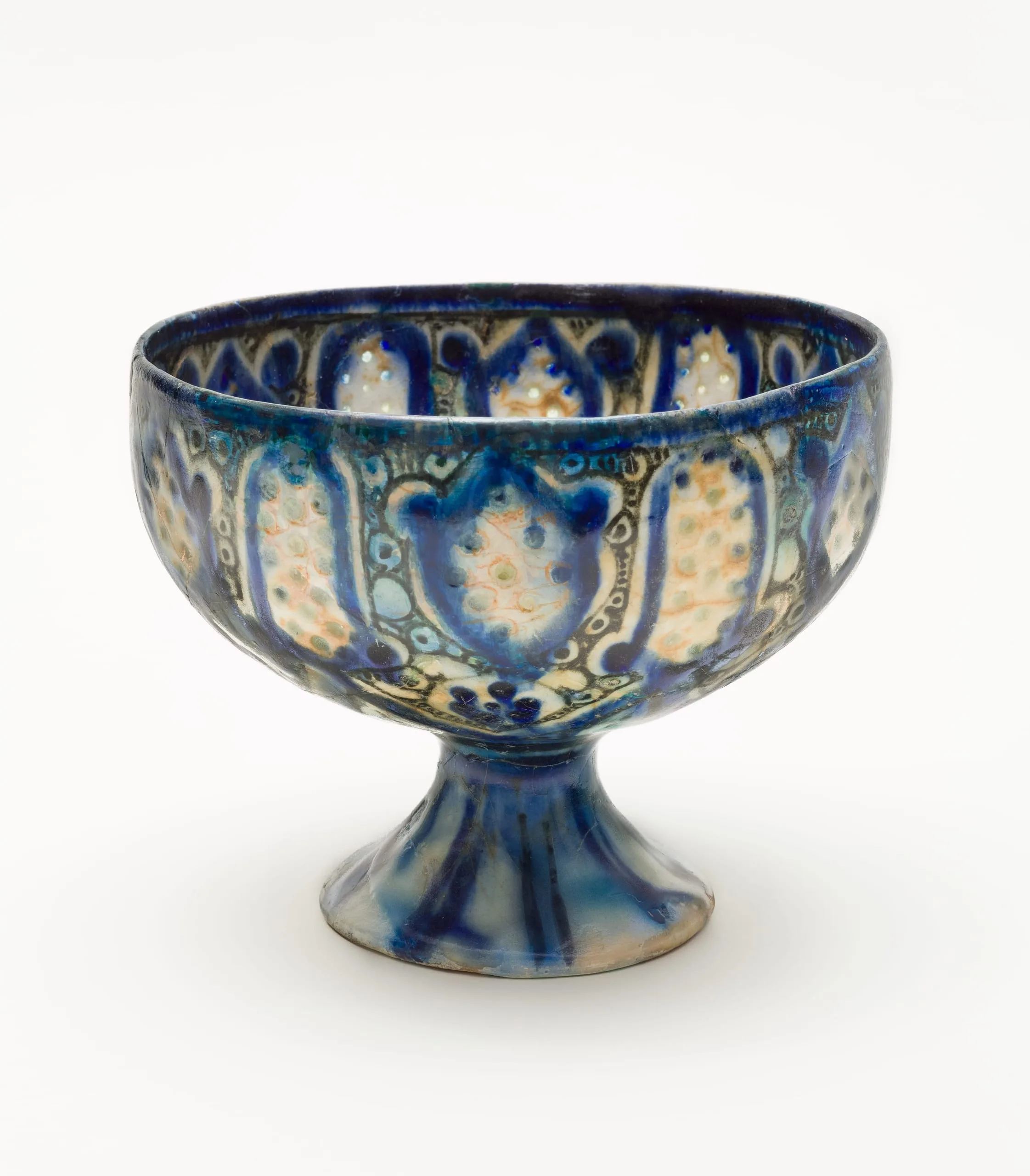
Goblet14th century

Not on view
Ceramic footed bowl with wide rounded form, cobalt blue glaze, and repeating vertical arch panels filled with cream, rust-orange, and turquoise spotted decoration
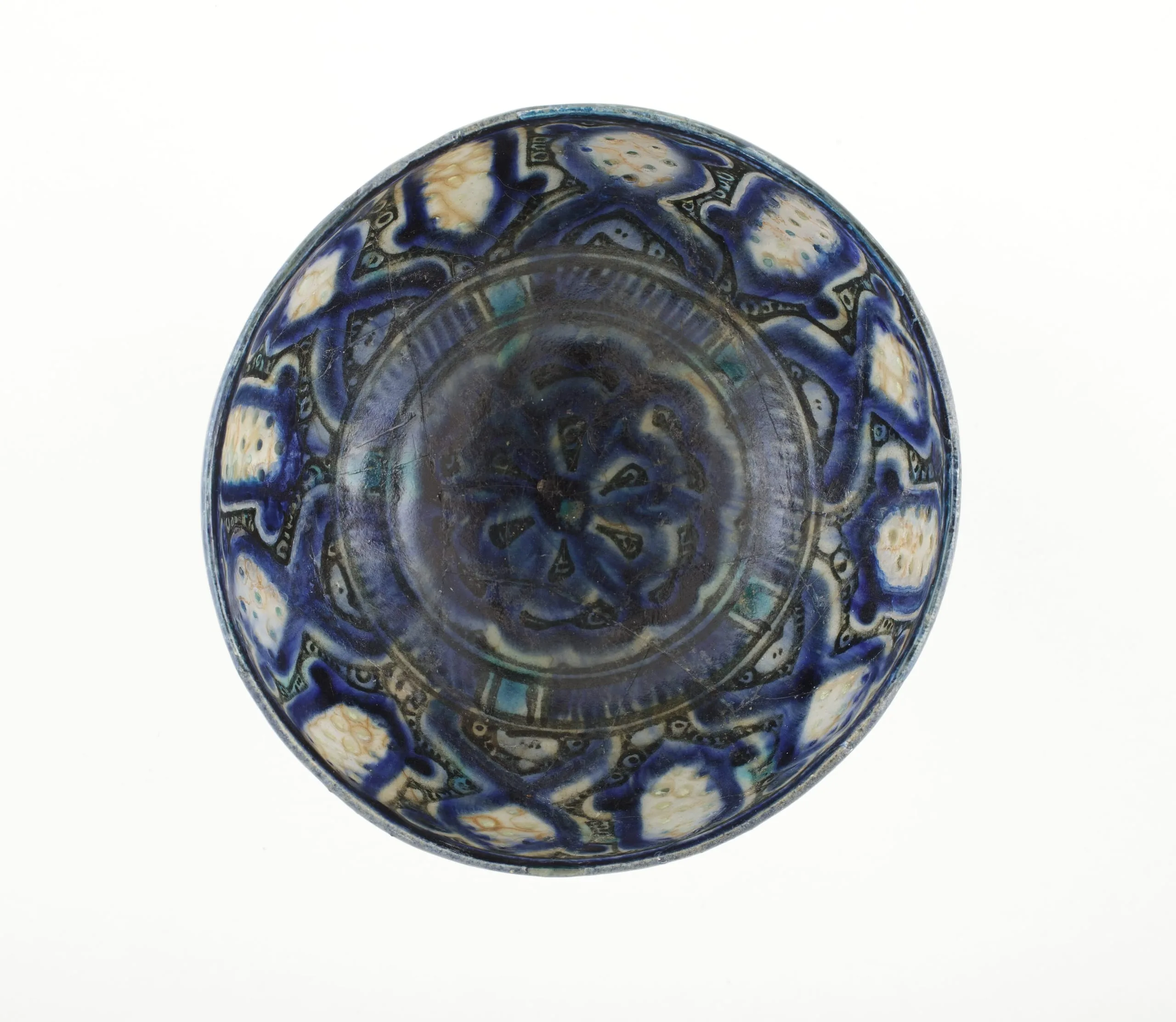
Ceramic bowl viewed from above, with a deep blue glaze and a rosette medallion at the center. The wide rim is decorated with a repeating pattern of cream and blue stylized motifs outlined in black, with turquoise accents throughout.
Ceramic footed bowl with flared pedestal base, decorated in cobalt blue, cream, and pale orange with repeating panels of stylized palmette and dotted vegetal motifs, separated by narrow geometric borders; glaze shows crazing and visible restoration cracks at rim.
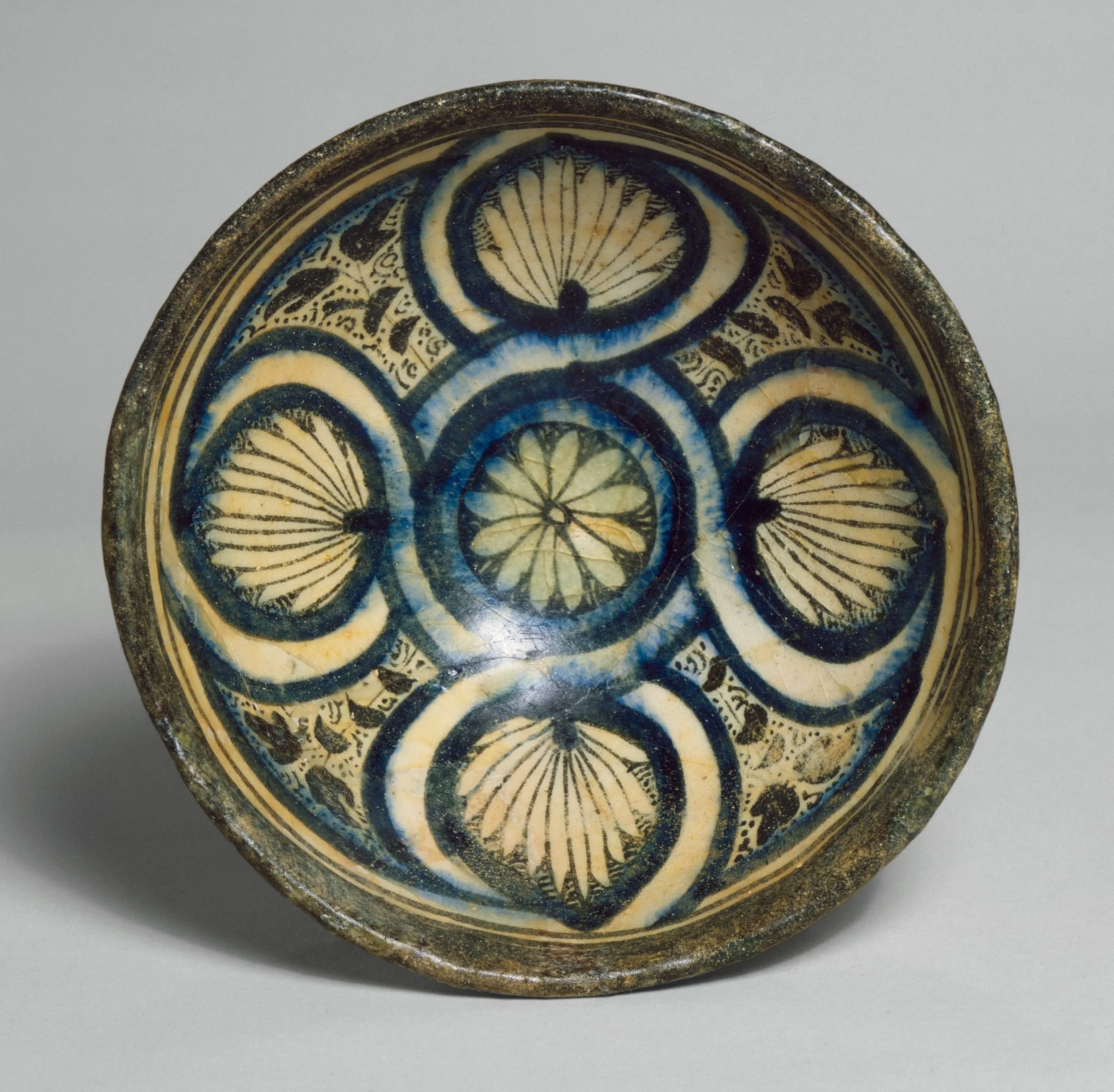
Ceramic bowl with cobalt blue and cream glaze, decorated with four fan-shaped palmette motifs arranged around a central rosette, framed by interlocking circular bands; small leaf-scroll pattern fills the background; dark unglazed rim.
Title
Goblet
Place Made
Iran
Date Made
14th century
Medium
Fritware, pierced and underglaze-painted
Dimensions
Height: 4 3/4 in. (12 .06 cm); Diameter: 6 in. (15.24 cm)
Credit Line
The Madina Collection of Islamic Art, gift of Camilla Chandler Frost
Accession Number
M.2002.1.45
Classification
Ceramics
Collecting Area
Art of the Middle East: Islamic
Curatorial Notes

Aside from colored glazes, Islamic potters developed other techniques, such as piercing, to decorate their wares. The window-like cartouches of this goblet are perforated with small circular holes that are then covered in transparent glaze, allowing light to "shine" through the windows and adding to the translucency of this thinly potted ware. The tiny apertures also served the practical function of revealing how much drink remained in the goblet.
Selected Bibliography
  • Lo Terrenal y lo Divino: Arte Islámico siglos VII al XIX Colección del Museo de Arte del Condado de Los Ángeles. Santiago: Centro Cultural La Moneda, 2015.

  • Komaroff, Linda. Beauty and Identity: Islamic Art from the Los Angeles County Museum of Art. Los Angeles: Los Angeles County Museum of Art, 2016.