LACMA

ShopMembershipMyLACMATickets
LACMA
Los Angeles County Museum of Art
5905 Wilshire Blvd.
Los Angeles, CA 90036
info@lacma.org
(323) 857-6000
Sign up to receive emails
Subscribe
© Museum Associates 2025

Museum Hours

Monday

11 am–6 pm

Tuesday

11 am–6 pm

Wednesday

Closed

Thursday

11 am–6 pm

Friday

11 am–8 pm

Saturday

10 am–7 pm

Sunday

10 am–7 pm


  • About LACMA
  • Jobs
  • Building LACMA
  • Host An Event
  • Unframed
  • Press
  • FAQs
  • Log in to MyLACMA
  • Privacy Policy
© Museum Associates 2025
Collections

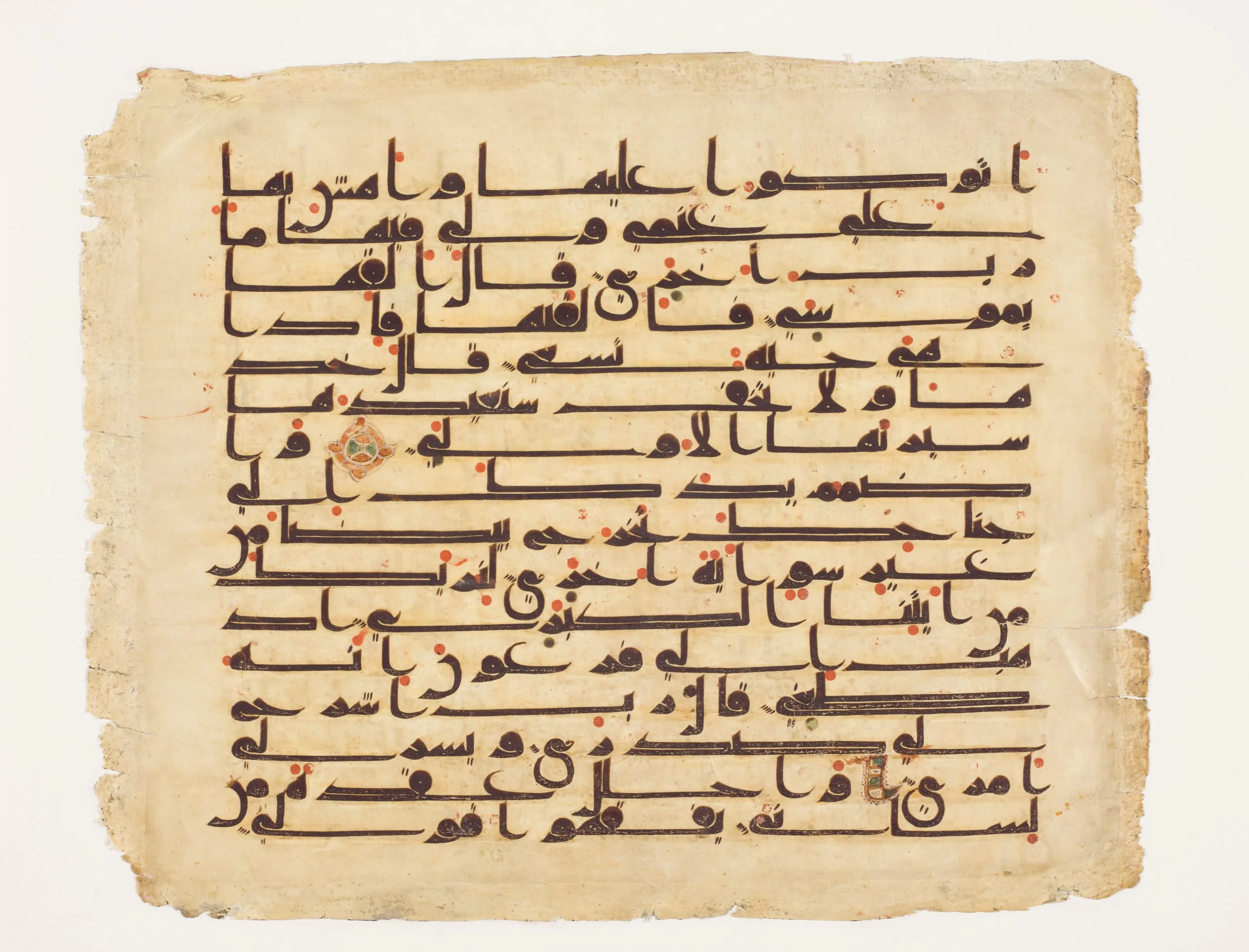
Page from a Manuscript of the Qur'an (20:18-28; 20:29-39)late 8th century

Not on view
Manuscript leaf with bold Arabic Kufic script in dark brown ink on aged cream parchment, with coral-red diacritical dots and two small geometric ornaments
Manuscript leaf with horizontal rows of early Kufic Arabic calligraphy in brown ink on aged parchment, with red and black diacritical marks scattered throughout and a small polychrome medallion at upper right.
Title
Page from a Manuscript of the Qur'an (20:18-28; 20:29-39)
Date Made
late 8th century
Period
'Abbasid (750-1258)
Medium
Ink and colors on parchment
Dimensions
12 7/8 × 15 3/4 in. (32.7 × 40.01 cm)
Credit Line
The Madina Collection of Islamic Art, gift of Camilla Chandler Frost
Accession Number
M.2002.1.383
Classification
Manuscripts
Collecting Area
Art of the Middle East: Islamic
Curatorial Notes
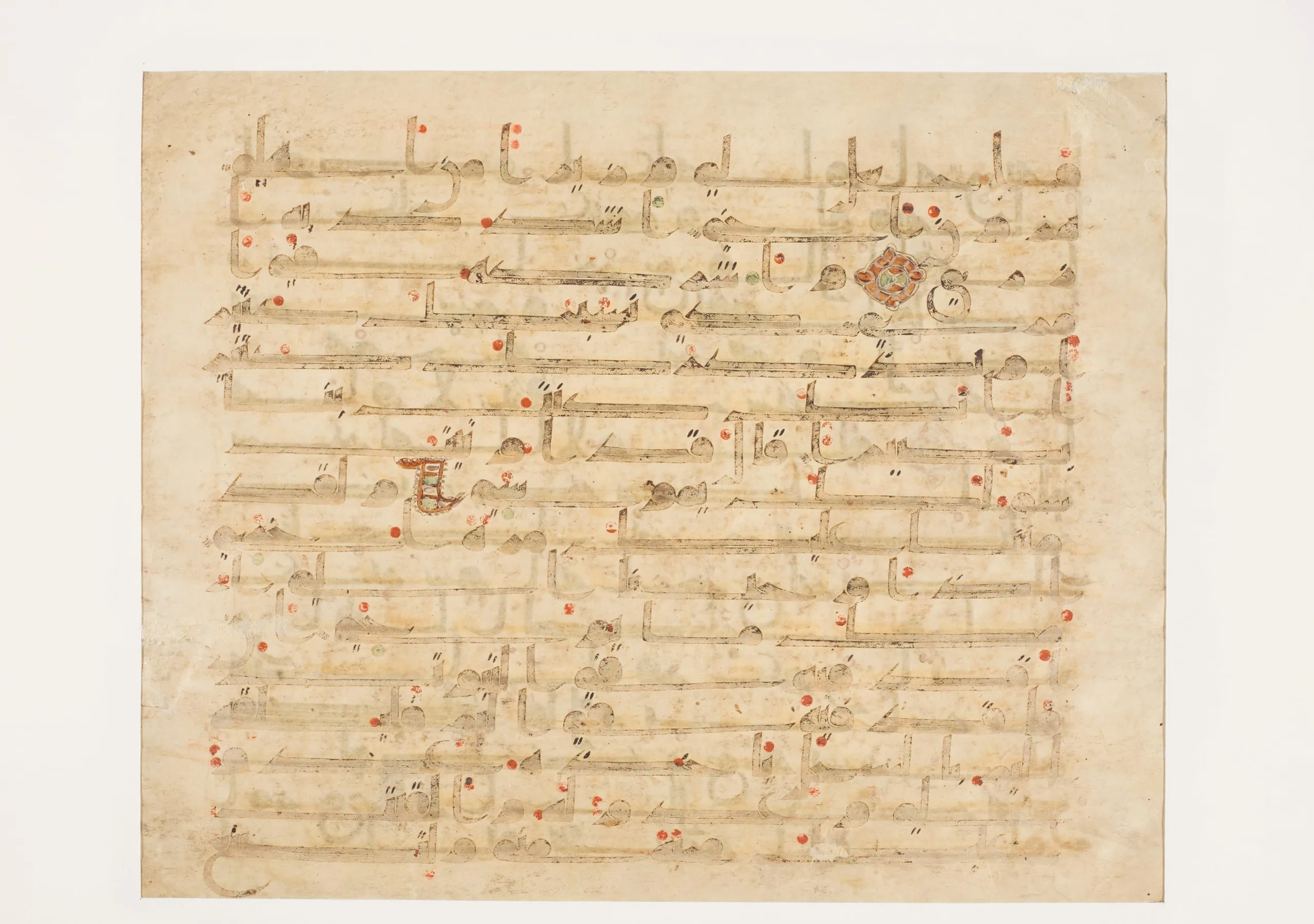
Early Islamic manuscripts of the Qur’an are distinguished by their parchment pages, angular scripts, and horizontal formats. Few such manuscripts remain intact, but given their sacred importance as written expressions of the word of God, many individual pages were preserved over the centuries in religious institutions. In the late nineteenth and twentieth centuries, such folios appeared on the art market and subsequently entered collections across the globe. The size, text layout, and idiosyncratic script of this page and a second example (see M.73.5.508, http://collections.lacma.org/node/240038) confirm their belonging to the same now-dispersed manuscript. Unlike some contemporaneous manuscripts of the Qur’an with just five lines of text and considerable spacing between words (see M.2002.1.24, http://collections.lacma.org/node/204539), this example has sixteen lines of text per page, thereby reducing the overall amount of parchment required. The illuminated verse markers (an alif for every five, a roundel for every ten) contribute color and luxuriousness, and red points indicate vocalization.
Selected Bibliography
  • Komaroff, Linda. Beauty and Identity: Islamic Art from the Los Angeles County Museum of Art. Los Angeles: Los Angeles County Museum of Art, 2016.