LACMA

ShopMembershipMyLACMATickets
LACMA
Los Angeles County Museum of Art
5905 Wilshire Blvd.
Los Angeles, CA 90036
info@lacma.org
(323) 857-6000
Sign up to receive emails
Subscribe
© Museum Associates 2026
  • About LACMA
  • Jobs
  • Building LACMA
  • Host An Event
  • Unframed
  • Press
  • FAQs
  • Log in to MyLACMA
  • Privacy Policy
© Museum Associates 2026
Collections

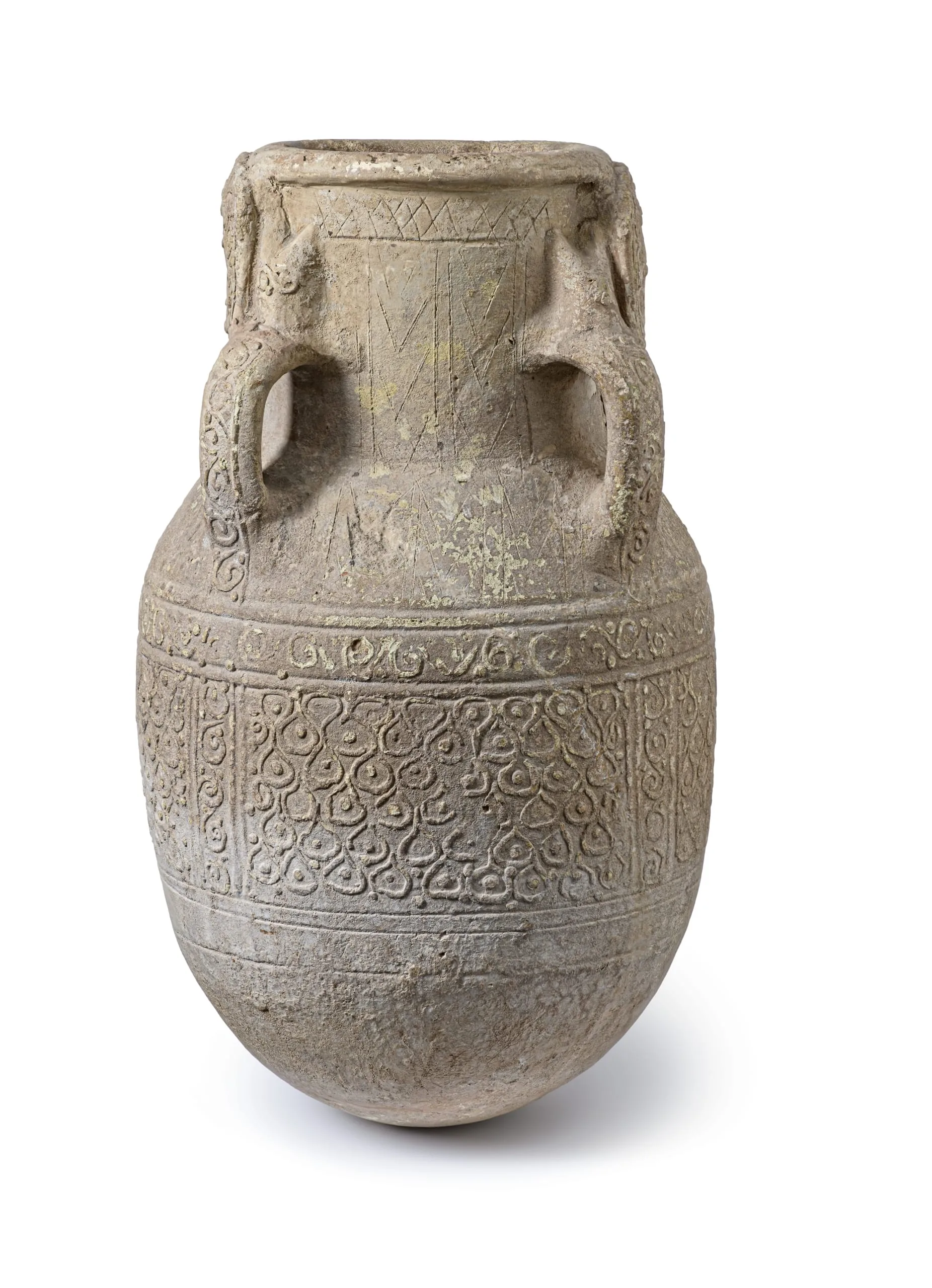
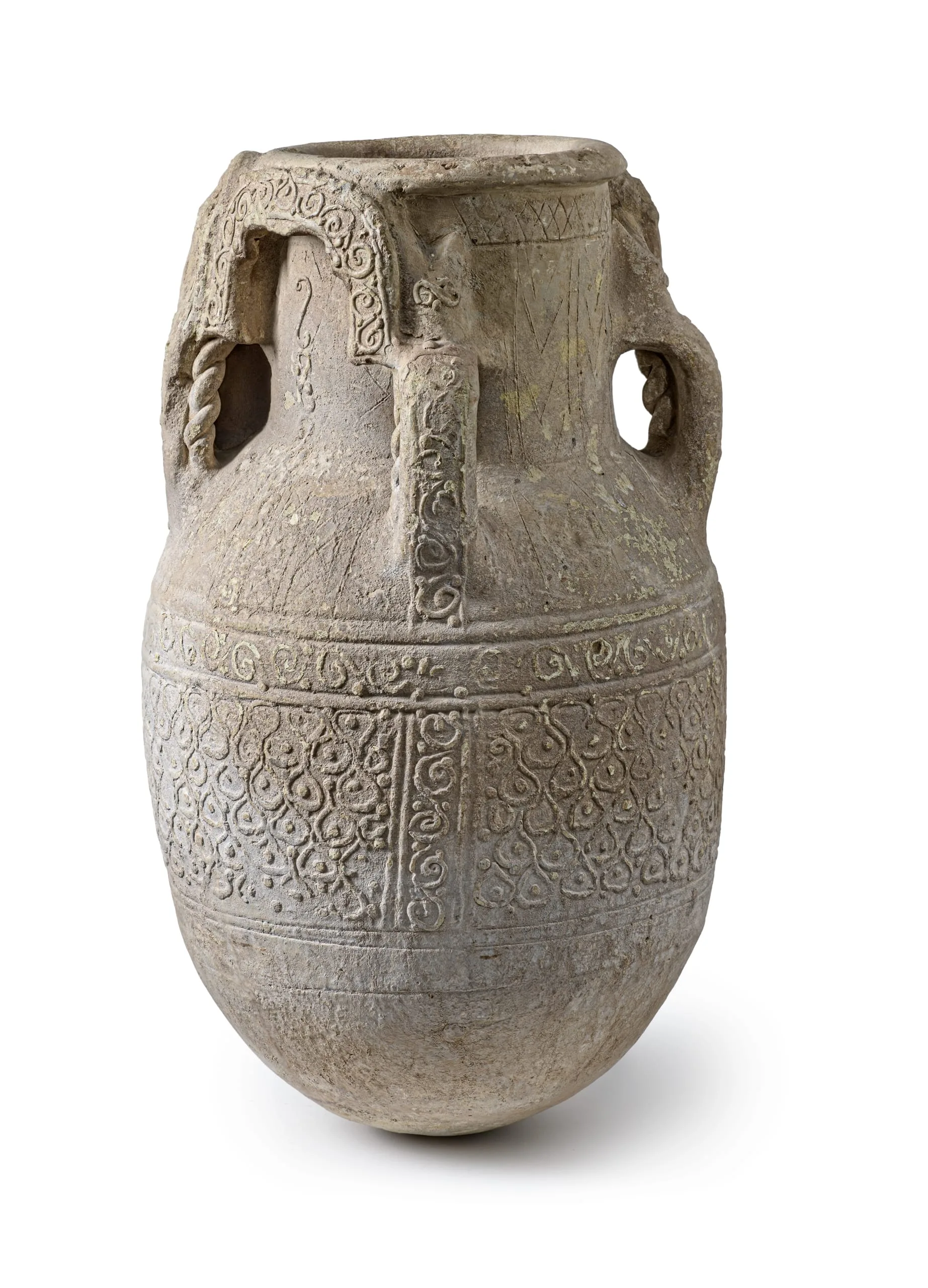
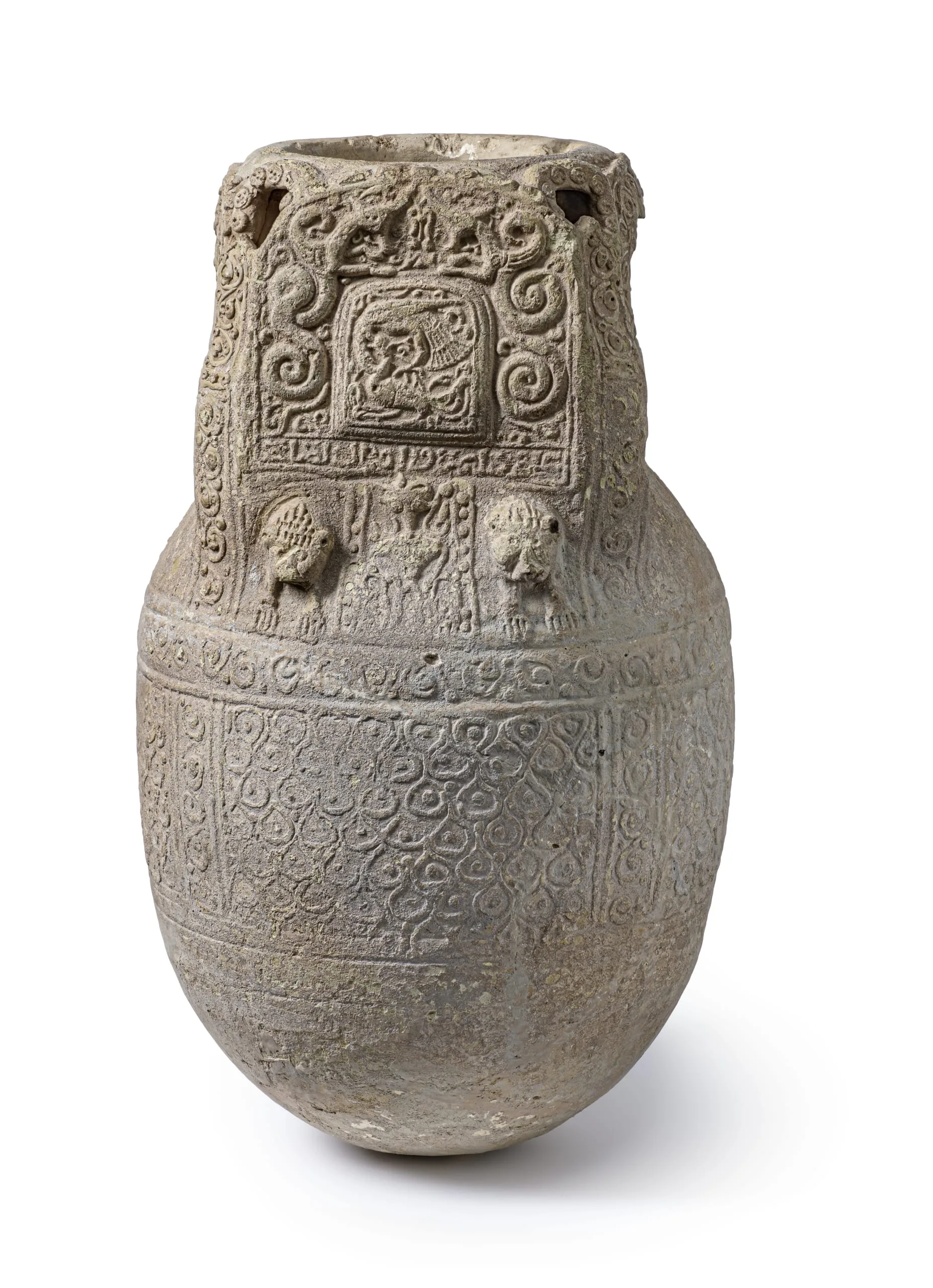
Water Jar (habb)12th century

Not on view
Unglazed gray ceramic vessel with an egg-shaped body, decorated in low relief with spiral scrolls, lion-head appliqués, and figural panels on the neck and shoulder
Large ceramic amphora with two loop handles, pale gray earthenware, decorated with incised geometric patterns near the neck and dense scrolling foliate relief across the bulbous body.
Large ceramic amphora with ovoid body and two twisted rope-style handles, covered in stamped and incised scrolling vine patterns arranged in horizontal bands around the shoulder and body, pale gray-buff clay with weathered surface.

Unknown, Water Jar (habb), 12th century, Los Angeles County Museum of Art, The Madina Collection of Islamic Art, gift of Camilla Chandler Frost, photo © Museum Associates/LACMA

Title
Water Jar (habb)
Place Made
Iraq
Date Made
12th century
Medium
Earthenware, molded, applied, and incised decoration
Dimensions
23 × 15 1/2 in. (58.42 × 39.37 cm)
Credit Line
The Madina Collection of Islamic Art, gift of Camilla Chandler Frost
Accession Number
M.2002.1.82
Classification
Ceramics
Collecting Area
Art of the Middle East: Islamic
Curatorial Notes

The form of this water cistern, or habb, with a narrow mouth on a large round belly, dates back to the Late Antique period. Habbs leverage the natural porosity of unglazed fired clay to filter and cool the water stored within. Due to their rounded base, they cannot stand upright on their own, so they were either buried in the floor for cooling or placed on stands known as kilgas. The latter option elevated the jar so that water would seep into a projecting well in the stand, where the filtered drink could then be collected.

While not as colorful as glazed ceramics, habbs often feature incised and applied decoration, such as the quadrupeds and swirling vegetal ornament seen on an earlier jar in LACMA’s collection (M.73.5.710). One example in Baghdad even includes an inscription that states the vessel was born of fire to quench the thirst of mankind, a valuable statement about the habb’s intended use. This jar also features an inscription, in this case generic blessings, as well as figural decoration that helps to date it to the twelfth century based on related architecture.

2024
Selected Bibliography
  • Lo Terrenal y lo Divino: Arte Islámico siglos VII al XIX Colección del Museo de Arte del Condado de Los Ángeles. Santiago: Centro Cultural La Moneda, 2015.

  • Komaroff, Linda. Beauty and Identity: Islamic Art from the Los Angeles County Museum of Art. Los Angeles: Los Angeles County Museum of Art, 2016.
  • Komaroff, Linda, editor. Dining with the Sultan: The Fine Art of Feasting. Los Angeles: Los Angeles County Museum of Art; New York: DelMonico Books, 2023.