- Title
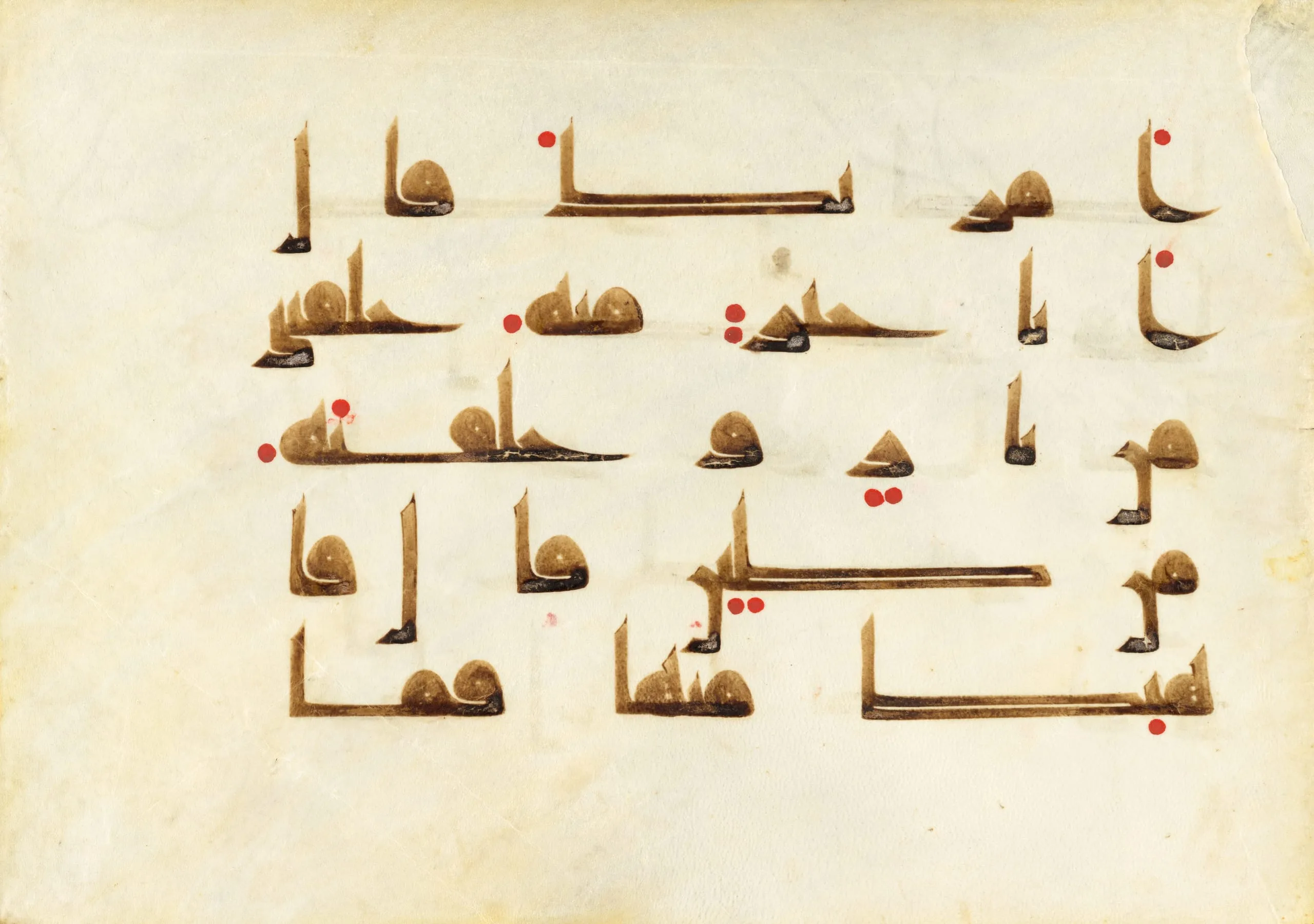
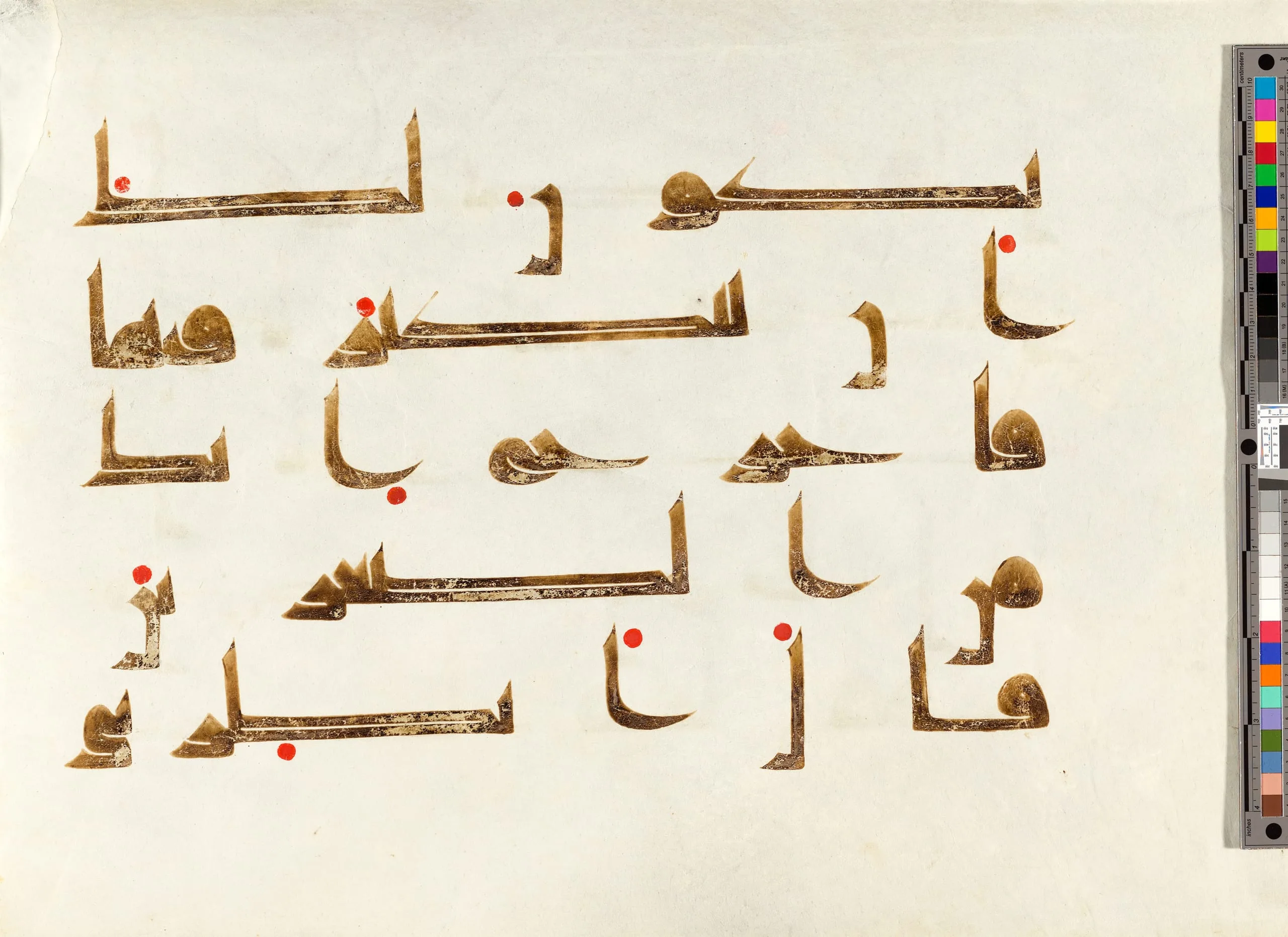
- Page from a Manuscript of the Qur'an (7:12-13; 7:13-14)
- Date Made
- 9th century
- Medium
- Ink and colors on parchment
- Dimensions
- Folio, overall: 11 1/2 × 15 11/16 × 7 1/8 × 11 in. (29.21 × 39.85 × 18.1 × 27.94 cm)
Textblock: 7 1/8 × 11 in. (18.1 × 27.94 cm)
Frame: 23 × 19 × 1 1/2 in. (58.42 × 48.26 × 3.81 cm)
- Accession Number
- M.2002.1.24
- Curatorial Notes
In Muslim cultures, the written word is used not only to communicate but to decorate. Because it is through writing that the Qur’an is transmitted, calligraphy became the most important form of Islamic art. Not surprisingly, some of the finest examples of calligraphy are found in manuscripts of the Qur’an, which can provide a wealth of information about the evolution of this art form and the Arabic script. Here, given the folio’s grand scale, the Qur’an from which it derives must have been quite substantial and was probably multivolume. The boldly beautiful kufic writing, comprising just five lines of text, is more than a match for the large format, while the horizontal extension of certain letters and the emphasis on select vertical elements perfectly complement the shape of the parchment page. As in other contemporaneous Qur’an manuscripts (see M.73.5.499), there are no diacritical marks, but short vowels are indicated by red points.
2024