- Title
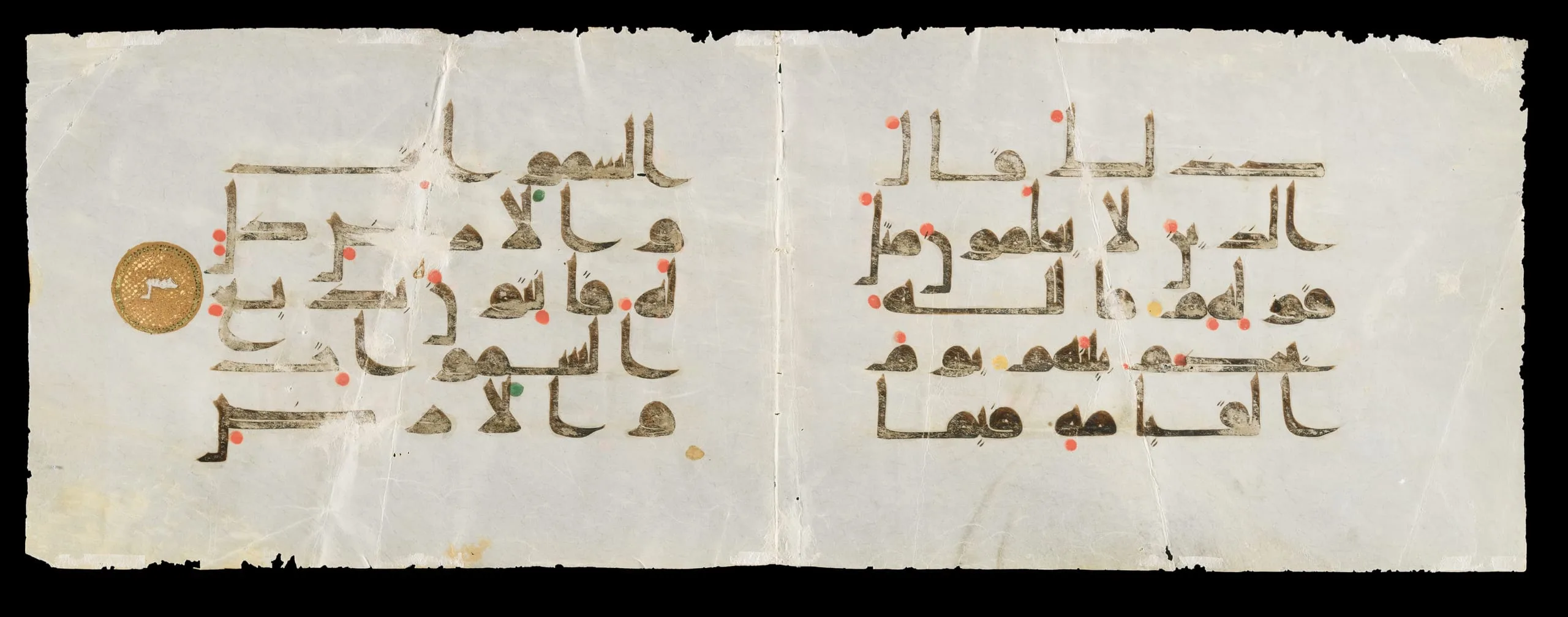
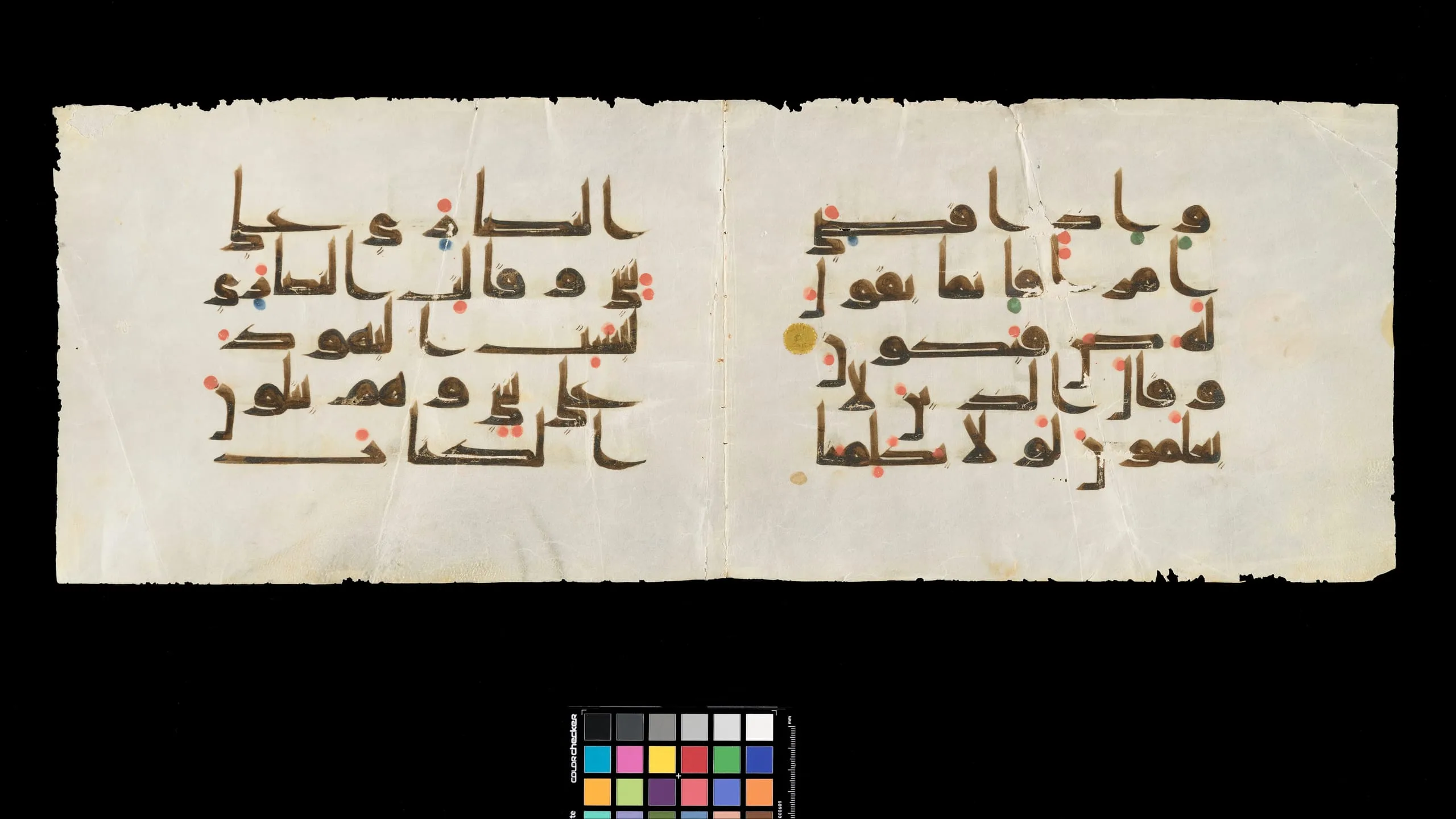
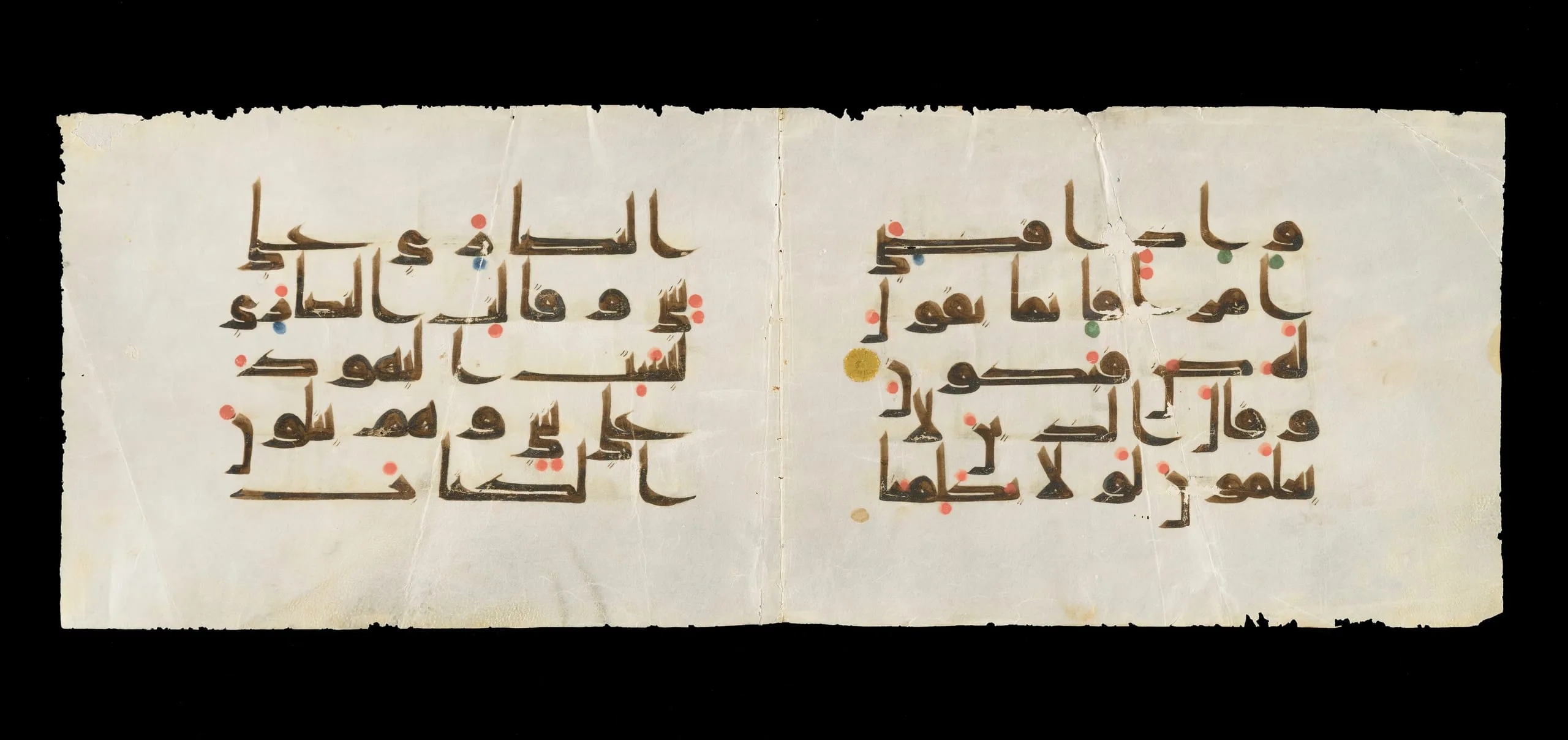
- Double page from a Manuscript of the Qur'an (2:113; 2:113 and 2:116-117; 2:117-118)
- Date Made
- 9th century
- Medium
- Ink, colors, and gold on parchment
- Dimensions
- 8 3/4 x 24 1/2 in. (22.225 x 62.23 cm)
Frame: 29 × 23 × 1 1/2 in. (73.66 × 58.42 × 3.81 cm)
- Accession Number
- M.2002.1.349
- Curatorial Notes
Because it is through writing that the Qur’an is transmitted, scripts in the Arabic alphabet were devised and perfected to be worthy of divine revelation. While the earliest surviving Qur’an manuscripts, from the second half of the seventh century, were written in a simple form of Arabic script that lacks symbols for short vowels and certain consonants, scribes of the eighth and ninth centuries gradually introduced a system to mark these letter sounds, which would change in subsequent centuries.
In this ninth-century double page, rendered in the rectilinear kufic script, colored dots indicate different short vowels, while tiny strokes distinguish between consonants of the same basic shape, helping to ensure an accurate recitation of the scripture. Gold medallions were also added to the calligraphy to indicate the ends of a verse or verse clusters, perhaps allowing readers to locate specific passages or keep track of which parts of the text they had covered.