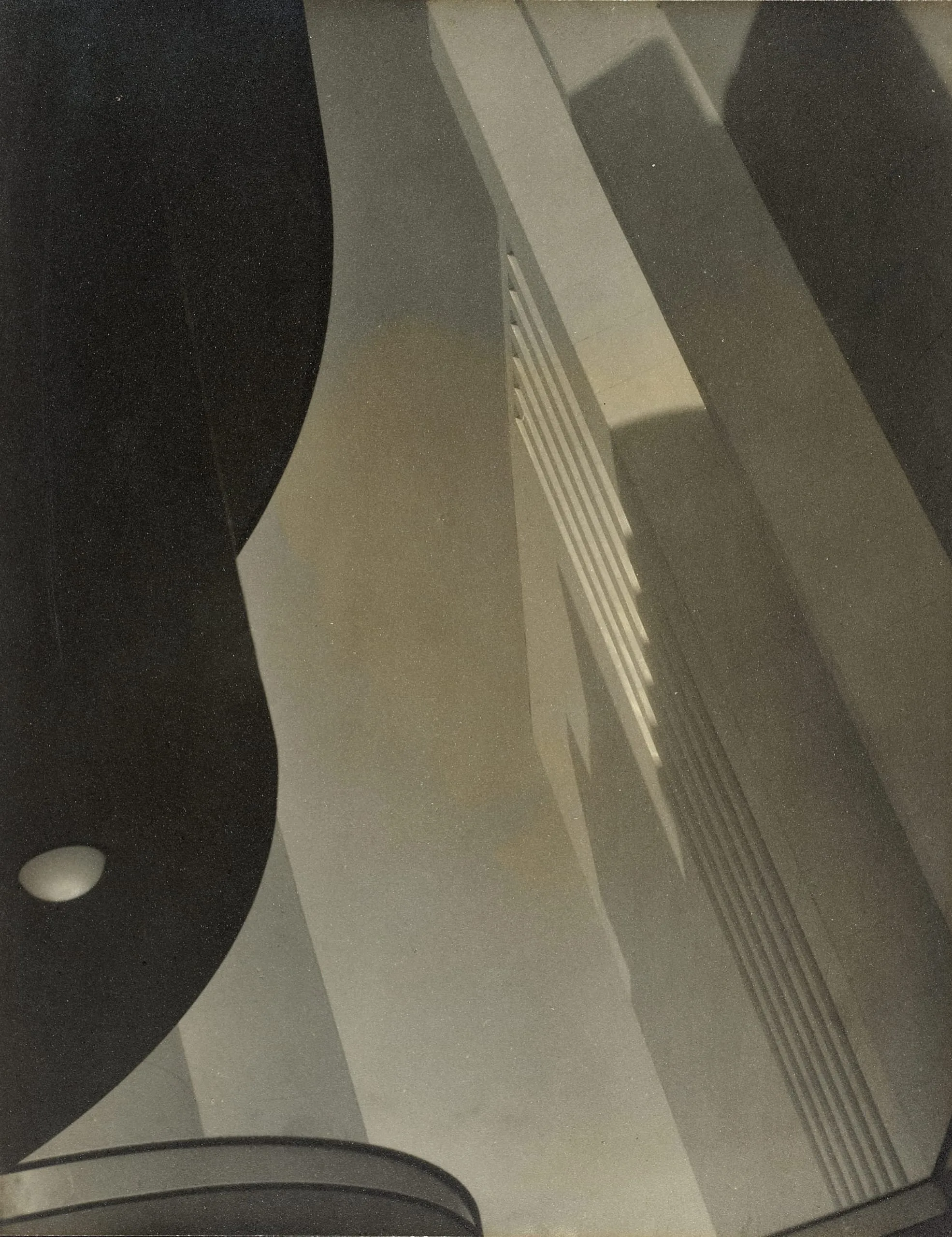
Harold Haliday Costain established a photography studio in Scarsdale, New York, in the mid-1920s. Having studied graphic design, he specialized in advertising, architectural, and industrial photography, and his work was featured in such publications as House and Garden, Town & Country Magazine, U.S. Camera, Modern Photography, and Fortune. Costain’s skills were an exact match for the 1933 Chicago World’s Fair, also known as the Century of Progress International Exposition, in which photography played an important role. The medium was not only a vehicle for documenting the fair’s ambitious displays but also a significant exhibit in its own right. Photographic innovations were prominently showcased, reflecting the fair’s theme of technological and scientific advancement. Additionally, photographs served as powerful promotional tools, capturing the futuristic architecture and vibrant cultural displays of the fair, and spreading its vision of progress and optimism to audiences far beyond Chicago.
Costain’s attention was drawn to the Chrysler Motors Building, designed by Holabird & Root in an Art Deco–inflected modernist style. He tilted his camera upward, capturing sunlight and shadow at play on the corrugated, white facade. The underside of a portico roof creates an opaque, dark area at left, balancing Costain’s “architectural abstraction.”
Britt Salvesen
2024