- Title
- Syrian Warrior God
- Date Made
- 1550-1150 B.C.
- Medium
- Bronze with gold and silver overlay
- Dimensions
- 7 × 2 × 3 in. (17.78 × 5.08 × 7.62 cm)
- Accession Number
- M.45.3.121
- Curatorial Notes
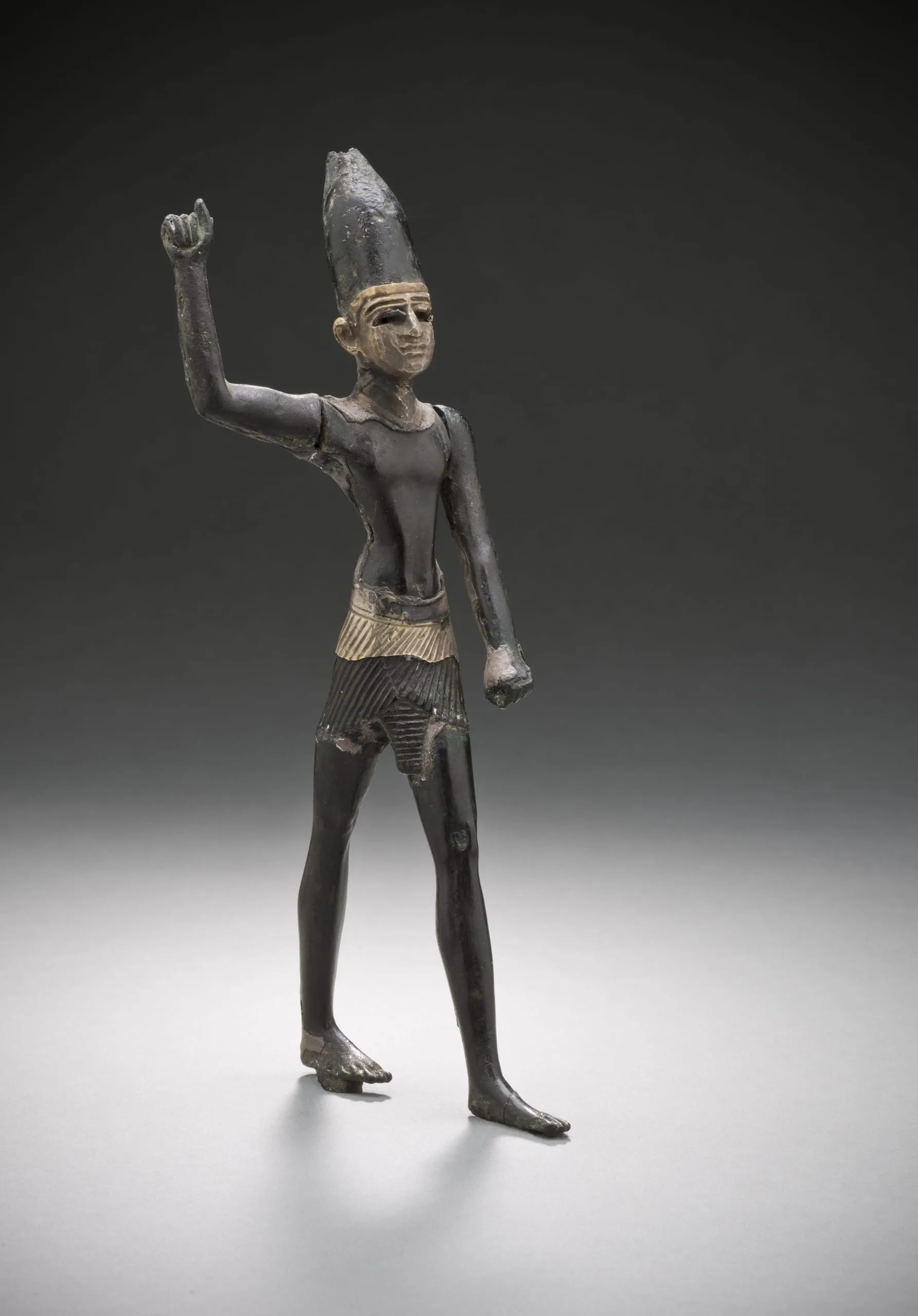
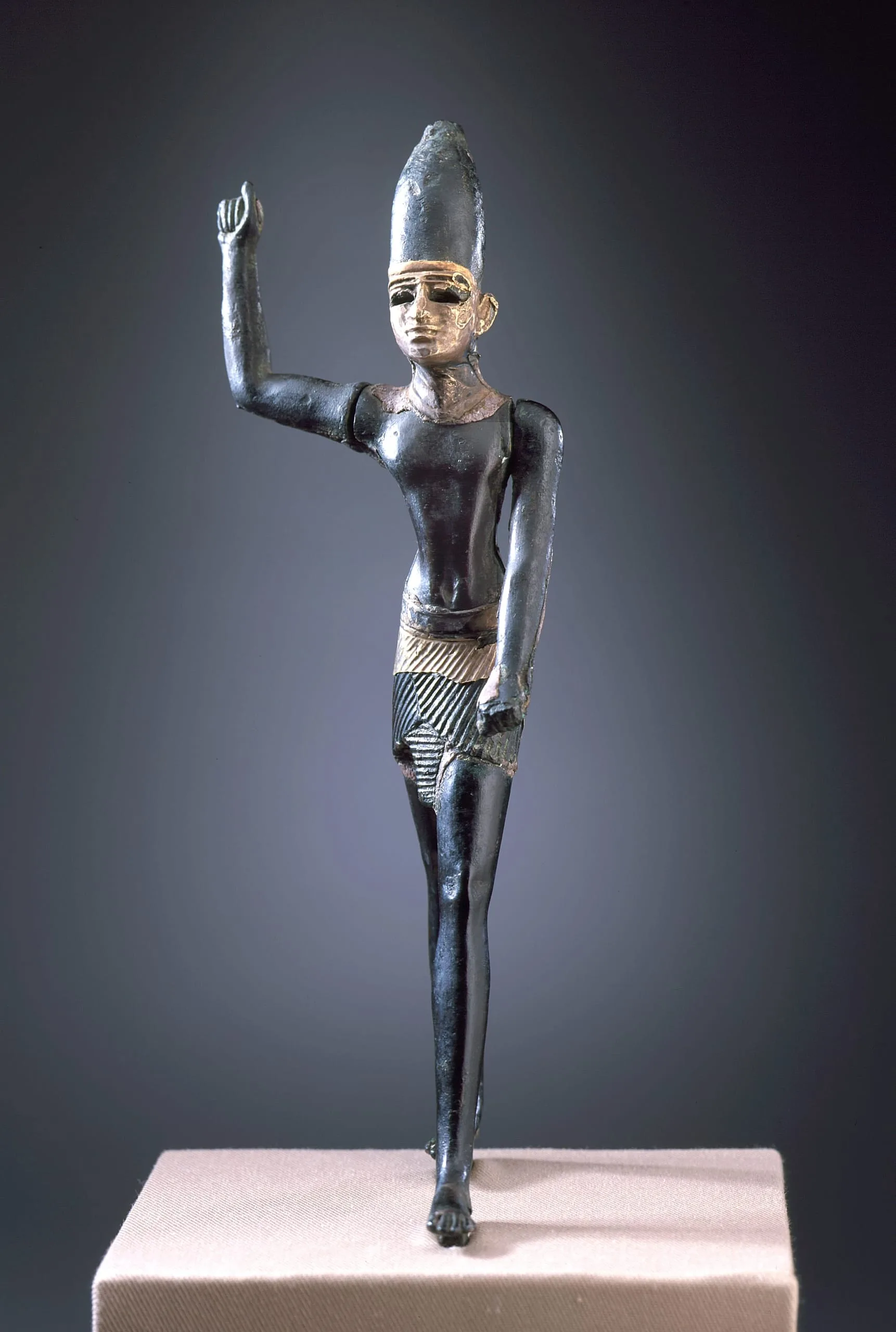
In the fifteenth century BC, the Egyptians and the Mitannians of Syria controlled the small kingdom of Ugarit in northern Syria. The bronzeworkers of the Ugarit region represented divinities with Egyptianized features, a fact that can be seen in the pharaonic white crown of this warrior god. The statuette has been dated, according to similar pieces, to the fourteenth century BC, and it originally brandished a weapon, probably a spear, and a shield. The influence of Hittite art, known from the rock reliefs of the Hittite religious center of Yazilikaya (near Ankara, in Turkey), is also visible in the position of the figure's hands as well as its overall gesture.
- Selected Bibliography
- Mousavi, Ali. Ancient Near Eastern art at the Los Angeles County Museum of Art. Los Angeles: Los Angeles County Museum of Art, 2012.