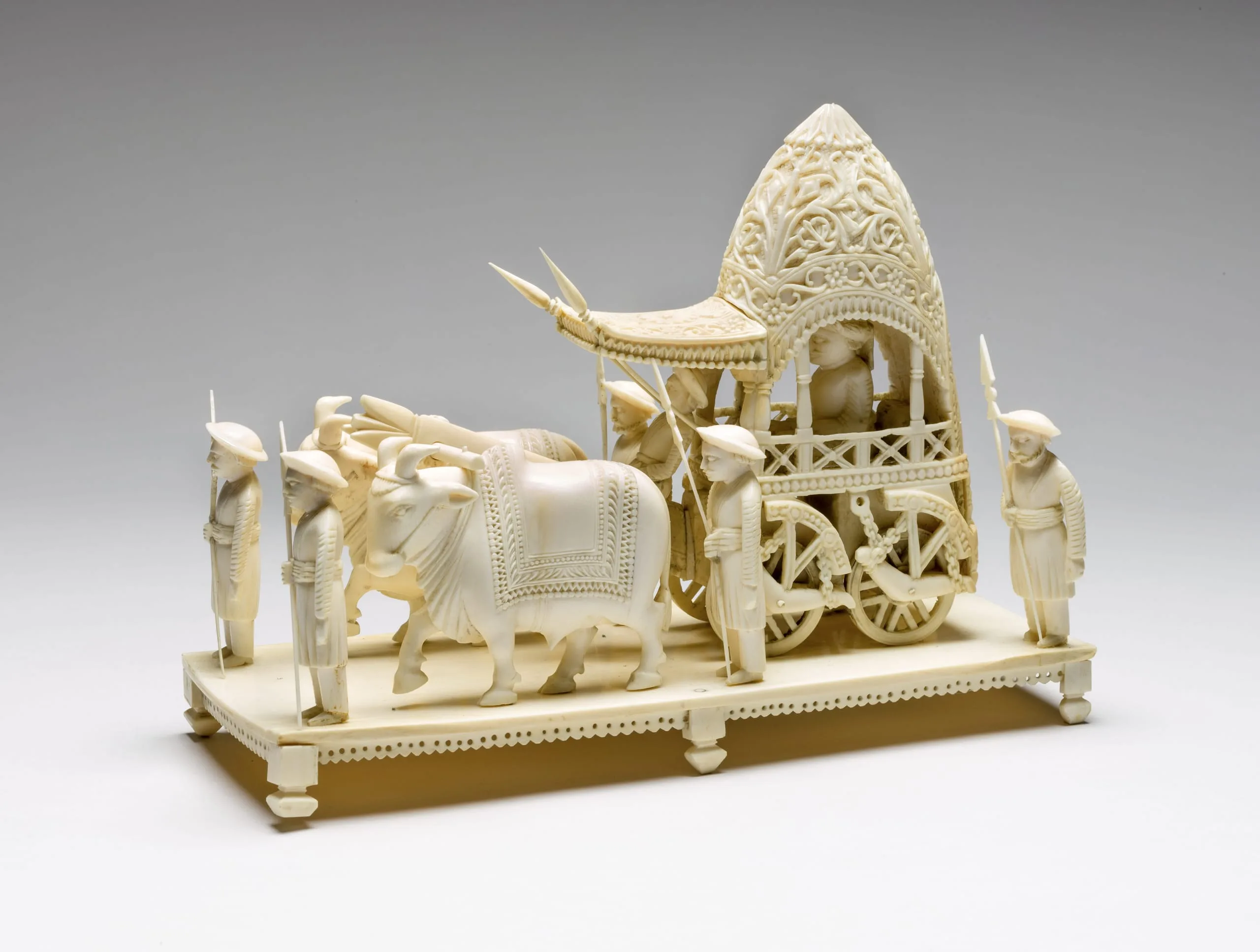
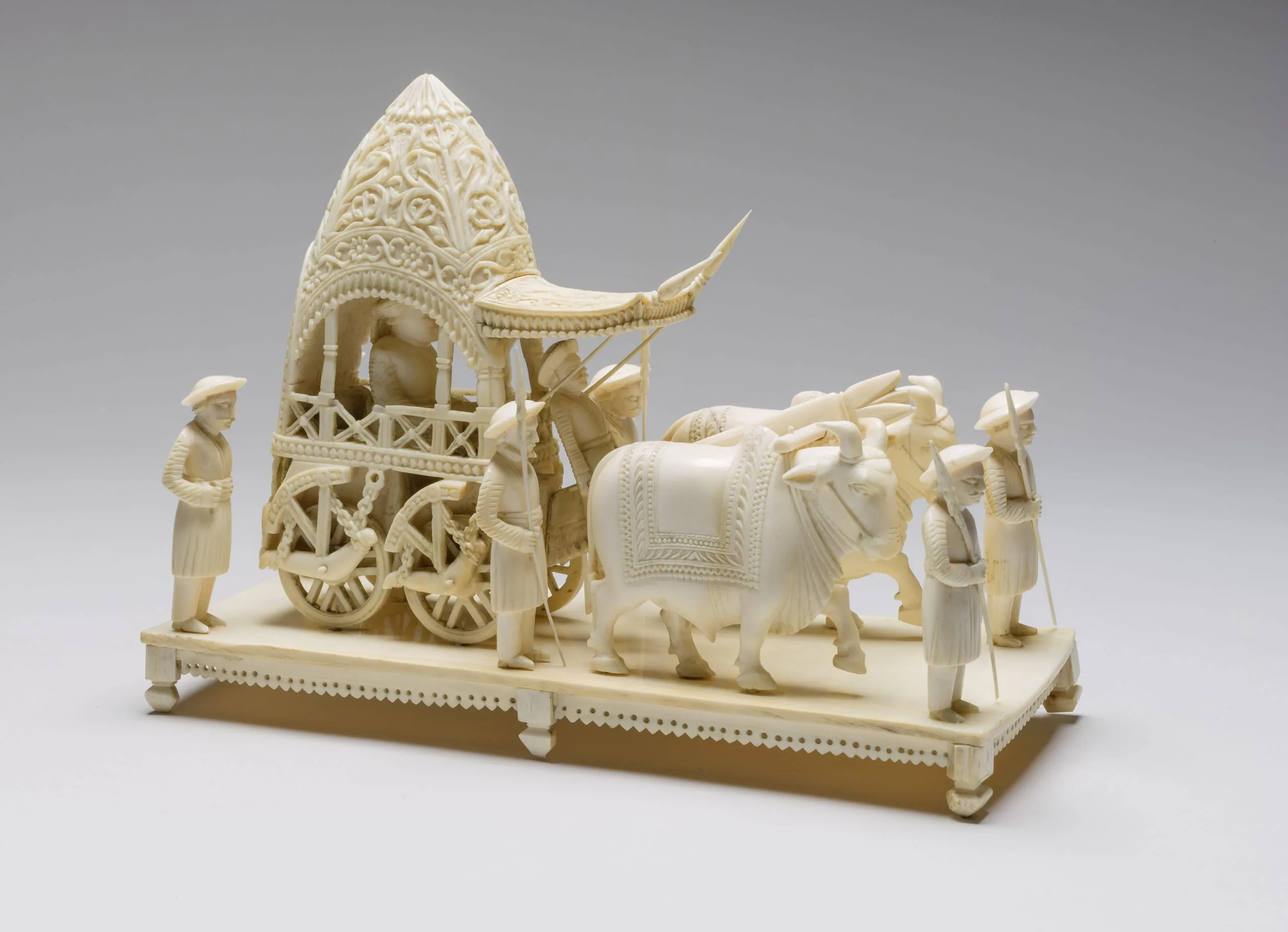
This ivory model of a bullock cart with a royal rider is a parallel expression in sculpture of the numerous paintings, drawings, and photographs representing occupations and activities that were popular among the many European residents and visitors in India during the 18th and 19th centuries. The varied subjects depicted include craftsmen, nautch dancing girls, soldiers, circus performers, bureaucrats, elephants with canopied howdahs, and royal pursuits such as enjoying a river cruise on a peacock barge (see M.82.154). Here, an Indian ruler or prince is riding in a canopied cart drawn by two yoked bulls and driven by a standing male under an awning. The cart’s superstructure is embellished with foliate designs. The substructure of the cart employs a complex double strut system attached with chains to the cart. Six sentries holding spears guard the royal protectee at the corners and midpoints of the platform. See also AC1994.230.2.
Murshidabad in the 18th and early 19th century was a wealthy cosmopolitan city. It was the capital of the Mughal province of Bengal, and an economic epicenter for merchant families and European companies. It was also a cultural and artistic center, with particular specialties in music, silk, painting, and ivory. The Murshidabad ivory carvers, principally centered in nearby Berhampore (modern Baharampur, Bangladesh), produced a diverse range of objects in addition to ethnographic studies, including chess sets, various containers, and Hindu deities.