- Title
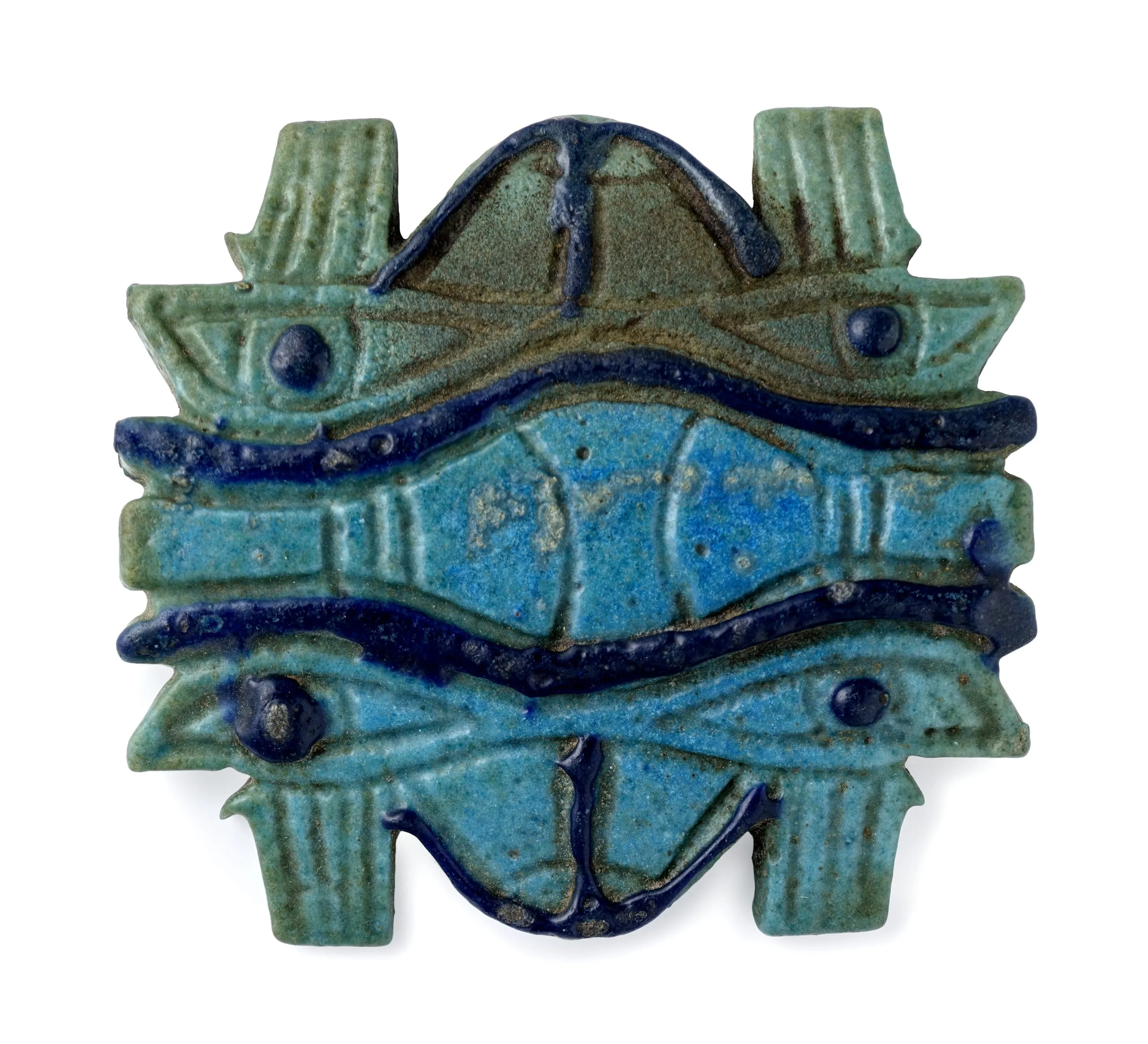
- Quadruple Eye of Horus Amulet
- Date Made
- Late Period-Ptolemaic Period (712-80 BCE)
- Medium
- Faience
- Dimensions
- 2 7/8 × 3 × 5/8 in. (7.3 × 7.62 × 1.59 cm)
- Accession Number
- 45.23.66
- Curatorial Notes
The Egyptian god Horus was considered a sky god, and texts describe his right eye as the sun and the left eye as the moon. Horus engaged in mythical combat with his longtime enemy, Seth, who tore out one or both of Horus’s eyes, but they were later restored by Thoth. Horus offered his eye to his deceased father Osiris, giving him new power to sustain himself in the afterlife. The image of a falcon eye was adopted by the ancient Egyptians as a symbol of wellness, healing, and protection; as such, amulets of the Eye of Horus (also known as wedjat) were often placed within burials. This faience amulet includes four images of the Eye of Horus, perhaps multiplying its efficacy.