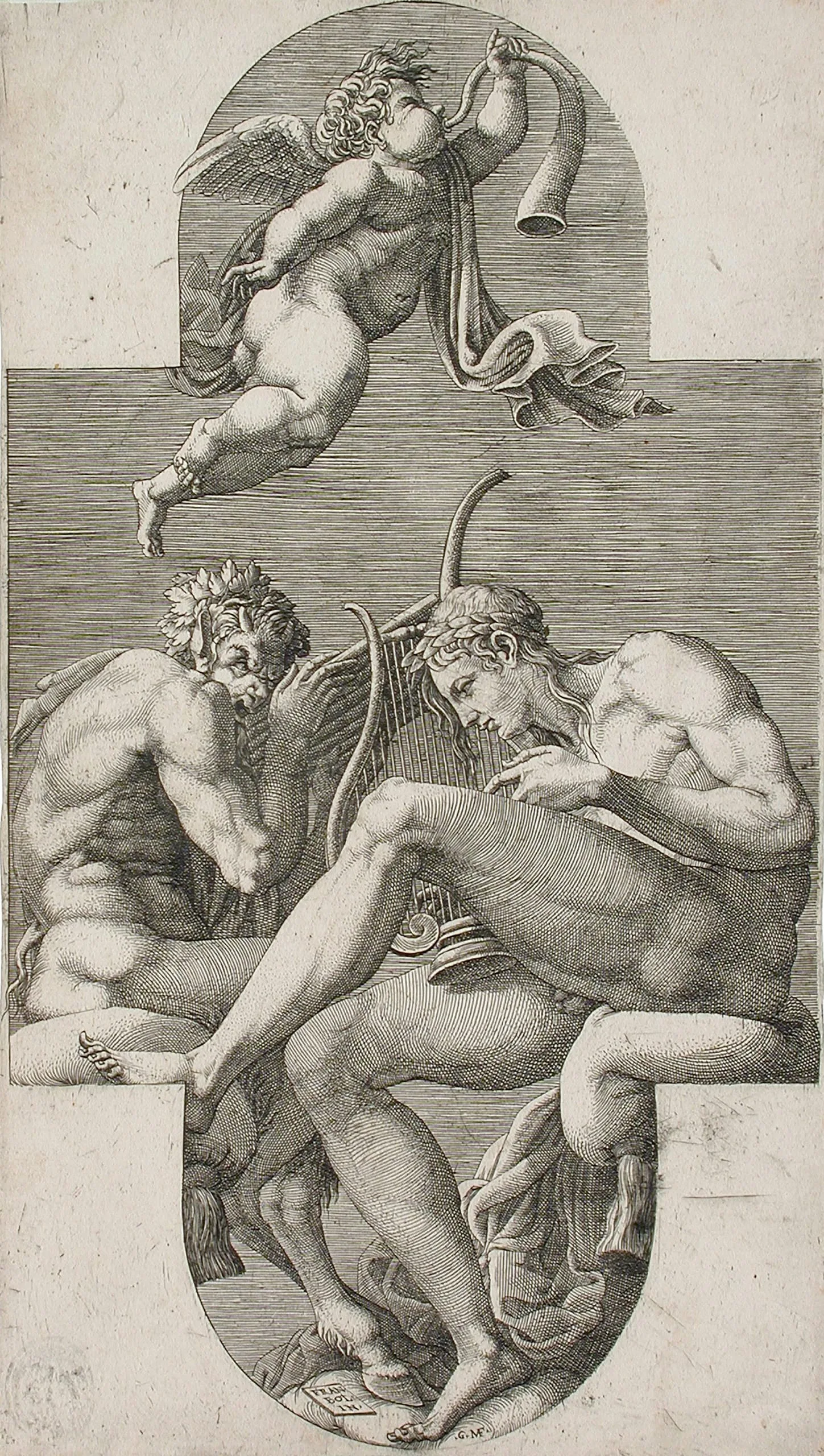
This engraving is one in a series of four (see also M.88.91.199a, b, c) that reproduces the decoration on the ceiling of the Gallery of Ulysses at Fontainebleau, the summer residence of Francis I of France (r. 1515−47), which was constructed and decorated by Italian artists in the mid-sixteenth century. Although the ornate gallery was destroyed in the eighteenth century, Ghisi’s prints help to re-create its original design by the artist Francesco Primaticcio. The chamber’s ceiling was divided into fifteen vaulted compartments, each containing a central image surrounded by multiple scenes; this series of engravings reproduces the decoration from the fourth vault, which featured at its center the goddess Venus and the three Fates. The composition’s unique form points to the shape of the ceiling panels. The series was likely produced during Ghisi’s French sojourn and was originally printed in Paris.
Erudite courtly viewers took pleasure in identifying literary references; attributes of each of the figures in this print help to determine who they are meant to represent. This work is distinct from others in the series, which depict the various muses of music and storytelling, instead showing a competition between the god of music Apollo and a satyr, as described in Ovid’s Metamorphoses. The figure at left may be identified as Pan, the god of nature, who appeared as a satyr and was gifted at playing the flute, or Marsyas, a satyr who challenged Apollo to a flute contest. Here, the satyr’s expression and demeanor may support his identification as Marsyas, for although Apollo won the contest, he flayed the satyr alive for having the hubris to challenge a god. The putto who blows a horn above reinforces the theme of a musical contest.
Claire Spadafora Baes
2024