LACMA

ShopMembershipMyLACMATickets
LACMA
Los Angeles County Museum of Art
5905 Wilshire Blvd.
Los Angeles, CA 90036
info@lacma.org
(323) 857-6000
Sign up to receive emails
Subscribe
© Museum Associates 2026
  • About LACMA
  • Jobs
  • Building LACMA
  • Host An Event
  • Unframed
  • Press
  • FAQs
  • Log in to MyLACMA
  • Privacy Policy
© Museum Associates 2026
Collections

Unknown
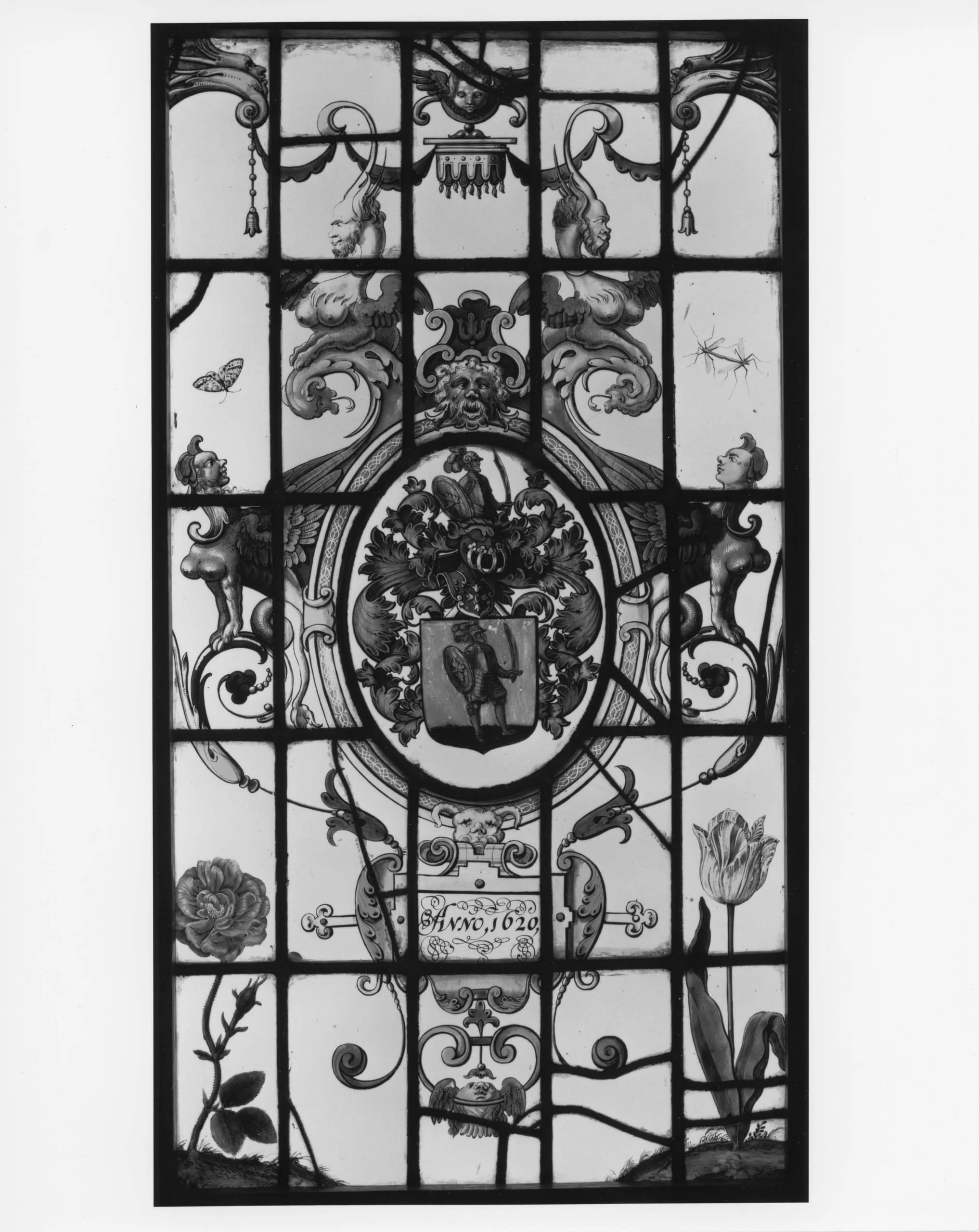
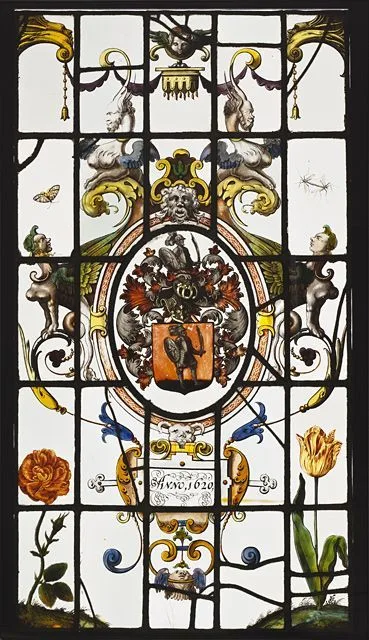
Heraldic Panel1620-1625

Not on view
Vertical stained glass panel, 1620, with central heraldic coat of arms in an oval cartouche, flanked by nude male supporters, grotesque masks, scrolling gold strapwork, and naturalistic rose and tulip in lower corners
Gelatin silver print of a rectangular stained glass panel with leaded divisions; central heraldic cartouche surrounded by scrolling strapwork, grotesque masks, and figural ornament; flanking panels with a rose and tulip at lower sides; inscription reading "ANNO 1620" below the coat of arms.

Unknown, Heraldic Panel, 1620-1625, Los Angeles County Museum of Art, William Randolph Hearst Collection, photo © Museum Associates/LACMA

Artist or Maker
Unknown
Title
Heraldic Panel
Place Made
The Netherlands
Date Made
1620-1625
Medium
White glass with silver stain and enamel
Dimensions
32 7/8 x 17 3/4 in. (83.7 x 45.2 cm)
Credit Line
William Randolph Hearst Collection
Accession Number
45.21.59
Classification
Architecture
Collecting Area
Decorative Arts and Design
Curatorial Notes

This stained-glass panel belongs to a series of six produced in 1620, likely for a professional organization (see also 45.21.56, .57, .58). Several of the central cartouches were left blank to be filled in with a corporate or family crest at a later date as the organization’s membership changed. In this panel, the roundel features a crest with two armored knights, each holding a sword and shield, and a larger helm surrounded by a plumed wreath.

Its style of ornamentation, featuring figures with human female torsos, wings, and hybrid animal bodies—referred to as grotesque—derives from ancient Roman fresco decoration. Especially popular in Europe in the sixteenth and early seventeenth centuries, grotesque decoration could be found on everything from silver pitchers to the backs of chairs. The panels were likely produced in a workshop with multiple painters, accounting for variation in shading and line in the ornamental frame.

The panel is framed by a red-orange rose and a yellow tulip, both flowers originally imported from the Middle East. A mottled moth and a pair of mosquitos in tandem hover in the negative spaces above each grotesque figure. The distinctively naturalistic and jewel-like style of the flowers and insects, along with the inclusion of grotesque decoration, indicate that the panels were likely produced in Middelburg, a major port for the Dutch East India Company. The influx of living specimens, seeds, and flower bulbs arriving from the Asian continent to the harbor allowed the city to host a thriving horticultural network that included botanical artists, gardens, and collector’s cabinets.

Cynthia Kok

April 2025, adapted from Diva Zumaya, The World Made Wondrous (2023)
Selected Bibliography
  • Raguin, Virginia Chieffo. Stained Glass before 1700 in the Collections of the Los Angeles County Museum of Art and the J.Paul Getty Museum. Vol. 1, Los Angeles County Museum of Art. London: Harvey Miller Publishers for American Corpus Vitrearum, Inc., 2024.