- Title
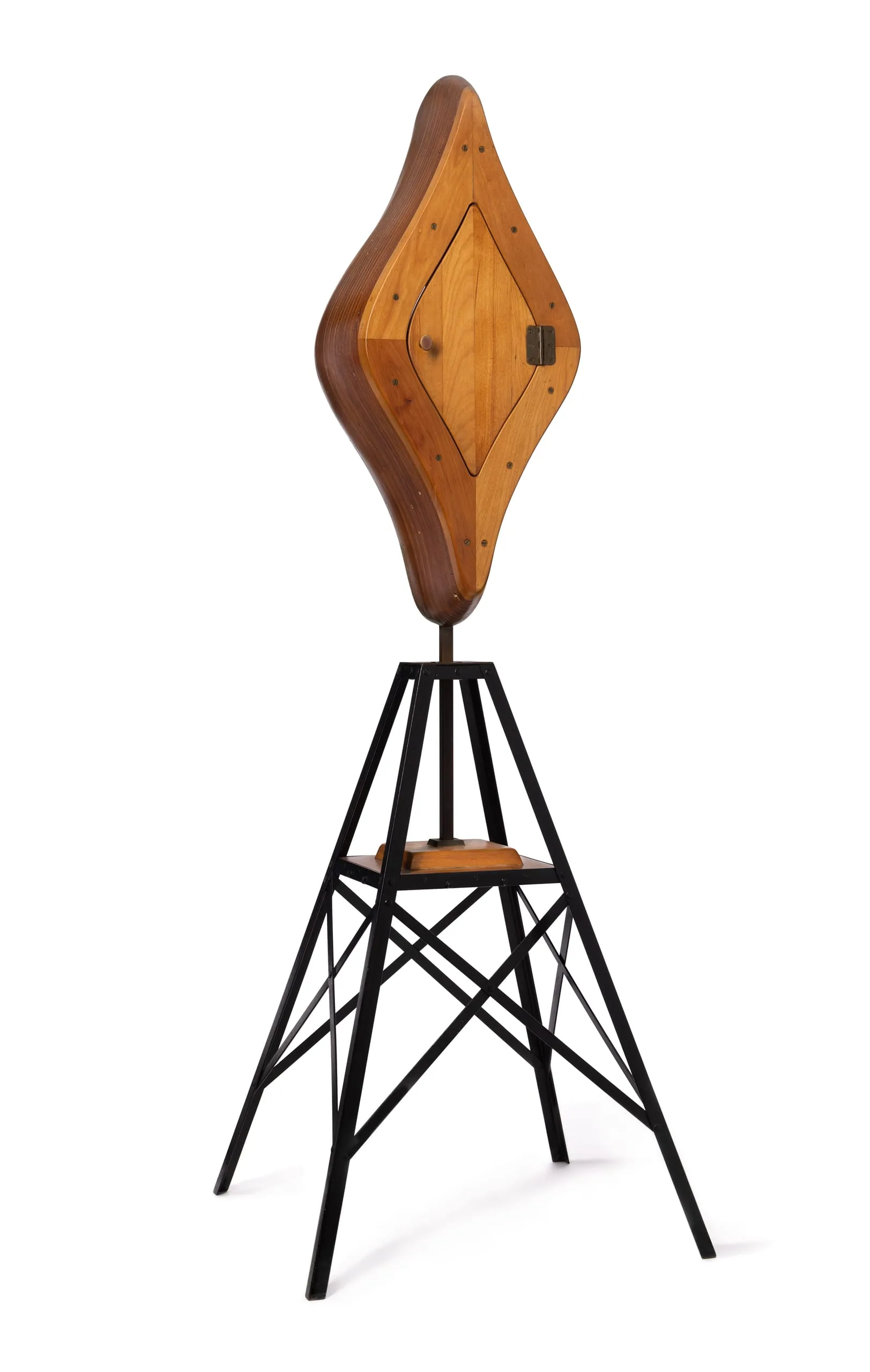
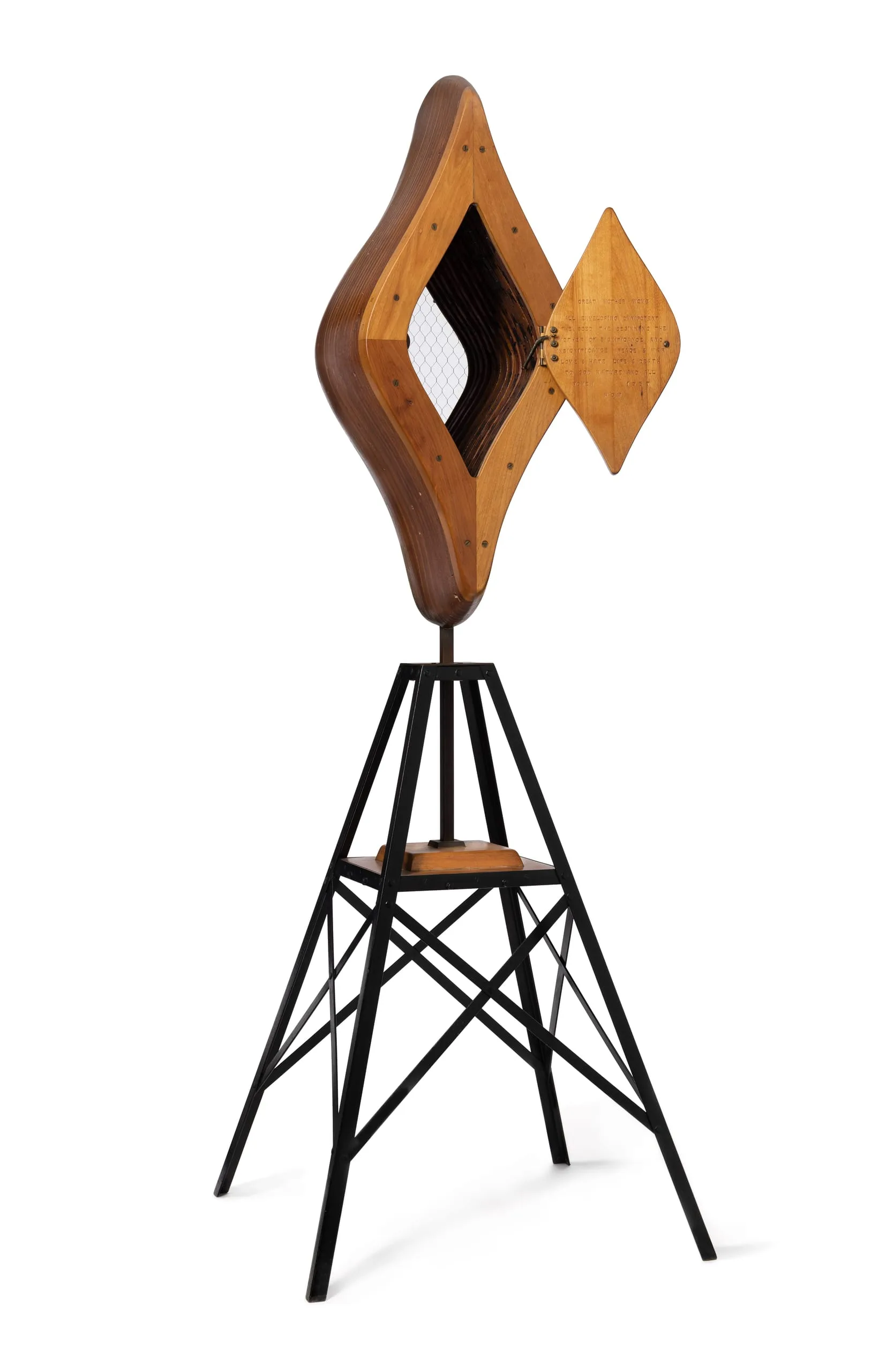
- Great Mother Womb
- Date Made
- 1956-1957
- Medium
- Laminated plywood, glass, and metal
- Dimensions
- 73 x 25 1/2 x 25 1/2 in. (185.42 x 64.77 x 64.77 cm)
- Accession Number
- M.2004.58.1
- Curatorial Notes
H. C. Westermann’s sculptures are direct and visceral and often involve puns. Born in Los Angeles in 1922, Westermann’s service in the Marine Corps during World War II and in the army during the Korean War led to his sense of man’s powerlessness and of life as a helpless and dangerous state. During his studies at the School of the Art Institute of Chicago, he worked as a carpenter to earn a living and was consequently attracted to wood as a medium for his art. Throughout his life, he applied the impeccable craftsmanship of a master carpenter to his sculpture. His works thus have an immaculate finish, with a particular attention to the wood’s grain and color.
In Great Mother Womb, Westermann’s hand-carved wood form references a seed pod, alluding to the concept of an essential earth mother. The swollen form and its thin supporting legs suggest both the fecundity and the fragility of the human condition. An interior inscription reads: “Great Mother Womb, all enveloping omnipotent, the seed, the beginning of mother of significance and insignificance, peace and war, love and hate, life and death, to god, nature and all women.”
Frances Lazare
- Selected Bibliography
- Wight, Frederick S. 20th Century Sculpture from Southern California Collections. Los Angeles: UCLA Art Galleries, 1972.
- H.C. Westermann. Los Angeles: Los Angeles County Museum of Art, 1968.
- Le Gallo, Éloïse. "Horace Clifford Westermann: si l'homme était une idée!" Cahiers du Musée National d'Art Moderne 150 (2020): 34-51.
- Copyright
- © H. C. Westermann Estate / Licensed by VAGA, New York, NY