- Title
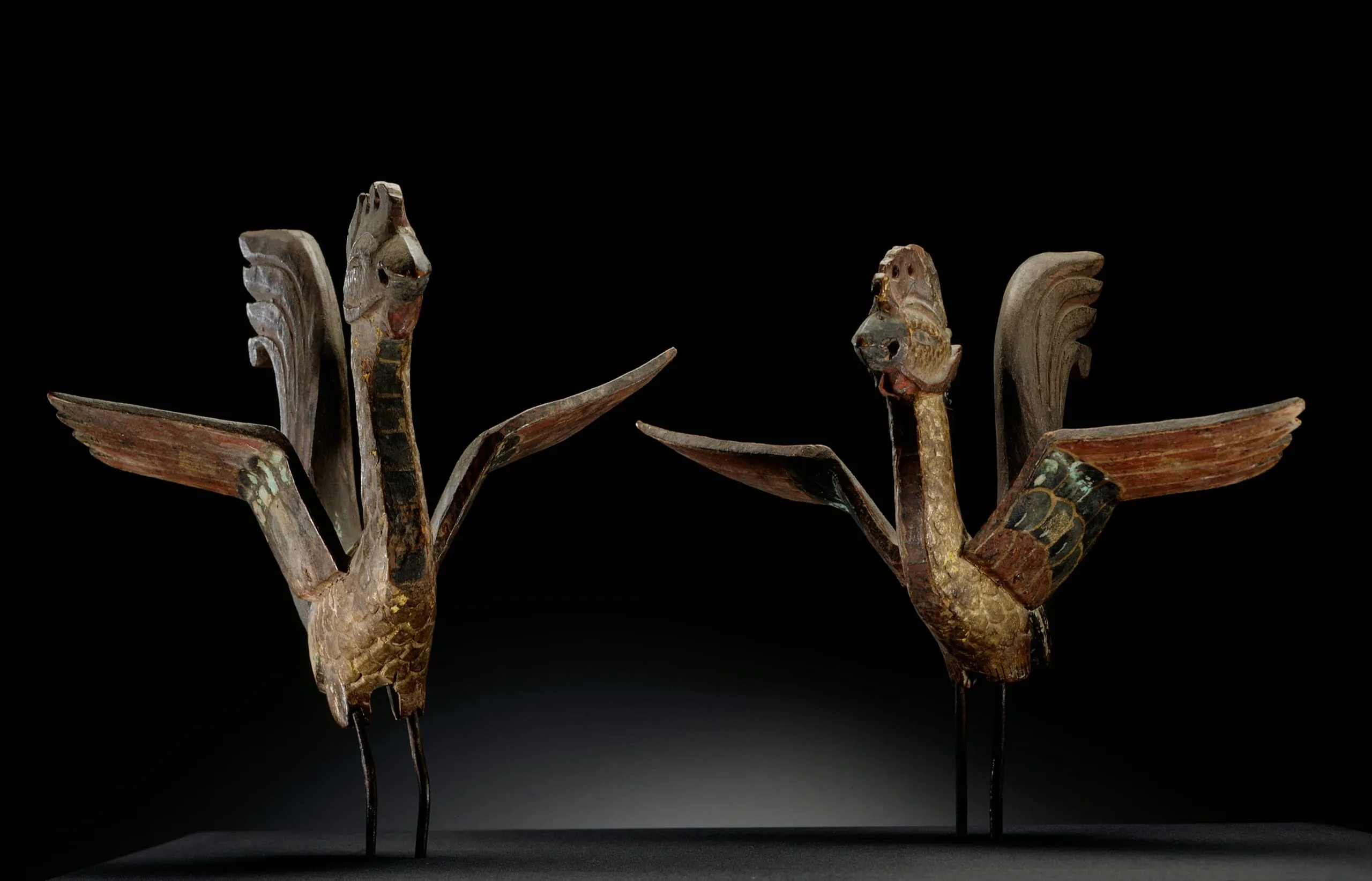
- Wooden Phoenixes
- Date Made
- Joseon dynasty (1392-1910), 18th century
- Medium
- Carved wood with paint and gilding
- Dimensions
- .a) 9 3/8 x 10 1/2 x 6 3/4 in. (23.81 x 26.67 x 17.15 cm); .b) 9 1/2 x 8 7/8 x 7 1/8 in. (24.13 x 22.54 x 18.1 cm)
- Accession Number
- M.2000.15.136a-b
- Curatorial Notes
Signifying peace and immortality, the phoenix is considered sacred in both Buddhism and Korean culture. Depictions of a phoenixlike bird, known as bonghwang, have been found on wall paintings dating to as early as the Baekche kingdom (18660). As one of the four celestial animals associated with the four cardinal directions, the phoenixlike bird represented the south. The meaning of LACMA’s pair of wood phoenixes departs from ancient associations and has been molded by subsequent cultural beliefs. The pair were likely intended to be hung in a Buddhist temple to maintain tranquility. To make the religion more inviting to the common people, Buddhist ornaments such as these phoenixes were often influenced by folk art.
Buddhist ritualistic implements and ornaments made of wood were common, but few have survived due to the medium’s natural vulnerability to fire. Although the Joseon dynasty suppressed Buddhism, and the phoenix became a symbol largely reserved for use by royalty, the religion was rooted so deeply in society that it could not be completely eradicated.
Virginia Moon
2024
- Selected Bibliography
- Korean Art Collection of the Los Angeles County Museum of Art, U.S.A. Daejeon, Republic of Korea: National Research Institute of Cultural Heritage, 2012.