LACMA

ShopMembershipMyLACMATickets
LACMA
Los Angeles County Museum of Art
5905 Wilshire Blvd.
Los Angeles, CA 90036
info@lacma.org
(323) 857-6000
Sign up to receive emails
Subscribe
© Museum Associates 2025

Museum Hours

Monday

11 am–6 pm

Tuesday

11 am–6 pm

Wednesday

Closed

Thursday

11 am–6 pm

Friday

11 am–8 pm

Saturday

10 am–7 pm

Sunday

10 am–7 pm


  • About LACMA
  • Jobs
  • Building LACMA
  • Host An Event
  • Unframed
  • Press
  • FAQs
  • Log in to MyLACMA
  • Privacy Policy
© Museum Associates 2025
Collections

Unknown
JarJoseon dynasty (1392-1910), 18th century

Not on view
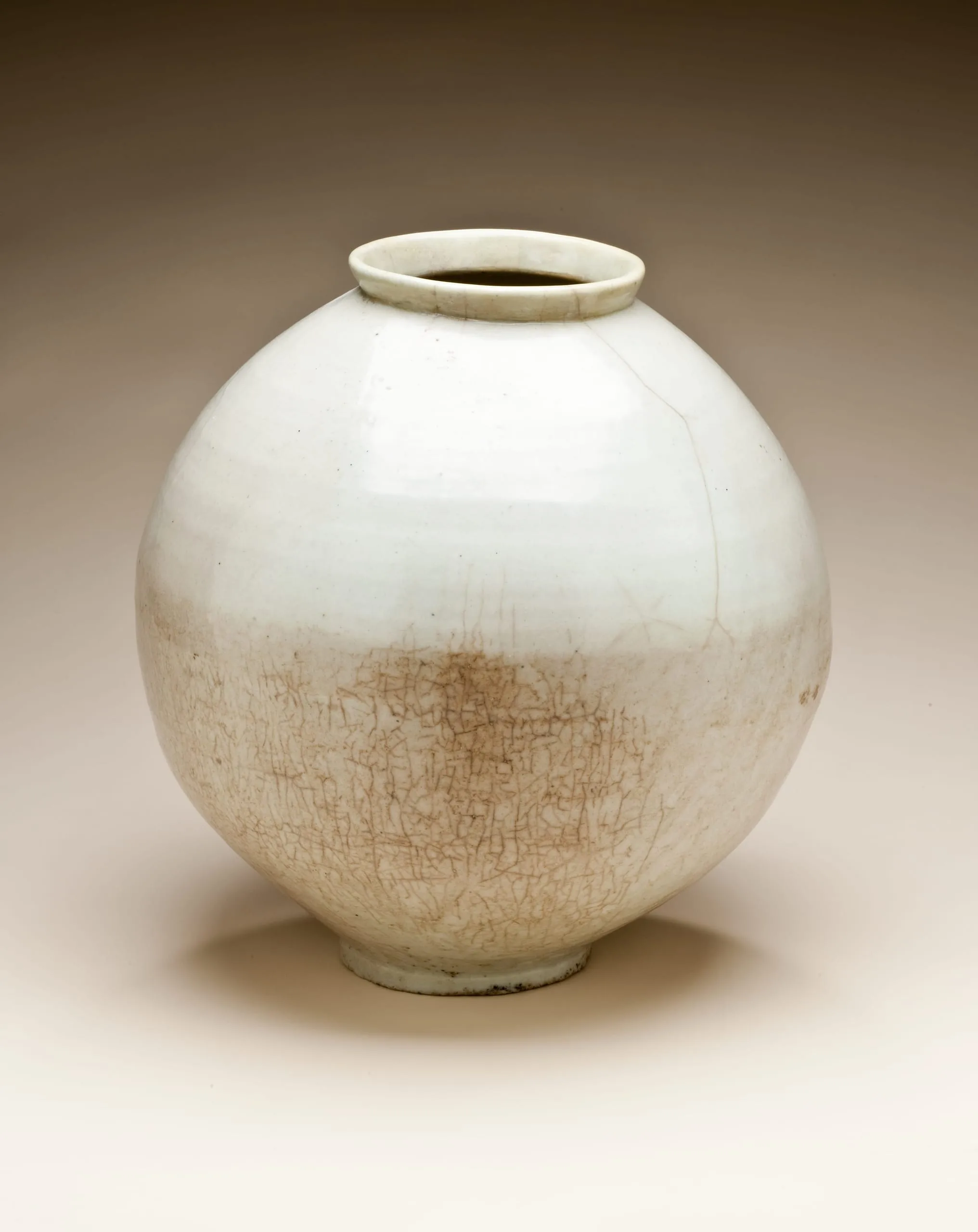
Ceramic jar with large, nearly spherical body, white glaze, glossy upper half, and dense crazing in warm tan tones across the lower half
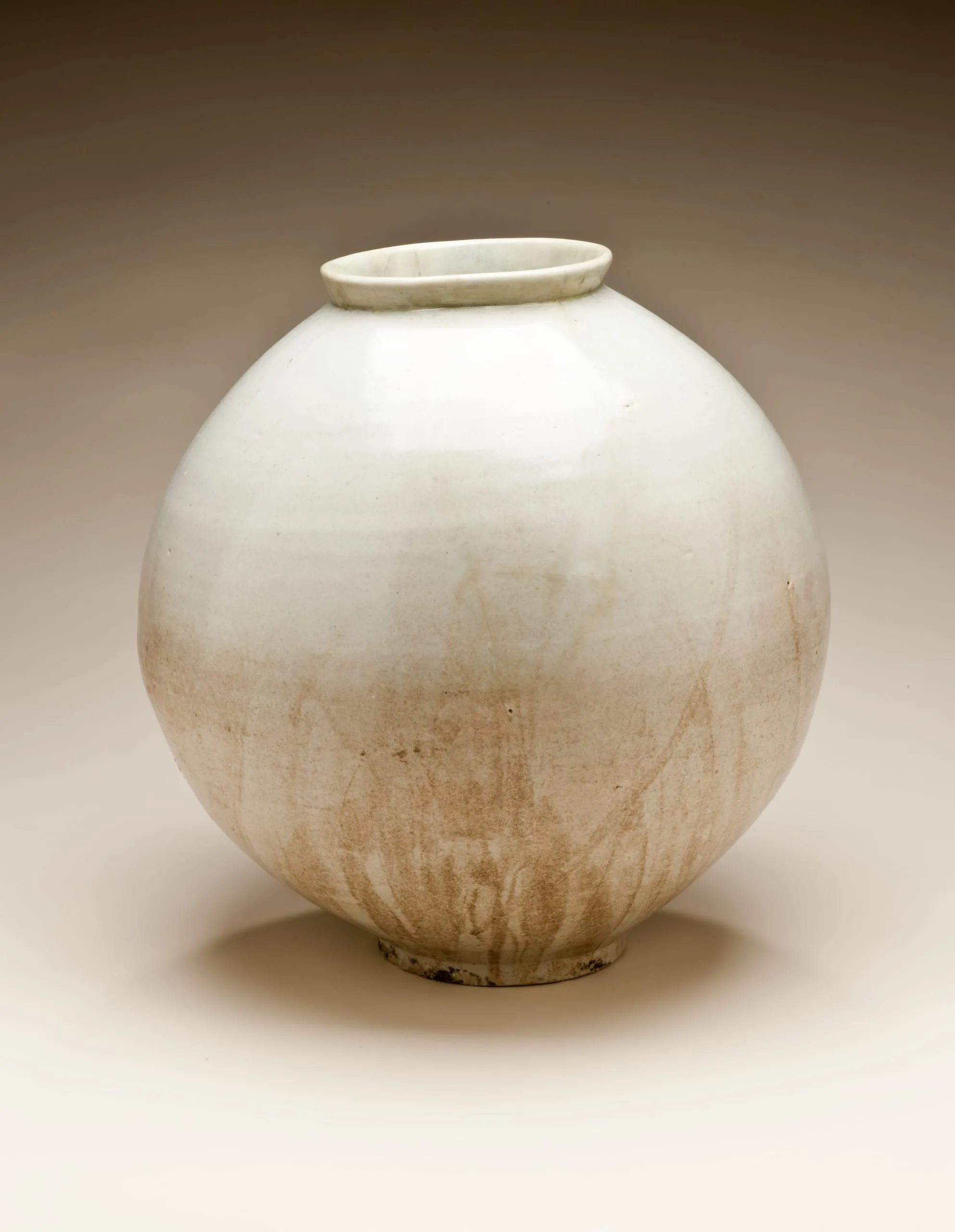
Porcelain moon jar with large spherical body and small cylindrical neck, white glaze transitioning to crackled warm-brown crazing across the lower half.
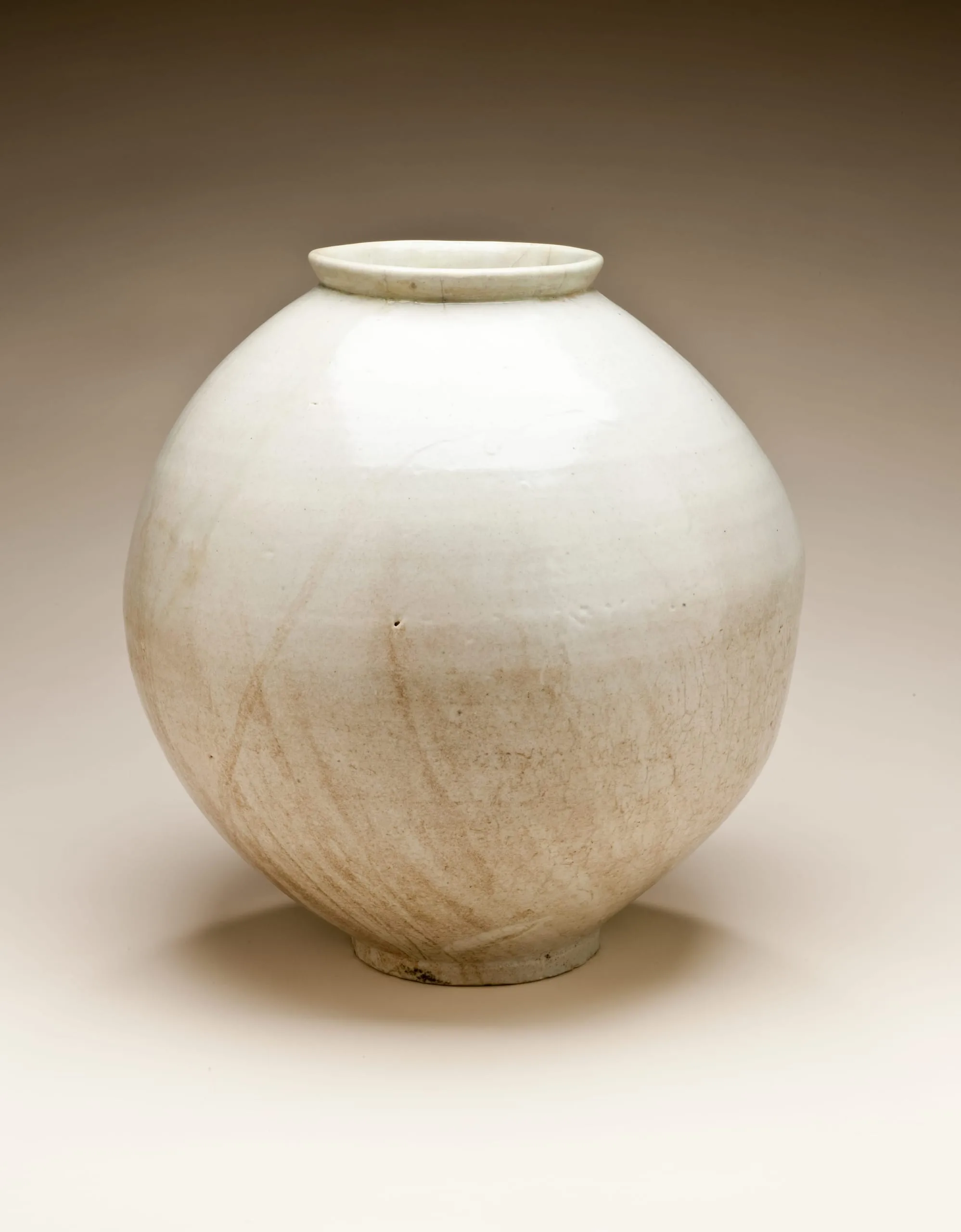
Porcelain moon jar with large globular form and small everted rim, white glaze fading to warm beige tones toward the base with subtle firing marks and crazing.
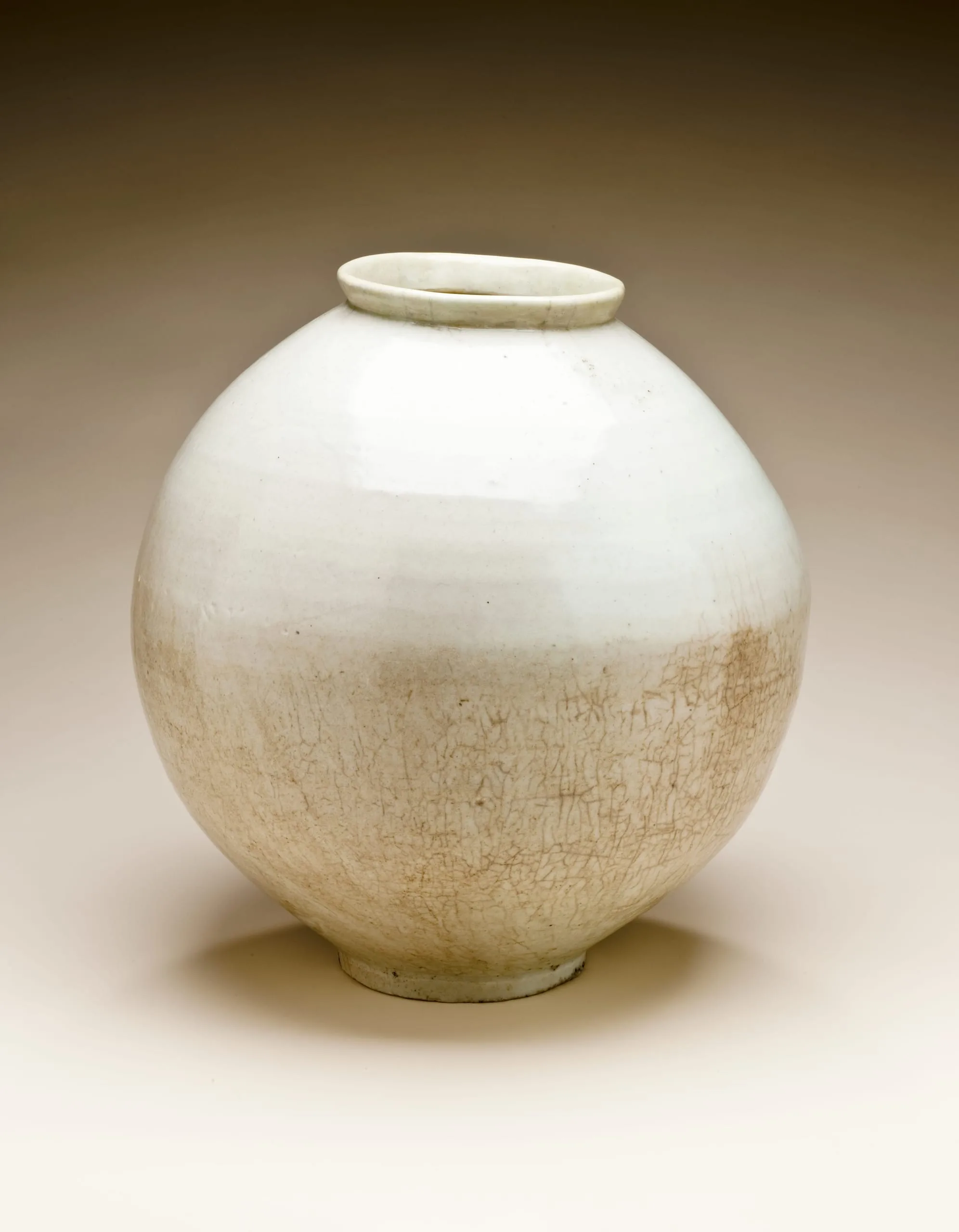
Porcelain moon jar with large, nearly spherical form, small everted rim, and white glaze showing subtle grayish brush marks and natural firing variations across the surface.
Artist or Maker
Unknown
Title
Jar
Place Made
Korea
Date Made
Joseon dynasty (1392-1910), 18th century
Medium
Wheel-thrown stoneware with clear glaze
Dimensions
Diameter: 12 1/2 in. (31.75 cm) Height: 14 in. (35.56 cm)
Credit Line
Purchased with Museum Funds
Accession Number
M.2000.15.114
Classification
Furnishings
Collecting Area
Chinese and Korean Art
Curatorial Notes
This globular jar, often referred to as a "moon jar" because its shape suggests a full or shaded half moon, is a fine eighteenth-century example. Although it features a less than perfectly round shape and somewhat uneven glaze surface, it is incredibly beautiful and its irregularities were very much appreciated in accordance with Korean aesthetics. Only produced for some one hundred years, moon jars did not appear until the late seventeenth century and had already begun to disappear by the early nineteenth century.
Because the white clay could not sustain the height and weight necessary to support the jar's body, they were produced in two sections and attached together at the waist, often leaving a seam. Korean ceramicists worked in harmony with the irregularity of the potter's wheel to produce shapes that accentuated naturalism. During the Joseon dynasty, a strong Confucian aesthetic prevailed that valued the elegant simplicity of undecorated white wares. Always seeing something new in the simple forms and undecorated white color, many scholars wrote and reflected on the "living" quality of such ceramic wares.
Hyonjeong Kim, Associate Curator, Chinese and Korean Art, (2008)
Selected Bibliography
  • Korean Art Collection of the Los Angeles County Museum of Art, U.S.A. Daejeon, Republic of Korea: National Research Institute of Cultural Heritage, 2012.