Portraits in East Asia have many functions and many layers of complex meaning. Foremost, they serve a vehicle for the worship and reverence of the ancestors, and this was especially true during the Joseon dynasty, when Confucianism was sponsored by the state. In addition to portraits of scholar-officials, which are the most common, many portraits of Buddhist monks have survived and – in some rare cases – portraits of important women. Images of the king and royal family, created by court painters who specialized only portrait making, were particularly significant. These royal portraits – as well as court-sponsored portraits of scholar-officials who had distinguished careers – were often used as strategic political propaganda to express the power of the court and to reinforce loyalty among the scholar-official class. Commemorative types of portraiture were also created to record the accomplishments of the esteemed statesmen as well as to educate younger generations of officials.[1] In addition, portraits of scholar-officials were made for more private contexts, such as the family shrine.
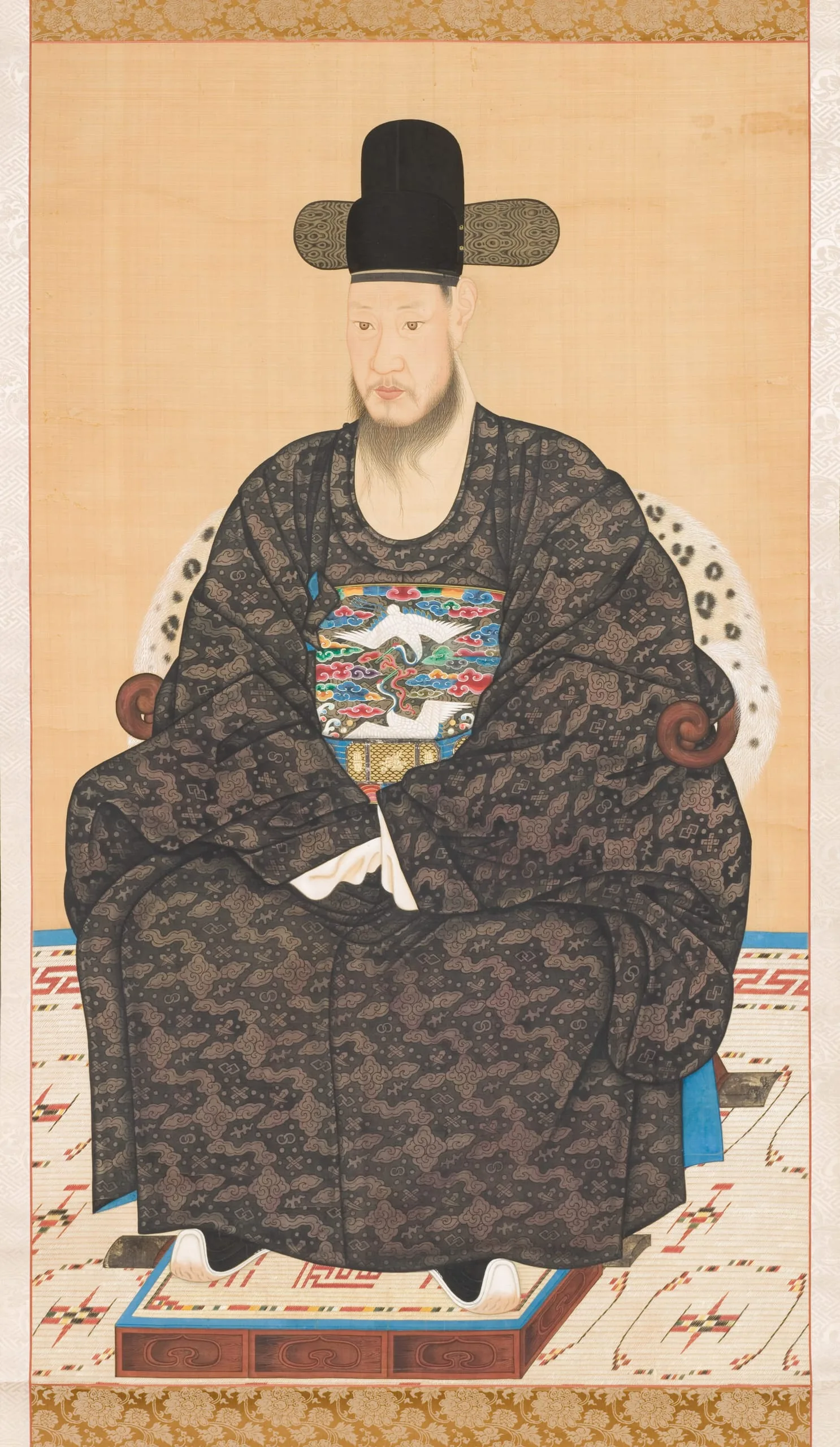
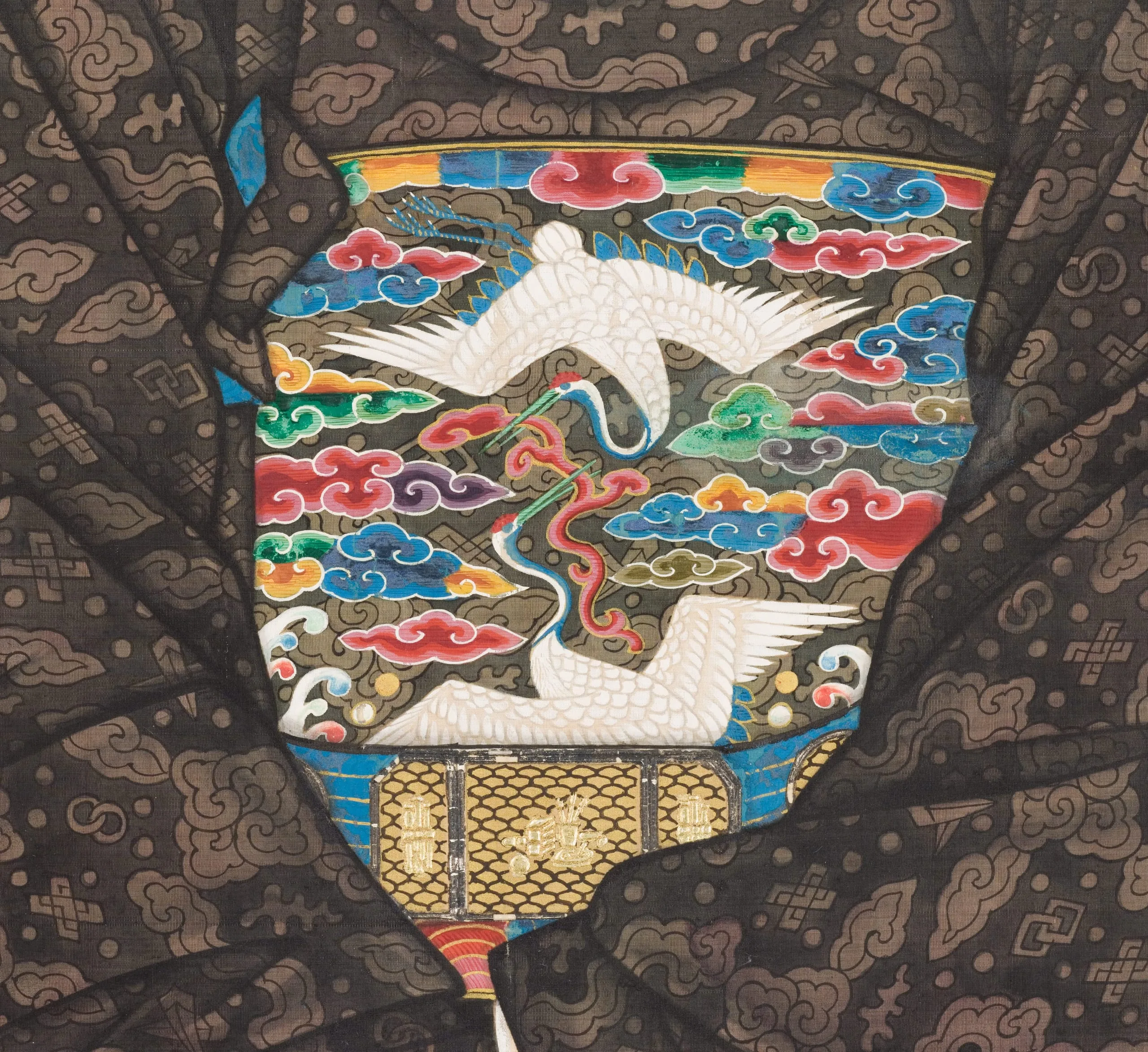
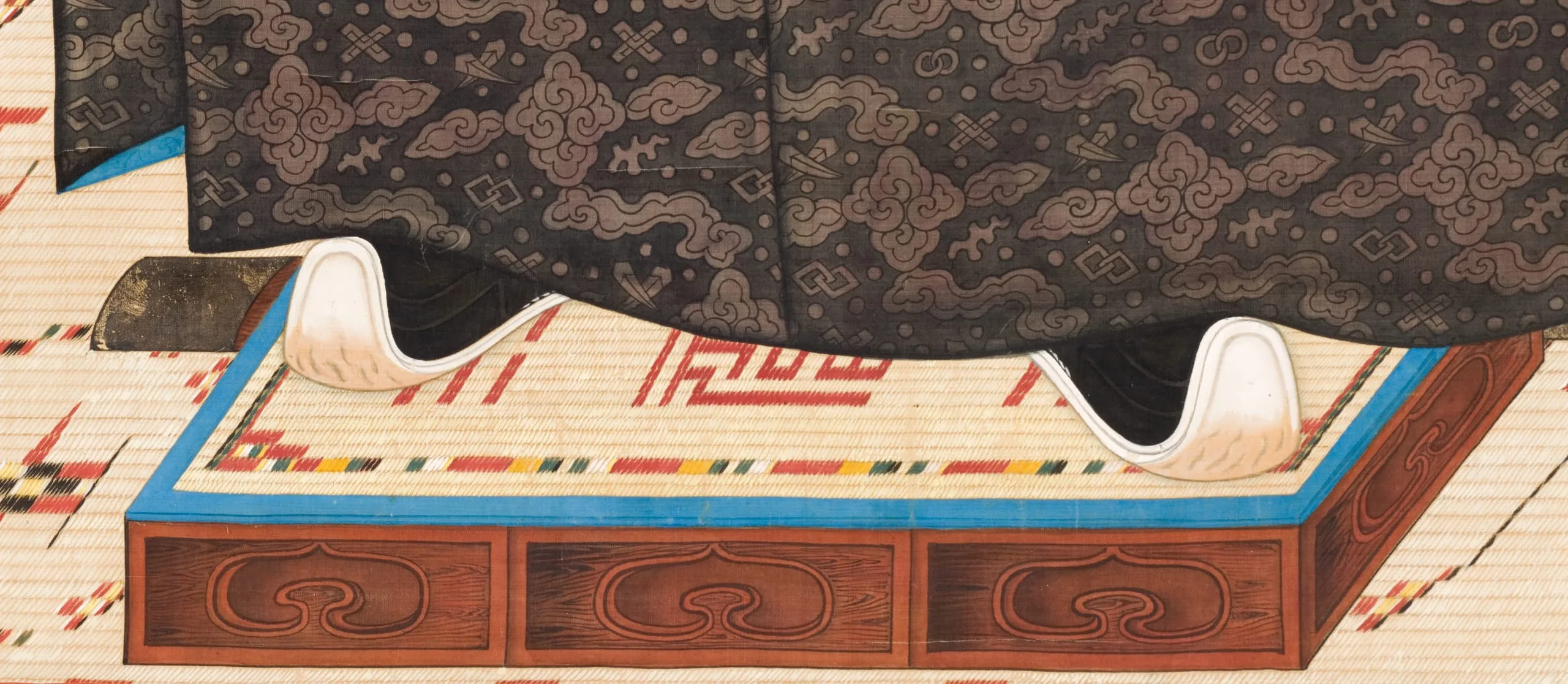
This portrait by an unknown artist depicts an unidentified scholar-official. Seated in a chair in full-length view, the subject wears an official’s robe, a black silk hat, and leather shoes. His robe features a rank badge (det. 1) with two cranes, indicating his status as a civil officer. At first, many scholar-official portraits were made to commemorate meritorious service, and they were displayed in designated halls. By the eighteenth century, however, it became popular among scholars, especially those who had once served as officials, to commission a formal portrait for private use.
LACMA’s portrait is characteristic of nineteenth-century portraiture style.[2] At the beginning of the nineteenth century, a traditional Korean mat began to appear as the most common flooring, replacing the previous standard of a foreign carpet ground. It was also during the nineteenth century that a footstool was added – often covered with the same mat flooring – as exemplified in LACMA’s portrait. Other details typical of the nineteenth century include the tall proportion and stiff appearance of the official’s hat.
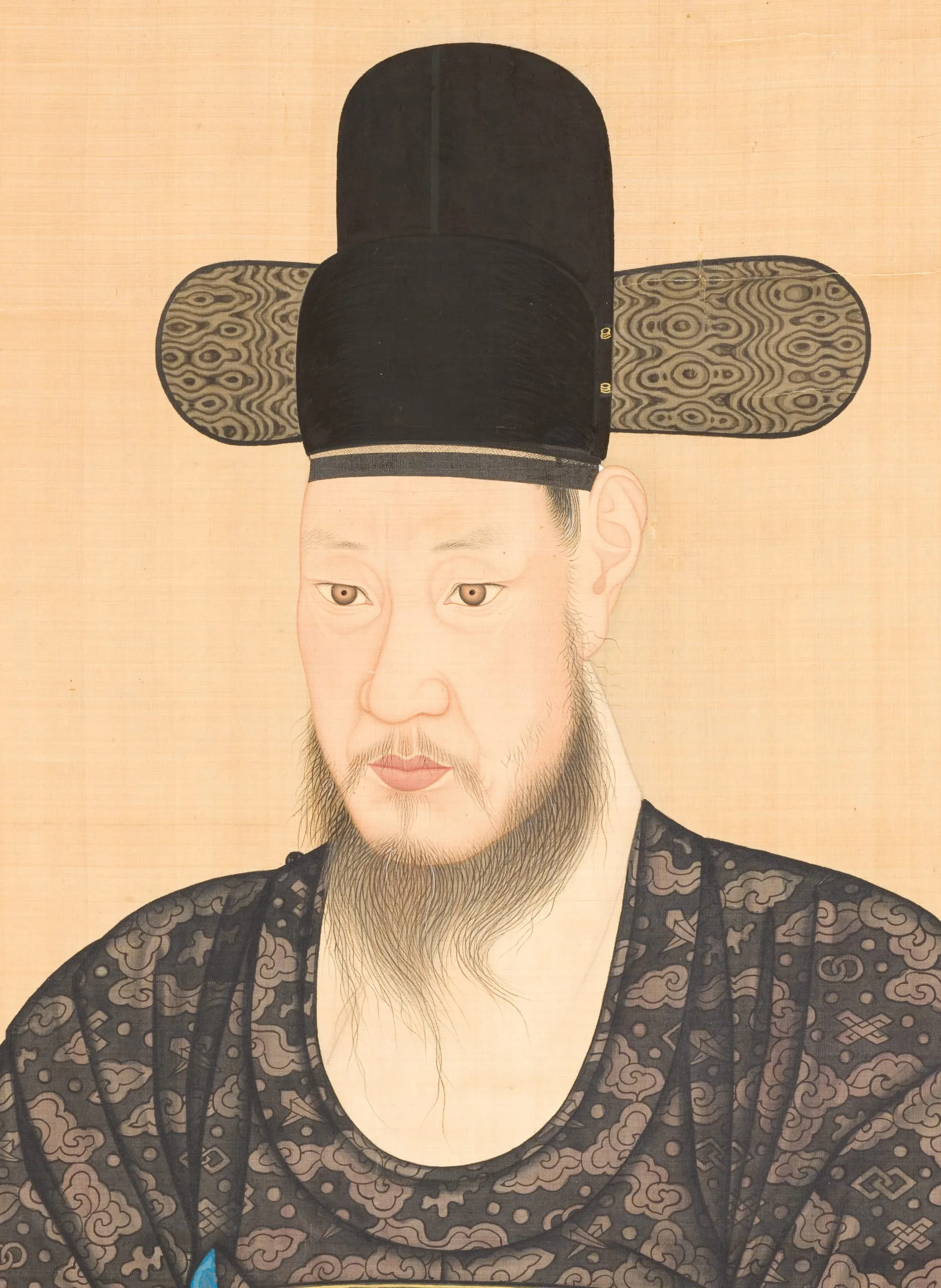
The scholar’s personality and physiognomy are expressed in the finely detailed and skillfully painted face (det. 2). The beard and robe are well executed with great sensitivity, enabling the viewer to appreciate the rich textures. The overall composition and technical details are very similar to the eighteenth-century portrait of Ming Baeksang in Seoul National University Art Museum (fig. 1). Because it possesses so many details characteristic of the genre during the nineteenth century, this portrait can be considered a typical example of nineteenth-century scholar-official portraiture.
Footnotes
[1] For more on the development of official portraiture, refer to Cho Seonmi, “Joseon Dynasty Portraits of Meritorious Subjects: Style and Social Function,” Korea Journal (summer 2005), 151-81.
[2] See Jin Junhyon, “Scholar-Official Portraits of the 19th and 20th Centuries [Sibgu yisib saegi sadaebu chosanghwa],” in National Research Institute of Cultural Heritage, Symposium Paper: Reinterpretation of the World of Our Portraits (2007).