- Title
- Basin
- Date Made
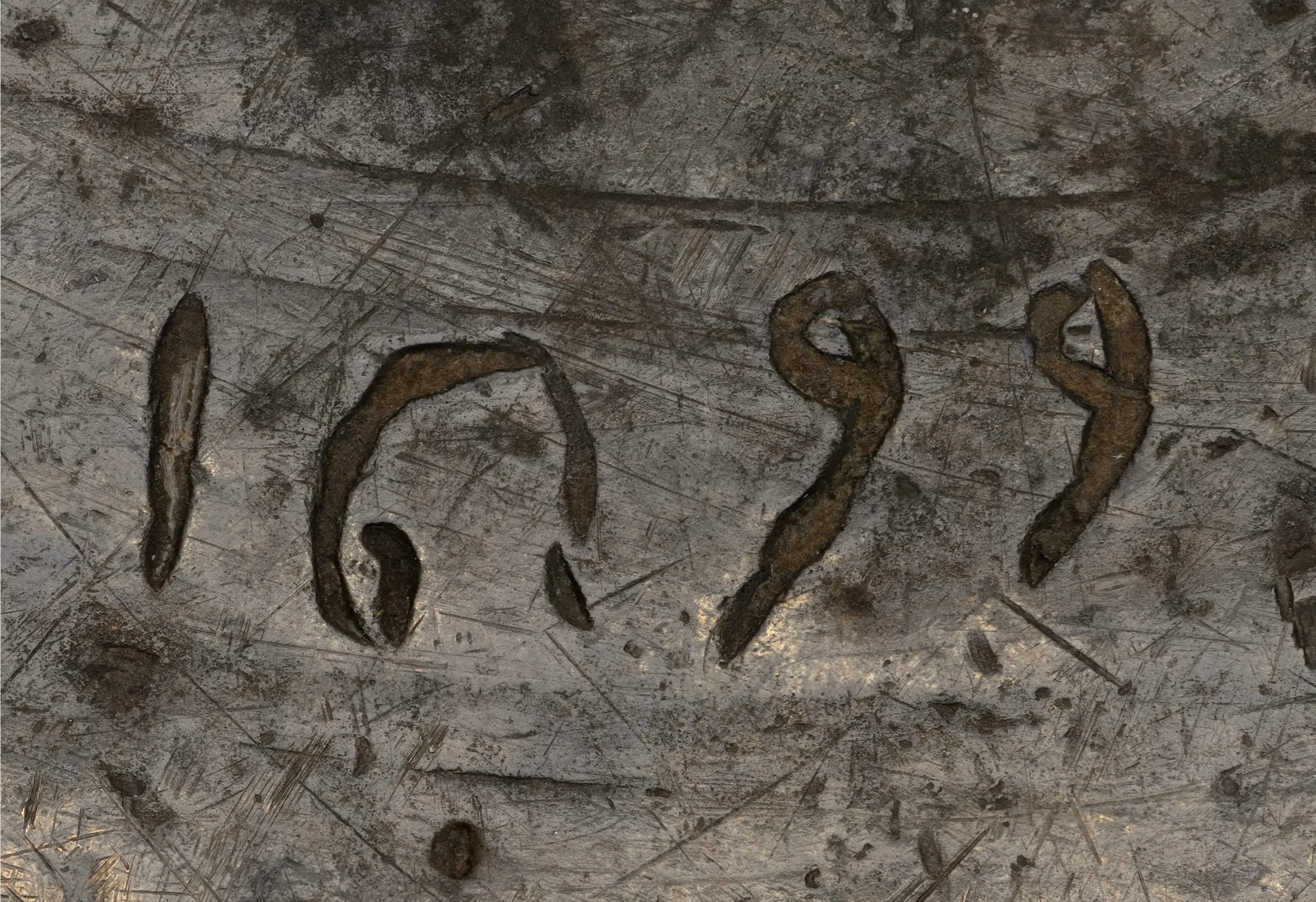
- circa 1650-1700 (bottom); 1742 (top)
- Medium
- Brass inlaid with a dark gray ground, cast and engraved (bottom); brass inlaid with a dark gray ground, engraved (top)
- Dimensions
- 7 3/8 x DIAM: 15 1/4 in. (18.73 x 38.74 cm)
- Accession Number
- M.2000.47
- Curatorial Notes
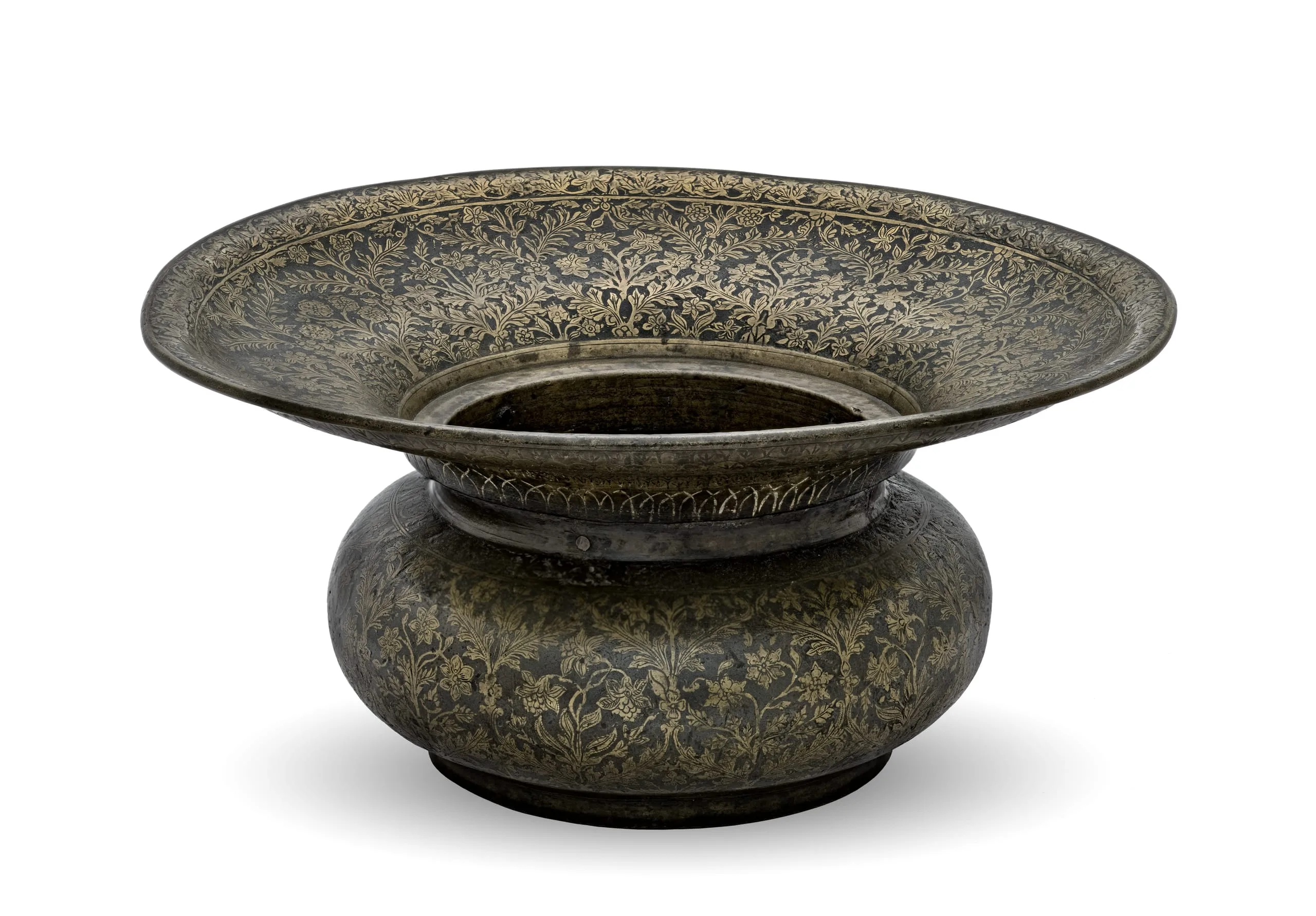
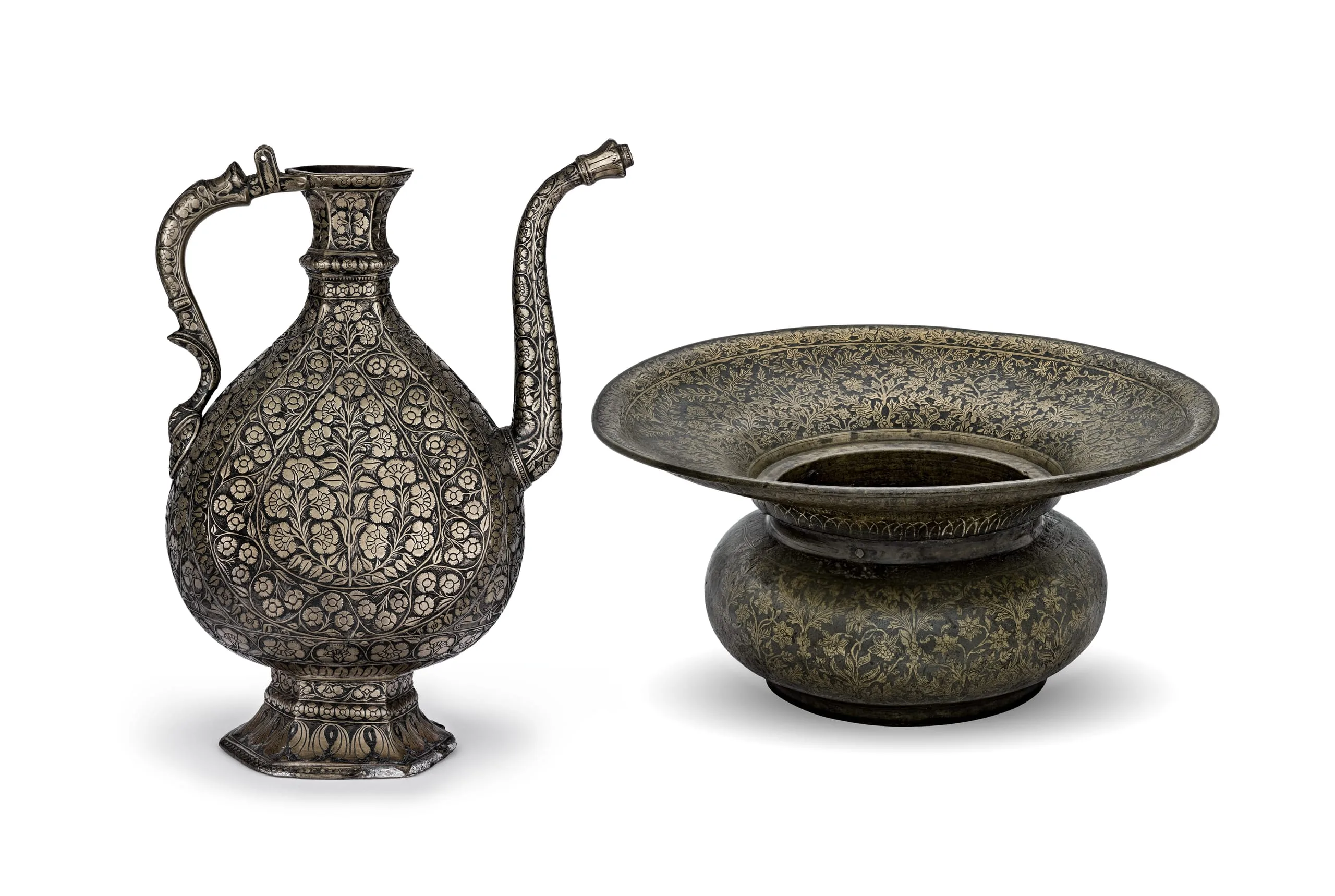
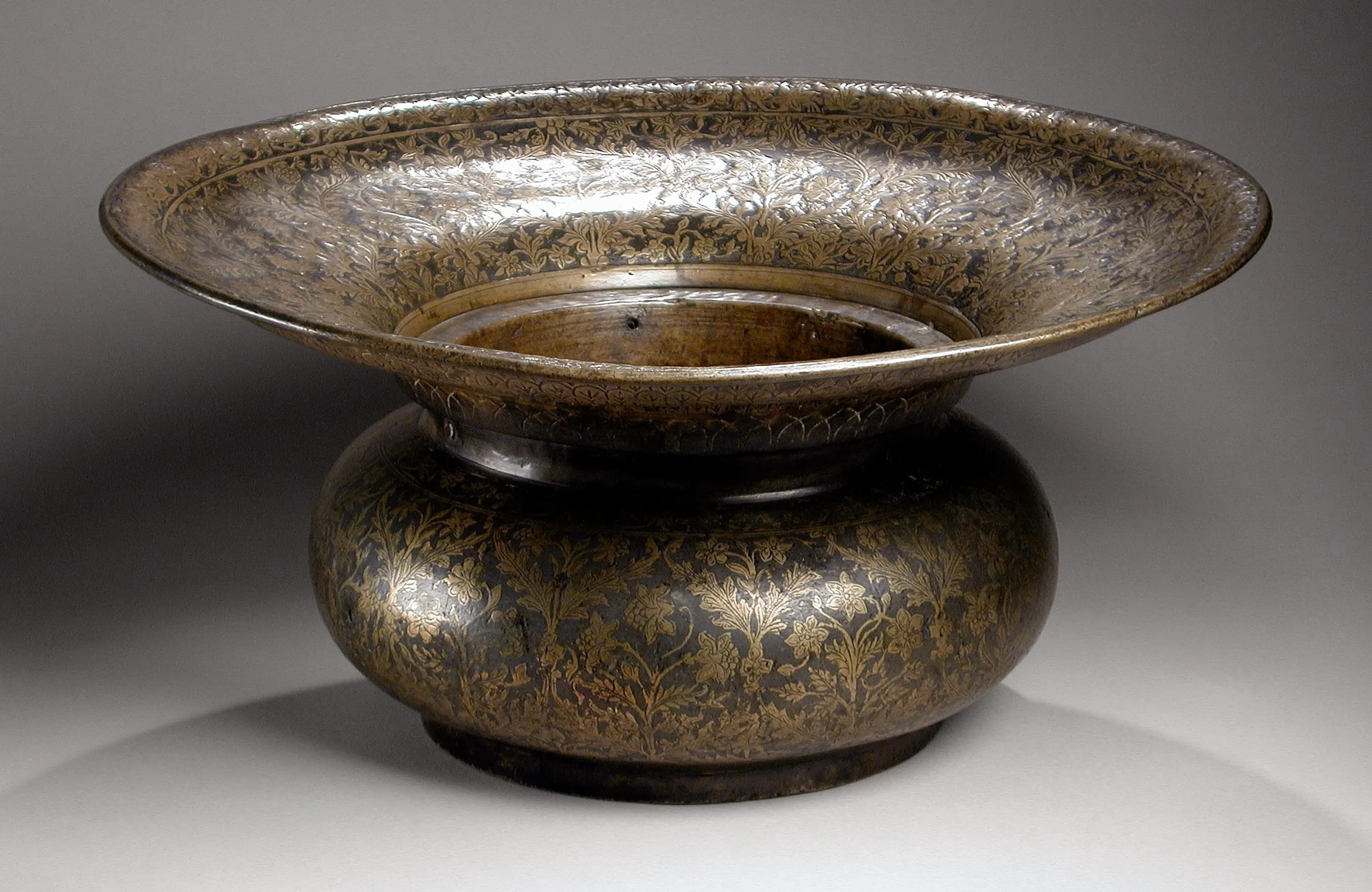
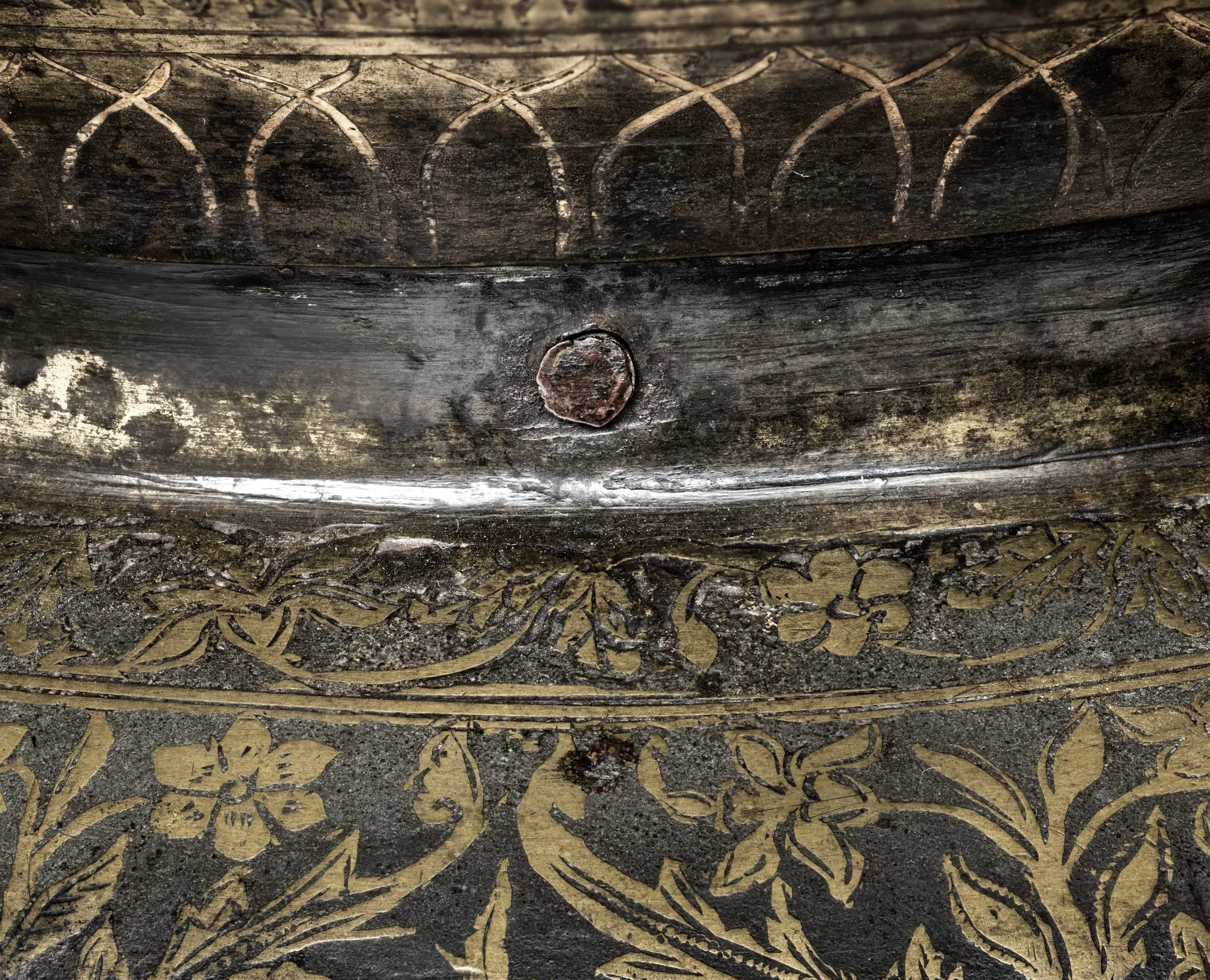
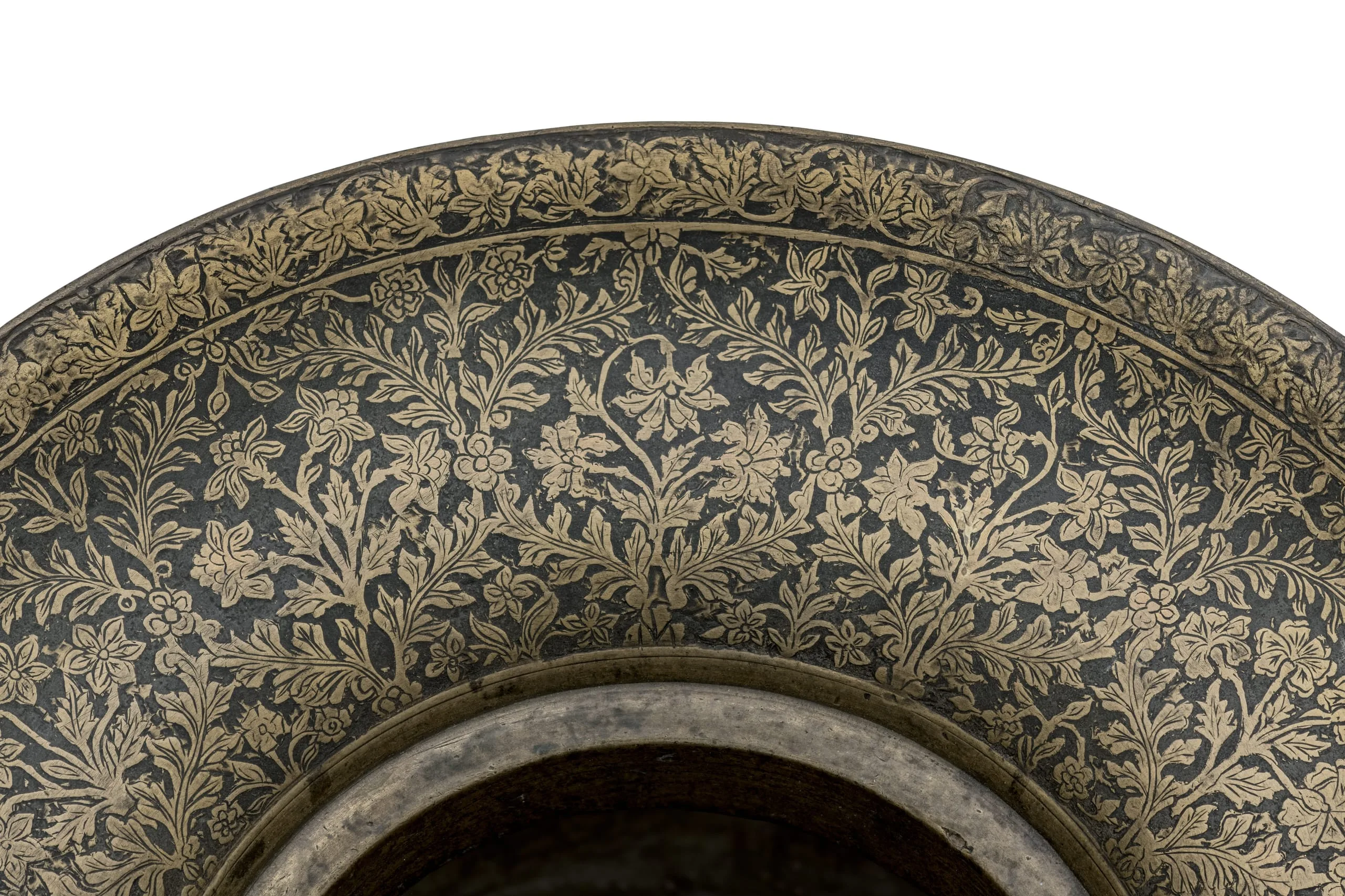
The basin (tasht or sailabchi) is composed, unusually, of two parts, created using differing techniques and at demonstrably different dates, that were riveted together to form the present vessel. The top is a broad, sloped rim that transitions to a vertical inner collar extending into the vessel’s throat. The interior lower edge of the rim has a narrow horizontal support lip for a decoratively pierced lid (now missing), which would have covered the mouth of the chamber and provided a foundation for the basin’s original matching water ewer (present location unknown). The bottom is a compressed bulbous body with a solid low foot.
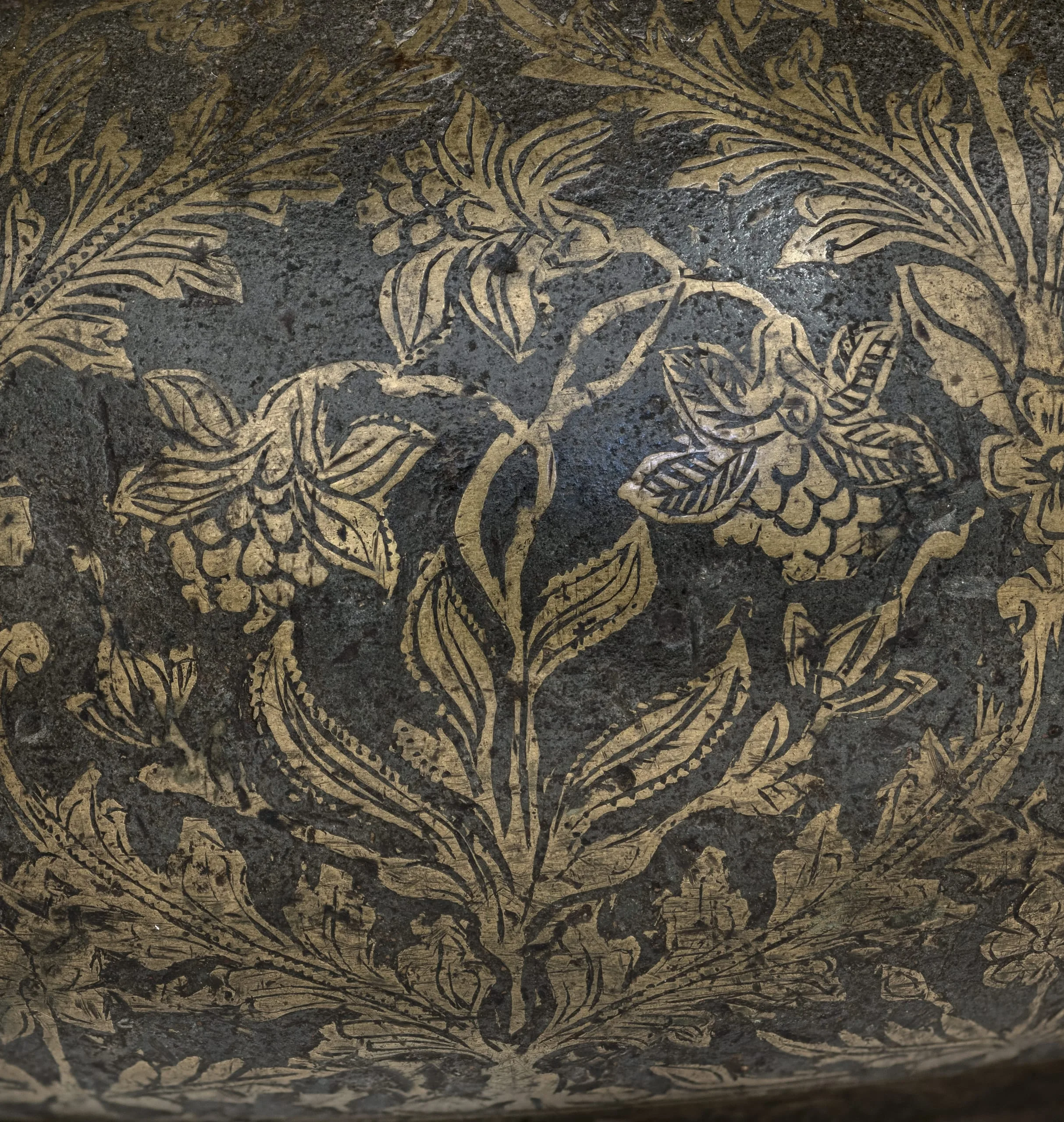
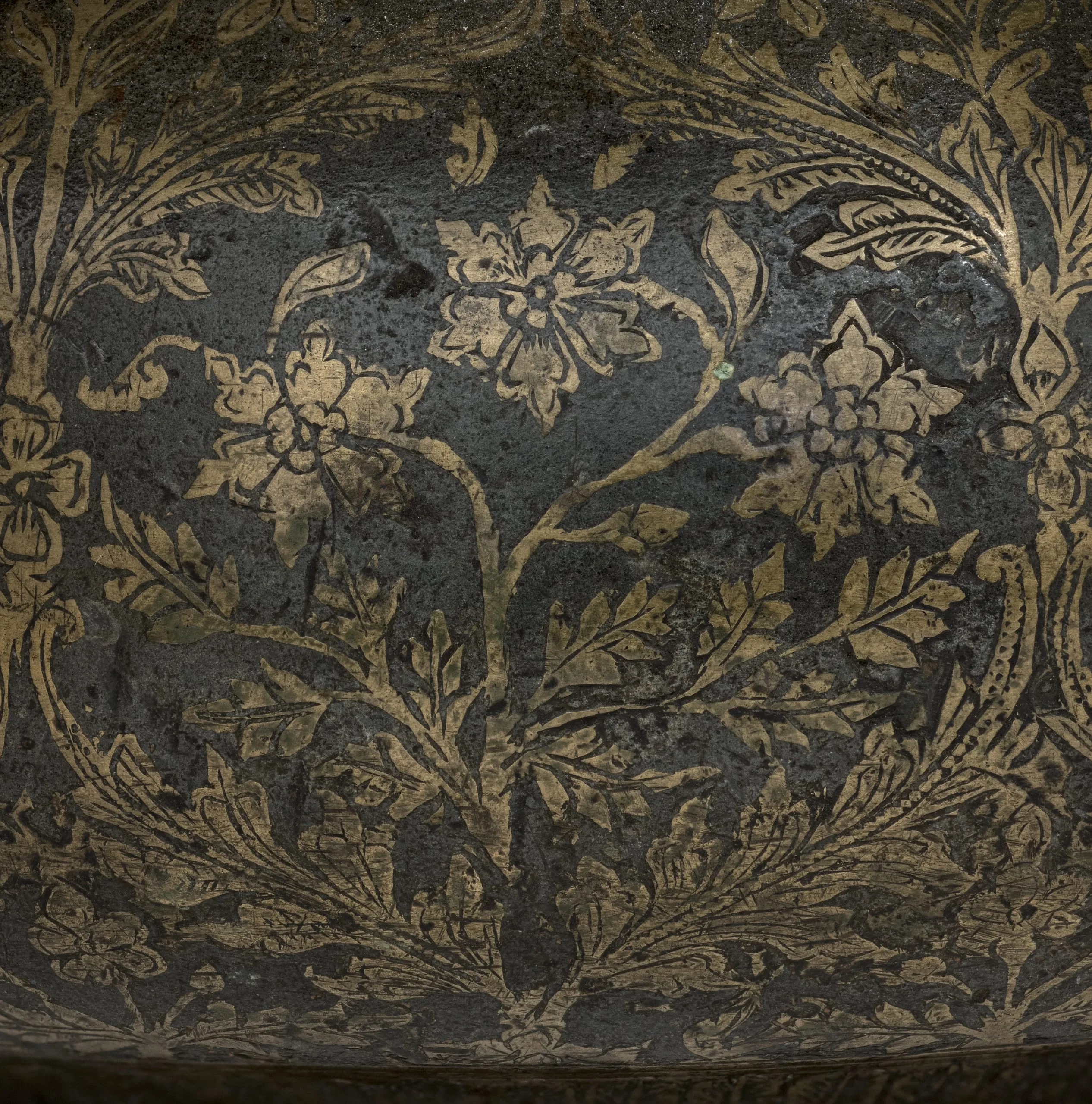
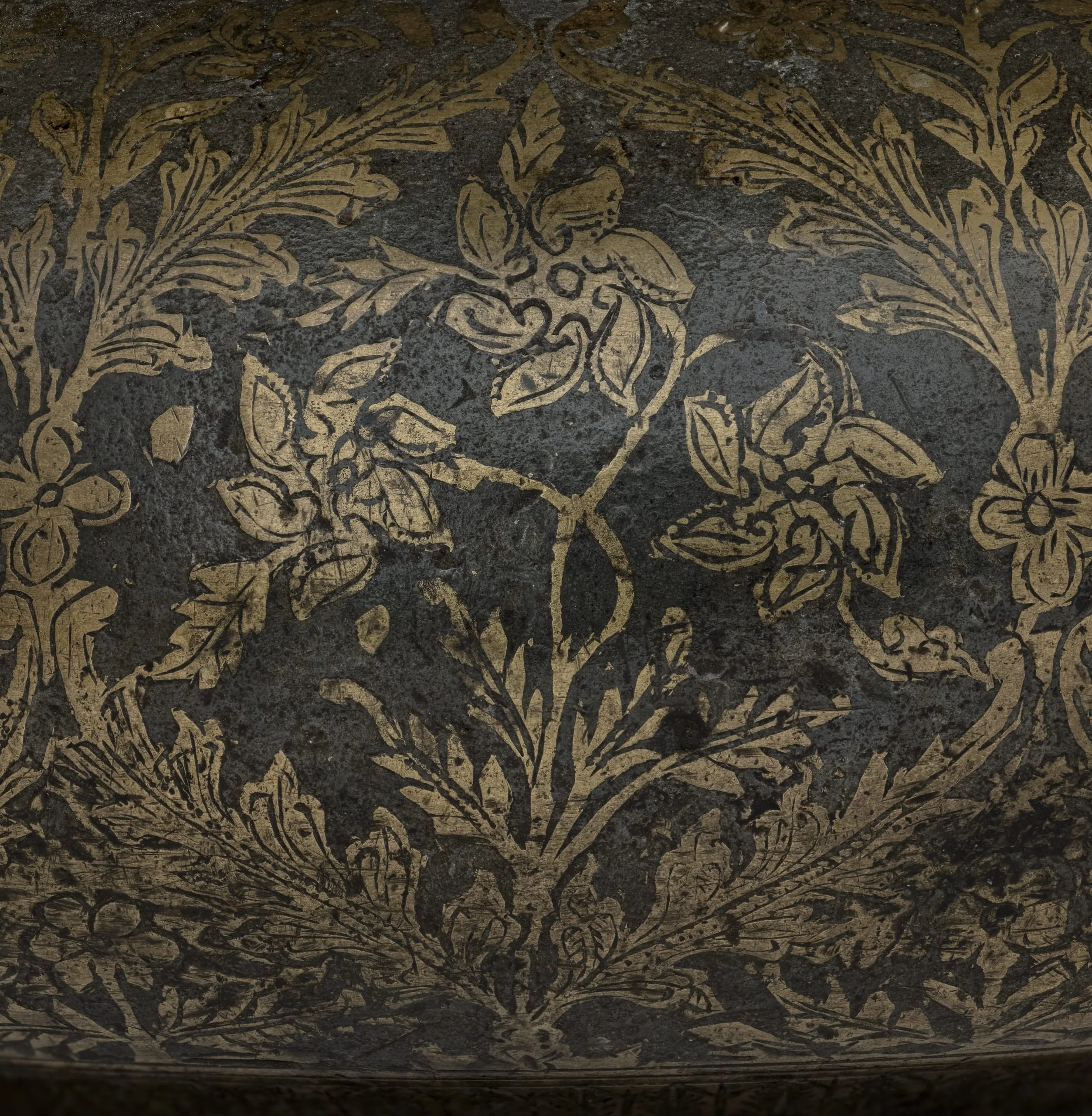
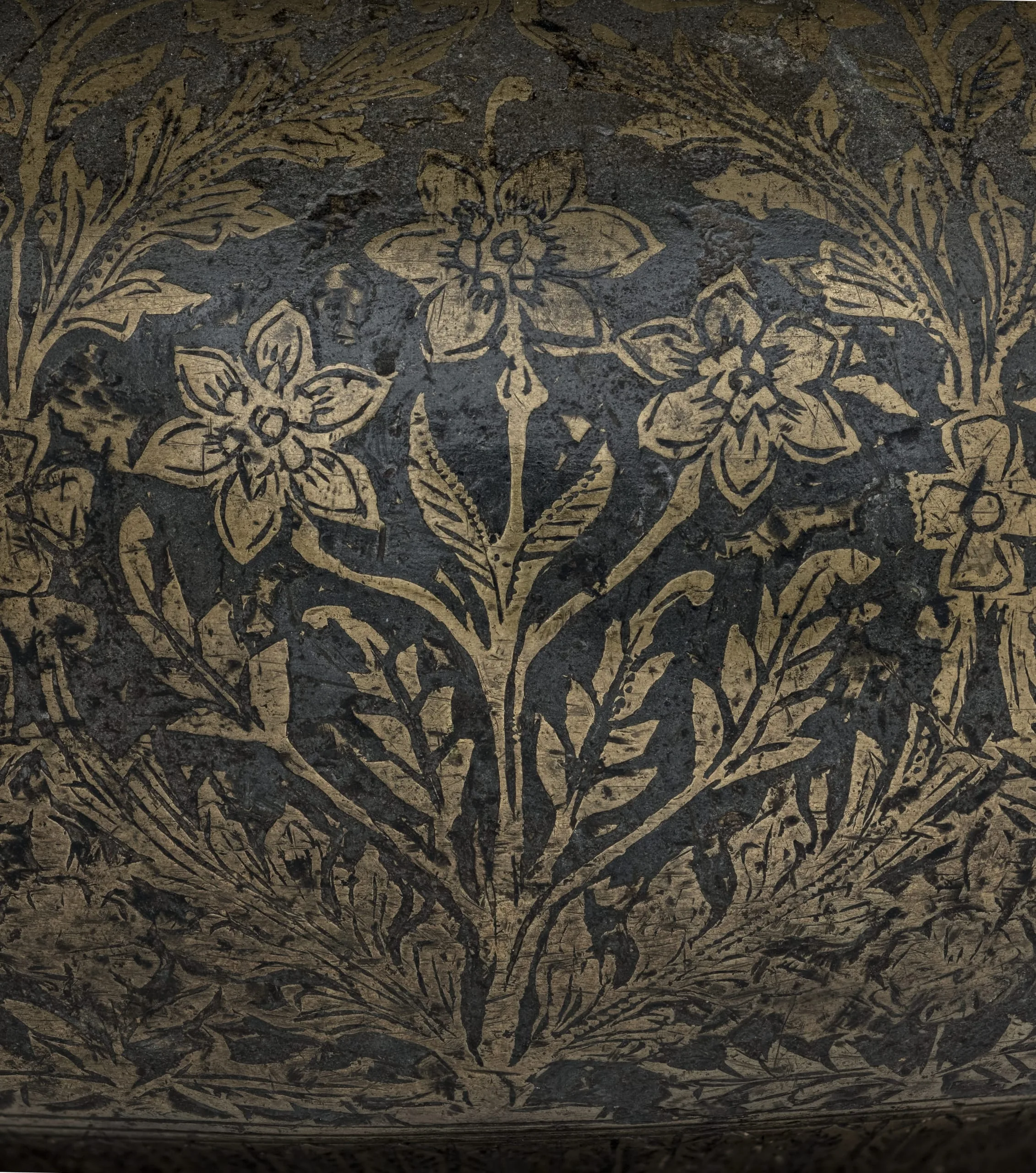
The decoration on both the top and bottom consists of twelve distinct flowering plants set within a vegetal lattice. Lilies and narcissi serve as the basic inspiration for the plants on the bottom. Each is sanded flush to the ground and emphasized by the surrounding areas of negative design space. In contrast, the floral motifs on the basin’s rim are more compact and denser, slightly raised from the ground, and have less negative design space between them. This subtle compositional difference has the effect of emphasizing the overall pattern of the motifs rather than the individual plants. The plants on the rim are also less individualized than those on the bottom and appear to be slight variations on three types: lilies and narcissi, as well as six- or seven-petaled rosettes. The cast floral motifs on the rim are also less finely detailed, with sparser and coarser linear incising than on the bottom. The basin’s flowers are closely related in botanical structure to the flowers in certain painting albums made for the Mughal Emperors Jahangir (r. 1605-27) and Shah Jahan (r. 1628-58), which suggests a shared artistic tradition.
- Selected Bibliography
- Markel, Stephen. Mughal and Early Modern Metalware from South Asia at LACMA: An Online Scholarly Catalogue. Los Angeles: Los Angeles County Museum of Art, 2020. https://archive.org/details/mughal-metalware (accessed September 7, 2021).