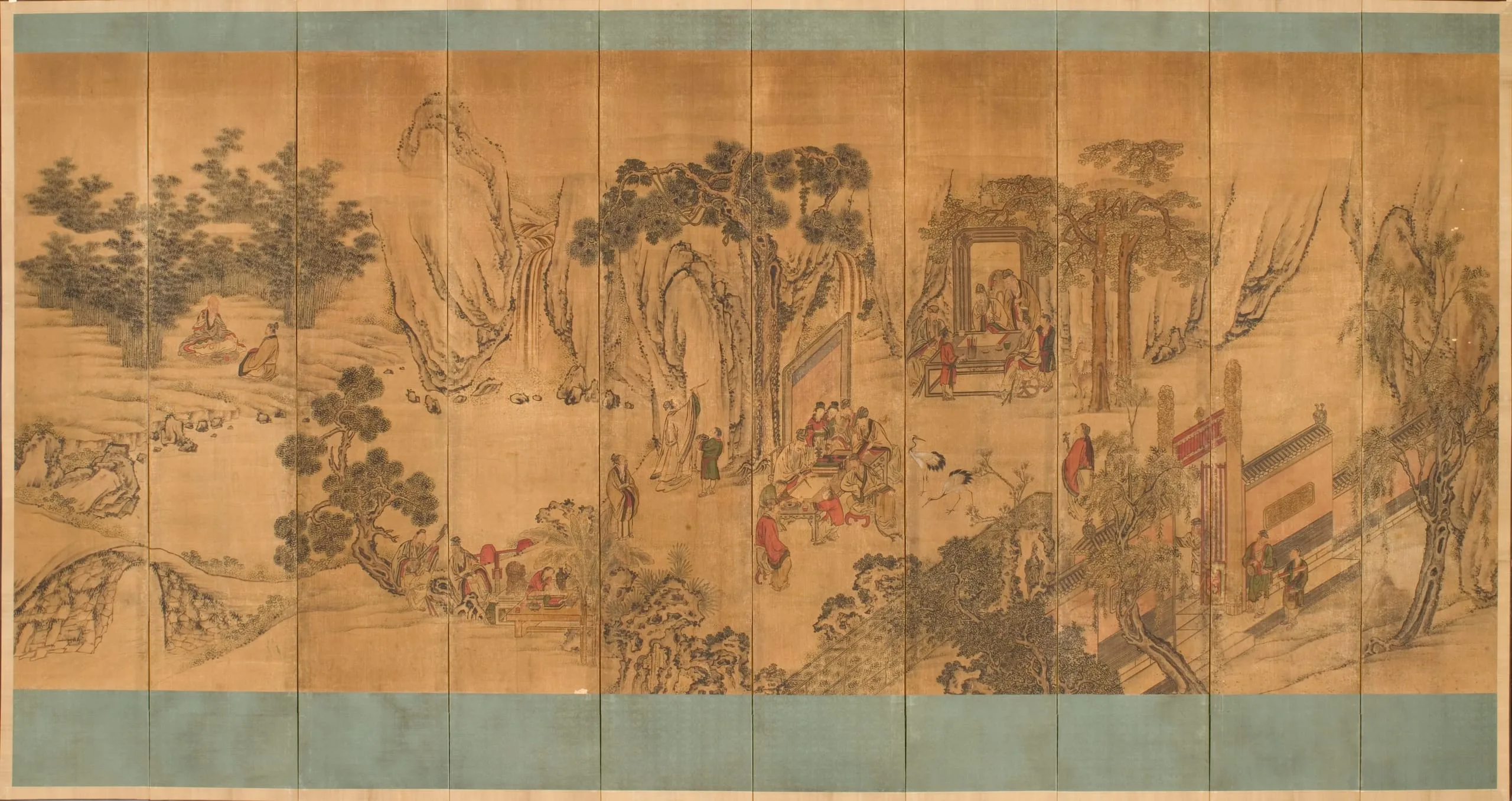
Although executed by a Korean artist, this beautifully painted large scale screen illustrates a famous gathering that took place in China during the Northern Song dynasty (960-1127). According to tradition, in 1087 sixteen famous statesmen, literati, and artists gathered in the capital Kaifeng at the Western Garden of Wang Shen (1036-after 1089), who was the son-in-law of Emperor Yingzong (reigned 1064-1067). Important guests included the poet and calligrapher Su Shi (1037-1101), the eccentric Mi Fu (1051-1107) and the famous painter Li Gonglin (1049-1106), all of whom have long been considered cultural heroes and models of scholarly virtue. Li Gonglin was believed to have recorded the gathering in a painting.[1] The subject of the “Elegant Gathering in the Western Garden” has been interpreted as an ideal or imaginary meeting that celebrates the cultural heroes of the Song dynasty, rather than as an actual event. Featuring the leading figures of poetry, calligraphy, and painting, as well as Confucians, a Daoist, and a Buddhist, the group represents the highest philosophical and artistic achievements during a period perceived as a high point in Chinese civilization.[2] Over the centuries, this legendary gathering became a frequent theme in Chinese painting.
In Korea, the subject became increasingly popular during the late Joseon period.[3] Well-known Chinese paintings of the same theme, such as one attributed to Zhao Mengfu (1254-1322) and another by an anonymous painter, now in the collection of the Metropolitan Museum of Art, may have been familiar to and influenced later Korean artists. One of the finest known Korean versions of the “Elegant Gathering” was painted by the virtuoso artist Kim Hongdo (1745-after 1814) in 1778 (fig. 1). Clearly, Kim’s painting was based on the iconography already formulated by Chinese artists. However, although the subject is derived from Chinese sources, the painting style and format went through notable changes after it arrived in Korea, including the adaptation of the subject to the screen format that was especially popular in late Joseon Korea.
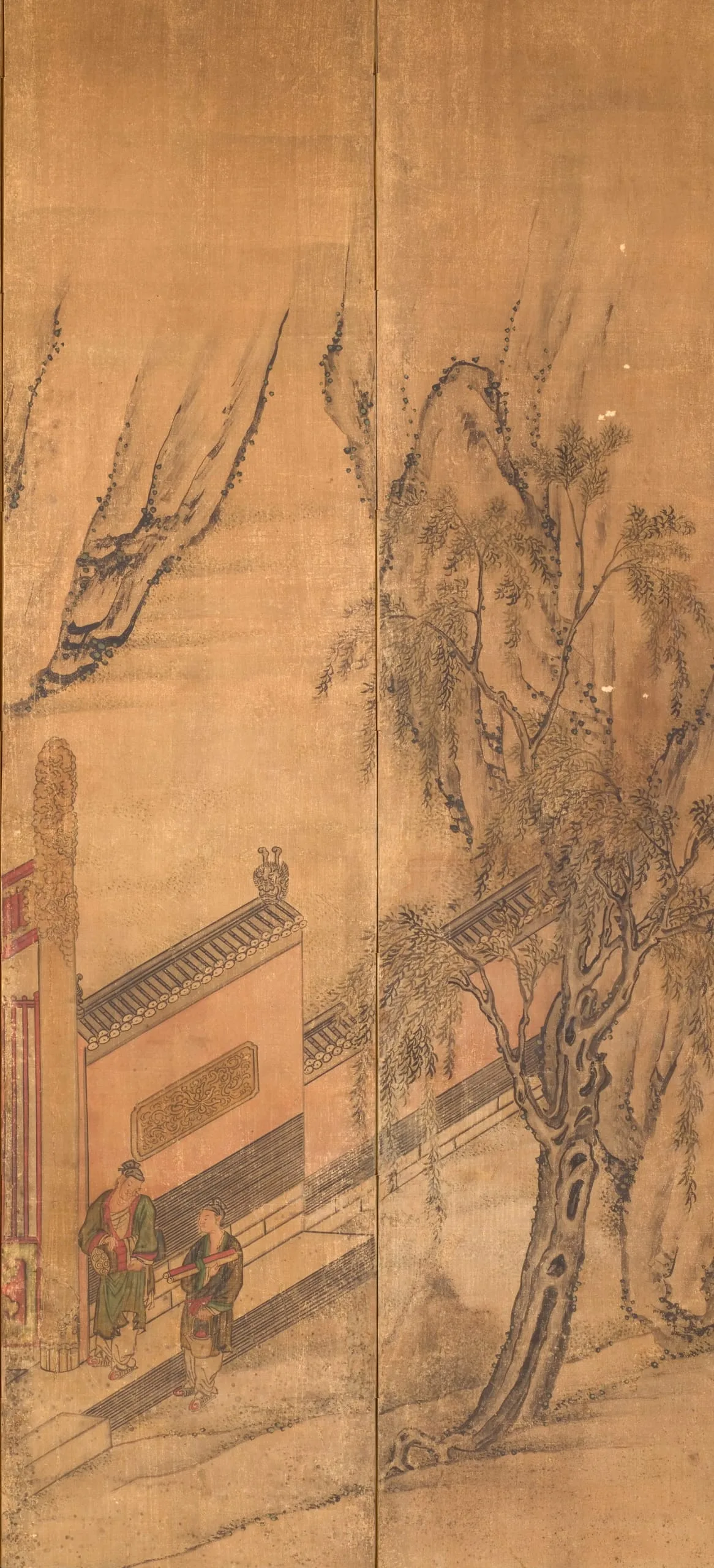
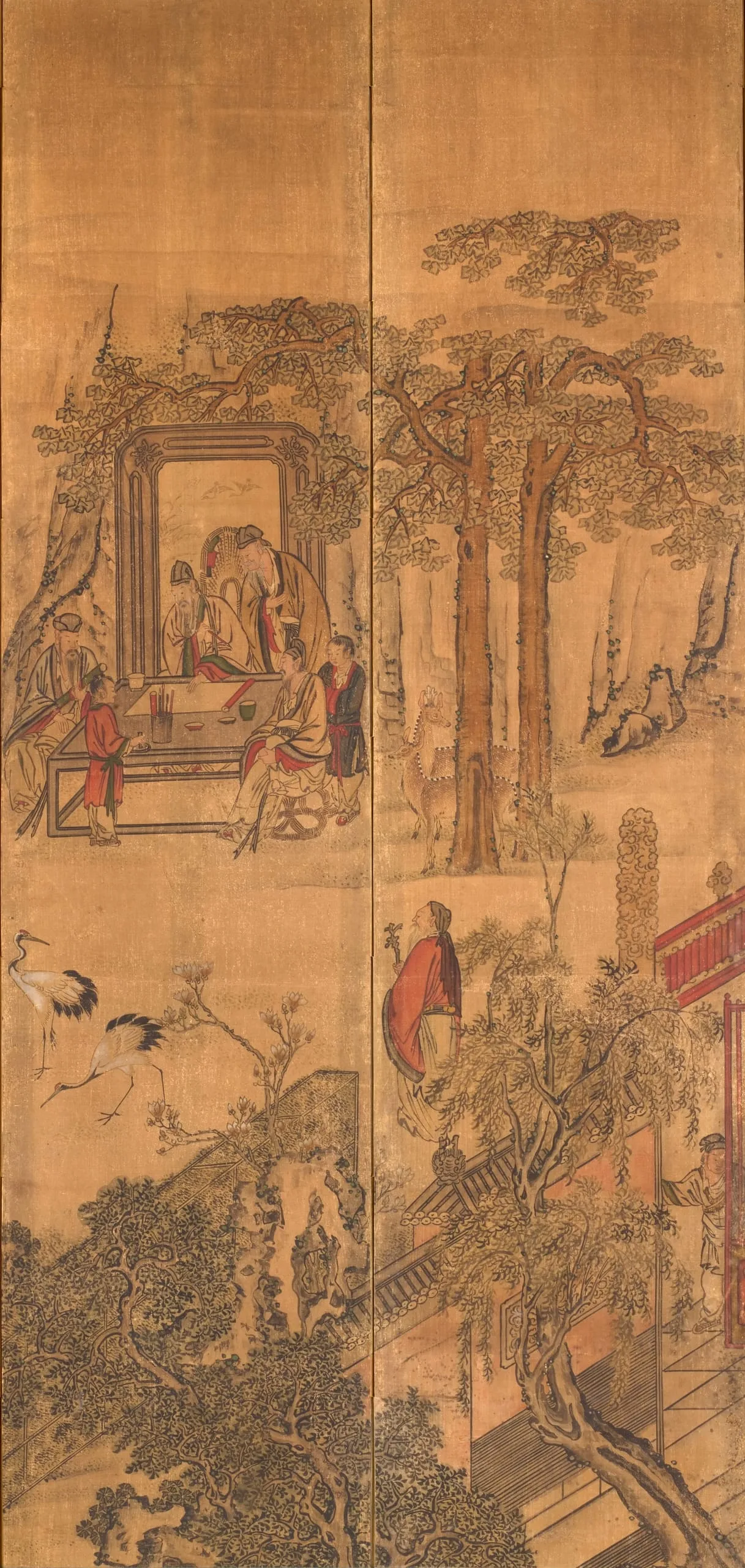
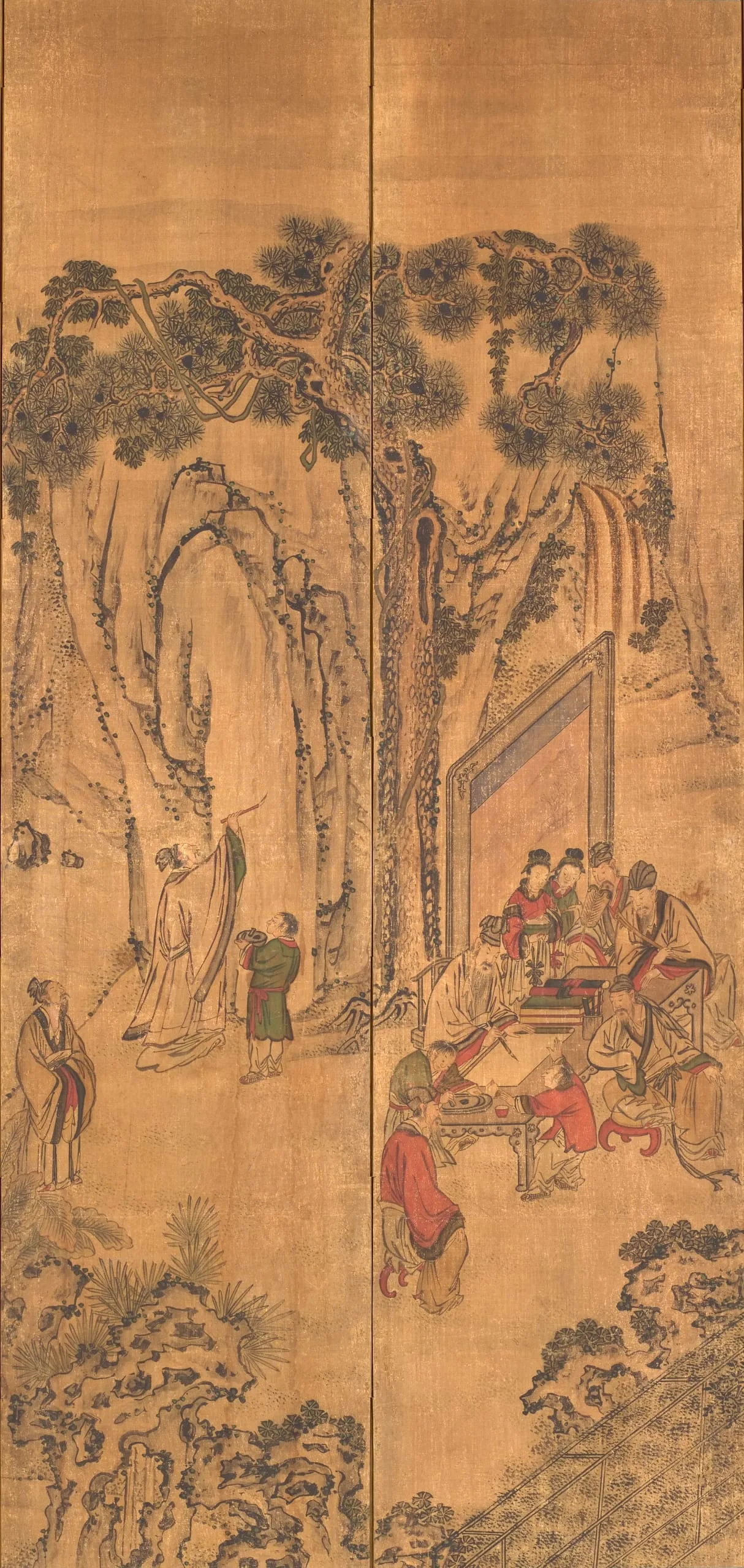
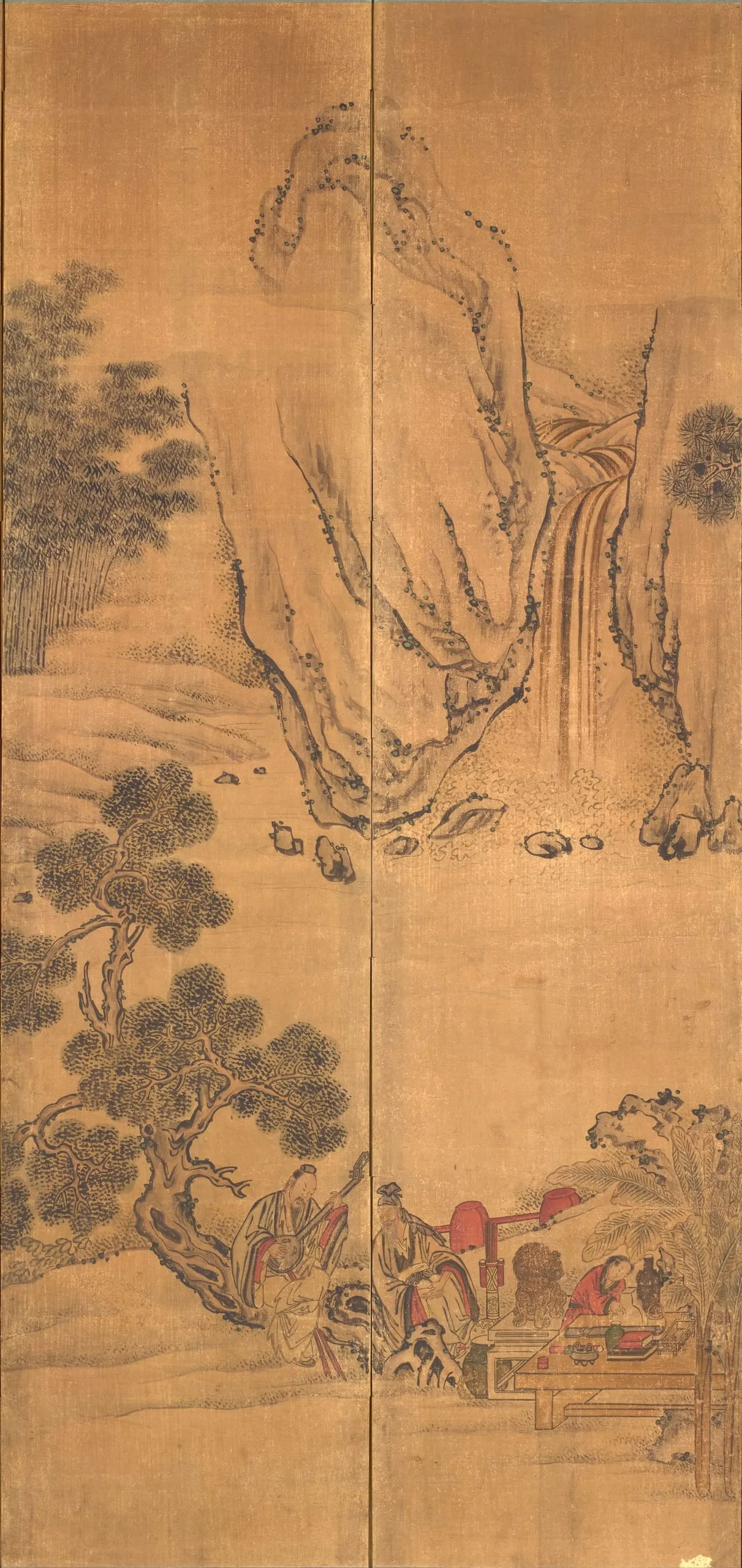
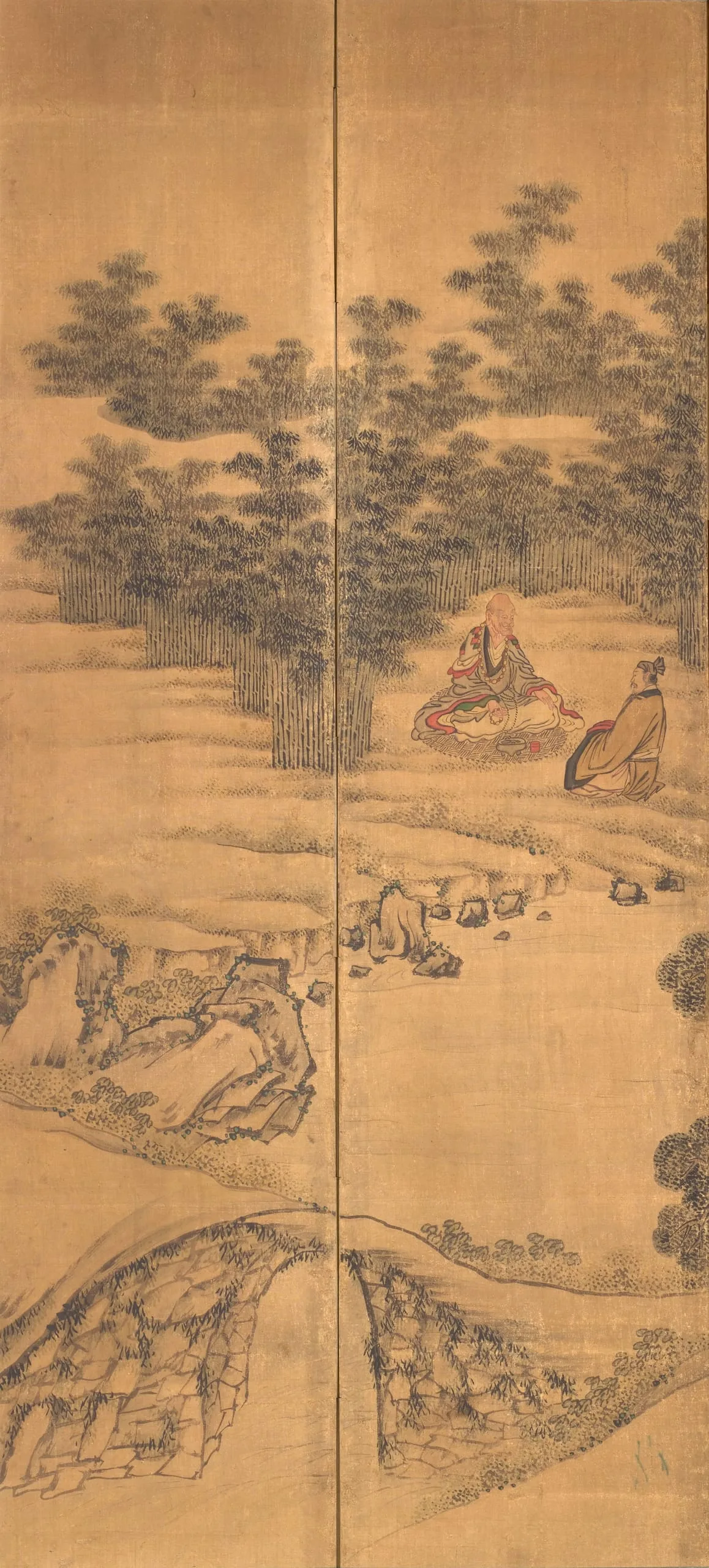
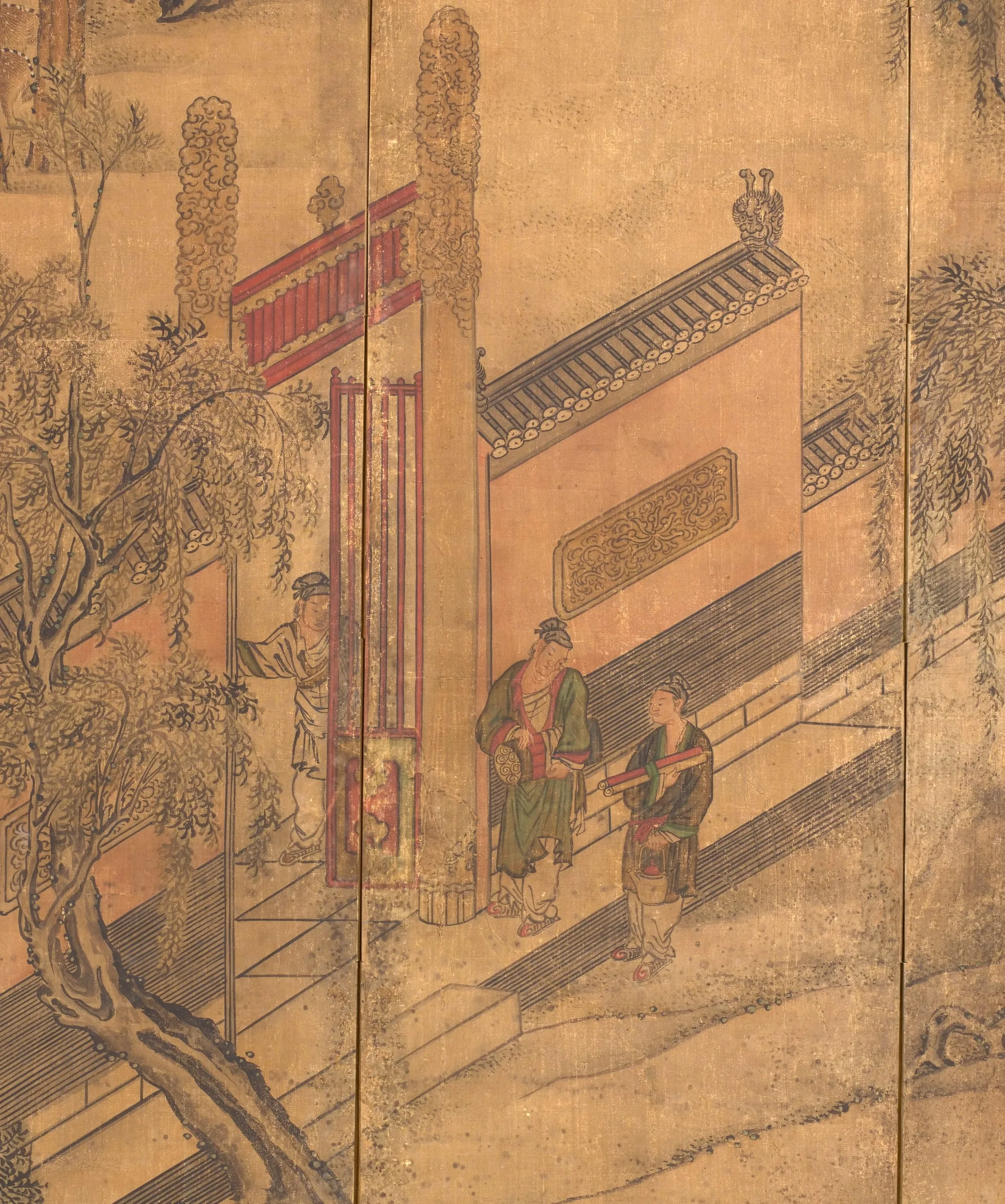
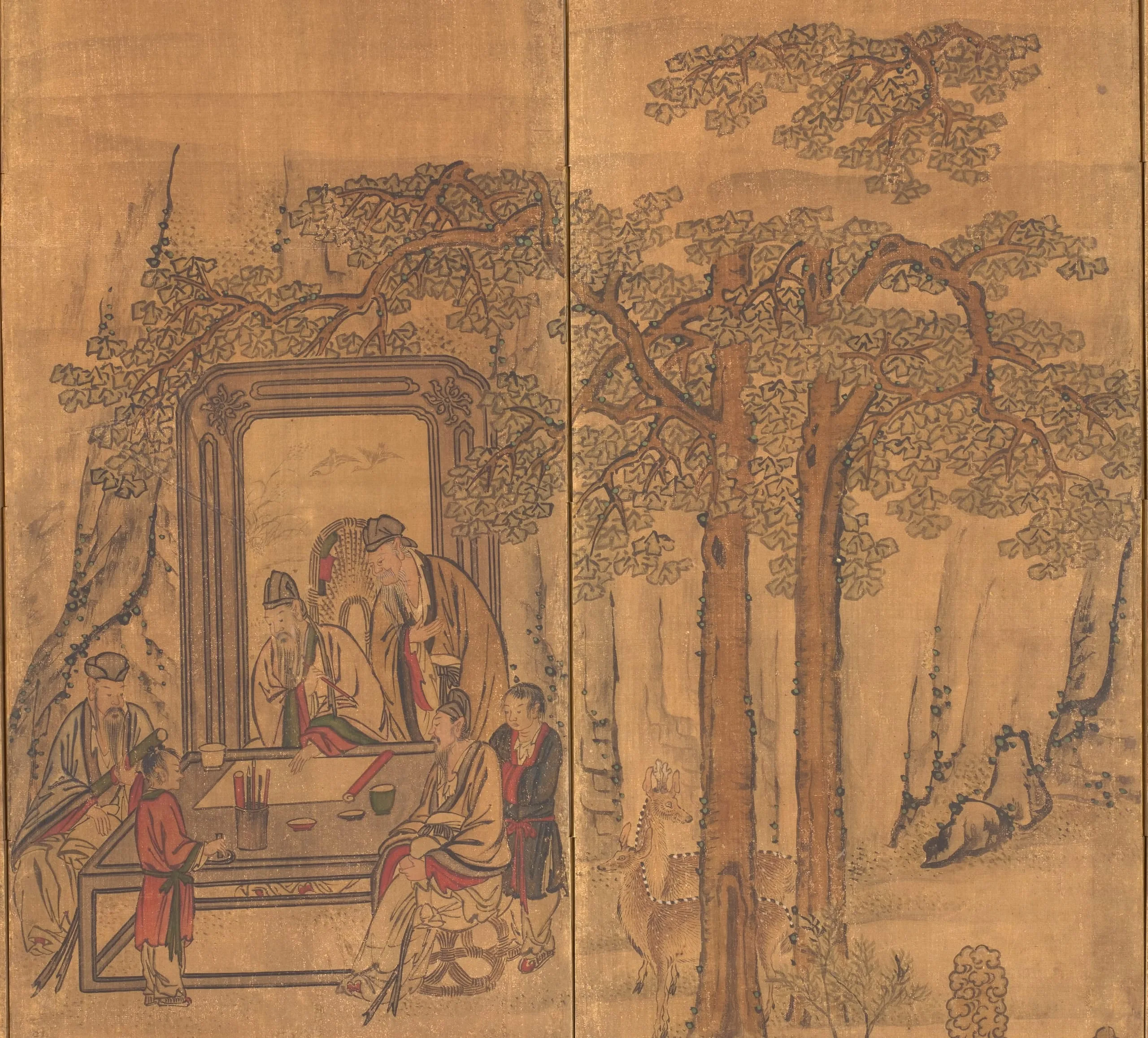
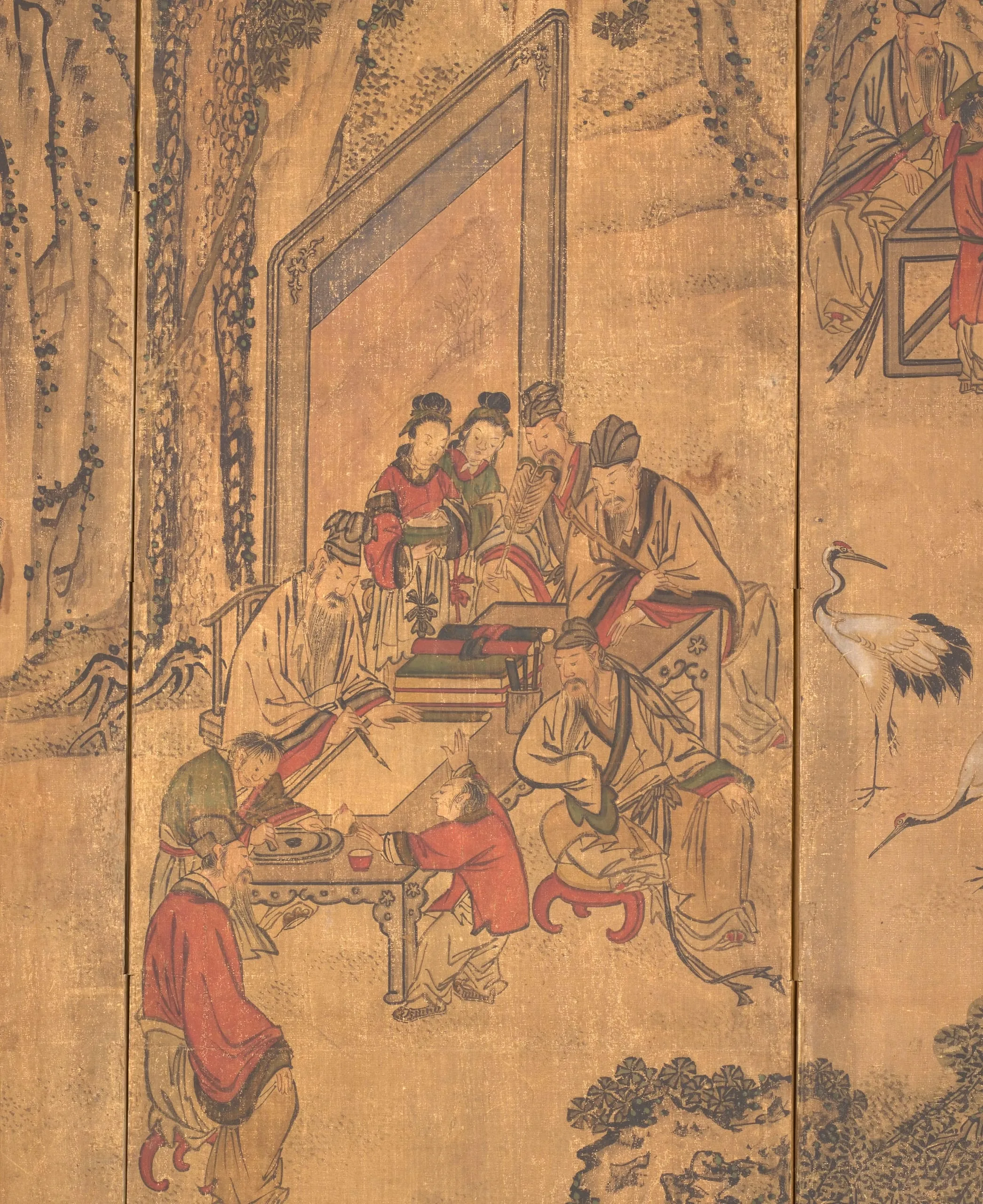
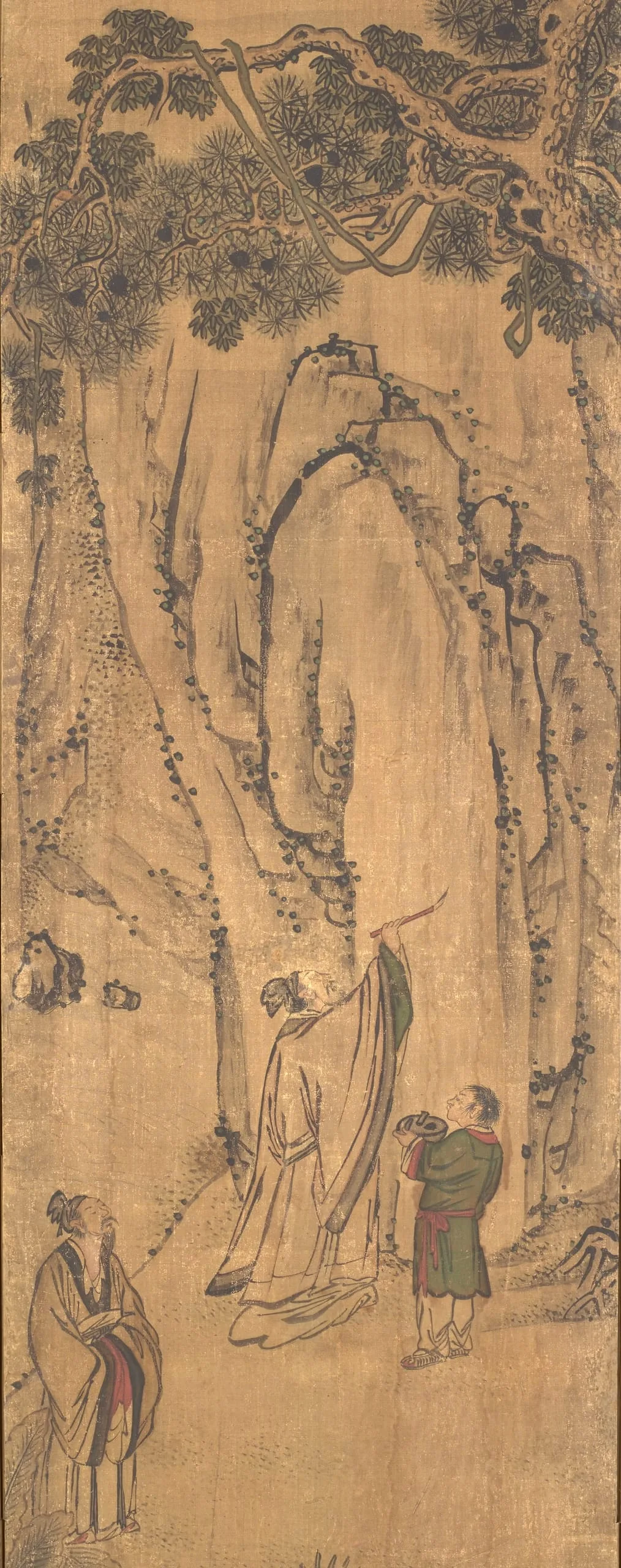
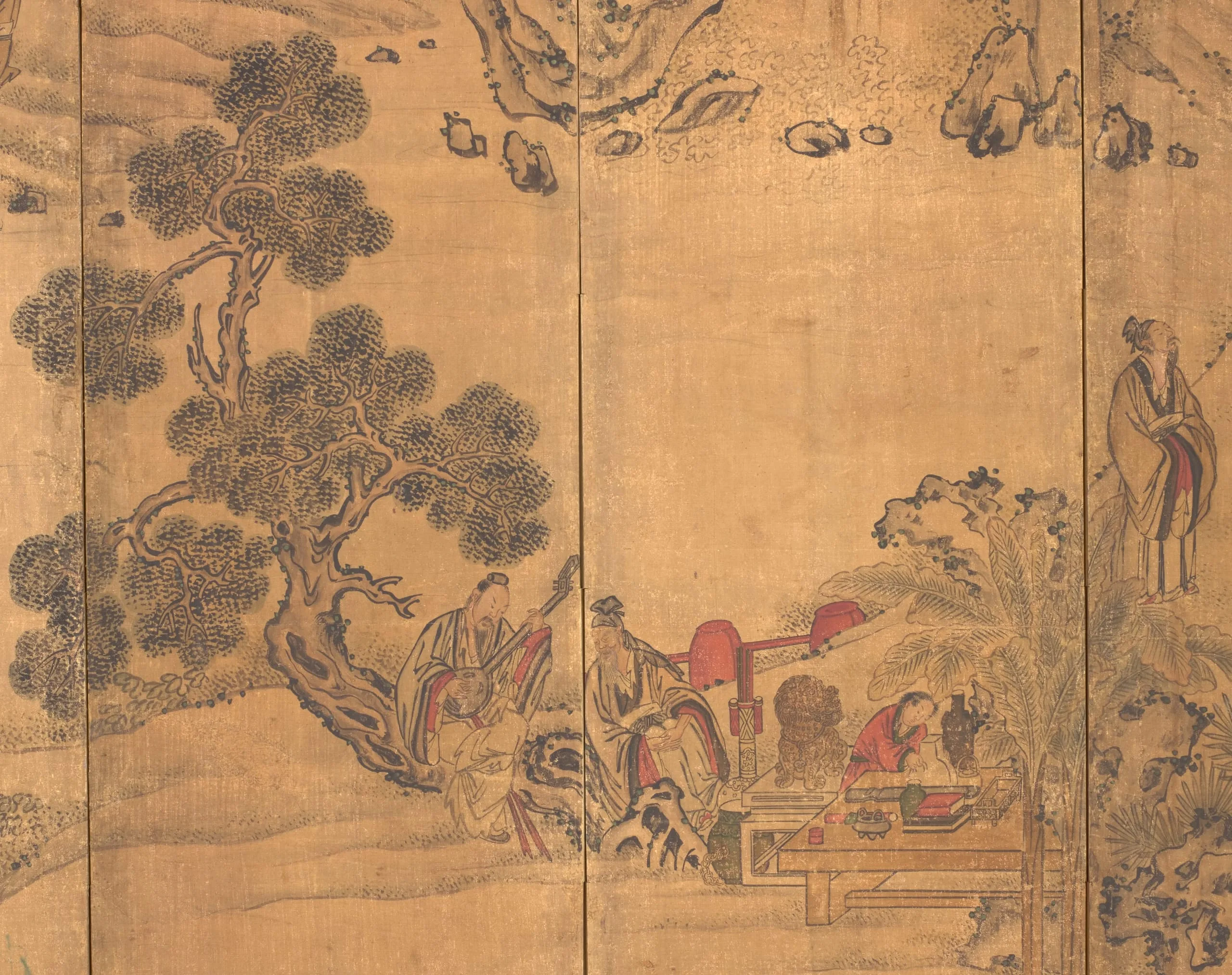
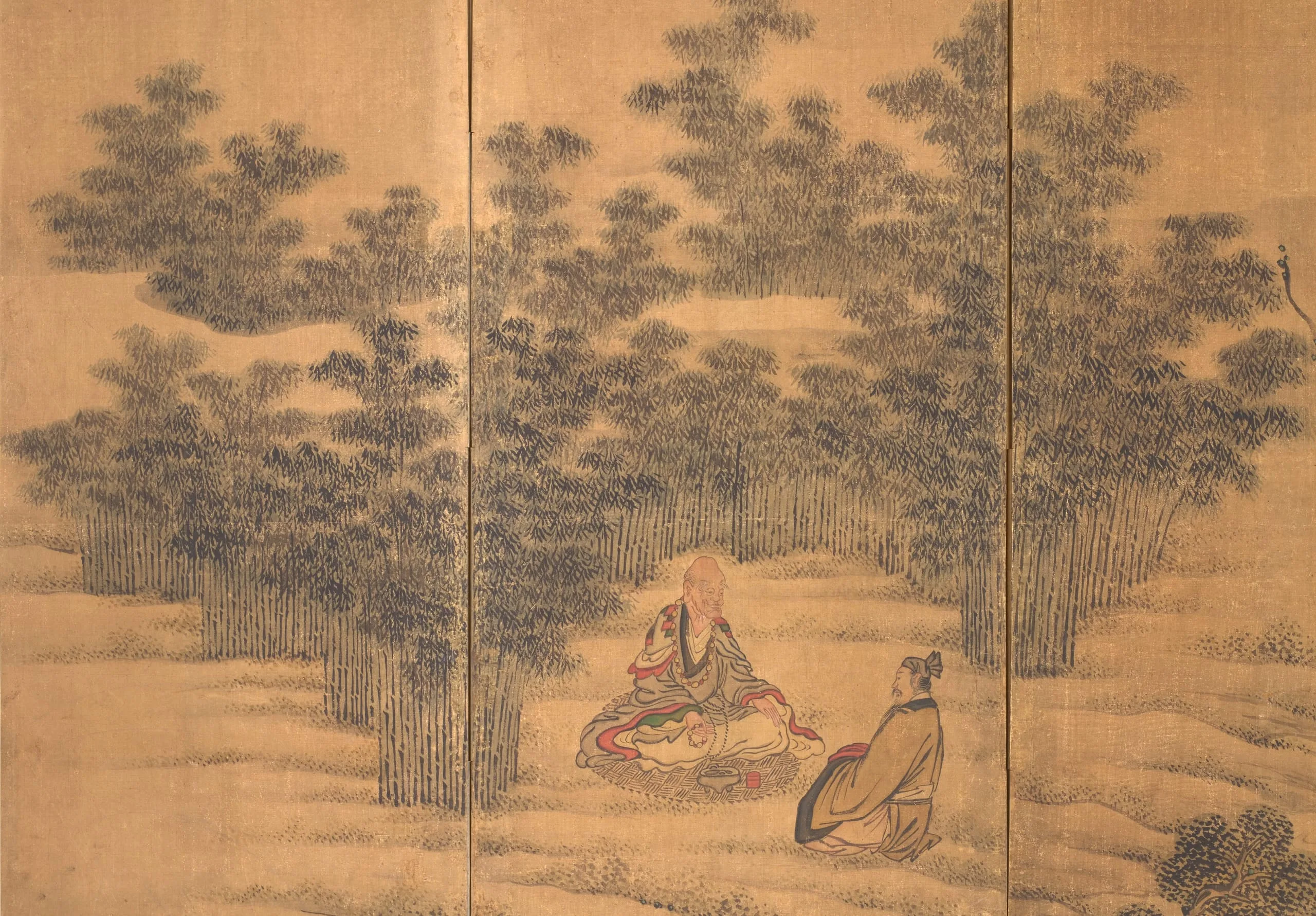
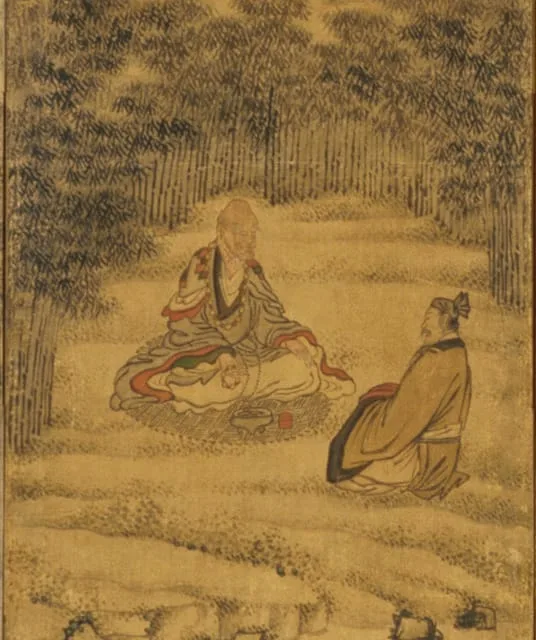
Painted primarily in black ink, LACMA’s ten-panel screen includes the standard compositional elements in both Chinese and Korean versions of the painting. On the right, in the second panel, two scholars can be seen arriving at the garden gate as a servant opens the door (det. 1). In the third panel, another scholar walks toward the gathering. The first large group, on the fourth panel, includes three scholars gathered around a table watching Li Gonglin paint, with two servants in attendance (det. 2). On the fifth panel, a group of five scholars observes Su Shi composing poetry; the host, Wang Shen, and others also observe, along with four servants, some of whom are women (det. 3). On the sixth panel, Mi Fu writes calligraphy on a boulder, probably a reference to his love of garden rocks, as a friend observes (det. 4). Under a cypress tree to the left, seated near a table full of instruments and antiques, a musician, Chen Bixu, performs on the lute for a friend (det. 5). In the final scene, a Buddhist monk and the writer Liu Zhuji are seated in a bamboo grove (det. 6).
The subject was clearly popular in Korea. In addition to Kim Hongdo’s famous screen depicting the “Elegant Gathering in the Western Garden” of 1778, a number of comparative works have survived. One eight-panel screen, now housed in the Museum of East Asian Art, Cologne, is very similar to the version by Kim Hongdo.[4] The screen in Cologne bears a long inscription signed by an artist with the pen name of Songam and dated 1794, sixteen years after the version painted by Kim Hongdo. There are several important variations in the LACMA screen that distinguish it from these two dated screens, including the order in which the figures appear and the iconographical details. Based on the style and iconography, LACMA’s Elegant Gathering in the Western Garden appears either to be later or made by a less experienced artist than these comparison works, probably at the turn of the nineteenth century.
Footnotes
[1] Whether the gathering was an historical event or just an ideal meeting celebrating the great Song luminaries has been the subject of recent debate. Modern scholars have looked closely at the historical records surrounding the event and found many contradictions. The list of guests is occasionally inconsistent, and it is not clear all were in the capital at the time the gathering was supposed to have taken place. In addition, a general lack of early documentation suggests that the subject may have appeared later as vehicle to celebrate these great personages of the Song period by later followers. For more on the subject, see Laing, “Real or Ideal,” 419-35.
[2] The historical appreciation for these men may have a political dimension: each shared similar political convictions and often risked their careers and lives in support of their beliefs. It is possible that the later popularity or even invention of the theme may have been rooted in the political sympathies of later scholar-officials. For a discussion on the political situation in Song China and possible political sources for the invention of the theme, see Laing, “Real or Ideal,” 430-32.
[3] For more on the influence and relationship of Chinese and Korean paintings of the “Elegant Gathering in the Western Garden,” see Jungmann, “Studies on Two ‘Elegant Gathering in the Western Garden’ Paintings in Western Collections,” 334-52.
[4] Again, see Jungmann, “Studies on Two ‘Elegant Gathering in the Western Garden’ Paintings in Western Collections,” for an extensive discussion on the style and dating of the Cologne, LACMA, and Kim Hongdo screens.
Bibliography
Jungmann, Burglind. “Studies on Two ‘Elegant Gathering in the Western Garden’ paintings in Western Collections [Gumi bakmulgwan sojangeui Seoweonajibdo].” In Misul sa’eui jeongribgwa hansan (Seoul: Sahui bipyong, 2006).
Laing, Ellen Johnston. “Real or Ideal: The Problem of the ‘Elegant Gathering in the Western Garden’ in Chinese Historical and Art Historical Records.” Journal of the American Oriental Society 88, no. 3 (July-September 1968).