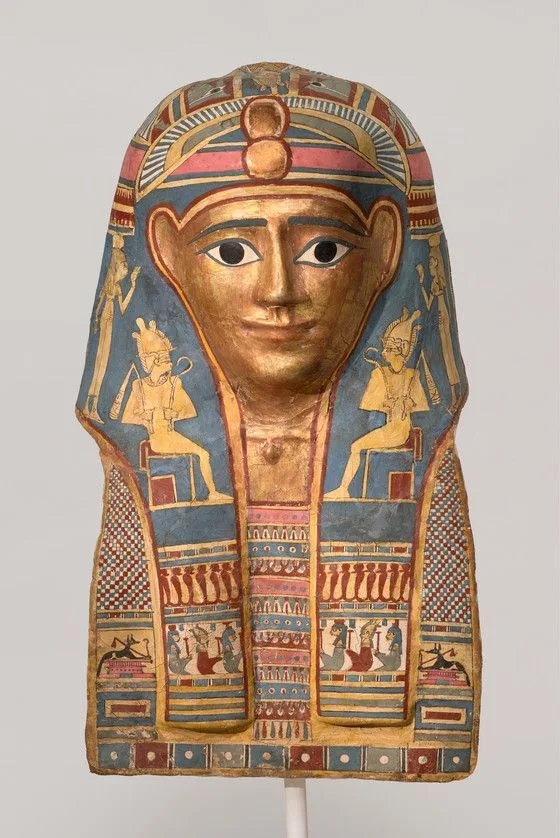
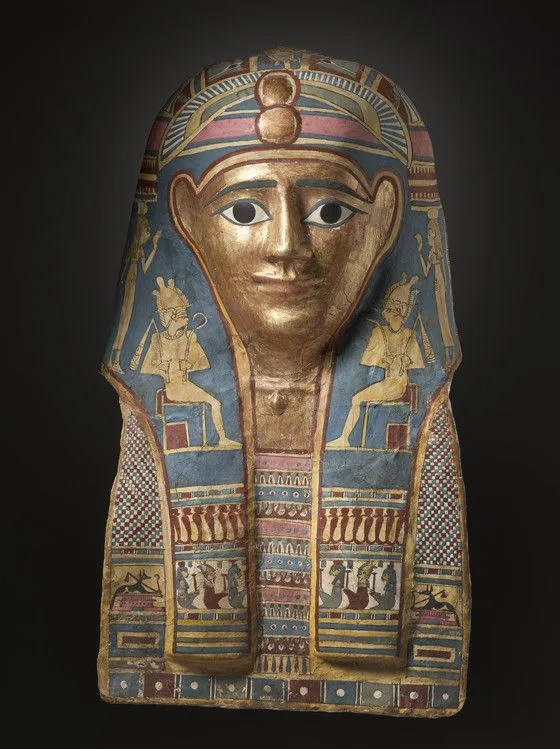
In ancient Egypt, the protection of a mummy’s head and face was of particular importance in elite burials. During the early Roman Period, vividly gilded and painted cartonnage masks, formed of layers of linen and plaster, became the predominant method. While numerous examples are known from cemeteries near Roman towns in the Faiyum region and elsewhere, this mask is unusually well preserved and elaborate. The facial features are broadly rendered and not intended to depict a specific individual. The youthful face is gilded to imitate the imperishable golden skin of the gods. It is outlined by a broad wig with lappets that allow the flattened ears to protrude, essentially forming the hieroglyph for “face” (an unusual sign that is always written frontally with large ears). The wig is decorated with symmetrical images of the seated funerary god Osiris, holding his emblematic crook and flail; rows of protective uraei (cobras); other deities including Isis and Nephthys; and jackel-headed Anubis, guardian of the cemetery, reclining on a shrine. The top of the wig is adorned with wadjet eyes and the outstretched wings of a vulture-headed deity holding shen rings, symbol of eternity, in each talon. The pink diadem extends to the back with trailing ribbons ending in upright uraei. Like all the mask’s elements, a scarab in relief on the forehead serves a protective function for the burial.