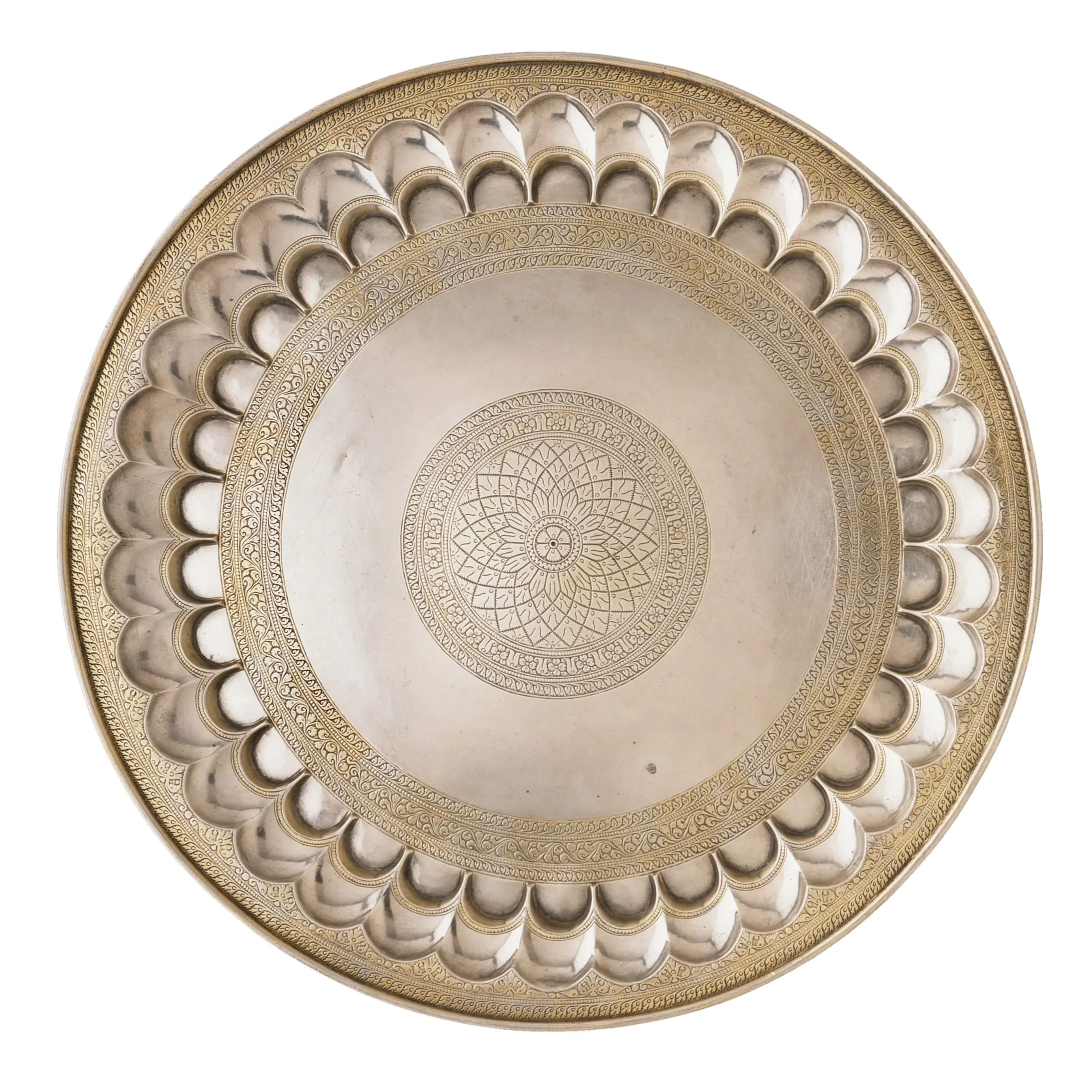
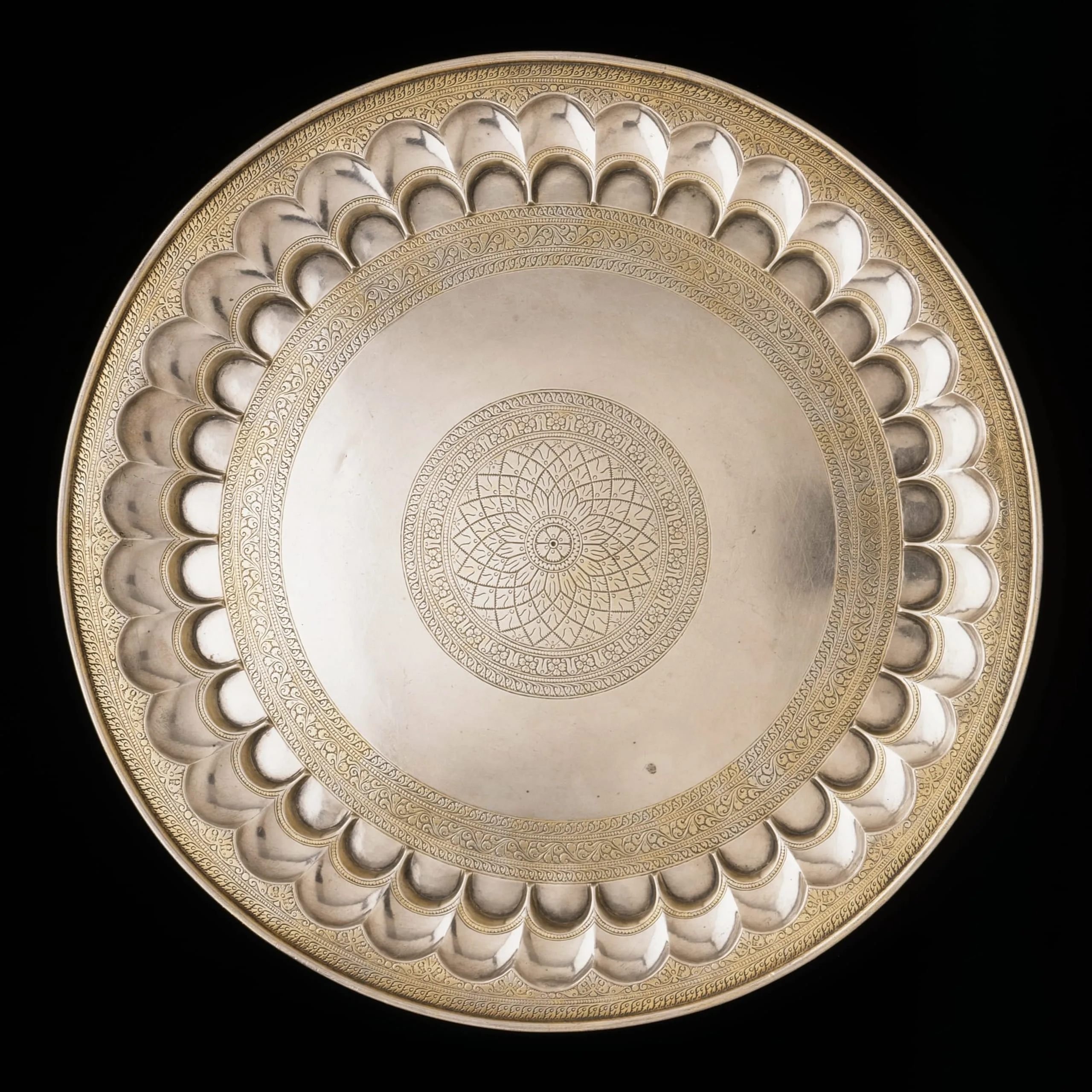
The tray’s elegant incised decoration consists principally of bands of lush floriated scrolls. Its epicenter is an open poppy flower surrounded by a stylized lotus medallion. Radiating outward from the central medallion are concentric areas of partially gilded ornamentation comprised of a broad plain expanse that serves to accentuate the intricate engraved designs; a band of floral and vegetal scrolls; a double row of semi-circular fluting reminiscent of architectural niches, the outer row of which is angled upward to form the side of the vessel; and another band of botanical scrolls. Its interior fluting is a quintessential design feature of Indian metalware, with the double rows of fluting particularly characteristic of silver metalware made in Pune (formerly Poona), near Mumbai, and in adjacent central India.
Pune in the 18th and early 19th century was among the largest and wealthiest cities in South Asia, with a population exceeding 100,000. It was the hereditary home of the Prime Ministers (peshwas) of the Maratha kingdom, which rivaled and ultimately succeeded the great Mughal empire in political and economic importance. The Maratha court led a luxurious lifestyle, which was emulated by the many prosperous merchants of Pune. The tray was originally used for serving betel nut quids, sweetmeats and other delicacies, and for presenting ceremonial presents or offerings at court receptions, weddings, and festivals.
Handmade Indian metalware was greatly admired during the Arts and Crafts Movement in England in the 19th century. It was accorded a prominent place in many of the great international expositions and British Empire coronation celebrations held between 1851 and 1925. Generally organized by media and region, rankings in design and workmanship were awarded to the displayed wares from princely courts and individual artists.