- Title
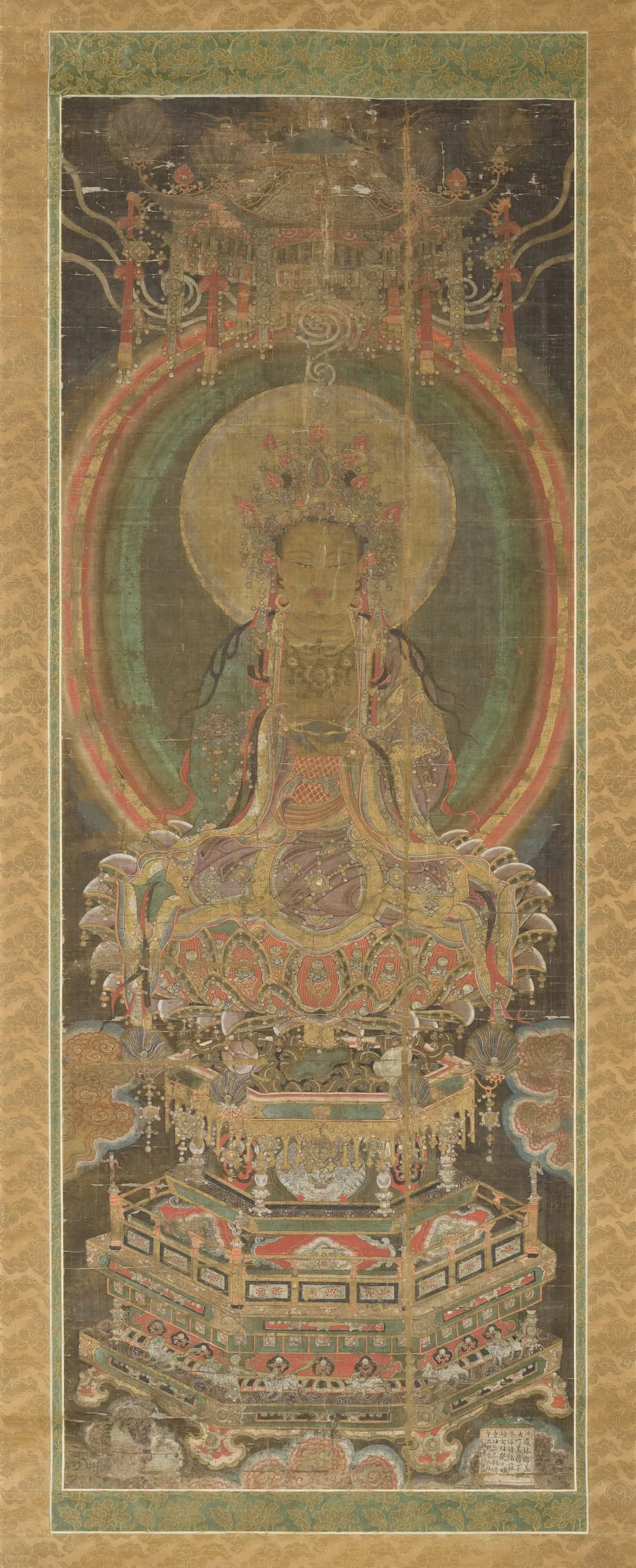
- Avalokiteshvara (Guanyin), the Bodhisattva of Compassion
- Date Made
- dated 1398, Ming dynasty
- Medium
- Hanging scroll, ink, gold leaf, and color on silk
- Dimensions
- Image: 68 1/4 x 25 1/4 in. (173.4 x 64.1 cm); Mount: 87 x 31 1/2 in. (221 x 80 cm); Roller width: 33 7/8 in. (86 cm)
- Accession Number
- M.2000.13
- Curatorial Notes
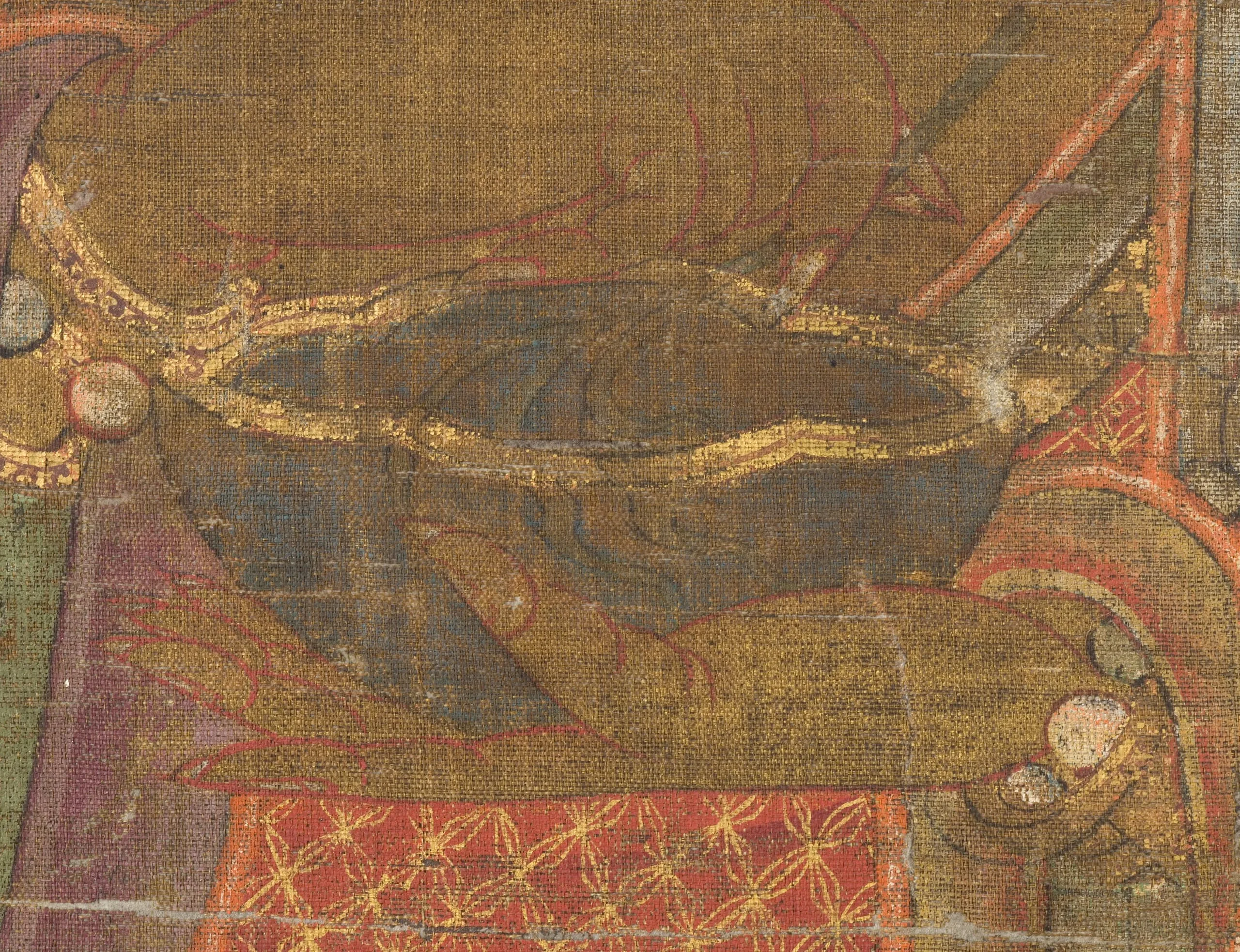
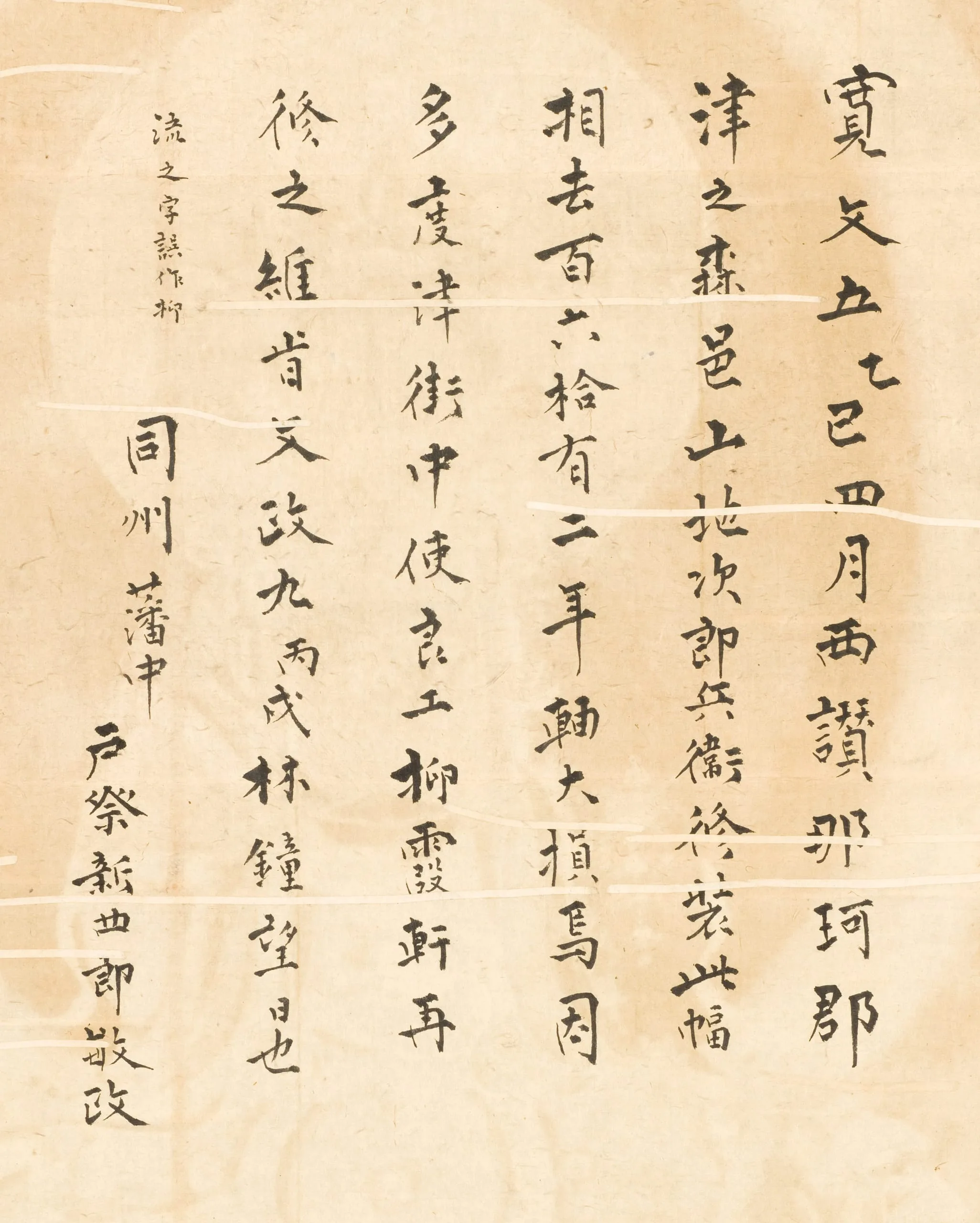
This hanging scroll depicts one of the most popular Buddhist deities in East Asia, Guanyin (Sk. Avalokiteshvara), Bodhisattva of Compassion, and is painted in astonishing detail in ink, colors, and gold on silk. The work was initially believed to be a Korean painting of the early Joseon dynasty (1392–1910). That it had spent several centuries in Japan was clear from both the antique Japanese silk brocade mounting and the presence of an inscription on the back indicating that the painting was remounted in Japan in 1826, after having been recorded earlier in a 1655 inventory. Only after it entered LACMA’s collection was the scroll studied by several Korean and Chinese Buddhist painting specialists, all of whom agreed that its origins are Chinese. This situation often occurs in East Asian Buddhist painting, as Chinese originals were often copied with great faithfulness in both Korea and Japan, since transmitting the proportions and other details of a sacred painting was key to preserving its spiritual efficacy.
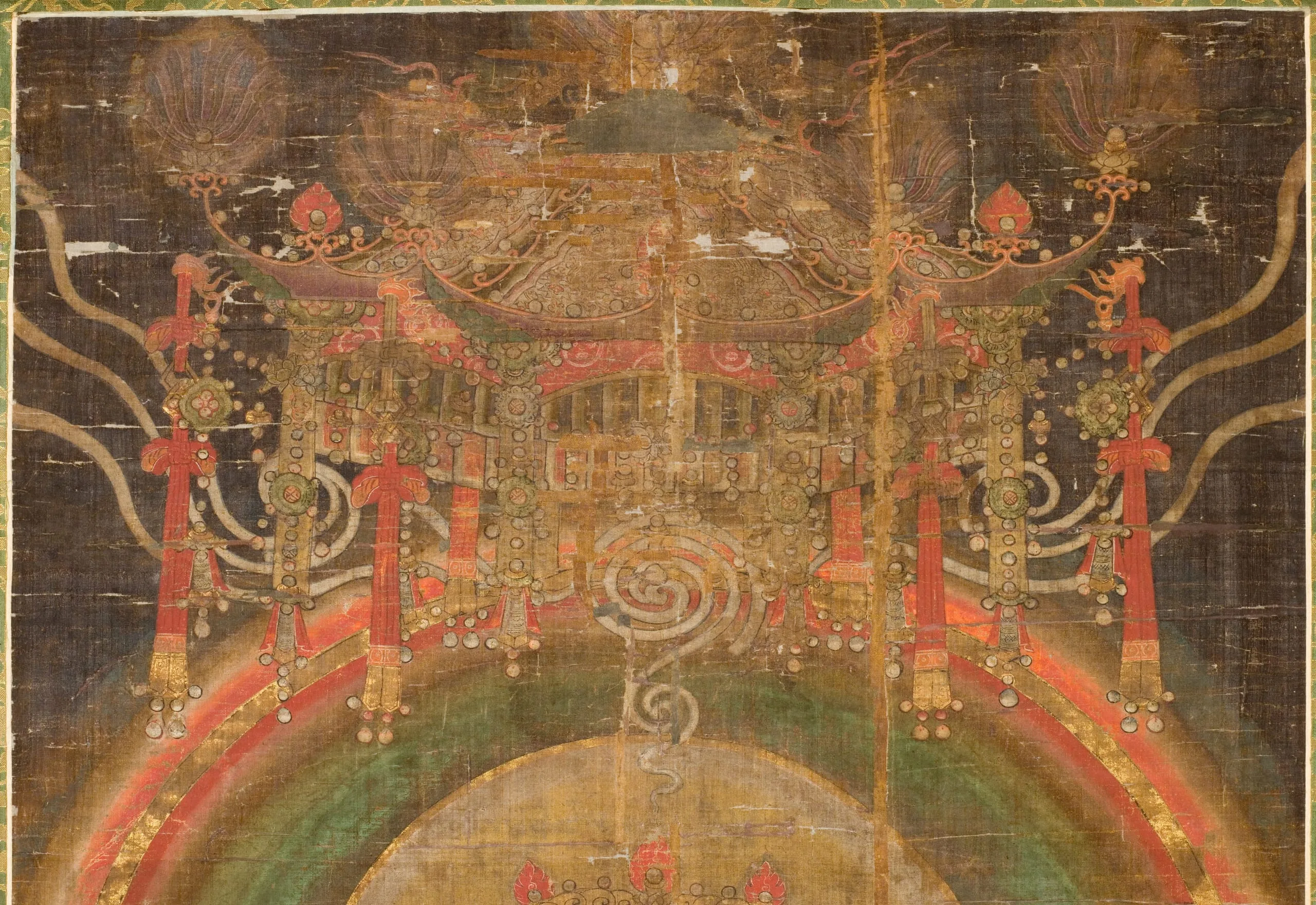
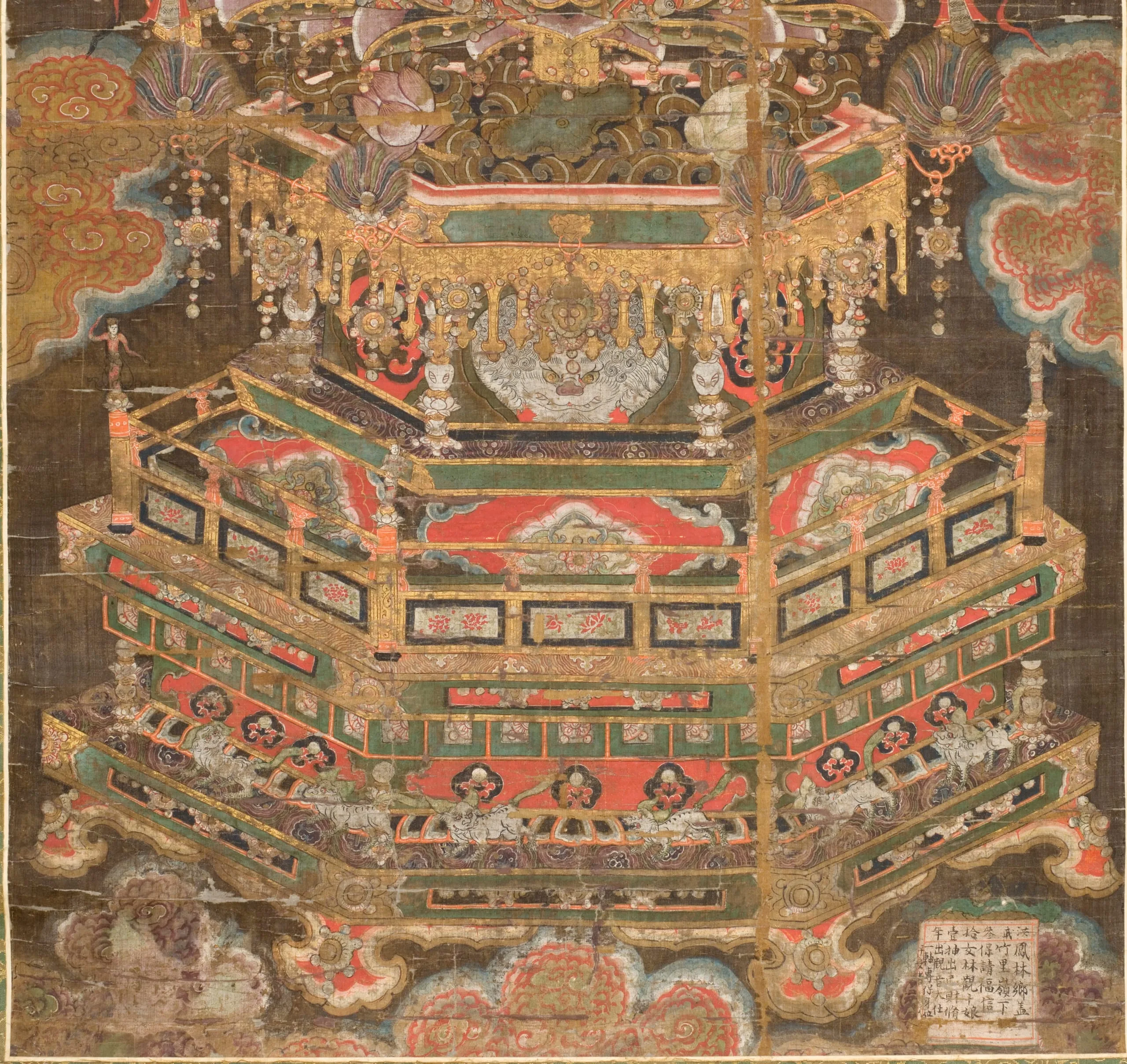
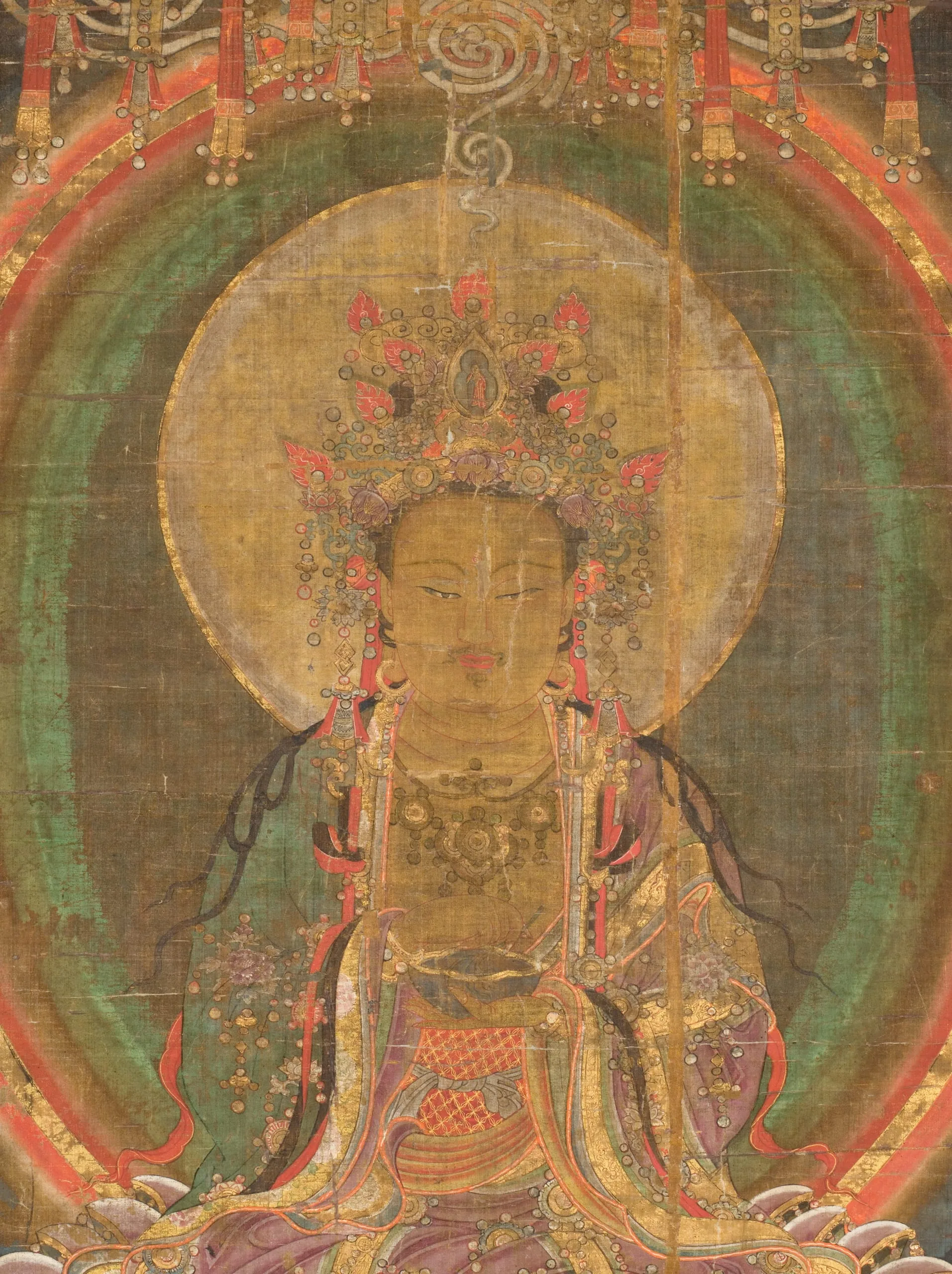
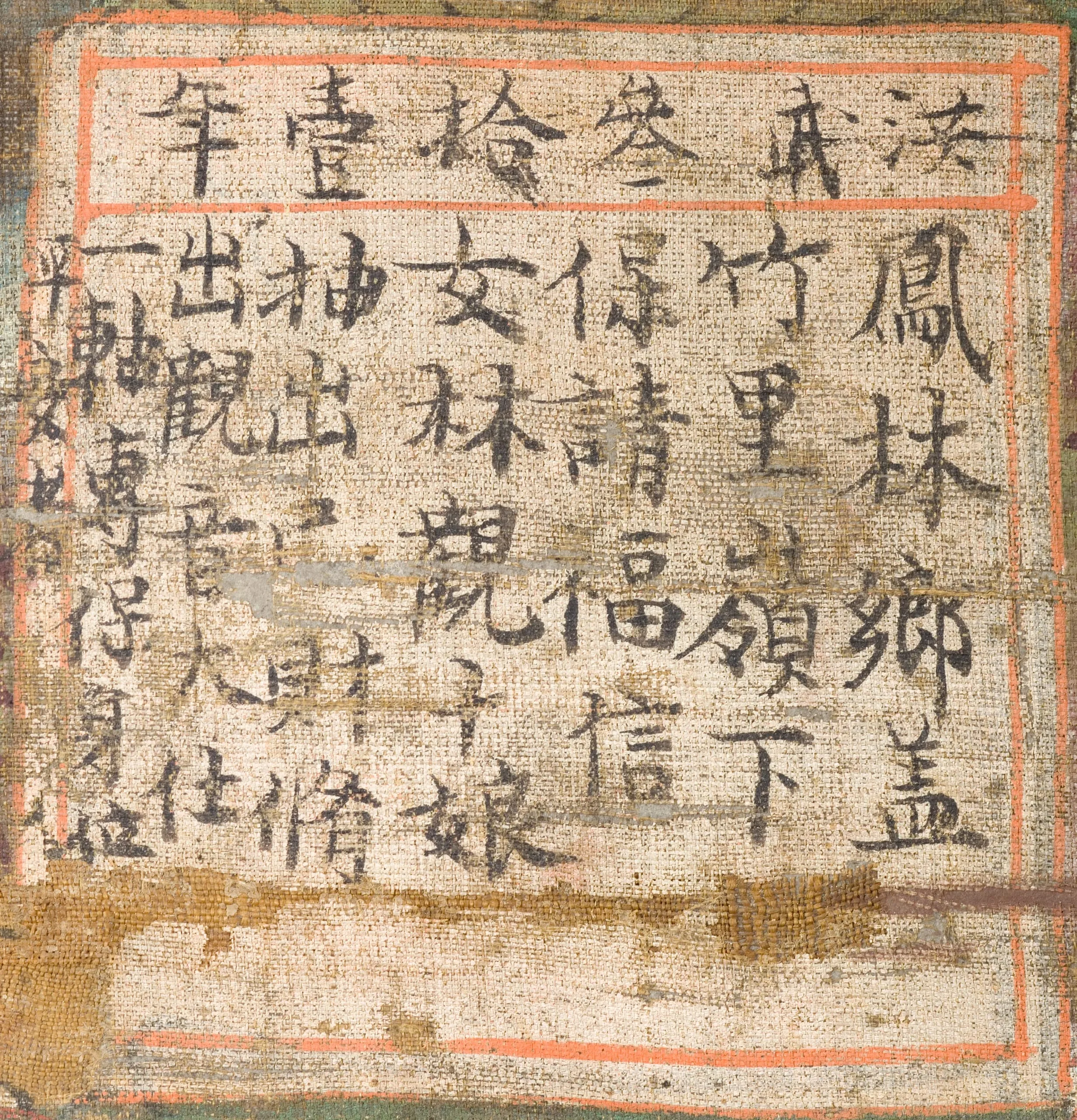
What led to the reattribution from Korea to China? First, the painting’s short dedicatory inscription, written in a cartouche in the lower right corner, mentions the first Ming emperor, whose reign title was Hongwu, and states that the scroll was painted in the thirty-first year of his rule (1398). While a key detail in terms of the work’s date, this alone does not prove its Chinese provenance, for Chinese reign titles were widely used in Korea during the Joseon dynasty. Second, the dedication mentions that the painting was commissioned by a group of female Buddhist lay practitioners in a town called Fenglin xiang (Phoenix Grove Village). While there is a well-known Buddhist temple named Phoenix Grove in Korea, no such village or town exists there, whereas one does exist in China, located in Anhui Province. Third, the presence of the jeweled canopy over the bodhisattva’s head, the lavender pigment in his robe, and the use of gold leaf are unusual features in Korean Buddhist painting and much more typical of Chinese Buddhist painting.
Stephen Little
2024
- Selected Bibliography
- Wilson, J. Keith. "Korean Art at the Los Angeles County Museum of Art." in Korean Art: Articles from Orientations 1970-2013, edited by Yifawn Lee and Jason Steuber, 428-35. Hong Kong: Orientations Magazine Ltd, 2014.
- Little, Stephen. An Introduction to Chinese Paintings in the Los Angeles County Museum of Art. Los Angeles: Art Catalogues; LACMA, 2017.
- Steuber, Jason and Allysa B. Peyton, eds. Arts of Korea: Histories, Challenges, and Perspectives. Gainesville: University of Florida Press, 2018.
- Little, Stephen, and Tushara Bindu Gude. Realms of the Dharma: Buddhist Art across Asia. Los Angeles: Los Angeles County Museum of Art, 2025.