- Title
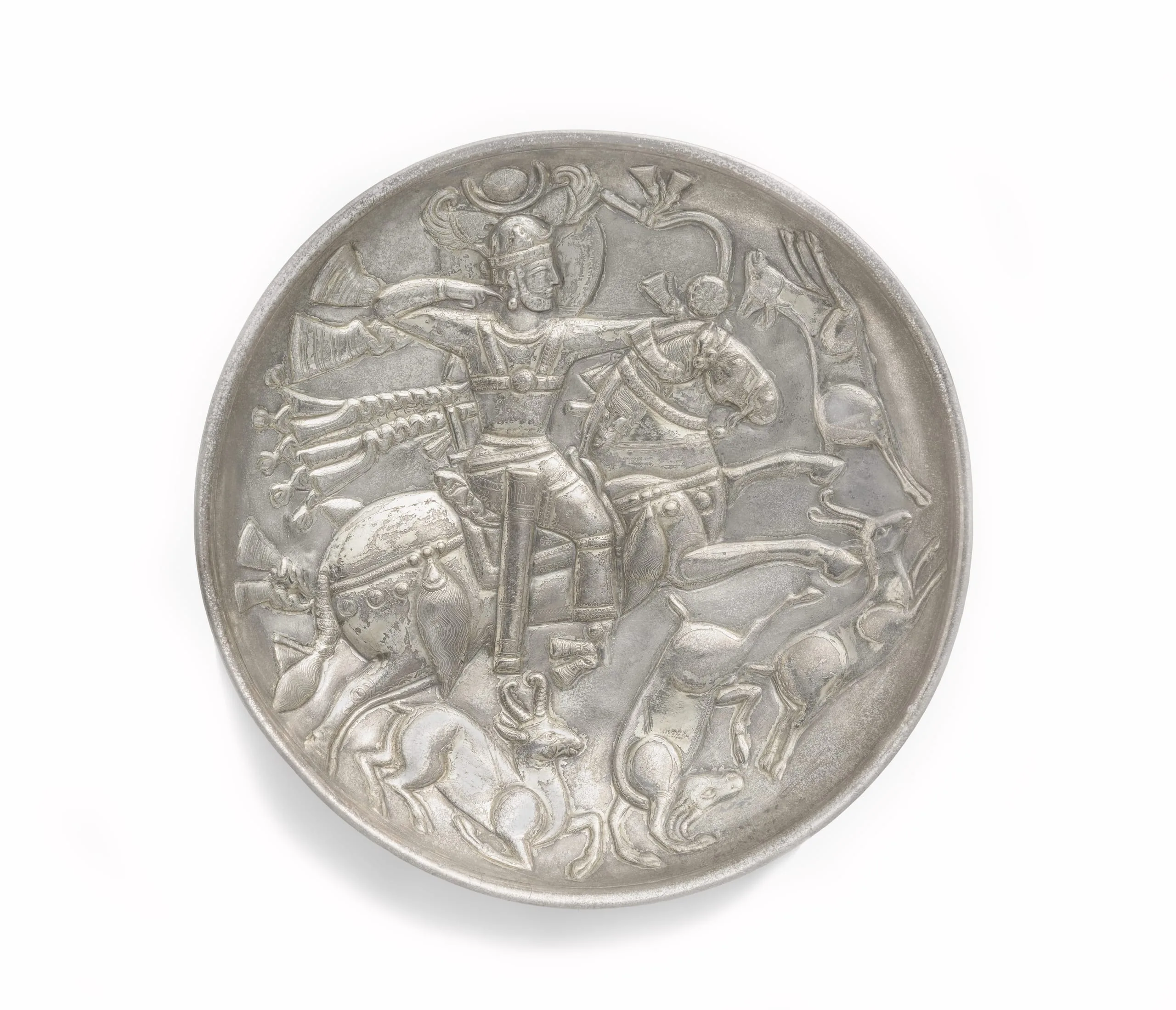
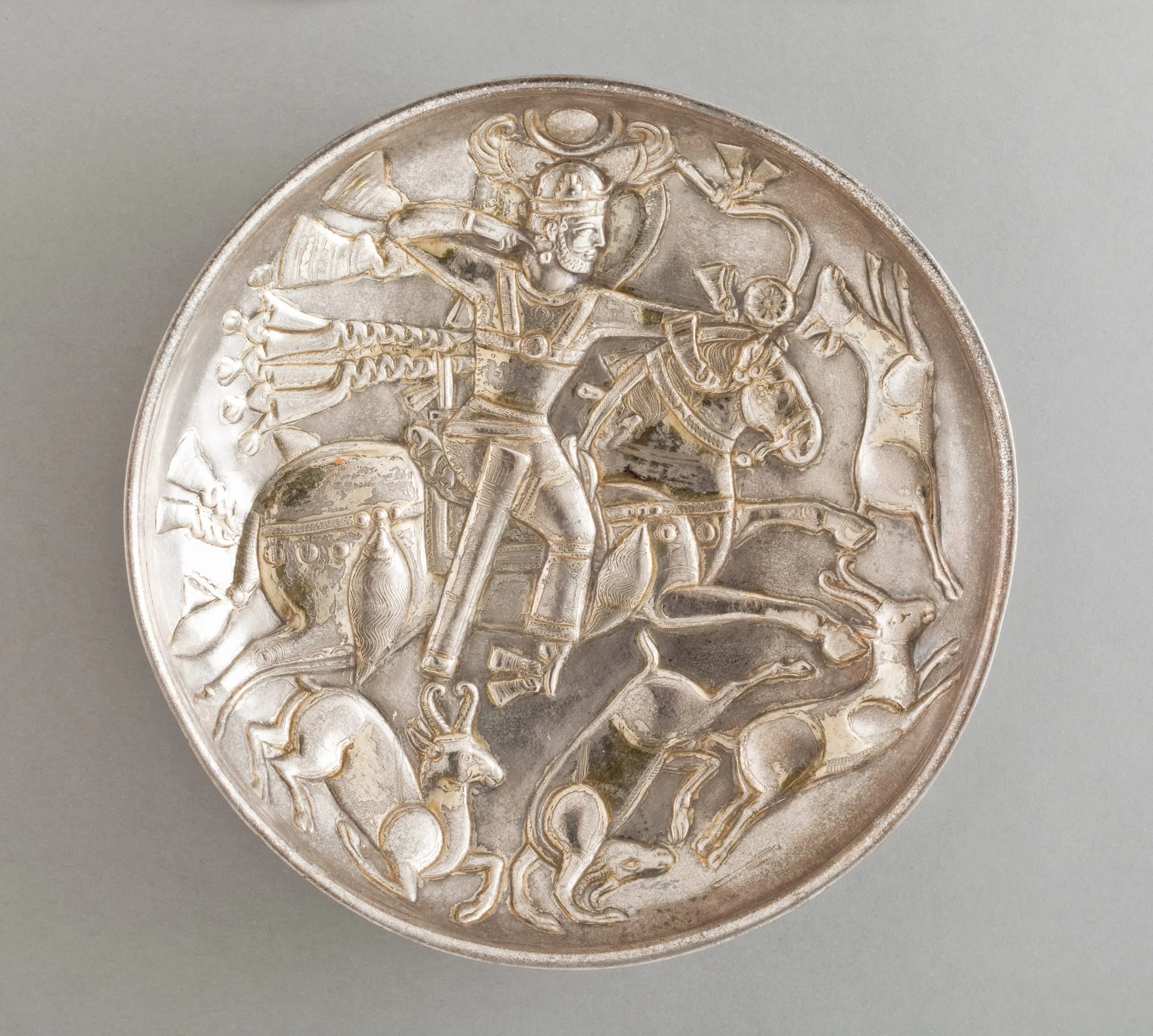
- Plate with a Royal Hunting Scene
- Date Made
- 224-651
- Medium
- Gilded silver
- Dimensions
- Diameter: 7 11/16 in. (19.53 cm)
Height: 1 11/16 in. (4.29 cm)
- Accession Number
- AC1999.130.1
- Curatorial Notes
The best-known works of art from the Sasanian period (224−651) are silver vessels, especially gilt-embellished plates depicting a variety of royal figural compositions, most notably the image of the king, as here (see also AC1993.140.1). It is generally believed that the court monopolized the production of silver plates and controlled their distribution, offering them mainly as gifts or rewards to client rulers and prized subjects.
On this finely made plate, which preserves much of its original gilding, the king is engaged in hunting. The theme of the royal hunt encapsulates both the public persona and the prowess of the Sasanian sovereign. The composition shows the monarch at center, bow drawn and mounted on a caparisoned horse, chasing four gazelles expertly rendered to fit within the inner circumference of the plate. Ribbons fly from the back of the royal crown, while streamers extend from the king’s halter. Such carefully delineated elements of costume are consistent with Sasanian royal imagery. The king’s distinctive crown accords with that of portrait busts depicted on the coins of Peroz I (r. 459−84), suggesting a general date for the vessel.
2024
- Selected Bibliography
- Mousavi, Ali. Ancient Near Eastern art at the Los Angeles County Museum of Art. Los Angeles: Los Angeles County Museum of Art, 2012.