- Title
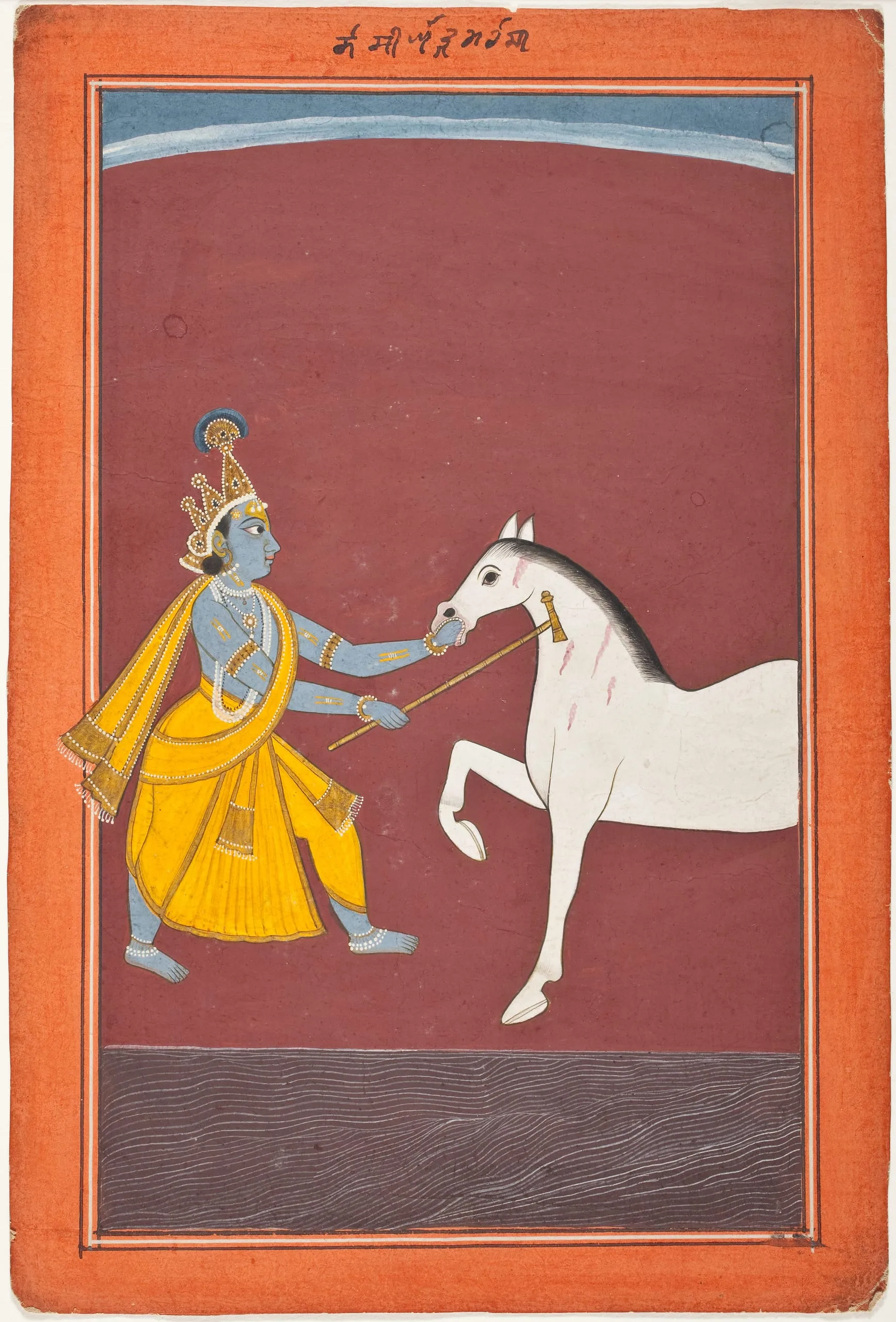
- Krishna Destroys the Horse Demon Keshi (recto), Folio from a Bhagavata Purana (Ancient Stories of the Lord); Dipak Raga (verso)
- Date Made
- circa 1750 or later
- Medium
- Opaque watercolor, gold, and ink on paper (recto); ink on paper (verso)
- Dimensions
- Sheet: 11 x 7 3/8 in. (27.94 x 18.73 cm); Image (verso): 9 1/8 x 5 5/8 in. (23.18 x 14.29 cm); Image (recto): 9 1/2 x 6 1/8 in. (24.13 x 15.56 cm)
- Accession Number
- AC1999.127.1
- Curatorial Notes
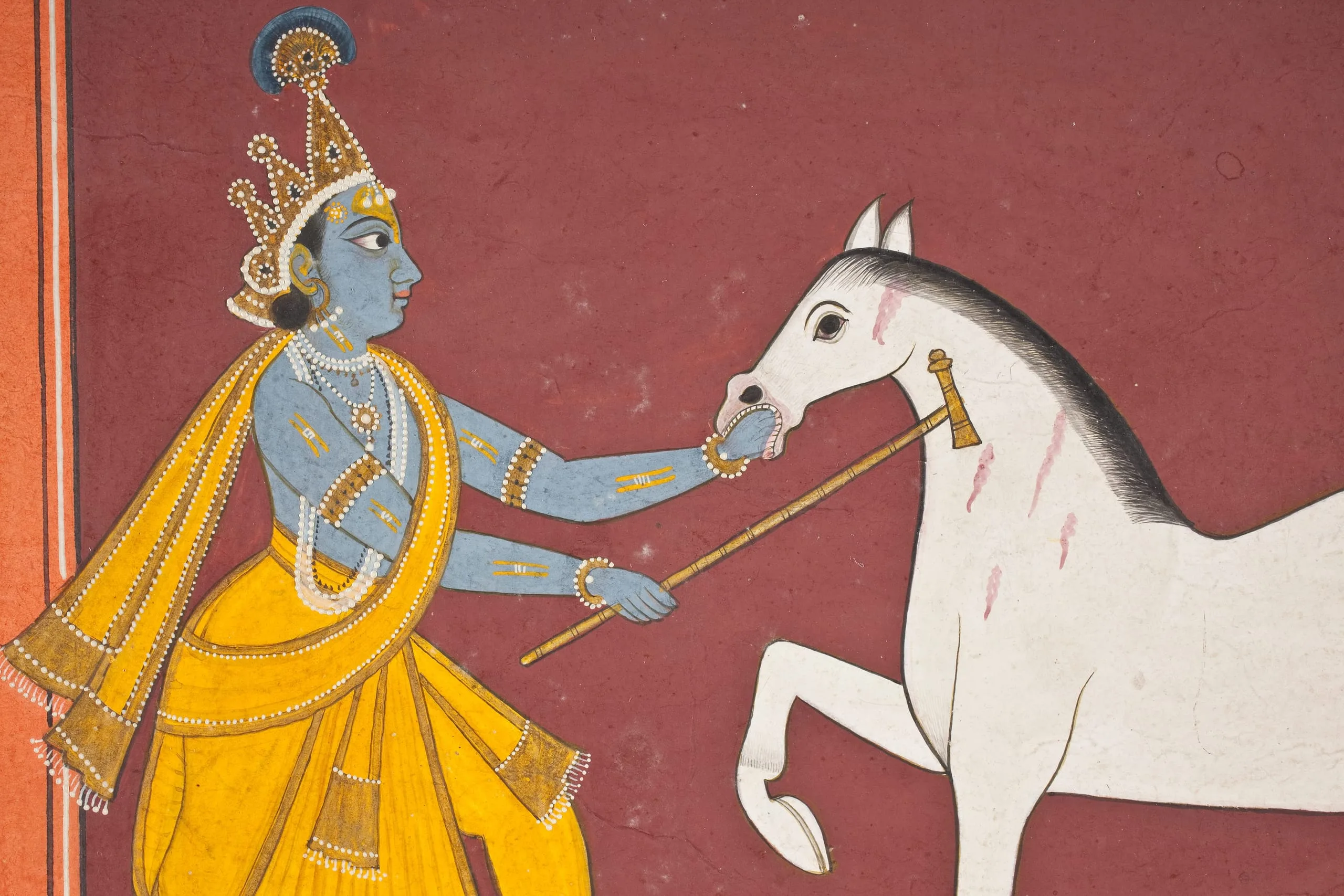
The recto of this painting depicts the Hindu god Krishna destroying Keshi, a demon who took the form of a gigantic horse to try and kill Krishna at the behest of his evil uncle, King Kamsa of Mathura. Krishna strikes the horse with his shepherd's crook on his neck and head, leaving several bloody gashes. The enraged equine charges Krishna with his snarling mouth open and his right leg poised to strike. Krishna delivers the coup de grace by inserting his left hand into the horse’s mouth and expands it until the horse chokes and expires. The Takri inscription in the upper border reads “the destruction of titan Keshi.”
The furious battle between Krishna and Keshi is narrated in the Bhagavata Purana, Vishnu Purana, and Harivamsha. Here, the image seems more iconic than narrative by stressing the climactic moment of Krishna’s triumph rather than the fury of the encounter. Accordingly, it is possible this image is from a series depicting the avatars of Vishnu.
Two stylistic inconsistencies may indicate the painting is later than its attributed date of circa 1750. Both of the horse’s ears are portrayed on the far side of its head, and Krishna is given two right feet.
On the verso is a sketch of the musical mode Dipak Raga. It depicts a crowned personage and a mahout riding an elephant carrying an oil lamp (dipak) in its trunk.