- Title
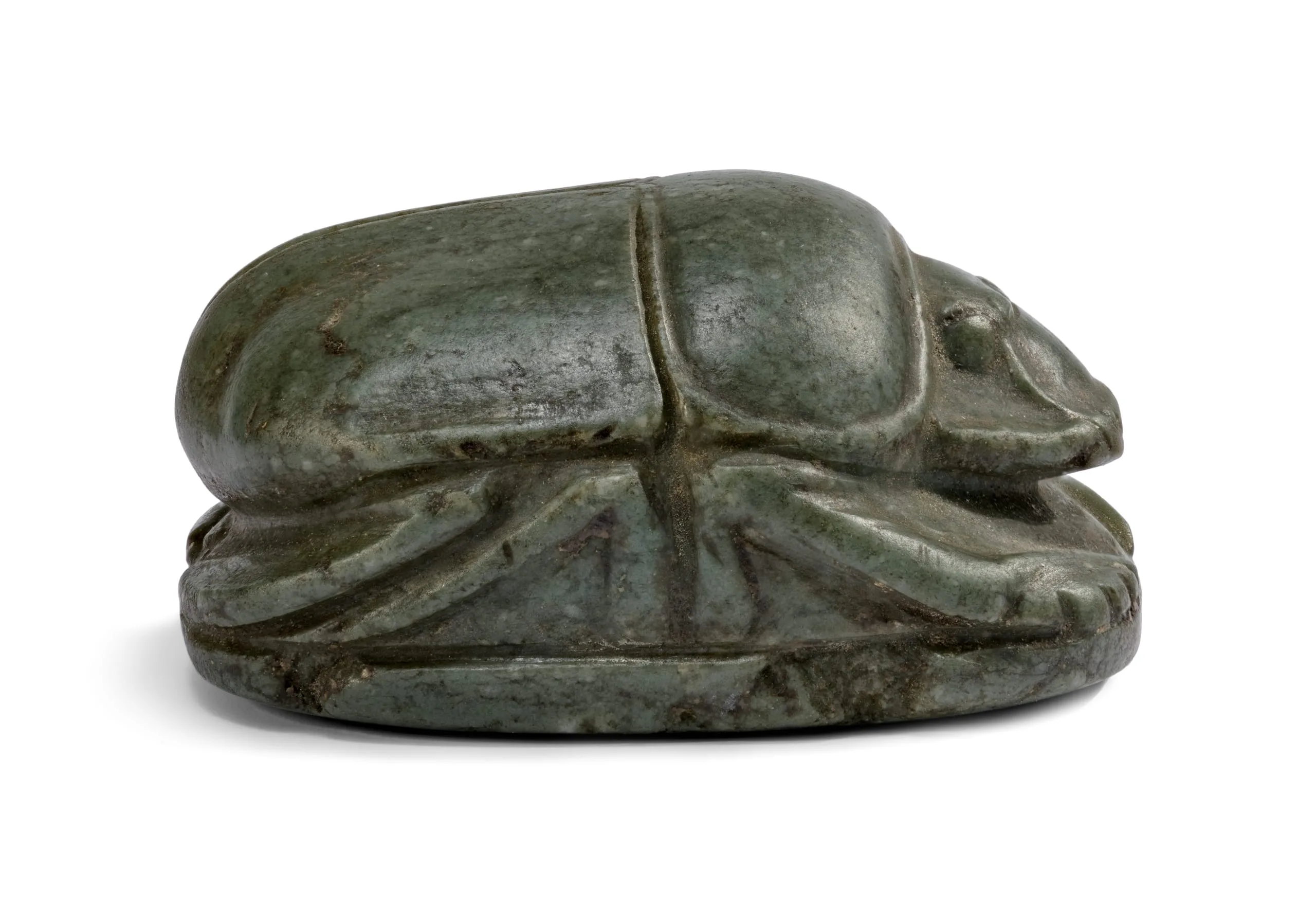
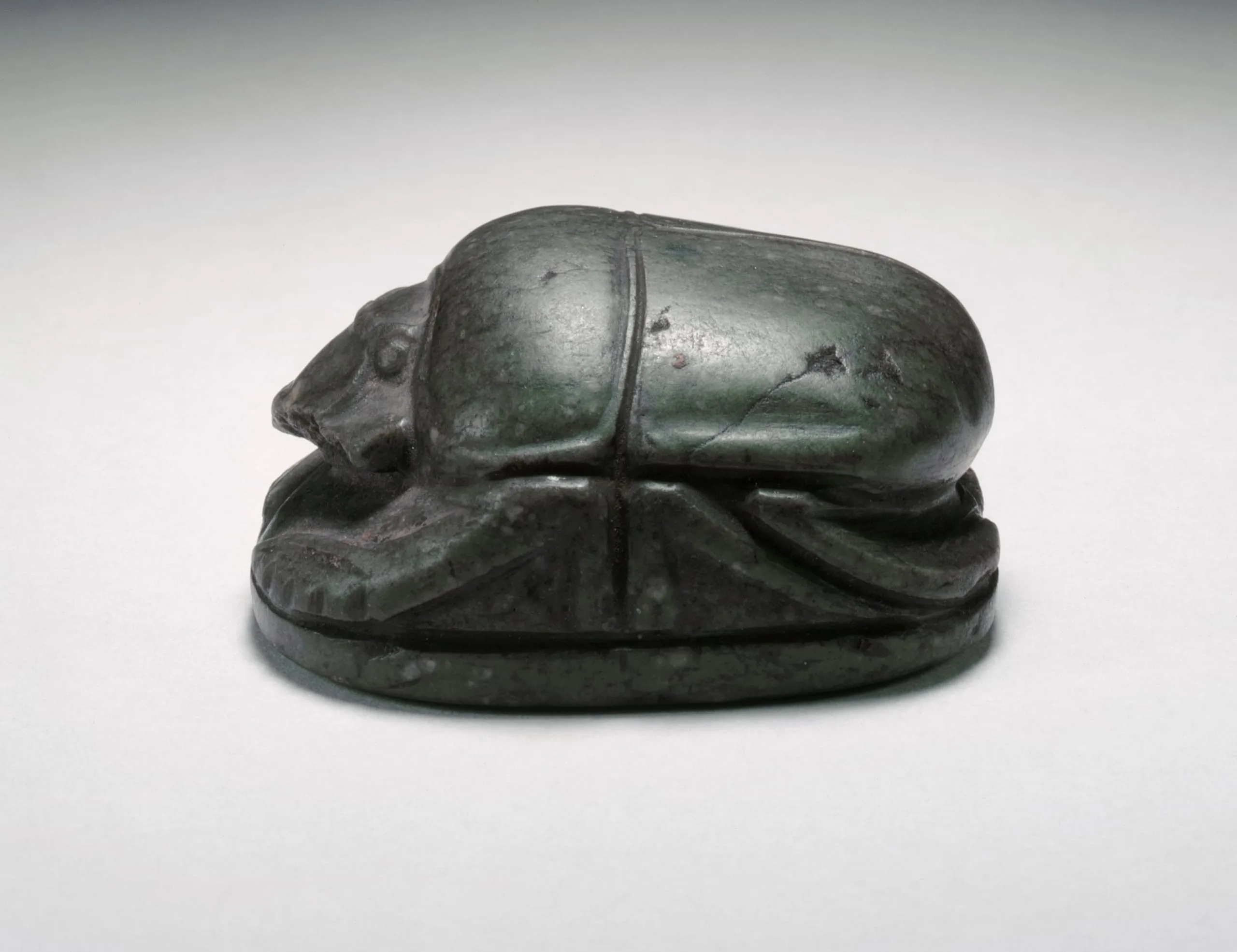
- Heart Scarab
- Date Made
- New Kingdom-Late Period, 1569-333 BCE
- Medium
- Serpentine
- Dimensions
- 1 1/2 × 3/4 × 2 in. (3.81 × 1.91 × 5.08 cm)
- Accession Number
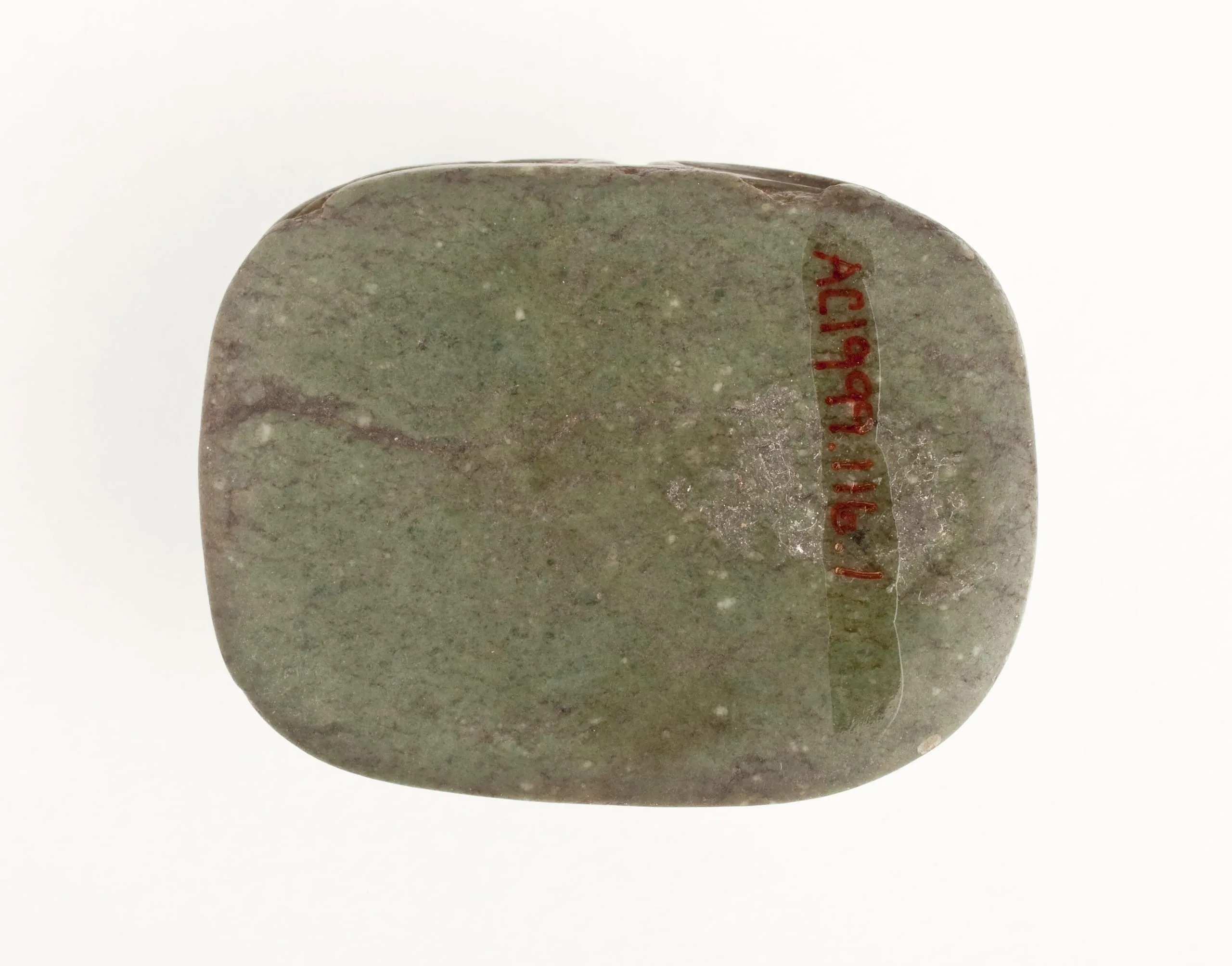
- AC1999.116.1
- Curatorial Notes
In ancient Egypt, amulets in the form of a scarab beetle symbolized rebirth or regeneration, based on the observation of actual beetles pushing balls of dung to their nests, paralleling the daily rolling of the sun across the sky by the god Khepri. Large heart scarabs were often placed at the neck or within mummy wrappings and inscribed with a text with a specific purpose—to protect the deceased from a false proclamation by the heart. Ancient Egyptians believed that the heart held the memories, thoughts, and moral values of the deceased and had the ability to speak ill of the dead at the time of judgment. Only those who had led a righteous life would be able to live comfortably in the afterlife. Heart scarabs first appear in the Second Intermediate Period (1759−c. 1539 BCE). They were generally made of a black or dark green stone and inscribed on the flat bottom surface with a spell from chapter 30B of the Book of the Dead. This text was intended to prevent the heart from speaking in opposition to the deceased at the time of final judgment before the god Osiris.
Provenance: Sotheby’s London, 1982, sold to Peter Lacovara; Gift of Peter Lacovara to LACMA, 1999.
- Provenance
Anonymous (sale London, Sotheby’s, 1982, sold to); Peter Lacovara, gift 1999 to; LACMA.