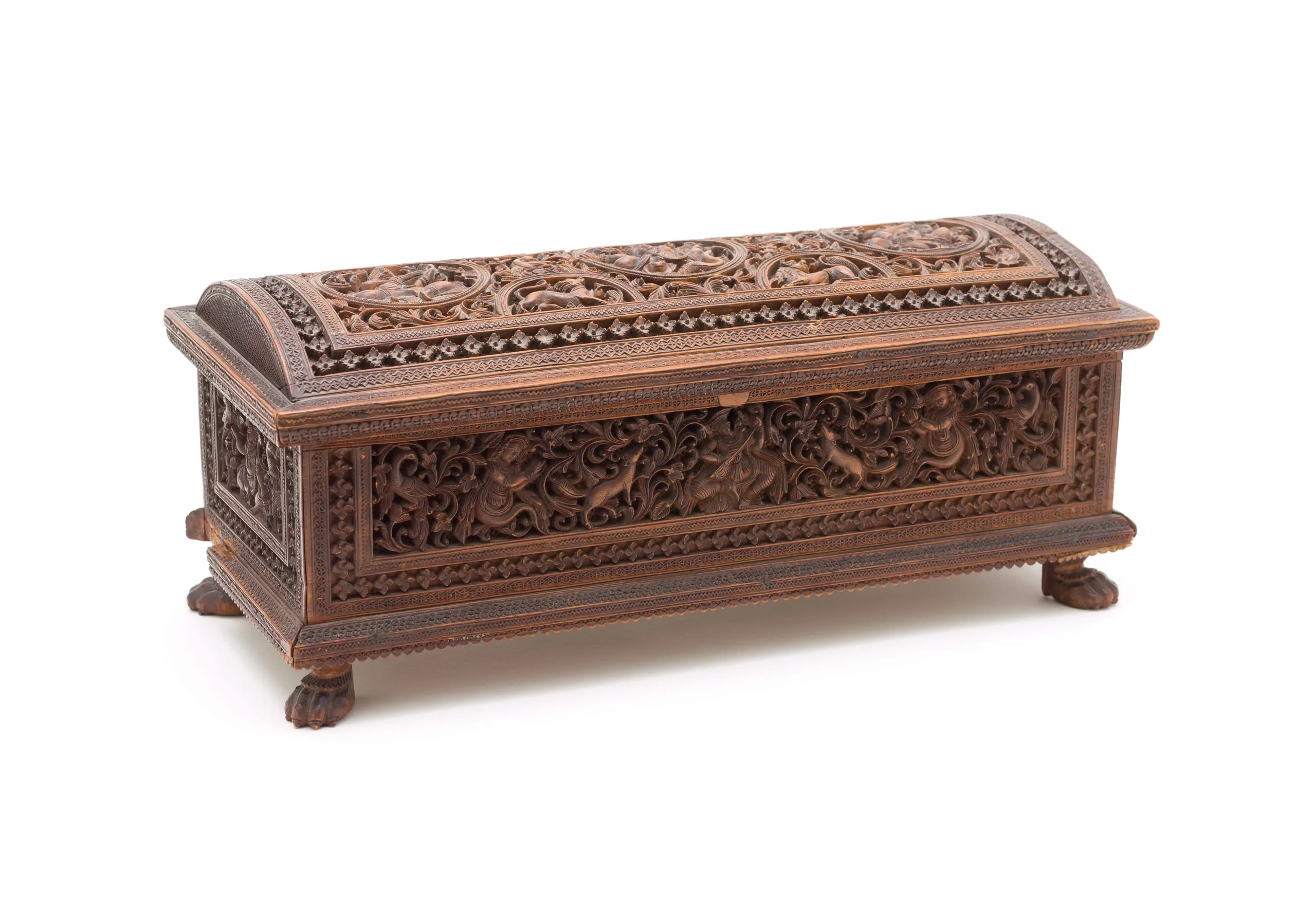
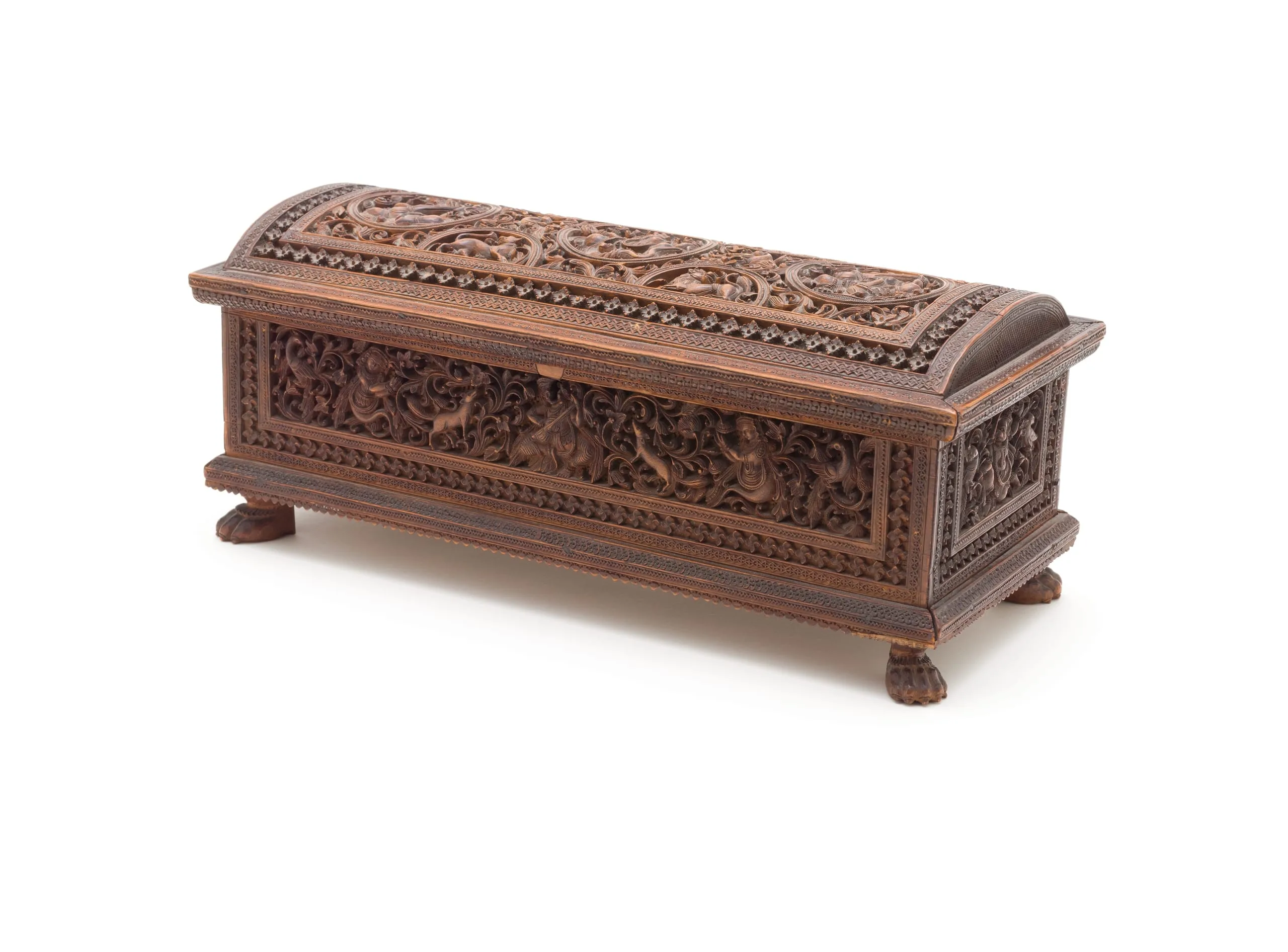
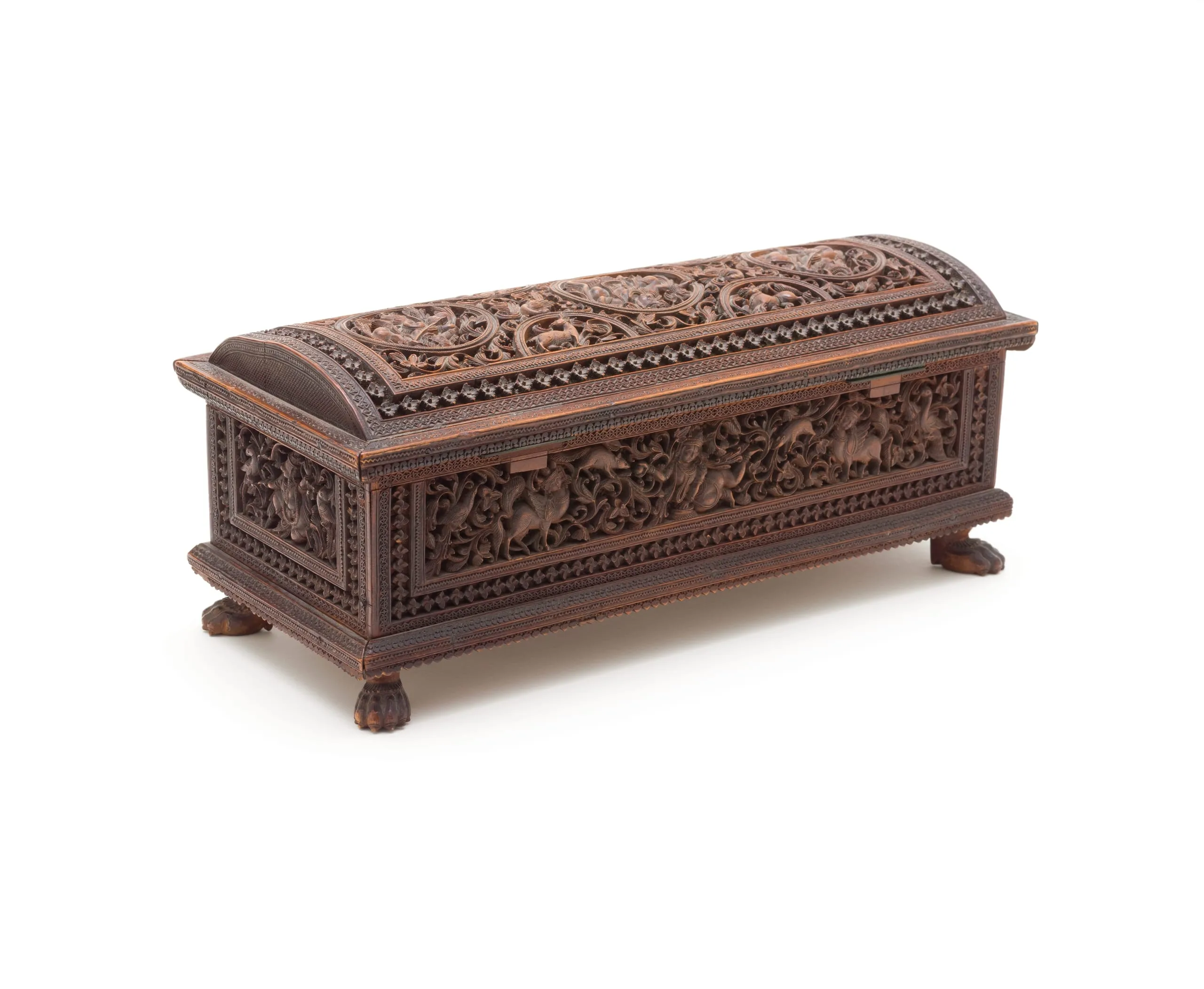
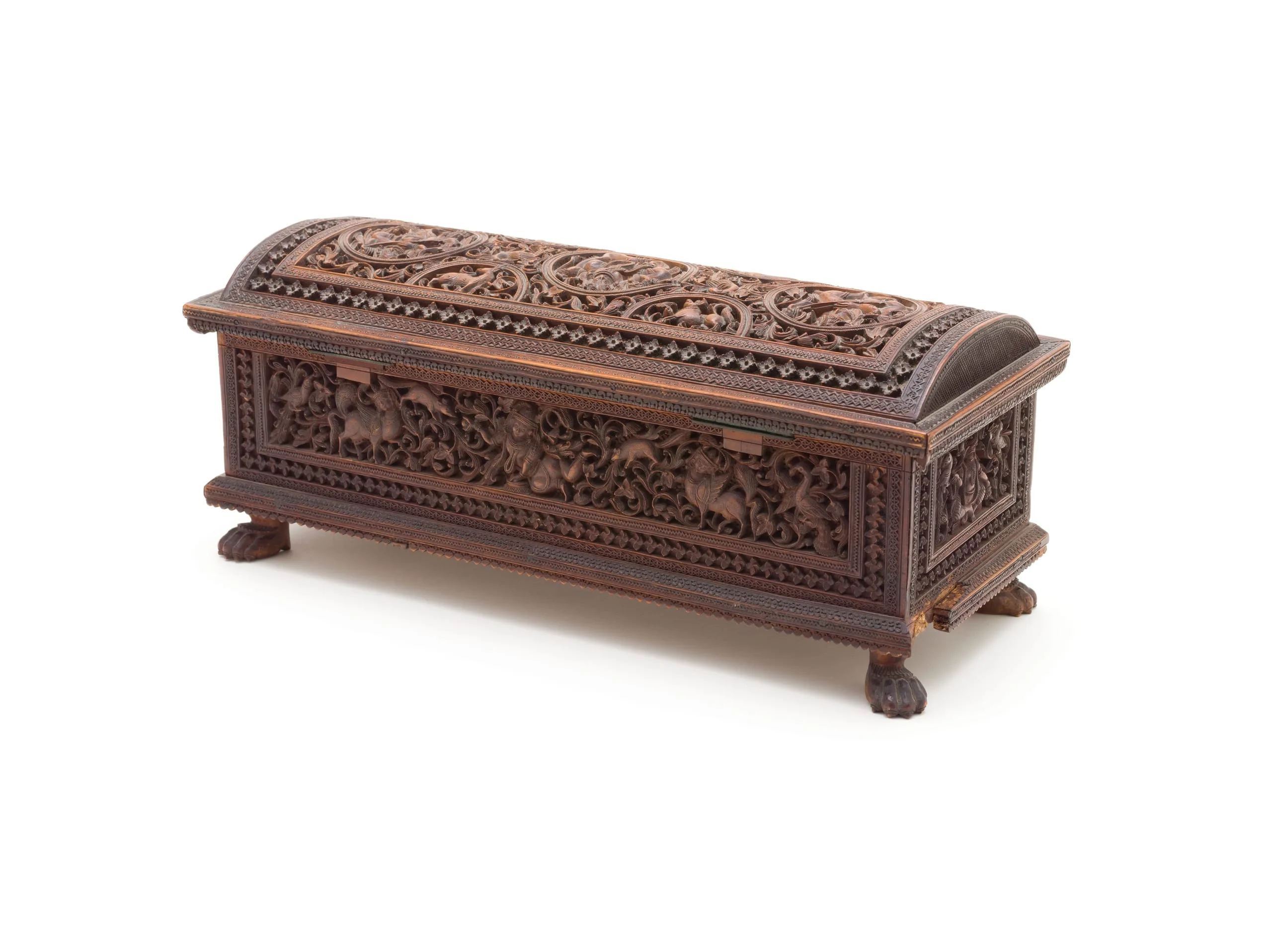
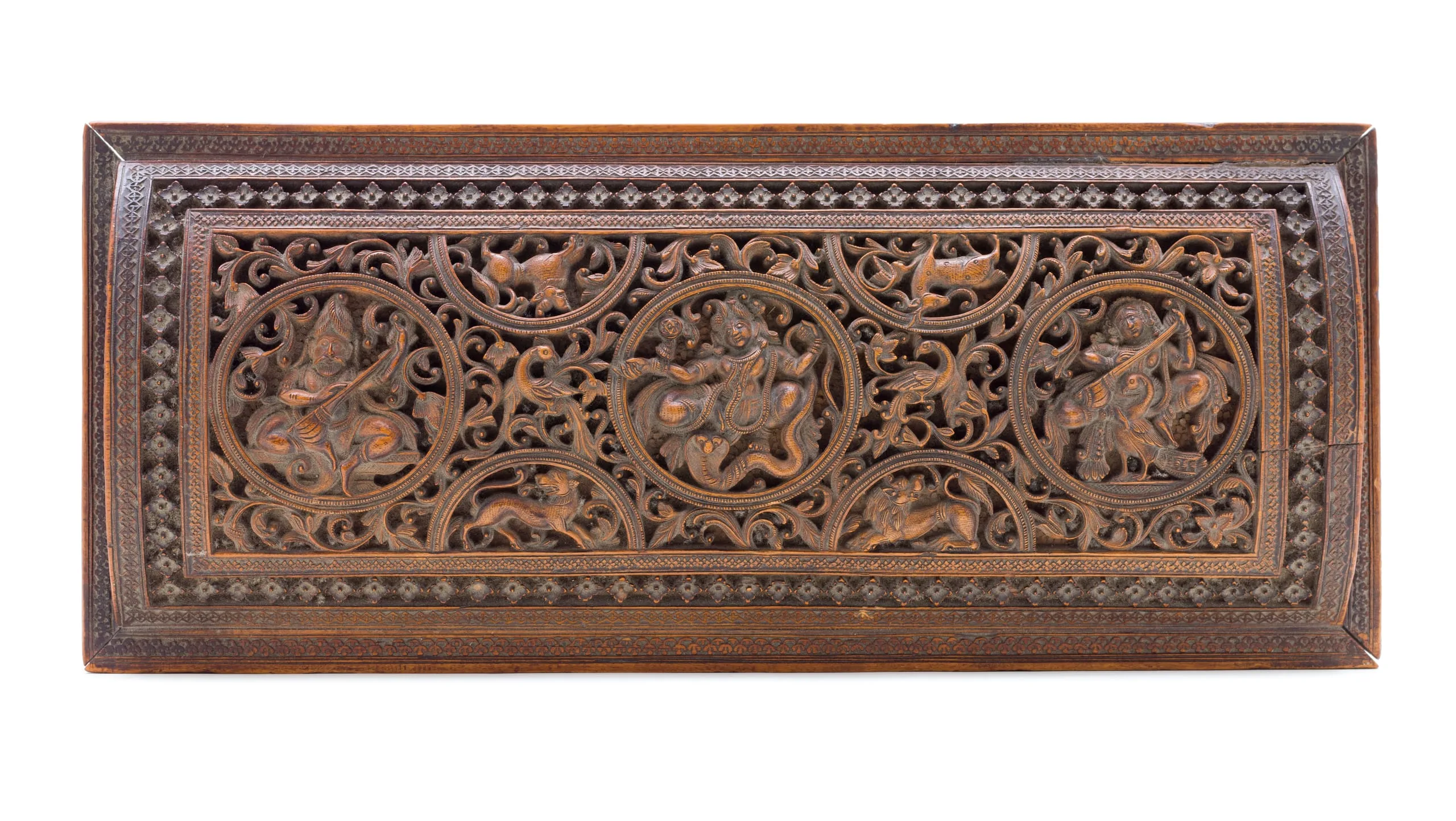
This exquisitely carved sandalwood casket epitomizes the sophisticated sandalwood carving produced by the renowned families of artists working in the Mysore region of southern India, which was regarded by contemporaneous art historians and critics as the finest in all of India.
The cabinet is rectangular with an overhanging hinged lid in the form of a hemispherical dome adorned with three Hindu deities in roundels and half-roundels containing three lions and one antelope. The roundels are set amidst deeply carved foliage enlivened with two peacocks. The casket is supported by claw feet.
The roundels on the top of the casket feature images of Vyasa, the master musician and sage; Krishna subduing the serpent Kaliya; and Sarasvati, the goddess of music and learning (left to right). The casket’s front face has Shiva playing a musical instrument in the center. He is flanked by two mongooses in heralding postures and two kinnari (celestial half-woman, half-bird). On the reverse is Krishna stealing butter, flanked by two kamadhenu (celestial wishing cows). The left end depicts the sage Agastya, while the right end has the monkey general Hanuman.
The interior top cover is inscribed in ink with the name of the artist (?), Bilinihasumatta or Bilinihasumattha. (Translation by Padmanabh Jaini and Robert J. Del Bontà.)