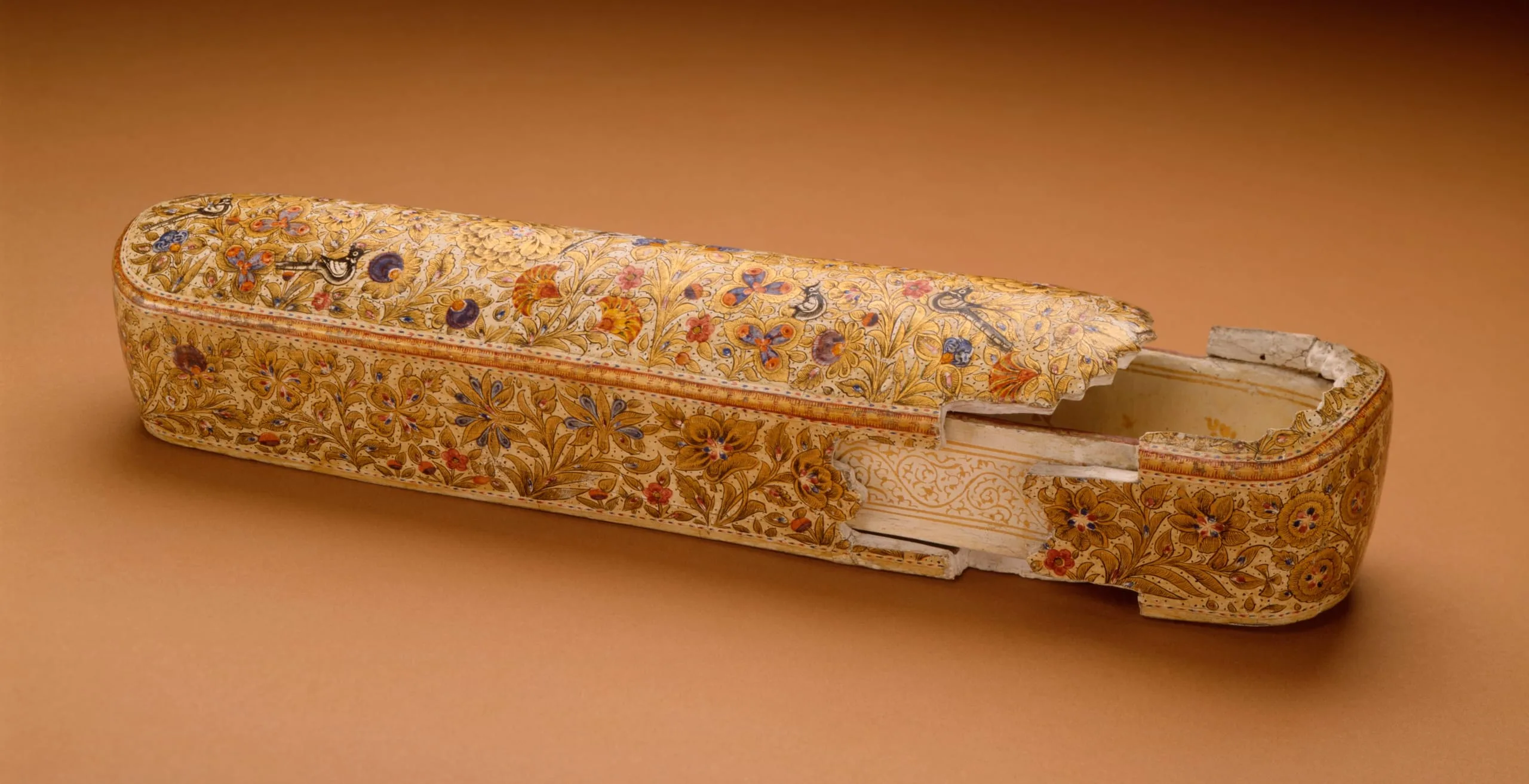
Made of papier-mâché with paint and gold leaf, this pen box is fashioned in the traditional manner with a horizontal tray for writing implements that is attached to an end of the pen box and constructed so as to slide into a decorated shell. The exterior is adorned with the so-called "rose pattern," which features on the rounded top a lush field of vegetation consisting of various stylized polychromatic blossoming floral sprays interspersed with songbirds. The sides of the pen box have a series of flowering plants in gold with less exuberant blossoms mainly accented in blue and red. The sliding pen tray is decorated with the "white and gold pattern" consisting of gold scrolling vines against a cream white background.
Writing sets, typically consisting of an inkstand, pen tray or pen box, paper weights, candlestick holder, portfolio binders, and a portable writing desk, were a favored correspondence accouterment of English and Continental residents and travelers in South Asia during the colonial period in the 18th and 19th centuries. Sets of multiple components with a shared origin and aesthetic sensibilities were produced, as well as numerous individual objects each reflecting the design and media preferences of their region and court affiliation.